Fish
Fish Fire
Fire Hike
Hike Bird
Bird

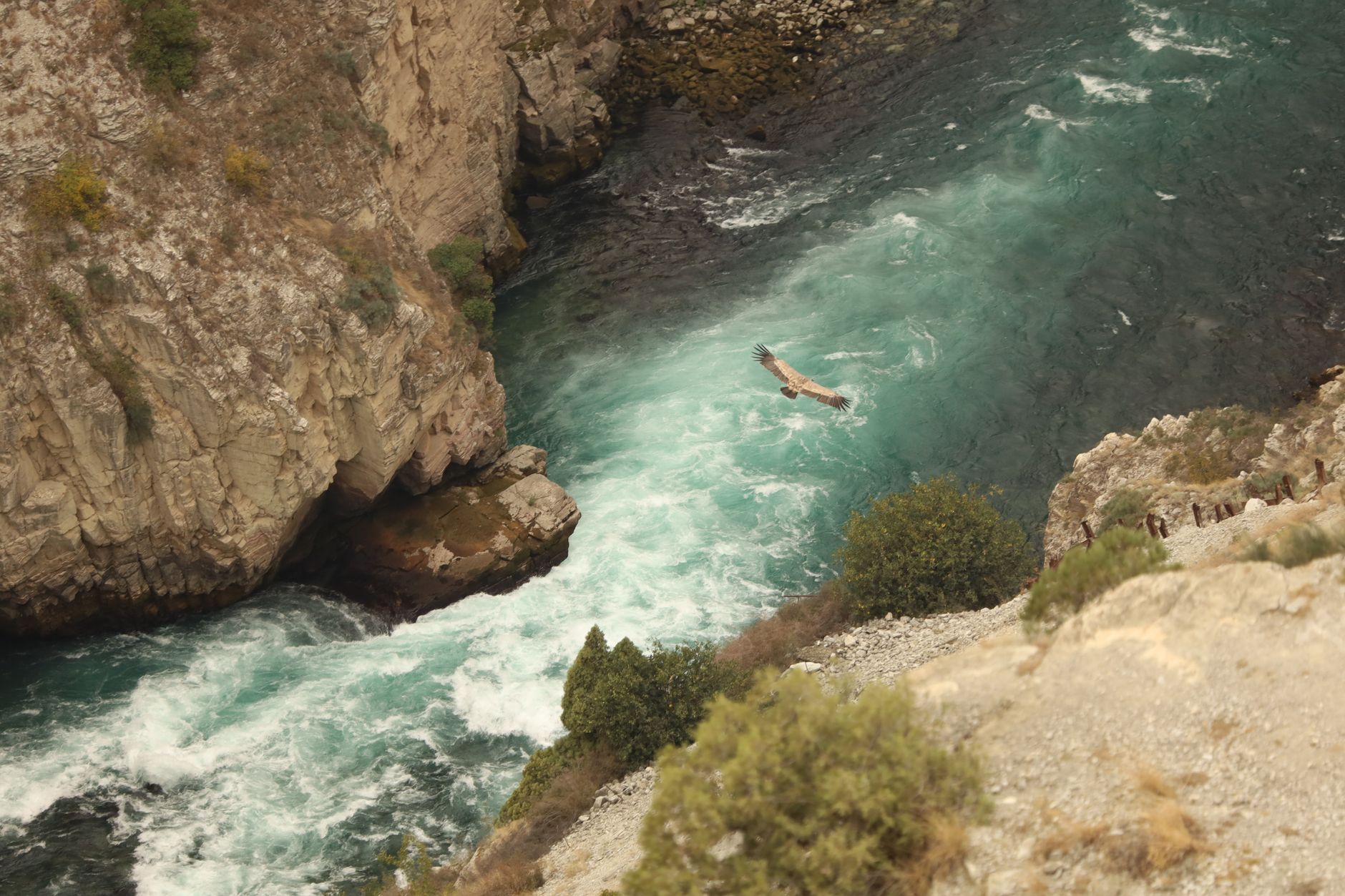

You stand on the rim at Dedication Point in April with a scope, and within twenty minutes you have watched a Prairie Falcon come off a ledge, a Golden Eagle work the updraft on the far wall, and a Red-tailed Hawk sitting on a basalt column doing absolutely nothing.
That density is not luck. The Morley Nelson Snake River Birds of Prey National Conservation Area holds what the Bureau of Land Management describes as the greatest concentration of nesting birds of prey in North America, and perhaps the world.
The numbers, and why they happen here
The NCA covers 485,000 acres along roughly eighty-one river miles of the Snake River canyon south of Boise. It was established on August 4, 1993 and renamed in 2009 for Morley Nelson, the falconer and conservation advocate who spent decades arguing that this canyon was something exceptional. Each spring some 800 pairs of hawks, owls, eagles and falcons arrive to mate and raise young.
The reason is a coincidence of three things, and understanding it makes the place read very differently from the rim. The canyon walls rise as much as 700 feet, and the basalt weathers into ledges, cracks and columns that are effectively purpose-built nest sites, which is exactly what Prairie Falcons require. The plateau above supports enormous numbers of Piute ground squirrels and black-tailed jackrabbits, so a raptor nesting on the cliff has a hunting ground beginning at the rim. And sun on dark basalt generates updrafts along the walls, letting soaring birds hunt a very large area for very little energy.
Remove any one of the three and the concentration collapses. That is why the NCA is drawn the way it is: it protects the hunting plateau, not just the nesting cliff.
Where to go, and what BLM ground means here
The NCA is, in the BLM's own phrasing, nature in the rough with few public facilities, and a handful of places do most of the work. Dedication Point is the standard first stop, a short walk from a parking area to a rim overlook with a panoramic view up and down the canyon, and where most people get their first Prairie Falcon. Swan Falls takes you down to the river at the historic dam, which changes the angle entirely, since you are looking up at the walls rather than across them and the riparian strip adds a different set of birds. Halverson Bar and Halverson Lake give another access to the river corridor with a walk in. And the road out from Kuna is itself productive, because much of the drive crosses the plateau where the hunting happens and where in spring the ground squirrel activity driving the whole system is obvious.
This is public land in the most straightforward sense, with the usual BLM characteristics. No entrance fee is charged. Facilities are minimal, meaning vault toilets at the developed sites and nothing at all elsewhere, so bring your own water. Roads vary enormously: the paved run from Kuna is easy, while many tracks beyond it are dirt that becomes impassable when wet and can be badly rutted.
Two complications are worth knowing about. There is a military training area within the NCA boundary, and portions of the landscape are grazed under permit, neither of which means you cannot be there but both of which make the map more complicated than one uniform block of open land. And some areas carry seasonal restrictions to protect nesting raptors, which given that the nesting concentration is the entire reason the NCA exists are the point rather than an inconvenience.
Fire is the serious and worsening issue. Large rangeland fires have repeatedly burned parts of the NCA, converting native shrub-steppe to invasive annual grassland and reducing the prey base. That is the long-term threat to the site and it is visible on the ground.
The Morley Nelson Snake River Birds of Prey National Conservation AreaSeason, and the two-month answer
This site is more seasonal than almost any other major raptor location. Mid-March to mid-May is the window, when the birds are on territory, displaying, courting and provisioning, and when the ground squirrels are above ground and active, with April at the center of it.
By late June the ground squirrels have largely estivated underground, the prey base collapses, many raptors have finished breeding and the canyon goes quiet. Summer here is hot, exposed and comparatively empty. Autumn and winter are worth a visit for wintering raptors on the plateau, including Rough-legged Hawks and Northern Harriers, but the spectacle is not the nesting concentration.
So unlike a refuge you can visit any time, the Snake River NCA genuinely has a season, and going in July because it was convenient is how people come away unimpressed by one of the best raptor sites in the world.
Which species, and how to sort them
The headline is density and the composition is what makes it interesting. Prairie Falcon is the signature bird and the NCA holds one of the densest breeding populations anywhere; look for a pale falcon with dark axillaries, the diagnostic dark wingpits that show as it banks. Golden Eagle nests on the bigger ledges and is often the bird working the far wall on a thermal. Red-tailed Hawk is abundant and is the default against which you check everything else, American Kestrel is everywhere on wires and on the rim, and Northern Harrier quarters the plateau rather than the canyon, low and unhurried with the white rump patch. The owls are present and much harder: Great Horned on the ledges, Barn Owl in the cavities, Burrowing Owl on the flats above. Turkey Vulture is the bird people misidentify most, and the dihedral plus the teetering flight sorts it in seconds once you know to look.
The useful discipline is to identify on shape and flight style first, because at canyon distances plumage detail is frequently unavailable and the silhouette is not.
The name also skews expectations, because there is a good deal more here than raptors. The plateau holds shrub-steppe passerines including Sage Thrasher, Brewer's Sparrow, Sagebrush Sparrow, Horned Lark, Western Meadowlark in numbers and Loggerhead Shrike. The narrow riparian strip at Swan Falls and Halverson concentrates warblers, orioles, flycatchers and Yellow-breasted Chat in spring. Cliff-nesting non-raptors include White-throated Swift, Say's Phoebe, Rock Wren, Canyon Wren and large Cliff Swallow colonies on the basalt. The river itself holds wintering waterfowl and, in the right conditions, good numbers of gulls. And Chukar, introduced and thoroughly established on the rocky slopes, announce themselves and then vanish.
A spring day here can reach a respectable list even when the raptors are uncooperative, and the shrub-steppe species in particular are ones many visiting birders need.
The best hour of the day
This site has a sharper daily rhythm than most. Early morning is quiet for soaring birds, because the rock has not warmed, the thermals have not formed and raptors are perched, which makes it good for scoping ledges and finding nests and poor for flight. Mid-morning onward is when it switches on, as the basalt heats and updrafts build along the walls and birds come off the cliffs to hunt. That is the productive window, and it is why a lunchtime visit here works better than at almost any other birding site. Afternoon stays good, with the light coming round onto the east-facing walls, and evening brings the owls and the Common Nighthawks over the plateau.
So unlike a passerine site, there is no penalty for a slow start, and a certain advantage in it.
The gear
The Snake River canyon is hot, exposed, windy and far from shade, and the gear list is a desert list with optics attached.
A spotting scope on a stable tripod, which is the core of it. The nesting cliffs are across a canyon, the birds are on ledges, and the whole point of the site is watching an occupied nest at a distance that does not disturb it. A light tripod in canyon wind is not good enough.
More water than the distance suggests. This is high desert in May and June, the pullouts have no services, and the temperature at Dedication Point in the middle of the day is not a walking temperature.
Sun protection and a brimmed hat, because there is no shade anywhere along the rim.
A vehicle with decent clearance if you leave the main road, since the BLM tracks that reach the better viewpoints deteriorate quickly and the good ones are not maintained.
A raptor identification reference, ideally one that covers perched and flight silhouettes, because the sorting problem here is real: Prairie Falcon against Peregrine, Golden Eagle against dark-morph buteos, and a great many distant accipiters.
Wind-resistant layers, since the canyon funnels wind and a spring morning on the rim is colder than the valley.
And a land ownership map, because the conservation area is BLM ground interleaved with private parcels and Idaho state land, and the boundaries are not marked at the pullouts.
Watching without wrecking it
Raptors on nests are sensitive, and this is a place where a scope earns its keep. Watch from the rim rather than the ledge, because approaching a cliff nest from above causes birds to flush and a flushed incubating bird is a lost clutch on a cold day. Stay on the roads and established trails, since the shrub-steppe here is fragile and the crust is slow to recover. Use a scope from distance rather than closing in, because everything worth seeing is visible from the established viewpoints. And leave the drone at home, since drones are treated as a serious disturbance around nesting raptors and are restricted here.
The river, and a completely different way to see it
Most visitors work the rim, and there is a second option that changes the experience entirely. Floating the Snake through the canyon puts you at the base of the walls looking up at nesting ledges from the water, with outfitters running trips from Swan Falls and a good deal of flatwater above the dam suitable for a canoe or kayak in settled conditions.
The advantages are real: you get the scale of the canyon in a way the rim does not convey, you see cliff faces invisible from any road, and the birds are considerably more tolerant of a boat than of a person on the skyline above them. The cautions are equally real. Wind funnels through the canyon and builds fast in the afternoon, dam releases affect flows, and this is not water to learn on, so go with an outfitter the first time.
If you are combining it with fishing, the Snake here is a working river with its own access and regulation questions, and the same ownership map that answers where you may park answers where you may legally stand in the water.
Visiting the World Center for Birds of Prey in Boise, IdahoThe World Center for Birds of Prey
Worth pairing with a canyon visit and frequently overlooked by people who drive straight through Boise. The Peregrine Fund's World Center for Birds of Prey sits on the south side of the city, roughly on the way out to the NCA, and is a working conservation breeding facility with an interpretive center open to the public.
What makes it relevant rather than merely pleasant is the history. The captive breeding and release program run here was central to the recovery of the Peregrine Falcon in North America after DDT, and the organization has since run recovery work on the California Condor and the Aplomado Falcon. For a birder heading to the canyon, an hour here first is useful, because seeing a Prairie Falcon at arm's length before trying to identify one at half a mile makes the second thing considerably easier. There is an admission charge and hours are seasonal, so check before you go.
A first visit
Go on an April morning. Drive out from Kuna, stop on the plateau when you see ground squirrel activity, and give Dedication Point an hour with a scope rather than ten minutes. Then drop to Swan Falls and look up.
Bring more water than you think you need, because the canyon is exposed and the wind is deceptive, and carry the BLM Boise District number, 208-384-3300, in case road conditions have changed.
One planning note for a landscape this size: 485,000 acres of BLM interleaves with state parcels, private inholdings, grazing allotments and a military training area, served by one paved road, one good gravel road and a great many tracks that are neither. Guidepole Bird carries the ownership and management layer, so a promising rim access on satellite imagery can be checked for whether the route crosses public ground or somebody's ranch before you drive it.
For the wider skill, hawk watching explained covers reading raptors at distance, and if you are working out where you may legally stand on ground this fragmented, that bird is on private land is the place to start.
The raptor concentration here is a nesting phenomenon rather than a migratory one, and the migratory version is in hawk watches explained. The winter equivalent of a big raptor concentration is in where to see bald eagles in winter and the Klamath Basin refuges. The public land rules that govern the canyon rim are in state trust lands and access, and the disturbance question that shapes how close you may get is in nesting and seasonal closures explained.