Fish
Fish Fire
Fire Hike
Hike Bird
Bird

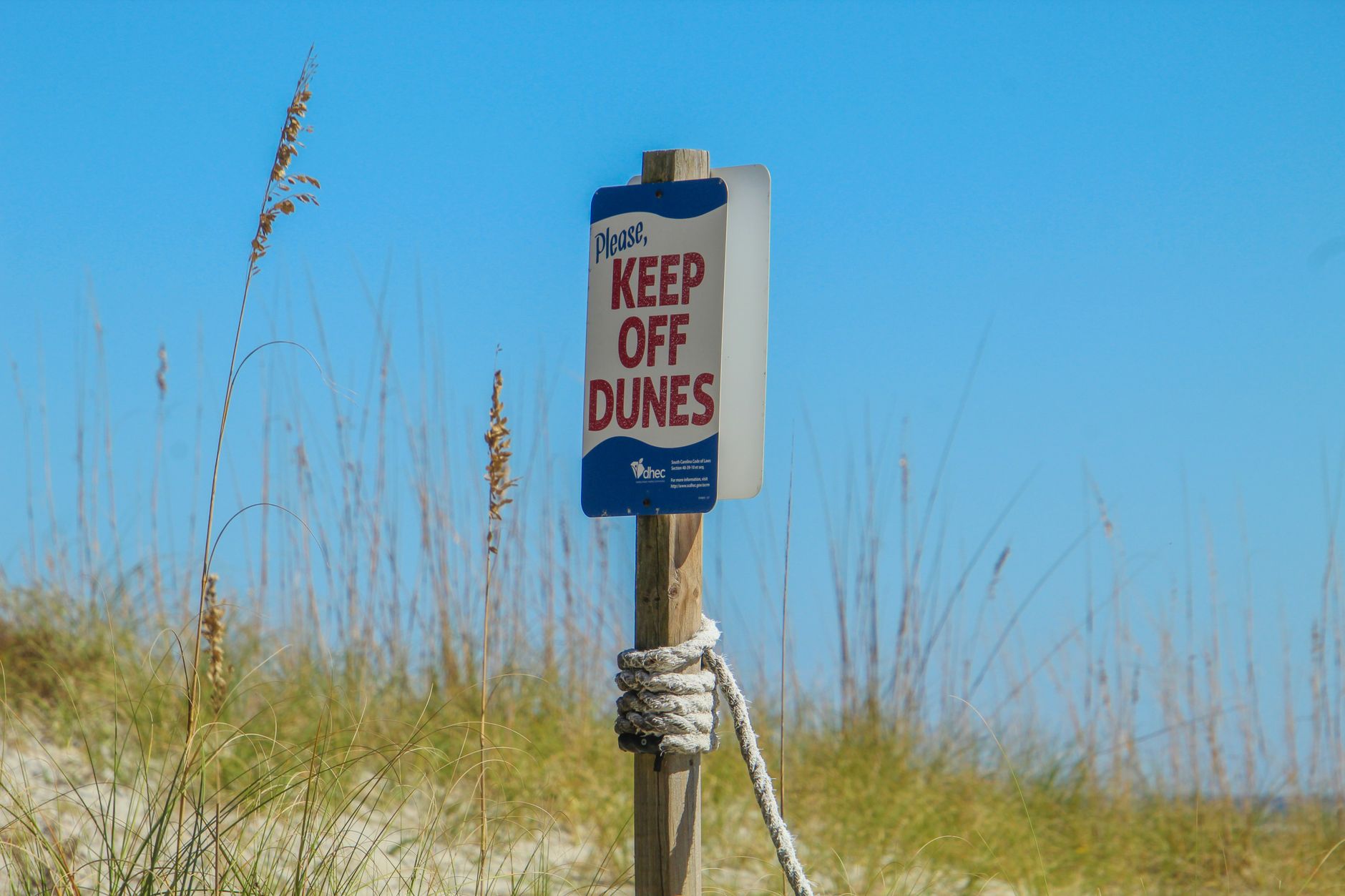

Walk a Pacific beach in April and you will eventually reach a line of thin fiberglass rods with string between them, and a sign.
The string would not stop a determined toddler. It is not meant to. It is a message, and the message is aimed at you, because the species it protects cannot be protected any other way.
What is behind the rope
The western snowy plover is a small pale shorebird that nests on open sand above the tide line, and the Pacific coast population was listed as threatened in 1993. Its nest is a scrape: a shallow depression in dry sand, sometimes lined with a few fragments of shell or driftwood, holding three or four eggs the color and pattern of the beach itself.
You will not see it. That is the entire evolutionary strategy and it works extremely well against gulls, ravens and coyotes. It works catastrophically badly against people, because a nest you cannot see is a nest you can step on, and because the adult's response to an approaching human is to leave.
Nesting runs roughly March 15 to September 15, which is why the closures run those dates.
Protecting New York's Piping PloversWhat disturbance does
This is the part worth understanding, because disturbance sounds mild and the mechanism is not.
The adult leaves the nest when you approach. It does not sit tight; it runs, often performing a distraction display, and it stays away for as long as you are near. Meanwhile the eggs cook or chill, because unshaded sand on a sunny day reaches temperatures that kill an embryo within minutes and cold wind does the opposite. The parent's body is the thermostat and you have removed it.
Predators are watching too. Crows and ravens learn that a distracting plover means an unattended nest, and they follow people along beaches for exactly that reason, which means human presence raises predation rates without a human ever touching anything. The chicks are no safer, since plover chicks leave the scrape within hours of hatching and feed themselves but cannot fly for a month, and when disturbed they crouch and freeze, which puts them underfoot and invisible. Repeated disturbance simply ends the attempt, because a pair pushed off enough times abandons and, late in the season, does not try again that year.
None of this requires malice, a dog off a lead, or anybody doing something they would consider wrong. It requires a family walking up the dry sand.
What the closures prohibit
Rules vary by site, but the pattern on designated plover beaches is consistent and stricter than people expect:
-
No dogs, even on a leash. This is the rule that generates the most argument and the least sympathy from managers, because a leashed dog is still a predator shape moving up a beach and plovers respond to it as one.
-
No vehicles, bicycles or e-bikes.
-
No camping and no wood fires.
-
No kites, because a kite is a raptor silhouette and plovers react to it from a long way off. Drones are worse for the same reason.
-
Walking is often still permitted on the wet sand below the high tide line, since the birds nest above it. That compromise is what keeps most of these beaches open at all.
Symbolic fencing, and why it is only string
The post-and-string barrier has a name: symbolic fencing. Fiberglass rods pushed into the sand, two or three strands of rope, and signs. It is deliberately not a physical barrier.
A real fence would be worse. It would trap chicks, catch drifting sand and change the dune, need heavy machinery to install, and create edges that predators patrol. So the fence protects nothing on its own, and works entirely by telling people where not to go, which means it works exactly as well as people's willingness to respect it.
That is an uncomfortable thing to hold in your head while standing at one, and it is rather the point.
It is not only plovers, and not only beaches
The same logic produces closures across the country for different species. Piping plovers on the Atlantic and Great Lakes get identical treatment with symbolic fencing and beach restrictions, and least terns nest colonially on sand and are fenced alongside them. Cliff-nesting raptors produce seasonal climbing closures, typically February to midsummer, on crags across the West, triggered by peregrines, golden eagles and prairie falcons. Colonial seabird islands are closed to landing entirely, often year-round. Bald eagle and osprey nests carry buffer distances on many public lands. Sandhill crane and waterfowl staging areas are closed in winter rather than summer. And bat hibernacula and cave closures apply the same principle to a completely different taxon.
The common thread is always the same: the animal cannot move, the season is fixed, and the only variable is human behavior.
The legal weight behind them varies more than the signs suggest. Some closures rest on the Endangered Species Act, where disturbing a listed species can constitute take and the penalties are federal. Others are ordinary agency regulation, enforceable as a fine on that unit. A few are advisory, requested rather than required, and rely wholly on goodwill. From the outside they look identical, which is deliberate, because a manager would much rather you simply respected the rope than worked out which category it fell into.
The recovery, and the habitat problem underneath it
Closures are easier to respect when you know they work, and these do.
The western snowy plover was listed in 1993 after decades of decline driven by beach development, vehicle use, off-leash dogs, introduced predators and the spread of European beachgrass. What followed was an unglamorous, sustained management effort: symbolic fencing, seasonal restrictions, predator management, beachgrass removal to recreate open nesting habitat, and monitoring of color-banded individuals across the whole range. Numbers have improved substantially in parts of the range, with Oregon in particular reporting sustained increases from a very low base, to the point where the conversation has shifted toward what long-term management looks like rather than whether recovery is possible. Piping plovers on the Atlantic show a similar arc, from a few hundred pairs to measurable recovery in several states through the same combination of measures. None of that happened because the birds were left alone; it happened because a specific set of restrictions was applied and enough people respected them.
The beachgrass part deserves explaining, because it is why closures alone are not enough. European beachgrass was planted along the Pacific coast from the early twentieth century to stabilize dunes and protect infrastructure. It succeeded, and in succeeding it changed the shoreline. Native dunes were low, mobile and sparsely vegetated, which is precisely the open sand a plover needs, whereas beachgrass builds tall, steep, continuous foredunes with dense cover, and the open habitat largely disappeared. So the modern management job includes removing vegetation to recreate bare sand, which is counterintuitive to visitors who reasonably assume more plants means more nature. Restoration areas on the Oregon and Washington coasts, and in California, now include deliberate beachgrass removal and mechanical creation of open habitat. The birds lost their habitat to a plant somebody planted on purpose, and getting it back costs money and looks like destruction while it is happening.
Meet the Threatened Bird Closing Your BeachBirding a closed beach
Closures are not a reason to stay home, and treating them as an obstacle misses that they are usually pointing straight at what you came to see.
Bird from the wet sand where walking is permitted and use a scope, because plovers are perfectly visible at range and behave normally when you are not close. Watch from the edge of a closure, which is frequently the best vantage anyway since the birds are inside it. Go early or late, when the beach is empty and the light is better. Report banded birds, because snowy plovers are color-banded extensively and photographing a combination from a distance is a real contribution. And do not point out a nest to anybody: if you find one, and you probably will not, keep it to yourself and move away.
Once you know what to look for, a closed beach becomes readable rather than merely roped. Plovers want open dry sand with some shell or gravel, above the tide line and below the vegetation, and that narrow band is the whole nesting habitat. An adult that runs ahead of you, stops, and runs again is leading you away from something. A broken-wing display means you are very close to a nest or chicks and should back away in the direction you came from immediately. Some programs place wire exclosures over individual nests to keep predators out while letting adults through, which is why their locations are not publicized. And the wrack line of stranded seaweed and debris is where chicks feed, which is why closures often extend down to it.
Closure boundaries move year to year with where the birds settle and are not always signed at every access point, so check the specific beach for the current season rather than assuming last year's line. Guidepole Bird shows which agency manages a stretch of shore and what is currently closed, which is the practical question when three miles of beach have two different managers and a closure somewhere in the middle. Until you have confirmed otherwise, assume dogs are banned on any Pacific beach between March and September.
The gear
Birding a closed beach well is mostly about being able to see from further away, and about not bringing the one thing that causes most of the problem.
A spotting scope, which is the entire answer to the frustration people feel at a rope. A plover at two hundred yards through a scope is a better view than the same bird at forty yards through binoculars, and it costs the bird nothing.
No dog, and this is not a suggestion. Dogs are the single largest cause of nest failure and chick mortality at beach colonies, a loose dog reads to a plover as a predator regardless of intent, and the presence of a dog on a leash a hundred yards away still keeps adults off eggs.
A checked closure map before you go, since the fencing moves as birds settle and a beach that was open in April may not be in June.
A camera with reach, used from outside the line rather than as a reason to cross it.
Wind protection, because these sites are open beaches and dunes and you will be stationary.
An early or late start, which is both better birding and lower impact, since it puts you there outside the hours when the beach is busy and the adults are already stressed.
And the discipline to say nothing, which is the hardest item on the list. Reporting a nest location publicly, tagging it on a map, or posting a photograph with the location attached is how a protected site becomes a busy one.
If you want to help rather than just comply
Several of these programs are chronically short of people and the work is more accessible than it sounds. Beach-nesting bird monitoring runs in most coastal states and typically involves walking a stretch of beach on a schedule and recording what you see, with training provided and no prior expertise assumed. Color-band resighting needs nothing but a camera with reach and the patience to read a combination, and individual plovers are tracked across their whole lives that way. Fence installation and removal happens at the start and end of every season and is straightforward volunteer labor. Beachgrass removal and habitat restoration work parties run through the off-season. And docent programs put volunteers at closure boundaries to explain to passing beach users what the rope is for, which is measurably more effective than another sign.
Contact the managing agency for the stretch of coast you use. They will be surprised and pleased.
The short version
The rope stops nothing. It works because people respect it, and the species behind it is one where a single disturbed afternoon can end a nesting attempt.
Bird the wet sand, carry a scope, leave the dog at home, and treat the line as what it is: the only protection a bird that nests in open sand has ever had.
Access generally is in that bird is on private land, refuge rules in a wildlife refuge is not a park, and the ethics of getting closer in playing a recording. Coastal walking with dogs is covered from the hiking side in the state parks that want your dog.
Why the agencies managing these beaches have the mandate they do is in a wildlife refuge is not a park. The disturbance argument here is the same one behind playback ethics and behind the roost etiquette in shorebirds and tides. Sites where this is the central constraint on a visit include Chincoteague National Wildlife Refuge and where to see puffins in Washington, and the general access question is in can you legally bird here.