Fish
Fish Fire
Fire Hike
Hike Bird
Bird

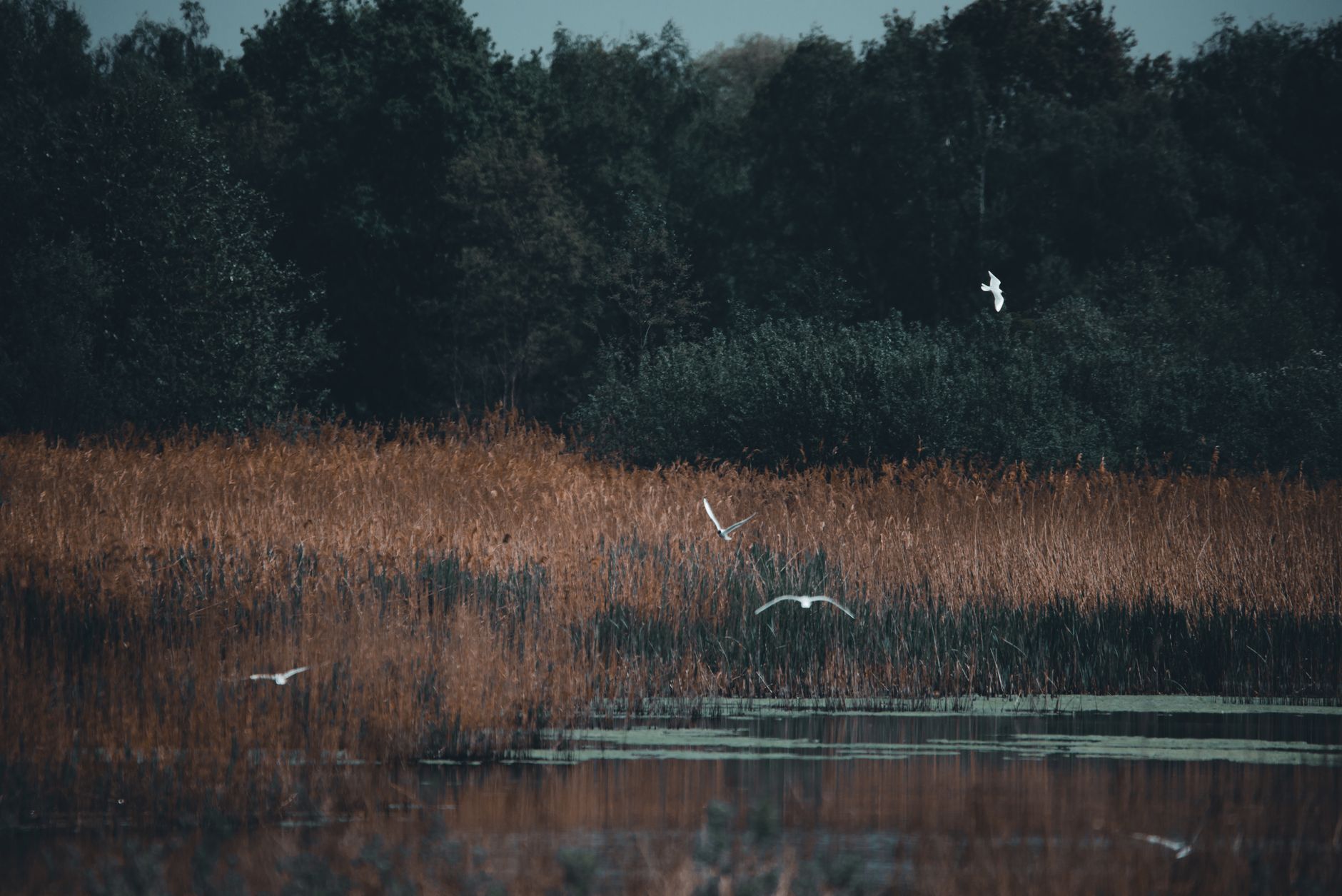

The National Wildlife Refuge System holds 573 refuges and covers land in every state. For a birder it is the single most productive category of public land in the country, because refuges were bought and are managed specifically for the habitat birds need.
And almost everyone treats them as parks with better birds, which produces a predictable set of surprises: the trail that closes in February, the area you cannot enter at all, the shotgun fire on a Tuesday morning, the road you are not allowed to get out of your car on. None of that is a failure of the refuge. It is the refuge working exactly as designed.
The mandate is the whole explanation
A national park exists to preserve scenery and provide for public enjoyment. Those two purposes are named together in its founding legislation, and the tension between them shapes everything the Park Service does.
A national wildlife refuge exists for wildlife. The system's governing law directs that refuges be managed for the conservation of fish, wildlife and plants, and that public uses be permitted only where they are compatible with that purpose. That word does a great deal of work, because compatibility is a formal determination made refuge by refuge and use by use. Wildlife observation and photography are among the priority public uses the law identifies, which is why birding is generally welcome, but the test is always whether the use interferes with the wildlife, and where it does, the use loses.
Parks accommodate people and protect the resource around them. Refuges protect the resource and accommodate people where they can. Every practical difference follows from that single distinction.
A Beginner's Guide to the National Wildlife Refuge SystemHunting is not an anomaly
This is the fact that startles new birders most. Hunting is permitted on a large share of national wildlife refuges, and it is not a compromise reluctantly tolerated: hunting and fishing are two of the six priority public uses named in the law, alongside wildlife observation, photography, environmental education and interpretation.
More than that, the system is substantially funded by hunters. The Federal Duck Stamp, formally the Migratory Bird Hunting and Conservation Stamp, is required of waterfowl hunters aged sixteen and over, and the revenue has bought millions of acres of refuge land since 1934. The practical consequences are worth planning around, because refuges frequently close portions during waterfowl season, hunt days may fall on specific days of the week, and some units are closed to non-hunters entirely while the season runs. That has its own article.
The duck stamp is also worth knowing about even if you never pick up a gun, because a current one admits you free to any refuge that charges an entrance fee. It costs less than many annual passes, essentially all of the money goes to habitat acquisition, and a substantial number of birders buy one every year for exactly that reason. It is the cheapest and most direct way to put money into the ground that birds use, and it doubles as your entry pass.
Seasonal closures are the norm, not the exception
Refuges close areas, and they do it constantly:
-
Nesting season shuts beaches, islands, sandbars and grassland units, typically spring through midsummer.
-
Wintering waterfowl closes areas in the opposite half of the year, because a refuge that lets people walk among resting geese is not resting geese. Sanctuary areas closed to all entry are a standard management tool rather than an unusual one.
-
Migration staging closes shorebird roosts at high tide, when the birds are packed together and least able to move.
-
Management activity closes units for prescribed burning, mowing, water-level manipulation and moist-soil work, often at short notice.
The result is that a refuge map showing twenty miles of trail may offer six miles in January and eighteen in September, and the closures are frequently not signed at every possible entrance.
Check the specific refuge's current status before you drive. That is the practical difference between refuge birding and park hiking, and it is precisely what Guidepole Bird is built to answer: which units are open, who manages them, and what the season is doing to both.
Stay in the car, and other things that are not laziness
A great many refuges are best birded from a vehicle. Birds treat a car as a non-threat and a person as a predator, so a vehicle stopped on a levee road will hold ducks at thirty yards that would flush at two hundred if you stepped out. Refuges know this, which is why so many are laid out around a driveable loop with pullouts, and on many of them you are required to stay in your vehicle on the tour route or restricted to marked stopping points.
The technique repays learning. Use the car as a blind: turn the engine off, rest your optics on a window mount or a rolled towel, and be still. Do not slam doors. Pull fully clear of the driving lane, because somebody is behind you. And work slowly, because most people drive a tour route far too fast and see a fraction of what is there.
Several other refuge practices catch out visitors used to parks. Water levels are managed, and refuge wetlands are drawn down and reflooded on a schedule to produce food for migrating birds, so a unit that was full of shorebirds last August may be dry this August because the manager needed it dry. Agriculture happens deliberately, with many refuges farming portions or leasing to farmers to produce waste grain for waterfowl. Prescribed fire is standard. Predator management occurs on some refuges and is contentious. Dogs are commonly prohibited or restricted well beyond typical park rules, drones are essentially always prohibited, and off-trail travel is often not permitted even where a park would allow it.
How the system was built
The refuge system has a specific origin, and knowing it explains the shape of the whole thing.
Pelican Island, Florida, 1903. Theodore Roosevelt set aside a three-acre island to protect brown pelicans and egrets from plume hunters, who were shooting colonial waterbirds in enormous numbers to supply the millinery trade. It was the first federal bird reservation and it is conventionally the start of the system. That plume trade context matters, because in the late nineteenth century feathers for hats drove colonial waterbird populations toward collapse, and the campaign against it produced both the first Audubon societies and, eventually, the Migratory Bird Treaty Act.
The Duck Stamp arrived in 1934, in the middle of the Dust Bowl, when drought and drainage had devastated continental waterfowl populations. Requiring hunters to buy a stamp and putting the proceeds into wetland acquisition was a direct response to a population crisis, and it has since funded the purchase of millions of acres. Then the 1997 Improvement Act gave the system a unified mission for the first time and established the compatibility test that governs public use today; before it, refuges were managed under a patchwork of individual authorities.
So the system grew out of three things: a bird-protection emergency, a hunting constituency willing to tax itself, and eventually a statutory mission. That combination is exactly why a refuge feels different from a park, and why hunters and birders end up sharing the ground.
What Is a National Wildlife Refuge?Choosing a refuge, and working it properly
There are 573 of them and they are not interchangeable, so a little targeting pays. Match the habitat to the season: coastal and estuary refuges peak with shorebird passage and wintering waterfowl, prairie pothole refuges peak with breeding ducks in early summer, desert refuges concentrate everything around water year-round, and forest refuges are breeding-season places. Look for managed impoundments, because a refuge that actively manipulates water levels produces shorebird habitat on demand and is far more productive than one that does not. Check whether there is an auto tour route, which tells you the refuge is set up for wildlife viewing rather than primarily for hunting or research. And do not dismiss the small ones, because acreage tells you very little while habitat quality and management intensity tell you almost everything.
Once you are there, a few habits separate a productive morning from a drive-through. Go at the edges of the day, when waterfowl and waders move and the tour routes are quietest. Learn the water, since knowing which units are being drawn down tells you where the shorebirds will be. Talk to the staff, because refuge biologists and volunteers know exactly where things are and are generally delighted that somebody asked. Read the bird list at the visitor center, which is a seasonal abundance chart specific to that unit and better than any general resource. Use the blinds, towers and photo platforms, which are placed where they are for reasons and let you get close without being intrusive. And do not expect trails, because many refuges have very little walking access by design, since dispersing people across the habitat is exactly what the compatibility test screens out.
The unwritten etiquette is short. Do not stop in the middle of a one-way tour route without pulling as far right as you can, because reversing is not an option for the person behind you. Turn the engine off. Wave people past if you are working a flock slowly and a car is waiting. Do not walk out on a dike toward roosting birds for a photograph, which flushes everything for everybody and is the most common source of friction between photographers and birders. Report what you saw, because staff want the data and many keep a sightings board. And close the gate behind you where there is one.
The gear
Working a refuge properly needs less equipment than most birding and more preparation than most birders give it.
A Federal Duck Stamp, which is the most useful twenty-five dollars in American birding. It admits you to any refuge that charges an entrance fee, it is good for a year, and almost the entire purchase price goes to buying and protecting wetland habitat. Birders buying duck stamps is one of the few genuinely uncomplicated things in this whole subject.
A window mount or bean bag, because refuge auto tours are designed around the vehicle as a hide and the instruction to stay in the car is a wildlife management decision rather than a convenience.
Blaze orange in autumn, since most refuges are open to hunting in some units in some seasons, and that is the mandate rather than an anomaly.
A scope, because refuges are managed for waterbirds and waterbirds are distant.
A checked closure status before you drive, since refuges close units seasonally as a matter of routine, water levels change what is where, and the day you arrive is not the day to find out.
Patience on the tour route, which is the actual technique. A refuge auto tour driven at ten miles an hour with long stops produces several times what the same loop produces at thirty.
And rubber boots, for the parts you can walk.
The look-alikes
The same logic applies to several similar designations birders meet constantly. State wildlife areas and wildlife management areas are the state-level equivalent, usually funded by hunting and fishing licenses and federal excise taxes on firearms and ammunition, and managed for game first. Waterfowl production areas, in the prairie states, are small federal wetland units open to walk-in access. And conservation areas and preserves run by land trusts and organizations like Audubon have their own rules entirely, with many requiring membership or advance permission.
The short version
A refuge is the best birding land in the country and it is not a park.
Check the unit rather than the category, check the season, expect hunting, buy a duck stamp, stay in the car, and assume something is closed. Do that and refuges will give you more birds than anywhere else you can legally stand.
The access question generally is in that bird is on private land, hunting seasons in sharing a wildlife area with people who are shooting, and closures in nesting closures explained. The hiker's version of the same land-manager problem is state park, national forest, or wilderness.
The seasonal closures that are the most visible expression of the mandate are in nesting and seasonal closures explained, and the hunting side is in birding during hunting season. The broader access question, on ground that is not refuge, is in can you legally bird here. For refuges worked in detail, see Malheur National Wildlife Refuge, Chincoteague National Wildlife Refuge and the Klamath Basin refuges.
One structural point worth adding, because it explains a great deal of what a visitor experiences. Refuges are chronically underfunded relative to their acreage. The system covers more land than the National Park Service and receives a fraction of the budget, many refuges have no permanent staff on site, and a good number are administered as part of a complex from an office an hour away. That is why the visitor center is closed on a Tuesday, why the road is graded once a year, and why the person who can answer your question about water levels is a biologist who is also the maintenance lead. It is not indifference. It is arithmetic.