Fish
Fish Fire
Fire Hike
Hike Bird
Bird

There is a moment on the drive in, somewhere past Burns on a road with nothing on either side of it, where you start to wonder whether this is going to be worth it.
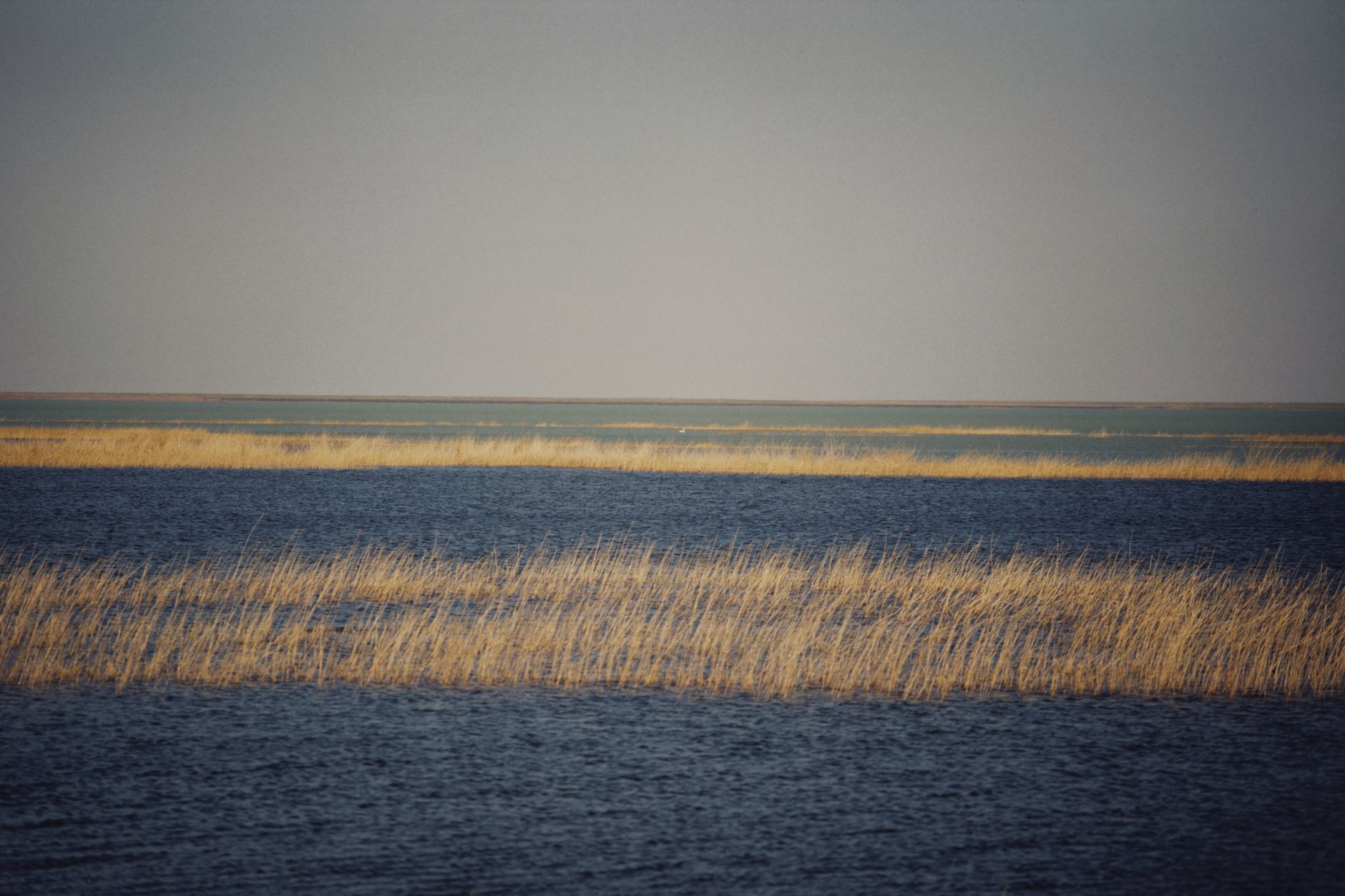
Then the Blitzen Valley opens up, a Sandhill Crane walks out of the rushes about eleven feet from the car, and the question answers itself.
Malheur National Wildlife Refuge sits in the high desert of Harney County, in the southeast corner of Oregon, and it is one of the great birding places in the western United States. More than 340 bird species have been recorded here, for a simple reason: it is a very large wet place in the middle of a very large dry place, and in the Great Basin that is the whole story.
The auto tour is the refuge
Most refuges have an auto tour. At Malheur the auto tour is more or less the point. The Blitzen Valley Auto Tour Route runs 42 miles from refuge headquarters south to the historic P Ranch, primarily following the Center Patrol Road built by the Civilian Conservation Corps in the 1930s, with nineteen interpreted stops along the way.
The refuge suggests allowing at least two hours. Any birder should read that as at least half a day, and a good day here can eat all of it. A few practical facts about the road matter more than they sound:
-
It is gravel, generally in decent condition, but poor conditions can occur at any time of year.
-
Vehicle pullouts are sparingly available. You cannot stop wherever the bird is, and you should not.
-
Turning space for larger vehicles is limited. A big RV on Center Patrol Road is a bad idea, and the refuge says so plainly.
-
Road closures happen when conditions are hazardous, particularly in autumn and winter. Call ahead on 541-493-2612 rather than driving four hours to find out.
Hours, seasons, and the things that are shut
This is where people get caught, because refuge hours and facility hours are not the same thing.
-
The refuge itself is open sunrise to sunset, year-round, with no fee.
-
The visitor center is seasonal: open April 1 to September 30 from 8am to 4pm, closed entirely from October 1 to the end of February, and on limited hours through March.
-
The nature store runs March 1 to October 31, 8am to 4pm, and closes November 1 to the end of February.
-
The museum is open sunrise to sunset daily, which makes it the reliable indoor stop in the off season and worth knowing on a wet day.
-
Malheur Lake is closed to the public. This surprises people, because it is the largest water body on the refuge and appears on every map. It is not somewhere you go.
Timing, and the two-week question
Malheur rewards precision about dates more than most places. Late April to early May is the standard answer and a good one, with spring migration in full flow, the passerine traps at headquarters and P Ranch working, and noticeably fewer mosquitoes than there will be in a month. March brings the goose and swan movement and the first cranes, in an empty landscape with nothing open. Late May into June is peak breeding, with the marsh at its loudest and the mosquitoes at their worst. Autumn is quieter with good raptor and waterfowl movement, and is when road conditions start to become a real variable. Winter is stark and largely empty of visitors, and can produce excellent raptors, with almost every facility closed and hazardous gravel a live possibility.
The migrant traps, and why a tree matters here
In a landscape of sagebrush and marsh, a stand of planted trees is a magnet, and Malheur has several famous ones. Refuge headquarters has the best known, a small planted oasis that in late spring and autumn concentrates migrant passerines and, with some regularity, eastern vagrants that have no business being in Oregon at all. P Ranch, at the southern end of the auto tour, does the same job at the other end.
This is the same principle as a desert oasis or an island: birds moving over unsuitable habitat drop into the first cover they find. It is why Malheur has a reputation for rarities out of all proportion to its remoteness, and why the trees get birded harder than the marsh does during migration.
What you are likely to see
A rough expectation, since 340 species across a year is not what any single visit produces.
Waterbirds are the backbone: American White Pelican, Trumpeter and Tundra Swan, a long list of ducks, Franklin's Gull, White-faced Ibis in numbers that surprise people, and Sandhill Crane throughout. Marsh specialists that are difficult elsewhere are routine here, including American Bittern, Virginia Rail, Sora, Marsh Wren and Yellow-headed Blackbird in colonies loud enough to be a physical experience. Raptors are constant, with Northern Harrier quartering the meadows, Swainson's Hawk in summer, Golden Eagle on the rims, Short-eared Owl at dusk and Great Horned Owl in the headquarters trees.
On the drier ground and along the drive in, the sagebrush birds appear: Sage Thrasher, Brewer's Sparrow, Sagebrush Sparrow, and with luck and effort Greater Sage-Grouse. Add migrant passerines in the tree stands in variable numbers, plus the vagrants that made the refuge's reputation.
The honest expectation for a good spring day is something around a hundred species with real effort, and a genuine chance of two or three you have not seen in the state before.
The gear
Malheur is four hours from a city in every direction and the nearest reliable services are in Burns. The gear list is a self-sufficiency list.
A full tank and a spare tire you trust. The Center Patrol Road runs forty-two miles of gravel through country with no fuel, no services and, for long stretches, no traffic. A flat here is a several-hour problem rather than an inconvenience.
Offline maps downloaded before you leave, because there is effectively no cell coverage on the refuge and the road network is not intuitive.
A spotting scope, since the refuge is water and open ground and much of what is on it is far away.
Serious insect repellent, which understates it. Malheur mosquitoes in late spring are among the worst in the West, they arrive in numbers that make standing outside genuinely difficult, and the usual answer is a head net rather than more spray.
A day's food and water per person, minimum. Frenchglen has a hotel with a set dinner and not much else, and the store in Burns is the last real resupply.
A window mount or beanbag rest, because most of the refuge is birded from a vehicle moving very slowly.
And the refuge phone number saved, since water levels, road conditions and section closures change and the headquarters is the only source that reflects the current state rather than last year's.
The mosquitoes deserve their own section
This is not a joke and treating it as one ruins visits. From late May through July, mosquito densities in the Blitzen Valley can be extraordinary, to the point where standing outside the vehicle at dusk becomes untenable without full cover.
What works is long sleeves and long pants in light colors, a head net you will feel silly buying and grateful for owning, repellent applied before you get out of the car rather than after, and a willingness to bird from the vehicle, which is what the auto tour is designed for anyway. What does not work is hoping.
This is the strongest single argument for the late April window, and it is why experienced Malheur birders talk about dates with such precision.
Malheur National Wildlife Refuge: Past, Present and FutureThe refuge has a difficult recent history
Worth knowing before you arrive, because it is still present in the area and visitors occasionally blunder into it.
In early 2016 an armed group occupied the refuge headquarters for forty-one days in a dispute over federal land management. The occupation ended with one death, a long series of federal prosecutions, and substantial damage to refuge facilities and to archaeological sites belonging to the Burns Paiute Tribe, whose ancestral land the refuge sits on and who were among the parties most directly harmed.
The refuge has long since reopened and functions normally. What lingers is a local sensitivity that is entirely reasonable, and a set of strong feelings in Harney County that a visiting birder is not going to resolve over a cup of coffee in Burns. The practical guidance is simple: be a good guest. The refuge staff are working a site that was occupied and damaged within recent memory, the tribe has a relationship with this land measured in millennia, and the ranching community has views. Come to look at birds, be pleasant, spend money locally, and leave the argument alone.
The country around it, and where to stay
The refuge sits inside a much larger landscape of public and private ground, and the birding does not stop at the boundary. Steens Mountain rises to the southeast and holds an entirely different set of species, with a loop road seasonally closed by snow well into summer. Diamond Craters and the surrounding BLM ground offer sagebrush obligates that the wet refuge does not. The surrounding valley is working ranchland, where the same rules apply as anywhere: the road right of way is not the field, and a gate is not an invitation.
Accommodation determines your birding here more than at most sites, because the distances are large enough that where you wake up decides what you can reach at dawn. Frenchglen sits at the southern end, close to P Ranch and the best access to Steens, with a historic hotel that is small, seasonal and books out well in advance for spring migration. Burns and Hines are the practical base about thirty miles north of headquarters, with fuel, groceries and the only real choice of rooms, at the cost of a pre-dawn drive to reach the headquarters trees at first light. Camping at Page Springs near Frenchglen puts you in the right place at the right hour. The decision is essentially convenience in Burns or position in Frenchglen, and birders who have been coming for years tend to choose position. Book early either way, because this is a small amount of accommodation serving a lot of people during the peak weeks with no overflow within a sensible drive.
Malheur also punishes casual planning in a way most refuges do not. Fuel up in Burns, because there is none on the refuge and the distances are real. Bring your own food and water for the whole day, since there is nowhere to buy either once you are on the auto tour. Do not rely on cell service, and download your maps before you leave town. And carry a spare tire you would trust, because forty-two miles of gravel is a long way from a garage.
A first visit that works
Come in late April. Sleep in Frenchglen or Burns. Bird the headquarters trees at first light, drive the auto tour south with the whole morning in front of you, and stop at P Ranch in the afternoon. Call the refuge before you drive if it is anywhere near winter, fill the tank and the water bottles, and accept that you will not get a signal.
The refuge itself is well signed and its boundary is clear. The value of an ownership map here is in the ground around it, which is a genuine patchwork of refuge, BLM, state and private where most birding apps simply stop. Guidepole Bird carries that layer, so a promising road out of the Blitzen Valley can be checked for whether it crosses BLM ground, a ranch, or a refuge unit closed to entry, before you commit to it. Forty minutes from the nearest help, knowing whose road you are on is basic navigation rather than a legal nicety.
And when a crane walks out of the rushes at eleven feet, stay in the car. That is why it walked out.
For the wider context, reading eBird hotspots explains why the headquarters trees look so much more productive than the marsh, and a wildlife refuge is not a park covers why so much of Malheur is closed to foot traffic.
The migrant trap effect that makes a lone willow in the desert worth an hour is the same principle at work in Point Reyes and its vagrants. The nearest comparable Great Basin water is in the Klamath Basin refuges, and the reason a refuge runs on its own rules is in a wildlife refuge is not a park. Planning a Malheur trip well is largely an eBird exercise, which is covered in reading eBird hotspots. The other end of Oregon is in birding the Oregon coast.
One further note on timing that regulars will tell you and the refuge will not. The productive window at Malheur moves with the water year rather than with the calendar, and a dry spring shortens it at both ends. The refuge posts water conditions, and a season where the ponds came up late is a season where the first two weeks of May are worth more than the last two.