Fish
Fish Fire
Fire Hike
Hike Bird
Bird

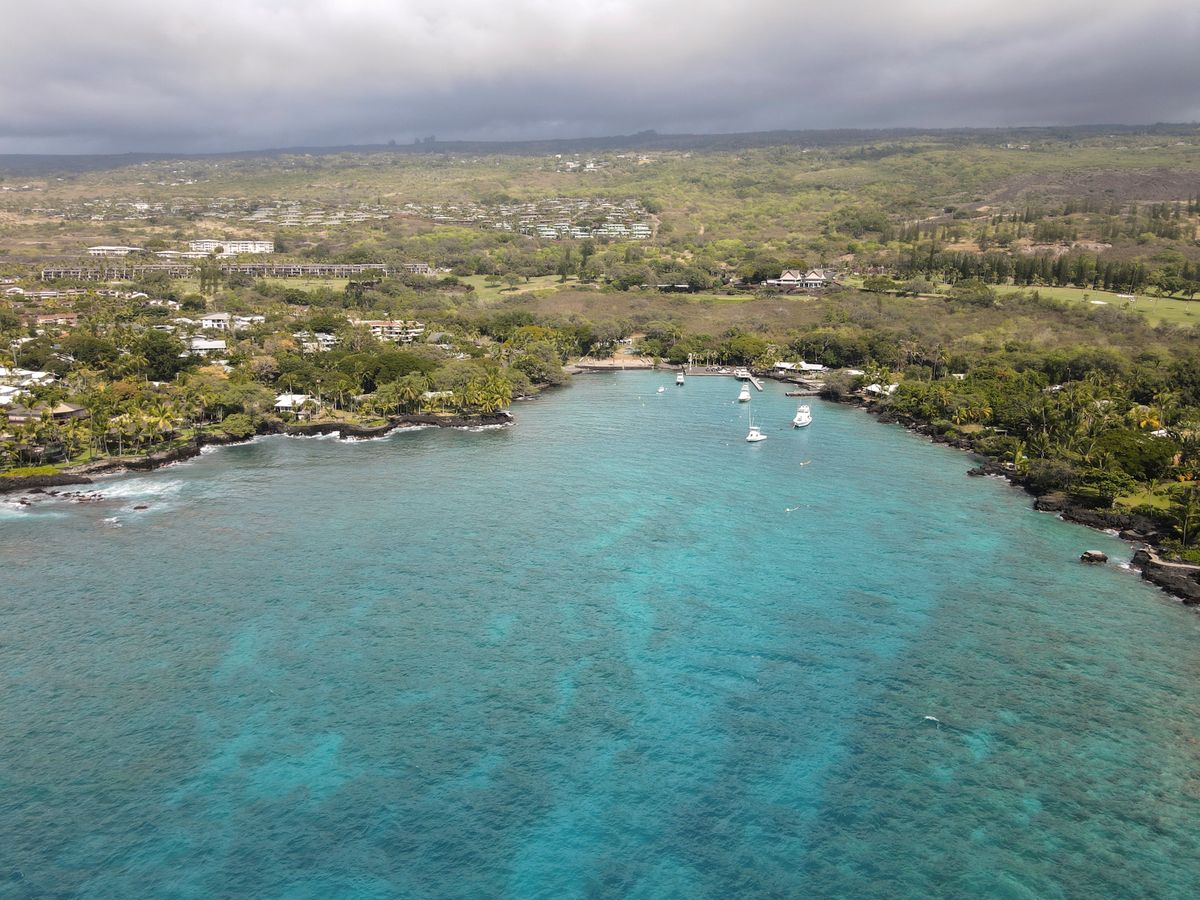

Kona sits on the leeward coast of Hawaii's Big Island, sheltered from the prevailing trade winds by the massive bulk of Mauna Kea and Mauna Loa. That wind shadow creates something almost unheard of in big-game fishing: consistently calm seas just a quarter-mile from the harbor. The ocean floor drops from 100 feet to over 6,000 feet within a mile of the coastline, and that steep underwater cliff, the Kona shelf break, funnels currents, concentrates baitfish, and draws blue marlin, yellowfin tuna, and other pelagic predators so close to shore that you can see the harbor from the fishing grounds.
Kona produces an average of two "granders", blue marlin over 1,000 pounds, every year. The International Billfish Tournament, held annually since 1959, is one of the oldest and most prestigious fishing tournaments in the world. But you don't need a tournament entry to fish Kona. The charter fleet operates daily out of Honokohau Harbor, and on most days, you're fishing within 15 minutes of leaving the dock. For a first-timer, Kona is arguably the easiest place in the world to experience legitimate big-game fishing.
This guide covers the offshore fishery, the nearshore options, and shore fishing, everything a visiting angler needs to know about fishing the Big Island's Kona Coast.
Offshore: Blue Marlin and the Big-Game Fishery
Blue marlin are the reason Kona is on every serious angler's bucket list. The Kona Coast produces more Pacific blue marlin per boat per day than virtually anywhere else in the world, and the proximity of the deep water to the harbor means you spend almost zero time running to the fishing grounds.
Blue Marlin
Blue marlin are present off Kona year-round, but the peak season is June through October, when warm currents push bait schools along the shelf break and big blues follow. Fish average 200 to 400 pounds, with 500- to 800-pound fish caught multiple times each season. The true granders, over 1,000 pounds, are rare but realistic: Kona averages two per year, and the harbor buzz when one comes to the dock is electric.
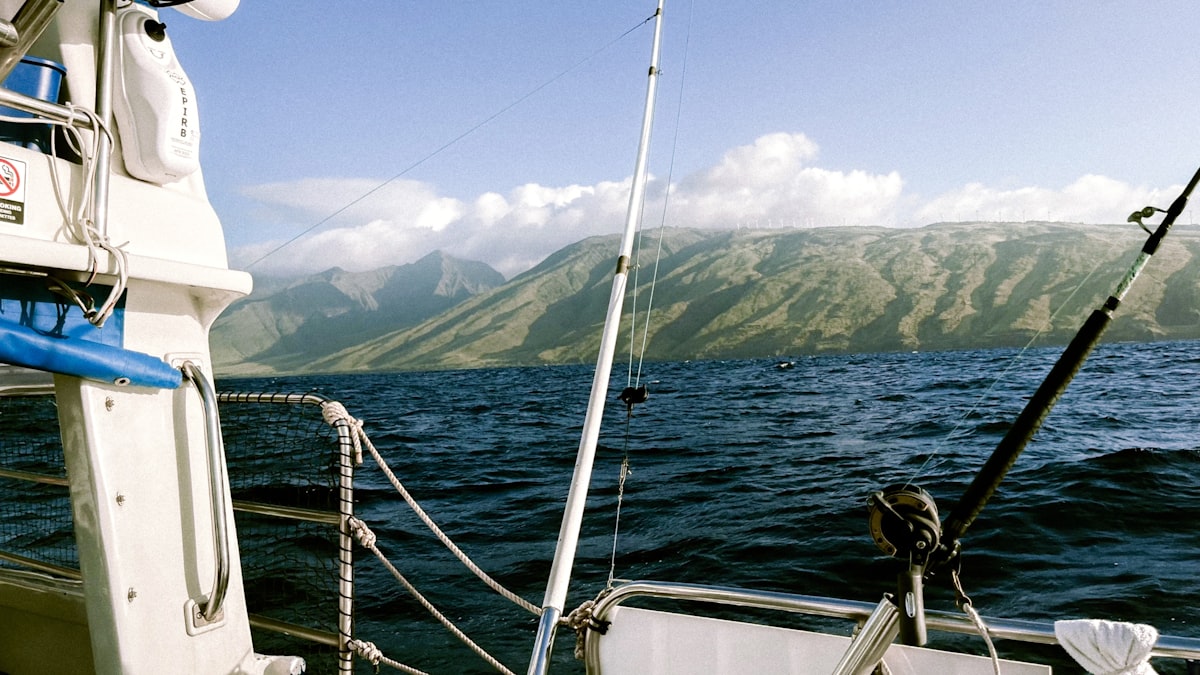
How they're caught: Trolling is the method. The captain runs the boat at 7 to 9 knots along the shelf break, typically 1 to 5 miles from shore, dragging a spread of 5 to 7 lures behind the boat. Kona-style marlin lures are distinctive, large resin heads (7- to 14-inch) with vinyl skirts in combinations of blue/white, pink/white, black/purple, and green/yellow. These flat-faced or angled heads create a bubble trail and splash pattern that mimics a fleeing baitfish school. When a marlin comes up behind a lure, the mate calls the strike, the captain adjusts speed, and the angler straps into the fighting chair for a battle that can last 15 minutes to over an hour.
Live bait: Some captains supplement the lure spread with a live aku (skipjack tuna), typically 2 to 8 pounds, slow-trolled on a bridled hook behind the lure spread. Live aku accounts for many of the largest marlin caught each season because big blues often follow lures without striking but commit fully to a struggling live bait.
Gear: The charter provides everything. Blue marlin are fought on 80- to 130-pound stand-up or chair tackle, heavy, lever-drag reels (Penn International 80 or Shimano Tiagra 80W) on roller-guide rods with 130-pound monofilament line. The fighting chair has a gimbal and harness to help the angler leverage their body weight against the fish. The mate does the wiring and gaffing (or tag-and-release).
What to expect: When a marlin strikes, the outrigger clip pops and the reel screams. The mate grabs the rod, puts it in the chair gimbal, and the angler sits down and starts fighting. The captain backs the boat toward the fish while the angler reels to gain line. A blue marlin's first run can strip 200 yards of line in seconds. The fight alternates between the angler pumping and reeling to gain line and the marlin making another blistering run. A 300-pound marlin takes 15 to 30 minutes. A grander can take well over an hour and leave the angler physically exhausted. Most Kona captains practice tag-and-release for all billfish, a quick tag, a photo at boat-side, and the fish swims away. This is the most adrenaline-producing experience in sport fishing.
Kona Hawaii Blue Marlin Fishing, Giant Caught! Giant Blue Marlin, Deep Sea Fishing in Kona, Hawaii!Yellowfin Tuna (Ahi)
Yellowfin tuna, called ahi locally, are Kona's second big-game species. They school over the shelf break and around underwater structure (seamounts and FADs, fish aggregation devices) from May through December, with the peak bite in summer. Ahi average 30 to 80 pounds, with fish over 100 pounds caught regularly and 200-pounders taken each season.
Trolling: Ahi hit the same lure spread as marlin, they're often caught on Kona-head lures while targeting marlin. Smaller skirted lures and cedar plugs (5- to 7-inch) trolled on lighter tackle catch the schooling fish.
Chunking and live bait: When a school is located, the captain may stop the boat, chum with cut skipjack chunks, and drop live aku or chunk bait on circle hooks to draw ahi into the chum slick. This is the most exciting way to catch ahi, you see the fish swirling in the slick before they eat.
Gear: Trolling ahi are typically caught on the marlin spread tackle. When chunking, lighter gear, 50-pound-class conventional reels with 60-pound braid and an 80-pound fluorocarbon leader, gives a better fight. The mate rigs the baits and coaches the technique.
Mahi Mahi (Dorado)
Mahi mahi are the most colorful fish in the ocean, electric blue, green, and gold, and the most beginner-friendly offshore catch. They're present year-round but peak November through March, when winter swells push floating debris and weed lines along the Kona Coast. Mahi school under anything that floats, logs, pallets, buoys, and hit trolled lures, live bait, and even flies with reckless aggression.
What to expect: Mahi average 10 to 30 pounds, fight acrobatically (they jump repeatedly), and are outstanding eating, the best table fish in Hawaii. A charter targeting mahi is the most reliable way for a complete beginner to catch fish offshore.
Ono (Wahoo)
Ono, Hawaiian for "delicious," which tells you everything about the eating quality, are caught from April through September, with the best fishing around the full moons in spring. They hit high-speed trolled lures at speeds up to 60 mph and fight with searing, reel-screaming runs. Ono average 20 to 50 pounds and are typically caught as a bonus species while marlin trolling.
Tuna, Ono, Marlin and Mahi Mahi Deep Sea Fishing in HawaiiNearshore and Bottom Fishing
Not all Kona fishing happens offshore. The rocky volcanic coastline, reef structure, and deep pockets close to shore support a nearshore fishery that's distinct from the pelagic grounds.
Bottom fishing: Half-day bottom-fishing charters run along the Kona Coast targeting opakapaka (pink snapper), onaga (longtail red snapper), ehu (short-tail red snapper), and uku (gray snapper) in 200 to 600 feet of water. These deep-water bottomfish are Hawaii's finest eating fish, the sashimi-grade snappers that command premium prices at restaurants. Electric reels are standard for the depth. Bottom-fishing trips are a good option for families and anglers who don't want a full-day offshore commitment.
Nearshore trolling: Lighter tackle trolling along the shoreline reefs and ledges, within a mile of the coast, catches ono, mahi mahi, rainbow runner, and barracuda. Some charters offer 2- to 4-hour nearshore trips at lower cost than the full offshore commitment.
Deep Sea Fishing Hawaii, Skipjack, Ono, in KonaShore Fishing: Ulua, Bonefish, and the Kona Coastline
Shore fishing on the Kona Coast is an entirely different experience from the offshore fleet. The volcanic shoreline, black lava rock, tide pools, sandy pockets, holds a variety of reef species and some surprisingly large game fish.
Ulua (Giant Trevally)
Ulua are the premier shore fishing target in Hawaii. Giant trevally to 100 pounds cruise the rocky shoreline, and hooking one from shore is a legendary Hawaiian fishing experience. Most ulua anglers fish at night, casting large live baits (live papio, akule, or opelu) on heavy tackle into deep channels and reef edges.
Gear: Ulua fishing requires heavy spinning or conventional tackle, 10- to 12-foot rods with large spinning reels (Penn Slammer IV 8500 or Shimano Saragosa 10000) loaded with 65- to 80-pound braided line. The rig is a sliding sinker setup with a 150-pound monofilament shock leader and an 8/0 to 10/0 circle hook. This is serious tackle for a serious fish, ulua don't stop when they eat, and the lava rock will cut lighter line instantly.
Bonefish and Papio
For lighter-tackle shore fishing, several Kona Coast bays hold bonefish and papio (juvenile giant trevally, typically 2 to 10 pounds). Anaeho'omalu Bay (A-Bay) north of Kona is the most accessible, a sandy flat that produces bonefish on the incoming tide. Small white or tan Crazy Charlie flies on a 7-weight fly rod, or Berkley Gulp Shrimp on a 1/8-ounce jighead with a light spinning rod, catch bonefish and papio in the shallows. The Keauhou area south of Kona has additional flats access.
Pier and Jetty
Honokohau Harbor's south jetty and the Kailua Pier in downtown Kona offer easy access for drop-line fishing. Species include moano (goatfish), menpachi (soldierfish), and various reef fish. A simple bottom rig with a small piece of squid or shrimp on a size 4 to 6 hook, dropped along the rocks, catches fish consistently. This is the most casual fishing Kona offers, no special gear, no charter, just a rod and some bait.
Flat Water Deep Sea Fishing in Hawaii, Catch and CookCharter Fishing: The Heart of Kona's Fishery
The vast majority of visiting anglers fish Kona via charter. The fleet operates out of Honokohau Harbor, about 3 miles north of downtown Kailua-Kona.
Half-day (4 hours): $650 to $850 for the boat, up to 6 anglers. This is enough time for a legitimate shot at marlin, ahi, and mahi, most of the action happens within the first few hours of trolling.
Three-quarter day (6 hours): $950 to $1,200. More time on the water means more lure changes, more ground covered, and a better chance at multiple species.
Full day (8 hours): $1,200 to $1,800. The best option for serious marlin hunters, you can cover the entire shelf break from Keahole Point to Kealakekua Bay.
Extended full day (10 hours): $1,500 to $2,200. For tournament-style fishing or when conditions warrant running farther south.
What's included: All tackle, lures, live bait, fighting chair, and crew. Tips for the crew are customary, 15 to 20 percent of the charter cost for a good day.
Booking: Book 2 to 4 weeks in advance during summer peak season (June through September). Off-season (January through April) has more availability and sometimes lower rates. Book directly with the charter company, the Honokohau Harbor charter desk can also match you with available boats for walk-up trips.
Chasing Blue Marlin Fever, Kona, HawaiiGear for Visiting Anglers
Offshore charters: The charter provides everything, rods, reels, lures, live bait, fighting chair, harness. You don't need to bring any fishing gear for a charter trip. Bring sunscreen (SPF 50+ reef-safe, Hawaii bans oxybenzone and octinoxate sunscreens), polarized sunglasses, a hat, light long-sleeve moisture-wicking shirt, non-marking shoes, and Dramamine or Bonine if you're prone to seasickness (take it the night before AND the morning of).
Shore fishing, general: A 7- to 9-foot medium-heavy spinning rod with a 5000-size spinning reel (Penn Battle III 5000 or Shimano Stradic 5000) loaded with 30-pound Power Pro braided line in moss green and 40-pound Seaguar fluorocarbon leader. This handles papio, small ulua, reef fish, and bonefish. Terminal tackle: 1/4- to 1-ounce egg sinkers, barrel swivels, size 4 to 2/0 Gamakatsu Octopus hooks, Berkley Gulp Shrimp in natural color (2- and 3-inch), and a few Halco Roosta Poppers or Yo-Zuri Bull Pop surface lures for papio.
Shore fishing, ulua: Dedicated heavy tackle: 10- to 12-foot surf rod (Penn Prevail II Surf 12-foot or Daiwa Emcast Surf) with a large spinning reel (Penn Slammer IV 8500 or Shimano Saragosa 10000) loaded with 65- to 80-pound braided line. Terminal: 150-pound monofilament shock leader, 8/0 to 10/0 Owner Mutu Light circle hooks, 6- to 10-ounce pyramid sinkers. Most visiting anglers rent rather than fly with ulua gear.
Fly fishing, bonefish: A 7- or 8-weight fly rod (9-foot, Orvis Clearwater or Redington Vice), matching reel with a good drag (Orvis Hydros or Lamson Liquid), weight-forward tropical floating line. Flies: Crazy Charlie in white and tan (sizes 4-6), Gotcha in pink, Christmas Island Special, and a few small Clouser Minnows in chartreuse/white. A 9-foot 12-pound fluorocarbon leader completes the setup.
Bait and tackle shops: The Charter Desk at Honokohau Harbor, Kona Fishing Tackle on Palani Road, and Big Island Sporting Goods carry everything from ulua rigs to light spinning tackle. Frozen squid, shrimp, and opelu (mackerel scad) are available at most shops for shore fishing bait.
Fishing License
Hawaii requires a non-resident recreational marine fishing license for anyone 15 or older. Costs: $20 for 1 day, $40 for 7 days, or $70 for an annual license. Purchase online at hawaii.gov or at authorized agents. No license is needed for charter boat fishing, the charter's license covers all passengers. Residents do not need a saltwater license.
Important: Hawaiian fishing culture emphasizes respect for the ocean and the resource. Practice catch-and-release for marlin (most Kona charters release all billfish unless it's a potential tournament or record fish). Take only what you'll eat. Leave the shoreline cleaner than you found it.
Marlin Expeditions Comes to Kona