Fish
Fish Fire
Fire Hike
Hike Bird
Bird

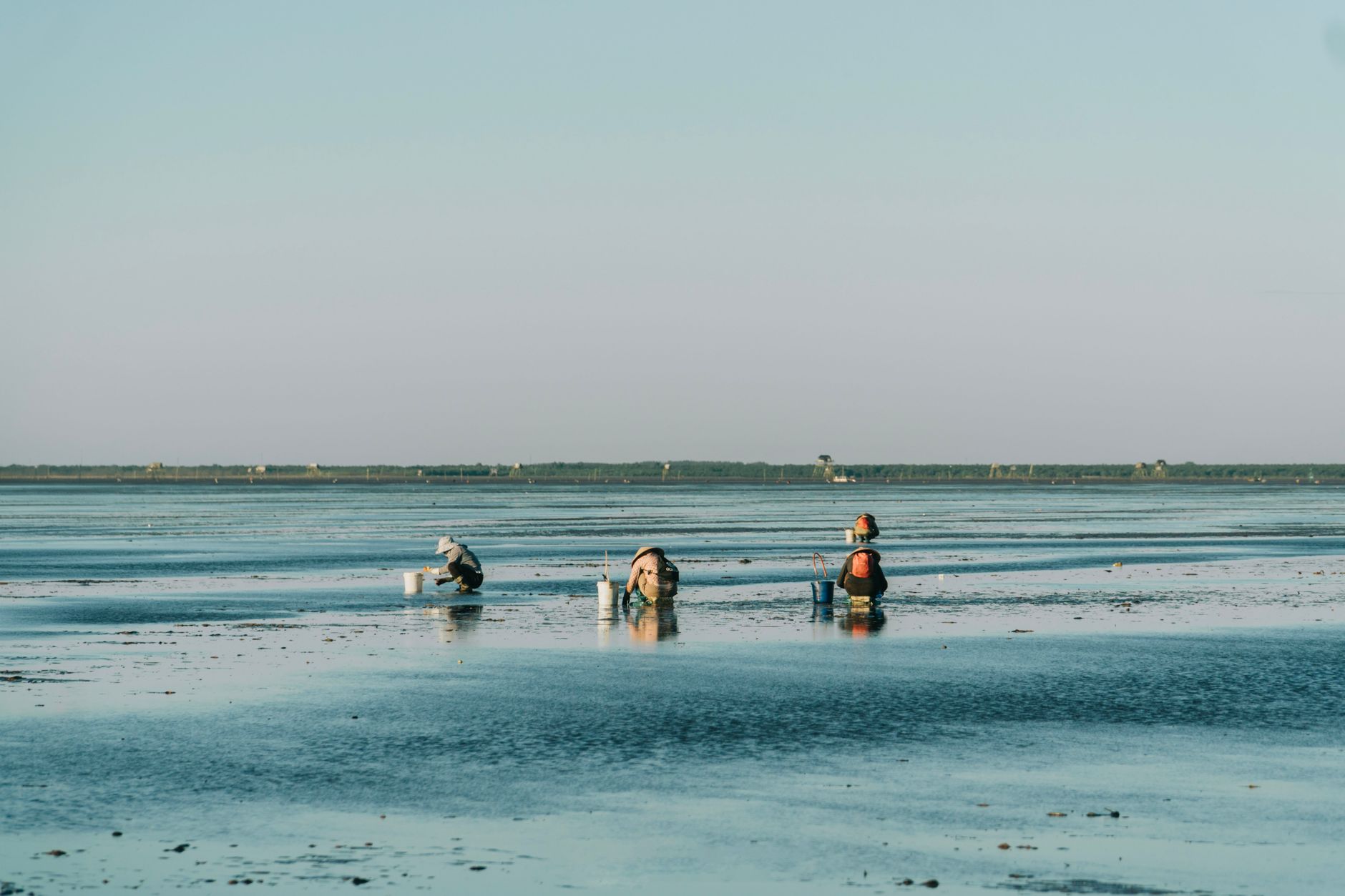

A clam bed that is under four feet of water is not a clam bed. It is a view.
Most of the shellfish worth digging on the American coast live below the level the tide reaches on an ordinary day, which means the entire activity depends on a handful of hours a year when the water pulls back further than usual. Those are minus tides, and learning to read them is the difference between a season and a hobby you keep meaning to start.
What a minus tide is
Tide predictions are given as heights above a reference level called a datum, and on American charts that datum is mean lower low water: the average of the lower of the two daily low tides, measured over a nineteen-year cycle.
A tide of plus two feet means the water stops two feet above that average. A tide of minus two feet means it keeps going, and pulls back two feet below it. Because the datum is an average rather than a floor, negative numbers are entirely normal, and the negative ones are where the shellfish are.
The practical translation is straightforward. A zero tide exposes the ground that is exposed on a typical low. A minus one exposes a strip beyond it. A minus two or lower exposes ground that spends most of the year underwater, which is where the geoducks, the horse clams and the better razor clam beds sit. The difference between a zero and a minus two is not twice as much beach. On a gently sloping flat it can be several hundred yards of new ground, and it is ground nobody has worked since the last big series.
Why the good ones cluster
Tides are driven by the moon and the sun, and the extremes happen when those two line up.
Spring tides, which have nothing to do with the season, occur around the new and full moon when the solar and lunar pulls reinforce each other, producing both higher highs and lower lows. Neap tides at the quarter moons are the flat weeks in between. So the useful digging days come in clusters of three or four around each new and full moon, and there is no point looking at the days between.
The moon's distance matters too. At perigee, the closest point of its slightly elliptical orbit, the pull is stronger, and a new or full moon that coincides with perigee produces the largest tides of the month. The largest of the year happen when this alignment also lands near an equinox or solstice, which is why the biggest exposures cluster in a small number of predictable windows.
The cruel part, on the Pacific coast, is when those windows fall. Through the winter the lowest tide of the day happens at night, and the extreme minus tides of December and January arrive in the dark, in the rain, at four in the afternoon or ten at night. In summer they swing to the middle of the day. Washington and Oregon razor clam seasons are largely a winter activity for exactly this reason, dug by headlamp, and the summer digs are the pleasant exception rather than the rule.
How to Read a Tide TableReading a tide table without getting caught
The number is only half of it, and the half people ignore is the timing.
Predicted heights are for a specific reference station, and your beach is not that station. A bay a few miles up the coast can differ by an hour in timing and by a meaningful amount in height, and using the wrong station is the most common way to arrive at the wrong time. Find the correction for the nearest subordinate station, or use a source that already applies it.
Predictions are also astronomical, not meteorological. A strong onshore wind or a low barometric pressure system can hold water on the beach and cost you a foot of exposure that the table promised. A high pressure system and an offshore wind can give you more than predicted. On a marginal tide, weather decides whether the ground you came for actually appears.
Work the tide down, not up. Arrive an hour and a half to two hours before the predicted low, start high on the flat and follow the water out, then leave when it turns. The temptation is to walk straight to the lowest ground and start there, which wastes the approach and puts you at the far edge of the flat at the exact moment the water begins moving back toward the beach.
The window is shorter than the arithmetic suggests
A tide cycle is roughly six hours down and six hours up, which sounds generous until you look at where the water actually is.
Tidal movement is not linear. The water moves slowly near the top and bottom of the cycle and fastest through the middle, in the pattern usually described by the rule of twelfths: about a twelfth of the range in the first hour, then two, then three, then three, then two, then one. The useful consequence is that the ground exposed by a minus tide stays exposed for a while either side of the low, so the productive window at the bottom is longer than a strict reading of the times would suggest.
The dangerous consequence is the middle hours. On a wide flat, the incoming water covers ground faster than you can comfortably walk during the third and fourth hours of the flood, and it does not come in as a neat advancing line. It fills channels and sloughs first and comes at you from behind and from the side. People are cut off on tidal flats every year, in the Pacific Northwest and in New England, and it is a genuine cause of drownings rather than a theoretical hazard.
How To Read Tide Charts 101Planning a season rather than a day
Add the constraints together and the number of usable hours in a year is smaller than most people expect.
Start with the days when the tide is low enough for the species you want. Remove the ones where the low falls in the dark, unless you are willing to dig by headlamp, which for razor clams you should be. Remove the ones where the beach is closed for biotoxin, which in a bad year is most of the autumn. Remove the ones where the season is shut. Remove the weather. What is left is frequently twenty or thirty good mornings spread across a year, and they are not evenly distributed.
Serious diggers plan around this rather than reacting to it. They mark the minus tide series for the whole year in advance, know which of those series fall at civilized hours, and treat those dates as fixed points to book around. Everything else on this list can change at short notice, but the tide is the one variable that is known years ahead and never moves.
That is also the practical case for having the pieces on one screen. The tide is predictable and the closure is not, the season comes from one agency and the beach ownership from another, and a good minus tide on a beach that turns out to be shut or private is a wasted drive. Guidepole carries the tide against the specific beach alongside its current closure status and the public-private ownership line, which is the combination that turns a promising number in a tide table into a trip worth making.
The species set the threshold
Different animals live at different heights, so how low a tide you need depends entirely on what you are after.
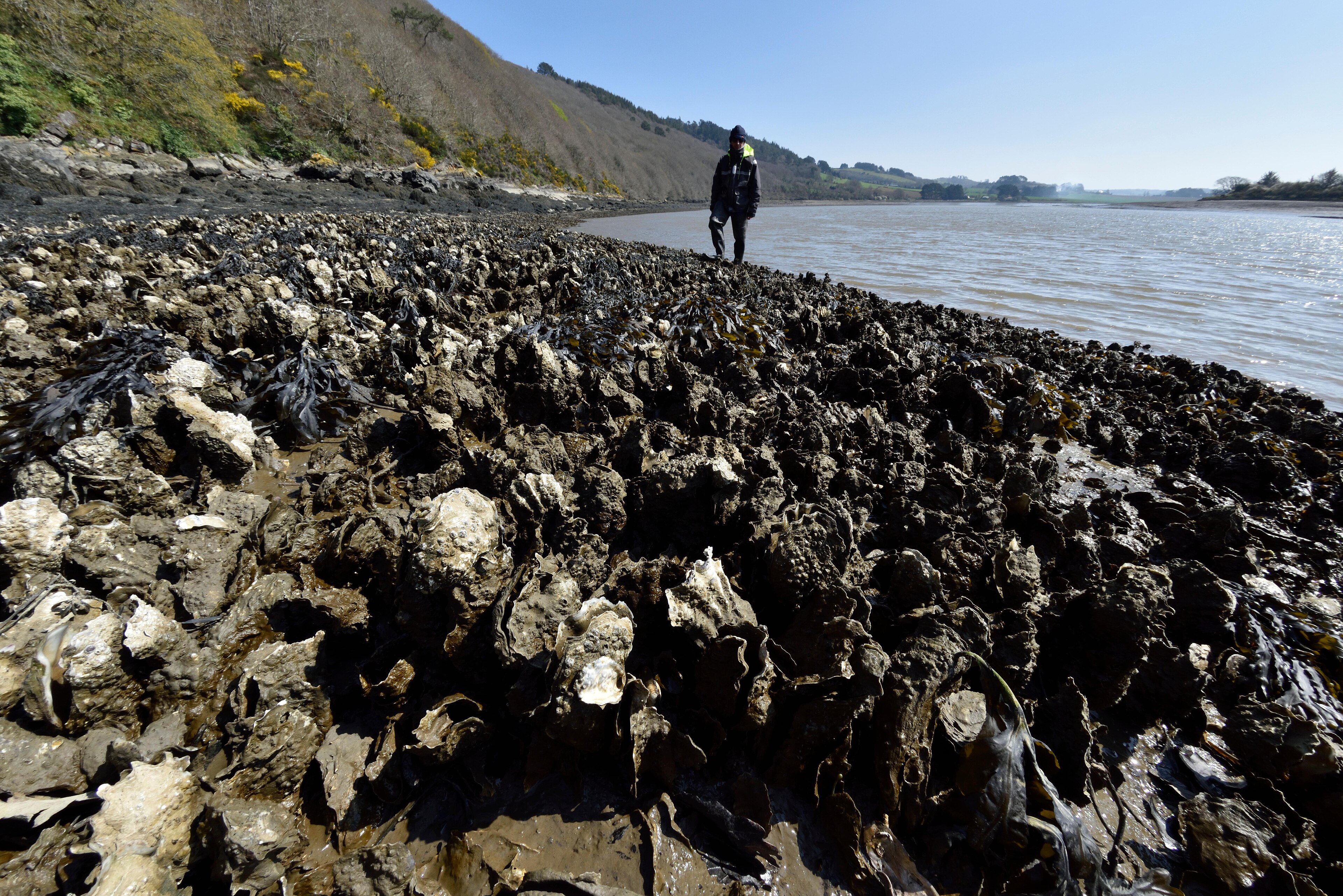
Oysters, mussels and manila clams sit relatively high on the beach and can be worked on an ordinary low of zero to plus one, which is why they are the accessible entry point and why they are dug most heavily. Butter clams and cockles sit a little lower. Horse clams and gapers want a genuine minus. Geoducks live at the very bottom of the intertidal and are realistically only reachable on a minus one and a half or lower, which is a few dozen tides a year and the reason geoduck digging is an occasion rather than an outing.
Razor clams are their own case, because they live on open surf beaches where the relevant number is the tide combined with the surf. A minus tide with a heavy swell running gives you less workable beach than the number promises and considerably more risk, and Pacific coast razor digs are called off for surf as well as for toxin.
Crabbing is the exception to all of this. Pots and rings work at any tide, which is why crabbing is the thing to do on the days the tide is wrong for digging, and why the two activities fit together well across a season.
The gear
A minus tide trip is defined by a window that closes, and every item here exists to keep you working inside it rather than scrambling at the end.
A headlamp with real spare batteries is first, and the batteries matter more than the headlamp. The best low tides of the year in the Northwest fall in December and January in full darkness, the second-best fall before dawn, and a headlamp that dies on a flat in the dark turns a good trip into a slow careful walk back.
A tide table corrected for your beach rather than for the reference station it was computed from. The correction is routinely thirty to sixty minutes and occasionally more, and an uncorrected table has you arriving as the water turns.
A watch you can read with gloves on, because the useful discipline is knowing the time without stopping, and the phone in a dry pocket under a rain shell is not that.
Waders, or boots serious enough for standing in cold water, since the productive band on a big minus tide is the part that is only briefly exposed.
A clam gun or tube appropriate to the species and legal on that beach.
A mesh bag you can carry without a free hand, because both hands are usually occupied.
And a cooler in the car with ice already in it, so the catch goes cold at the parking lot rather than after the drive.
Working the window safely
The rest of it follows from the timing rather than from the species, because most of the difficulty is that you are working in the dark, in the cold, at the far edge of a flat, against a clock.
Warmth and waterproofing are the part the gear list understates. This is wet work in December and hypothermia is more likely to end a dig than anything else. Then something to carry the catch that does not require a free hand, and a way to keep it cold on the way home.
And a watch you can read without taking a glove off, set against the turn of the tide rather than against dinner. The single habit that separates people who do this safely from people who get caught is that they decide when they are leaving before they start, and then leave then.
One last practical point. Tide predictions are astronomical rather than meteorological, which means they do not account for weather, and weather routinely moves the water by a foot in either direction. A strong low pressure system or a hard onshore wind will hold water on a beach and turn a predicted minus one into something closer to zero, which is the difference between a productive dig and a wasted drive. Check the forecast alongside the table, and treat a big storm surge as a reason to pick a different day rather than a reason to arrive early.
The short version
Minus tides are lows that fall below mean lower low water, and they are where the shellfish are. They cluster around the new and full moon, peak when that coincides with lunar perigee, and on the Pacific coast the biggest ones happen at night in winter.
Use a tide table corrected for your actual beach, not the nearest big port, and expect wind and pressure to move the real water off the prediction. Arrive ninety minutes to two hours early, work the tide down, and leave when it turns, because the flood covers a wide flat faster than you can walk during its middle hours.
The species sets the threshold: oysters and manilas on any low, geoducks only on a minus one and a half or lower. And crabbing works on any tide, which is what to do on the days the numbers are wrong.
Whether the beach is open is in shellfish biotoxin closures, whether you may dig it at all is in public tidelands and private beaches, and the gear rules for the crabbing days are in crab pot rules explained.
The species that most demands the big tides is in geoduck digging on Puget Sound, which is essentially a tide problem with a clam attached. The one that rewards a coastal minus tide instead is razor clamming the Washington coast, where the digs are scheduled around exactly these numbers and announced by the state. And the species you can reach on an ordinary low, which is worth knowing when the calendar refuses to cooperate, is in digging Manila clams on Puget Sound. Between the three, most of a year's tide series has something in it worth driving to.