Fish
Fish Fire
Fire Hike
Hike Bird
Bird


The clam most people in Washington dig is not from Washington.
The Manila clam arrived here by accident in the 1930s, mixed in with oyster seed shipped from Japan, and it turned out to be better suited to Puget Sound beaches than anything native. It now supports the region's largest recreational clam fishery and a substantial commercial one.
It is also the easiest shellfish to dig on this coast, which is why it is where nearly everybody starts.
Why it is the beginner's clam
Three things make Manilas the accessible option, and they compound.
They live shallow. A Manila sits in the top few inches of gravel and mixed sand, which means a rake or a garden fork reaches them and you are not excavating. Compare that with a geoduck at two or three feet down and it is a different activity entirely.
They do not run. Unlike razor clams, which dig away from you faster than most people can follow, a Manila has a short siphon and essentially no escape response. Once you have turned the ground over, the clam is simply there.
And they sit high enough on the beach that you do not need a big tide. A low of around zero to plus one exposes plenty of good Manila ground, so there are many usable days a year rather than a handful. The tide arithmetic is in minus tides for clamming.
Telling them from the native
Manilas share the beach with the native littleneck, and it is worth knowing which is which even though both are legal and counted together.
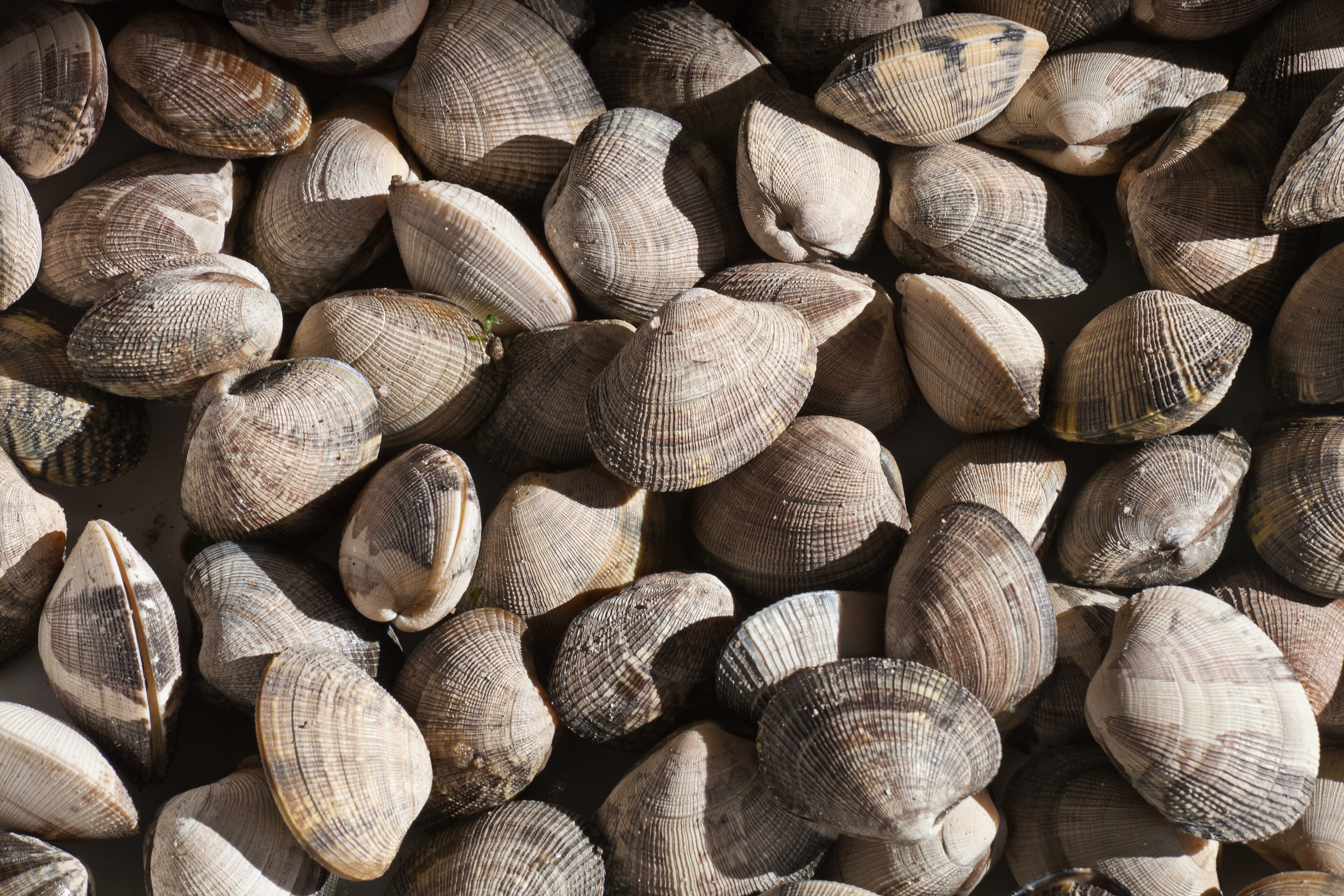
A Manila has a more oval, slightly elongated shell with strong crosshatched ridges, the concentric growth rings crossed by radiating ribs, and the shell often carries brown, tan or black patterning that varies enormously between individuals. The inside frequently shows a purple or yellow stain, and the siphons are fused for most of their length and split only at the tips.
A native littleneck is rounder and thicker, with a less pronounced crosshatch, a plainer chalky exterior and a white interior. Its siphons are separate rather than fused.
The practical difference is that natives tend to sit slightly deeper and lower on the beach, so a bed worked from high ground gives you mostly Manilas and one worked lower gives you more natives. Both are excellent eating and the rules treat them identically.
The rules
Washington's clam limits are generous by most standards and specific enough to be worth knowing precisely.
The daily limit is forty clams per person for Manilas, native littlenecks, butter clams and cockles combined, and the minimum size for Manila, native littleneck and butter clams is one and a half inches across the widest dimension of the shell.
Cockles changed. As of April 1, 2026, the minimum size for cockles is two and a half inches, up from one and a half, so a rule learned before that date is now wrong. This is a good general illustration: Washington's shellfish rules are revised annually and the current ones are the ones enforced.
Horse clams are a separate limit at the first seven dug, retained regardless of size or condition, and geoducks are their own thing entirely, covered in digging a geoduck.
Everyone needs a shellfish or combination license, and each person digs and keeps their own limit in their own container.
How to Harvest Manila ClamsFilling the hole
This is the rule people skip and it does more damage than undersized clams.
Every hole you dig has to be filled in before you move on. That is not tidiness either. A clam left exposed on the surface is eaten within minutes by gulls and crabs, and a hole left open exposes the clams in its walls and changes the drainage of the flat around it. Beaches worked hard by diggers who do not refill visibly decline.
Undersized clams go back into the hole they came from, at depth, and get covered. Not tossed onto the surface, which is a death sentence, and not left in a bucket while you decide.
Work systematically rather than randomly. Dig a section, refill it, move on. Digging scattered holes across a wide area does more damage per clam than working one patch properly.
The gear
Manila clamming has the lowest equipment threshold of any shellfishery on this coast, which is most of why it is where people start.
A clam rake or a four-tine garden cultivator is the tool. Manilas sit in the top few inches of gravel and mixed sand, so this is a turning-over job rather than an excavation, and a short-handled cultivator does it as well as anything sold as a clam rake.
A bucket per person is a legal requirement rather than a convenience, because each digger keeps their own limit separately and it is checked. Forty clams is also more than most people expect to carry back up a beach.
A gauge matters more than it used to. One and a half inches for Manilas, native littlenecks and butter clams, and two and a half for cockles since April 2026, which is the change most likely to catch out somebody working from memory.
Gloves are worth bringing for barnacles, broken shell and cold gravel, and there is a second reason: a cut in seawater is the route in for the rarer and more serious Vibrio infections.
Boots with grip beat waders here, because Manila ground is wet cobble and gravel at an angle rather than sinking mud, so this is a slip-and-fall beach.
Then a second bucket, filled with clean seawater on the way off the flat, for purging. Manilas purge well, which razor clams do not, and a few hours in seawater is the difference between good clams and gritty ones.
And the state public beach list, downloaded before you go, because ownership is the hard question in Washington and signal at a beach access is unreliable.
Where to dig
The beach type is specific and once you know it you can read a shoreline from the parking lot.
Manilas want mixed gravel, small cobble and coarse sand, in the upper half of the intertidal, on protected water rather than exposed surf. Pure fine mud is generally poor and pure sand is generally poor. What you are looking for is that mixed, slightly loose, gravelly ground, often with a scatter of broken shell in it.
Signs are readable. Small holes or dimples in the surface are siphon holes, though they are less obvious than razor clam shows. Broken shell in the beach material tells you clams live or have lived there. And a beach that has clearly been dug before, with the refilled depressions still visible, is a beach with clams in it.
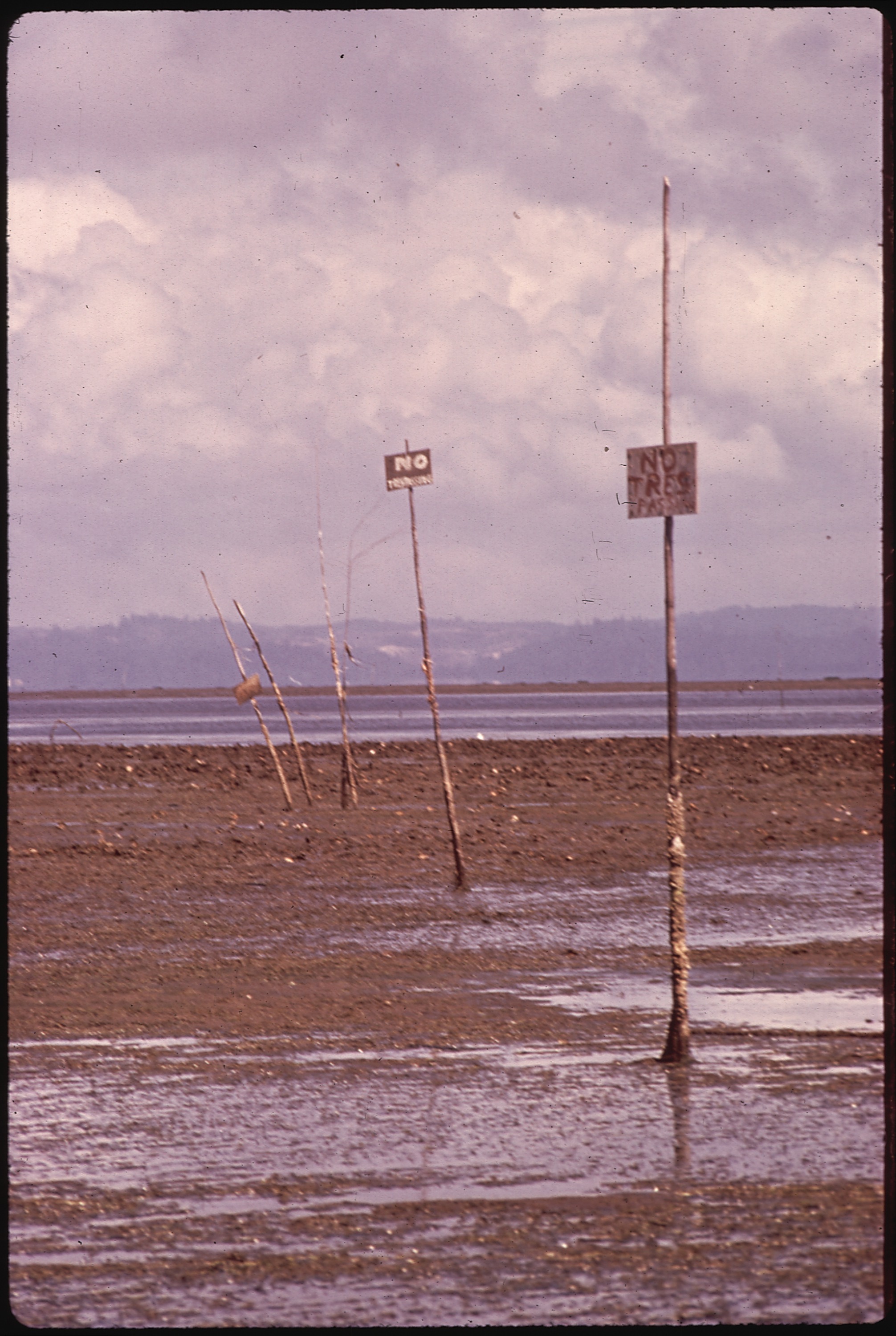
Puget Sound, Hood Canal and the San Juans all hold good Manila ground. The state's public beach list is the place to start, and it matters here more than almost anywhere, because Washington sold roughly seventy-one percent of its tidelands and the clams on a private tideland belong to the owner. That whole problem is in public tidelands and private beaches.
Where the beds came from
The Manila clam's arrival is a good illustration of how much of this coast's shellfish situation is accidental.
Oyster seed shipped from Japan through the 1920s and 1930s carried other organisms with it, and Manila clams were among them. Nobody imported them deliberately. They established quietly in Puget Sound, spread through the warmer inlets over the following decades, and by the second half of the century had become abundant enough to support both a recreational fishery and a commercial one.
They succeeded partly because they occupy a slightly different niche from the native littleneck: a little higher on the beach, a little more tolerant of warmth, and faster growing. So rather than displacing the native, they largely filled ground the native was not using heavily, which is why both species are still common on the same beaches.
The same shipments brought the Pacific oyster deliberately and the varnish clam and several other organisms accidentally, which is covered in the oyster on your plate came over on a steamship. A great deal of what a Washington beach digger takes home descends from those crates.
Enhanced beaches, and why some beds keep producing
Some Washington public beaches are actively seeded, and knowing which changes where you go.
The state and its partners plant hatchery-reared Manila clam seed on a number of heavily used public beaches, specifically to keep them productive under recreational pressure that would otherwise strip them. That is why certain beaches have short, intense seasons and then close: the season is set against a survey of what is actually there, and the beach is rested and sometimes reseeded.
The practical consequence is that beach seasons are not arbitrary bureaucracy and they are not permanent. A beach that was open for six weeks last year may open for two this year, or not at all, depending on what the survey found. That schedule is published annually.
It also means the ground you are digging on some beaches is a managed resource rather than a wild one, which is a reasonable argument for filling your holes and returning undersized clams properly even when nobody is watching.
Three separate checks before you go
The Manila fishery is easy. Establishing that a given trip is legal is the part that takes work.
Is the beach public, and where does the public section end? Is it open, meaning the seasonal schedule for that specific beach, which differs between beaches and is published annually? And is it currently closed for biotoxin, which moves independently of everything else and can change the same day?
Those are three answers from two agencies plus a county-level ownership question. Guidepole carries the ownership boundary, the beach season and the current closure together against the specific beach, which on a shoreline where the next two hundred yards may be private, shut, or both is the difference between a morning and a drive. The closure framework is in shellfish biotoxin closures.
Cooking them, and the one mistake
Manilas are the most forgiving clam on this coast at the stove as well as on the beach, and there is exactly one way to ruin them.
Steam them. A little wine or water, garlic, butter, a lid, and three to five minutes over a decent heat until they open. Discard any that stay shut. Then use the liquor, because that is where most of the flavor went, and a plate of clams served without the broth has thrown away the better half.
The mistake is cooking them too long. A Manila is done the moment it opens, and every extra minute after that turns it tougher. Clams that open early can be lifted out while the stragglers finish, which is fussier than most people bother with and produces noticeably better results.
They also take to almost anything: white wine and parsley, sake and ginger, chorizo and beans, coconut and chili, or straight into a vongole. They are small enough that they cook faster than most things you would put them with, so they go in last.
What else is on the same beach
A Manila dig rarely produces only Manilas, and knowing what else is coming up is worth an evening.
Native littlenecks come up in the same ground and count in the same limit. Butter clams sit deeper and lower, and they carry a different toxin risk that is covered in butter clams and PSP. Cockles sit shallow and are easy to spot by their strongly ribbed, almost heart-shaped shell, and their minimum size changed in 2026.
Horse clams and geoducks live lower and deeper still, on their own separate limits. Varnish clams, another accidental introduction, are abundant in some inlets and sit shallow in muddier ground; in Washington they carry no minimum size but still count inside the same forty-clam aggregate as everything else.
Then there is everything you are not there for: moon snails, sand dollars, crabs of several species, and the occasional sea star. None of that is your business on a clam dig, and turning it over and putting it back where it was is the whole etiquette of working a flat.
Manila Clam Forage & Feast (Digging & Cooking Clams on the Beach)Purging and cooking
Manilas are the most forgiving shellfish on this coast at every stage including this one.
They purge well, which razor clams do not. A few hours in clean cold seawater in a bucket lets them spit out the grit, and changing the water once improves it. Never fresh water, which kills them without purging. A little cornmeal in the water is a traditional addition and the evidence for it is mixed.
They keep well too. Live Manilas hold for days in a refrigerator in an open container under a damp cloth, never sealed and never submerged. Discard any that gape and stay open when tapped.
And they cook in minutes. Steam with wine, garlic and butter until they open, discard any that did not, and use the liquor. That is the whole thing, and it is a large part of why this is the clam that got a generation of Northwest families onto a beach.
The short version
The Manila clam arrived from Japan in the 1930s as an accidental passenger with oyster seed and became the most-dug clam in Washington.
It is the beginner's clam because it sits in the top few inches, does not run, and lives high enough that an ordinary low tide exposes it.
Forty per person per day across Manilas, native littlenecks, butter clams and cockles, at a one and a half inch minimum for the first three. Cockles went to a two and a half inch minimum on April 1, 2026.
Fill every hole and return undersized clams to the bottom of it. This matters more than the size limit does.
Check three things: the beach is public, the season is open for that beach, and it is not closed for biotoxin. Three answers, two agencies, all of them changeable.