Fish
Fish Fire
Fire Hike
Hike Bird
Bird

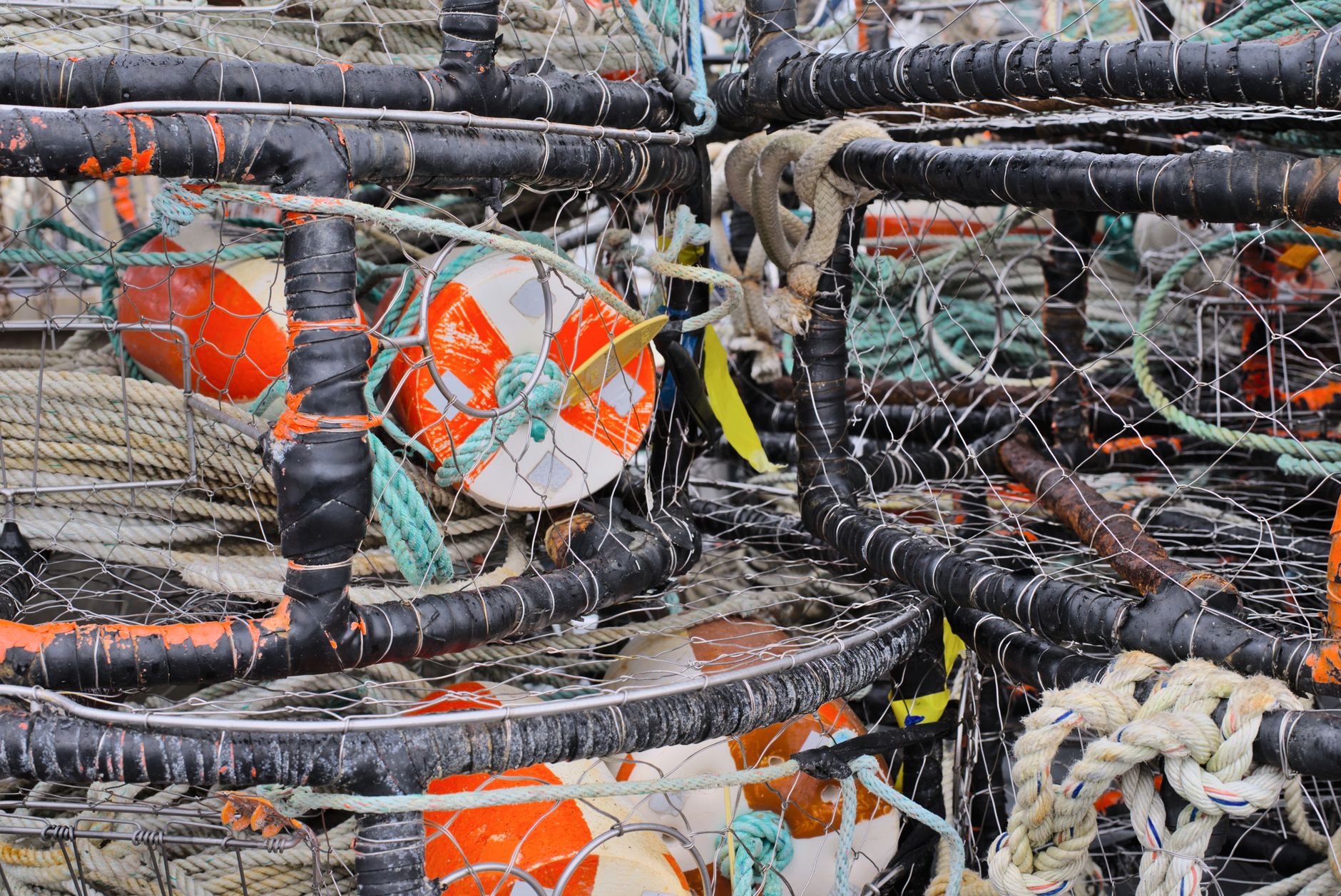
Almost every crab regulation that looks like pointless bureaucracy exists because of one problem: a pot that is lost keeps working.
It sits on the bottom, it catches crab, the crab die, the dead crab bait the pot, and it catches more. Left alone with a solid lid and a healthy mesh, a single lost pot can run that cycle for years. Estimates of derelict gear in Puget Sound alone have run into the thousands of pots, and recovery programs have pulled up gear still full of crab a decade after it went over the side.
Every rule below is an answer to that, or to the closely related problem of a fishery that fails when you take the wrong animals.
Escape rings, which are not optional and are frequently wrong
The rule in Washington is two escape rings of at least four and a quarter inches inside diameter, set in the upper half of the pot. On the Columbia River the minimum is four inches. Undersized crab find them and leave; legal crab largely do not.
The failure mode here is not defiance, it is neglect. Rings corrode, get bent, get painted over, or came undersized from a manufacturer selling into several states with different minimums. A pot bought secondhand or inherited is the usual offender. Measure the inside diameter with calipers or a drill bit rather than trusting the packaging, and put them in the upper half, because a ring low on the wall sits below the crab and does nothing.
Two other gear specifications travel with them: minimum mesh of one and a half inches, and a maximum pot volume of thirteen cubic feet.
Rot cord, and why it has to be the cheap kind
This is the rule that actually solves the derelict gear problem, and it is the one people get wrong most often, usually by using cord that is too good.
The requirement is a biodegradable device that will fail and open the pot after the gear is lost. Washington accepts three configurations: a single loop of rot cord securing the pot lid hook or tie-down strap, a three by five inch escape panel in the upper half of the pot sewn closed with rot cord, or attaching the lid or one side of the pot with no more than three single loops of cord.
The cord itself must be untreated one hundred percent cotton or another natural fiber such as hemp, jute or sisal, no larger than thread size 120. Waxed cotton is not untreated. Cotton-wrapped synthetic is not cotton. Anything sold as marine-grade, weather-resistant or long-lasting is exactly wrong for this application, because the entire function of the part is that it rots.
Replace it every season. A rot cord doing its job is a rot cord that is visibly degrading, and one that still looks new after two years of soaking is one that failed the design requirement while passing a glance.
Crab Pot Basics: How to Set Up Your Crab PotsBuoys, and the name on them
An unattended pot has to be findable and attributable, and the marking rules do both.
In Washington, crab gear buoys must be half red and half white, with both colors visible while fishing, and marked with the owner's first and last name and permanent address. A phone number is voluntary and worth adding, because it is what lets somebody who finds your gear return it rather than report it.
The color scheme is not decoration. It distinguishes recreational crab gear at a distance from commercial gear, from navigation marks, and from the several other things that float on a line in Puget Sound, and enforcement uses it to know which rule set applies to what they are looking at.
Get the line length right and weight it. Too short and the buoy submerges on a flood tide, which loses your gear and, worse, leaves an unmarked pot on the bottom. Too long and the slack floats on the surface where propellers find it, which is how gear gets cut loose in the first place. Sinking line or a weighted section near the buoy keeps the slack down.
The gear
Almost everything in this article is a rule, and most of the rules attach to a specific object. That makes the gear list unusually literal here.
Calipers, or a drill bit of the right diameter, to check escape rings. A ring that came on the pot from the factory is not evidence of compliance, rings deform, and a ring measured with a gauge is a thirty-second check that answers the single most commonly cited violation on the water.
A spool of untreated cotton rot cord, and it has to be the cheap untreated kind. Coated or synthetic cord will not rot, which is exactly what the requirement exists to make happen if the pot is lost.
A half-red, half-white buoy with your name on it, marked the way your state specifies, because a buoy is how a pot is legally yours and an unmarked one is abandoned gear.
Sinking line, or at minimum a weighted section near the buoy, so floating slack does not sit at propeller depth in a channel.
A crab gauge, used on every crab, on the boat, before it goes in the box rather than after.
A cooler with a wet towel and a little ice rather than standing water, since crab held in fresh meltwater die and crab that die before cleaning are not worth keeping.
And bait that stays put in a container rather than loose. Loose bait is gone in twenty minutes to whatever finds it first, and a pot fishing without bait is a pot soaking for nothing.
Measuring, and the two mistakes everyone makes
Size limits are the other half of a fishery that keeps working, and crab are measured in a way that is easy to do wrong.
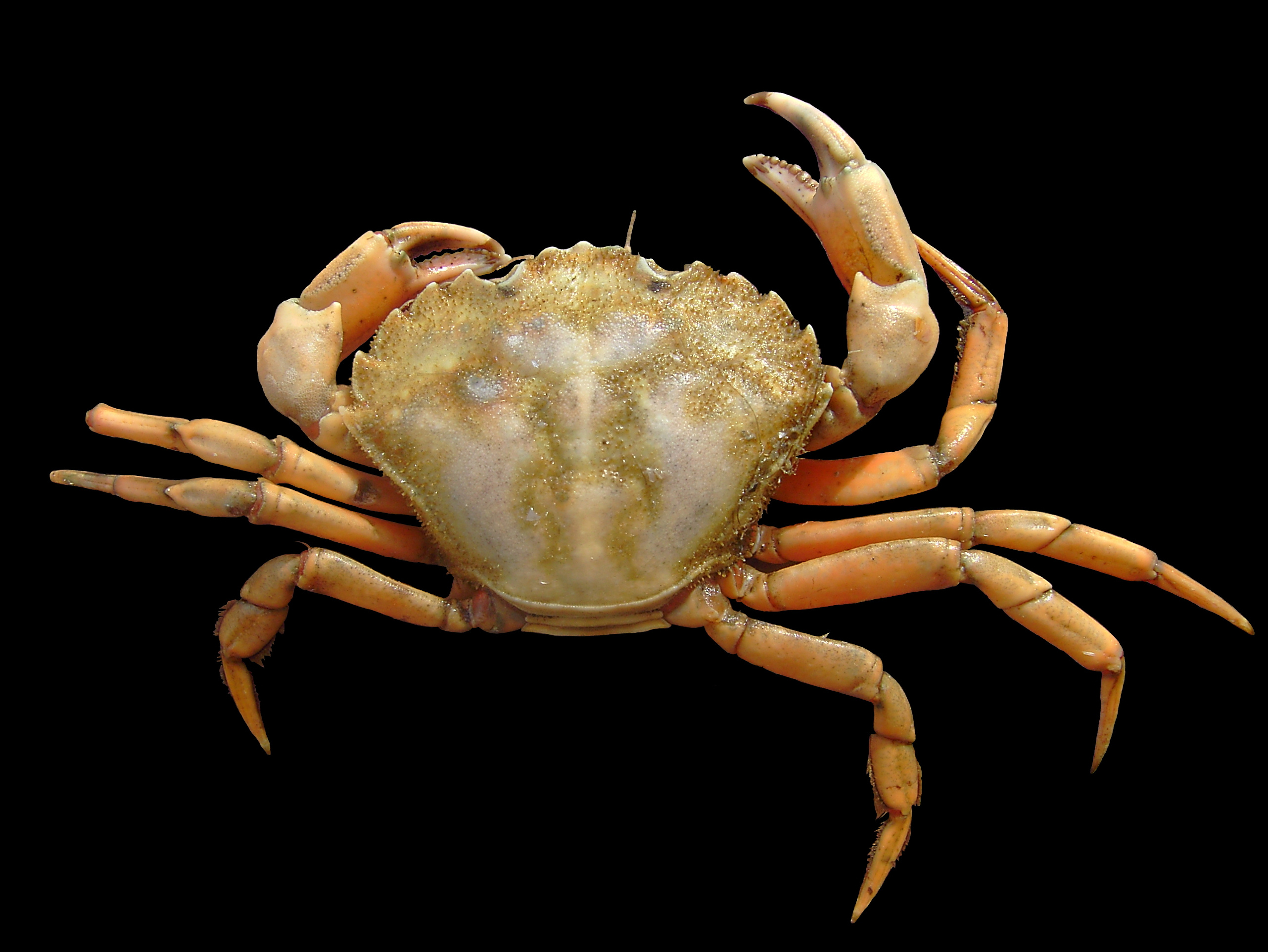
A Dungeness is measured across the widest part of the shell, in a straight line, immediately in front of the points at the outside tips. Not including the points. Not around the curve. The difference between measuring to the tips and measuring in front of them is enough to turn a legal crab into an illegal one, and it is the most common honest error on the water.
The second mistake is sex. Recreational Dungeness fisheries on the Pacific coast are male-only, and the identification is on the underside: males have a narrow, pointed abdominal flap, females a broad rounded one. It is not subtle once you have seen both, and it is worth deliberately looking at a female early so you know the difference rather than guessing in the dark with cold hands.
Carry a gauge, use it on every crab, and measure before you decide rather than after. Returning a crab is free. The penalty for a short one is not.
Soft shells, and why you should put them back anyway
Crabs grow by molting: they shed the entire shell and expand, then spend weeks hardening the new one. A crab caught soon after molting is legal if it is legal size, and it is a poor animal to keep.
A soft crab is mostly water. The meat yield is dramatically lower, the texture is poor, and the animal is far more likely to die from handling. Press the shell just behind the widest point: a hard crab is rigid and a recently molted one gives. Some states regulate this directly and others leave it to judgement, but the practical case for putting soft crab back is that you get more crab later for no cost now, since the same animal will be worth keeping in a month.
The molt cycle is also why seasons fall where they do. Crab seasons are largely set around molting and mating so that the fishery takes hard-shelled males outside the period when the population is most vulnerable, which is why an area can be closed when the crab are obviously there.
How to Attach Lines to Crab Pot and BuoysSoak times, tending, and losing gear
The rules on how long gear may sit vary by state and area, and the reasoning is the same throughout: unattended gear is gear that becomes derelict.
Where pots must be tended or removed daily, that is a rule about loss rather than about fairness. Where overnight soaks are permitted, the risk transfers to you, and a pot left through a tide change and a weather shift is a pot that may not be there in the morning.
The practical measures are unglamorous. Note the position rather than trusting the buoy to still be visible. Watch the tide, because current lays buoys flat and drags gear. Do not set in a marked channel or a ferry lane, which is both dangerous and a reliable way to have your gear cut. And if you lose a pot, report it: most Pacific coast states have a derelict gear reporting program, recovery is free to you, and the alternative is your pot fishing on its own for the next several years.
The rules change by a line you cannot see
The specifics above are Washington's, and the reason to say so explicitly is that they are not universal. Ring diameters, rot cord specifications, buoy colors, pot limits, size minimums and whether females may be kept all differ between Washington, Oregon, California and Alaska, and they differ again between Puget Sound and the coast within Washington itself.
Marine areas are the practical unit, and their boundaries are lines on a chart rather than features on the water. A boat can cross from one area into another in ten minutes and move from an open season to a closed one, from a seven-crab limit to a five, and from one set of gear specifications to another, with nothing visible to mark the transition. Add the biotoxin closures, which apply to crab viscera during a domoic acid event and move independently of everything else, and the number of separate things that have to be true at once is larger than it looks.
That is the case for carrying it on the map rather than in your head. Guidepole shows the marine area boundary and its current rules under the water you are on, alongside the closure status, which on a fishery where the boundary is invisible and the rule changes across it is more use than the summary you read at the dock.
Handling what you keep
The last part is the part that determines whether the trip was worth it, and it starts the moment the pot comes up.
Keep crab cool and damp, not submerged. A cooler with a wet towel and a little ice, drained so they are not sitting in fresh water, will hold live crab for hours. Fresh water kills them and so does a sealed bucket. Crab that die before cooking spoil quickly and begin breaking down almost immediately, which is why the standard advice is to cook them live or clean them immediately after dispatch.
During a domoic acid event, the guidance on the Pacific coast is to clean crab and discard the viscera, the soft material sometimes called the butter, because that is where the toxin concentrates. The meat is generally fine when the animal is cleaned. This is the one case where discarding the guts is a real answer rather than folk wisdom, and it does not transfer to clams.
One habit worth adopting from the commercial side: log your sets. A note of where each pot went, when it went in, what the bait was and what came out takes thirty seconds and turns a season into data rather than a series of impressions. Crab move with the season, the tide stage and the bottom, and the pattern only becomes visible across a dozen trips. It is also the fastest way to find out that the spot everybody recommends is worse than the unremarkable patch of bottom four hundred yards away that nobody bothers with.
The short version
Two escape rings of at least four and a quarter inches, in the upper half of the pot. Rot cord of untreated natural fiber, replaced every season, because a pot that cannot rot open fishes forever once you lose it. A half-red, half-white buoy with your name and address on it.
Measure across the shell in front of the tips, not to them, and keep males only where that is the rule. Put soft crab back because they are worth more later. Know which marine area you are in, because the rules change across a line you cannot see.
And report lost gear. Recovery programs exist, they are free, and the pot you leave down there does not stop.
Whether the water is open at all is covered in shellfish biotoxin closures, where you may legally be is in public tidelands and private beaches, and the tides that matter for the digging half of this are in minus tides for clamming.
The practical version of these rules on a specific fishery is in Dungeness crabbing on Puget Sound, and the East Coast equivalent, where the gear tradition is different and the trotline does much of the work a pot does out west, is blue crab on the Chesapeake. Shrimp pots run under a related but separate set of rules, covered in spot prawns on Puget Sound.