Fish
Fish Fire
Fire Hike
Hike Bird
Bird

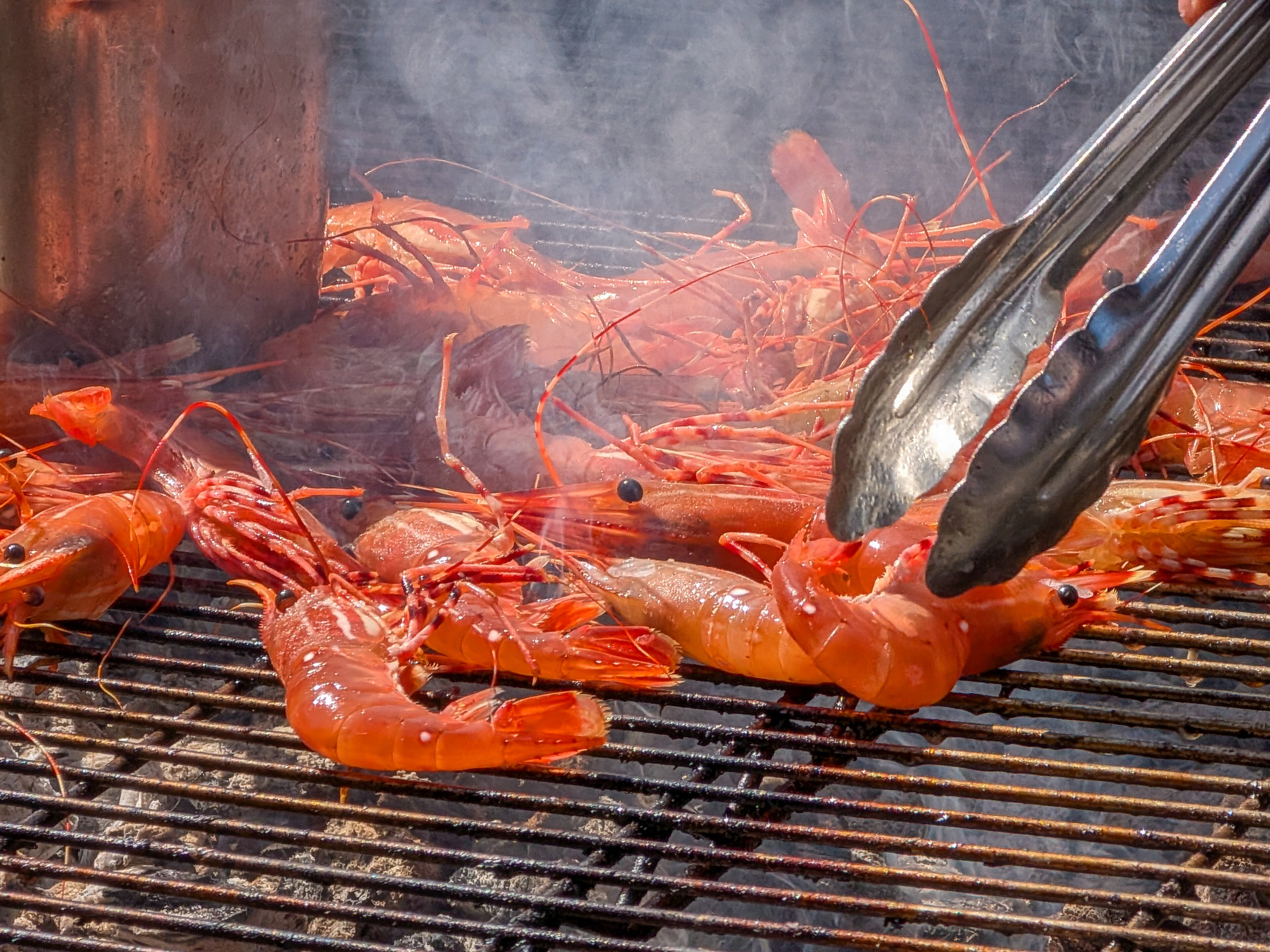

Puget Sound has a fishery that opens for a few hours on a handful of days in May and produces the most concentrated boat traffic on the water all year.
Spot shrimp live three hundred feet down, the season is announced days at a time by marine area, and when it opens everybody who owns a pot is over the same ground at the same moment.
It is the shortest, sharpest recreational season in Washington, and the planning matters more than the technique.
What you are actually fishing for
Pandalus platyceros is the largest shrimp on the American west coast and the reason people put up with the logistics.
They are unmistakable: reddish brown with white spots on the first and fifth abdominal segments, white bars on the carapace, and a size that makes every other local shrimp look like bait. A good one fills a hand.
They are also protandric hermaphrodites, which is a relevant piece of biology rather than trivia. Every spot shrimp begins its adult life as a male, spawns as a male for a season or two, then transitions and spends the rest of its life as a female. That means the largest animals in any population are all females carrying the reproductive future of the stock, which is precisely why the season is short, the quota is small, and the fishery is managed as tightly as it is.
The season, which is the whole problem
There is no long season to plan around. There is a small number of announced days.
Openings typically begin in the middle of May and run day by day, marine area by marine area, with some areas adding dates into June and early July and some areas not opening at all in a given year. Hood Canal sometimes gets an earlier opportunity than the rest of the Sound. The dates are set annually against a quota, and once an area's share is taken it closes, sometimes after a single day.
That structure means a spot prawn trip cannot be planned the way a crabbing trip can. You watch for the announcement, you take the day off, and you go. Anyone who treats it as a season rather than an event misses it.
The daily limit across Puget Sound is eighty spot shrimp per licensed fisher, with a combined ten pound total for all shrimp species. During announced spot shrimp openings only larger mesh gear is permitted, one inch, which is a deliberate selectivity rule: the mesh lets the small non-target shrimp out and means most of what you keep is what the season is for.
Three hundred feet of line
The depth is what separates this from every other recreational shellfishery in the region, and it is a genuine equipment problem.
Spot shrimp concentrate in deep water on steep, rocky, structured bottom, commonly somewhere between two hundred and three hundred feet and sometimes deeper. Everything about the rig follows from that. You need enough line for the depth plus a generous allowance for current, which in practice means four hundred feet or more on a spool for a three hundred foot set.
You need a buoy with enough flotation to stay visible with that much line and weight below it, and you need weight in the pot, because a light pot in a tidal current does not go where you put it and does not stay there. Twenty to thirty pounds is normal and it feels absurd until the first time you set in moving water.
And you need a way to get it back. Hauling three hundred feet of line and a weighted pot by hand, several times, is hard work, and most people who do this more than once buy a puller. A powered or manual line hauler is the difference between a pleasant morning and an ordeal, and it is the single best money spent in this fishery.
Spot Prawn Shrimping Tips in Puget SoundFinding the bottom
Spot shrimp are not spread evenly across deep water. They stack on specific structure and the difference between the right spot and a hundred yards away is total.
What you are looking for is steep, hard, complex bottom: rock walls, boulder fields, the edges of underwater canyons, ledges and the transitions where a slope steepens. Soft flat mud at the right depth generally holds nothing. A chartplotter with good bathymetry and a sounder that shows bottom hardness is the practical tool, and reading contour spacing to find the steep ground is the skill.
Because the productive ground is small, well known and heavily fished on opening day, the boats concentrate. That is useful information for a newcomer and it is also the source of the day's main hazard, which is a lot of vessels working gear in a small area with three hundred feet of line under each buoy.
Marine area boundaries matter here as much as they do for crab, and more, because the openings differ between adjacent areas and an area can be open while its neighbor is not on the same day. Guidepole carries the marine area boundary and its current status against the water you are on, which in a fishery where a single day's opening is the whole opportunity is worth more than a printed regulation summary from March.
Opening day, and how not to be a problem on it
The concentration of boats on a spot prawn opener is the part nobody warns newcomers about, and it is worth planning around rather than discovering.
Dozens of boats work the same known ground, each with several buoys and three hundred feet of line hanging under each one. Propellers and shrimp line find each other easily, and a cut line means a lost pot on the bottom and somebody else's morning ruined. Idle through the fleet, give buoys a wide berth rather than threading between them, and approach your own gear from downcurrent so the line comes vertical before you haul.
Set early and set apart if you can. The obvious pinnacle that everybody knows will be covered in gear an hour after the opener, and a slightly less famous piece of steep rock frequently fishes just as well with room to work. That is a chart-reading exercise done the week before rather than a decision made at speed on the day.
Setting and soaking
The mechanics reward being organized, because everything happens fast on a short opening.
Bait matters more here than in crabbing, because you are asking shrimp to find a small target in deep, dark water. Oily commercial shrimp bait, cat food punched with holes, fish scraps and mackerel all work, and a bait jar or a mesh bag inside the pot keeps it releasing scent rather than being consumed in the first ten minutes.
Set with the current rather than fighting it, and allow for the pot moving as it descends. Three hundred feet of line in a running tide does not go straight down, and the pot lands well away from where the boat was when it went over.
A soak of forty-five minutes to a couple of hours is typical, and longer is not necessarily better. On a short opening, more sets in the productive window generally beats fewer long soaks, so the pattern that works is to set several pots, work them in rotation, and keep moving until you find the depth and structure that are producing.
The gear rules
Shrimp pots carry their own specifications, and they are not the crab rules.
Pot dimensions, mesh size, the number of pots per fisher and the buoy marking requirements are all specified, and during announced spot shrimp openings the one inch minimum mesh applies. Buoys must be marked with the owner's name and address, and the same practical wisdom about line length, weighting and slack applies here as in crabbing, with more urgency because there is more line and more current.
Biodegradable escape mechanisms apply to shrimp pots as they do to crab pots, and for the same reason: gear lost in three hundred feet of water is gear nobody is going to recover casually, and a pot that cannot rot open keeps fishing. The general reasoning is in crab pot rules explained, and the specific numbers for shrimp differ, so read the shrimp rules rather than assuming.
The other shrimp, and the non-spot seasons
Spot shrimp are the headline and they are not the only legal shrimp in Puget Sound, which matters because the non-spot seasons are longer and far less crowded.
Coonstripe shrimp are the main alternative, smaller than spot shrimp and often abundant, found shallower and on somewhat different bottom, frequently in the fifty to two hundred foot range. Pink and dock shrimp round out the group. These fisheries generally open after the spot seasons close, run for weeks rather than days, and use smaller mesh gear, because the selectivity rule that protects spot shrimp is no longer the point.
The practical value of knowing this is that a person who buys the gear for one four-day spot season and then puts it away is wasting it. The same pots, line and hauler fish a considerably longer non-spot season with nobody else on the water, and coonstripe are good eating even if they are half the size.
Limits differ, the ten pound combined weight cap still applies across all shrimp species, and the areas and dates are announced separately. As with everything else here, it is worth reading the current rule rather than assuming the spot rules carry over.
Spot Shrimp Opening Day in Puget Sound: Catch, Clean and CookHandling, because they spoil fast
Spot shrimp begin degrading almost immediately after death, and the difference between good handling and casual handling is enormous.
The enzyme that softens the tail meat is concentrated in the head, so the standard practice is to head them on the boat, immediately, and get the tails onto ice. Shrimp that sit whole in a bucket in the sun for two hours are noticeably worse than shrimp headed within minutes, and this is the single biggest factor in how they eat.
Ice, not fresh water. A cooler with plenty of ice and a drain, so the tails are chilled rather than soaking. If you intend to eat them raw, which is worth doing at least once because a fresh spot prawn is exceptional, that handling is not optional.
Keep the heads if you cook. They make the best shellfish stock available on this coast, and throwing them away is the most common waste in the fishery.
Cooking them
A spot prawn is not a shrimp you treat like a shrimp, and the difference starts before the pot.
Head them at sea if you are not eating them within a few hours. The enzyme that turns the meat mushy lives in the head, it works fast in a warm cooler, and a prawn beheaded on the boat and iced immediately is a different animal from one that rode home whole in the sun. If you are eating them raw that night, leave the heads on and keep them alive in circulating cold seawater instead.
Cook them briefly. Ninety seconds in salted boiling water is enough for a large one, and the failure mode is universally overcooking rather than under. The meat should still be slightly translucent at the center when it comes out.
Save the heads. Roasted and simmered, they make the best shellfish stock available on this coast, and throwing them away is the most common waste in the fishery.
And try one raw, once, within an hour of the pull. It is sweet, faintly firm and nothing like a cooked prawn, and it is the reason people get up at four in the morning for a fishery that gives them one day.
The short version
A handful of announced days in May, by marine area, against a quota, and an area can close after one day. Watch for the announcement rather than planning a season.
Eighty shrimp per licensed fisher, ten pounds combined for all shrimp species, and one inch minimum mesh during spot openings, which is a selectivity rule rather than a nuisance.
They live at two to three hundred feet on steep rocky structure, so bring four hundred feet of line, a heavily weighted pot, a buoy with real flotation, and a hauler if you value your shoulders.
Head them on the boat and ice the tails immediately, because the enzyme that ruins the meat is in the head. Keep the heads for stock.
And remember what you are catching: every large spot shrimp in the pot is a female, which is why the season is four days long instead of four months.
Whether the water is open on biotoxin grounds is a separate check, covered in shellfish biotoxin closures, and the crab fishery that shares this water and most of this gear thinking is in Dungeness crabbing in Puget Sound.
The other pot fishery in the same water, running under related but separate gear rules, is in Dungeness crabbing on Puget Sound and red rock crab on Puget Sound. The rules governing the pots themselves are in crab pot rules explained, and the licensing across state lines is in shellfish licenses by state. For the contrast with a shrimp fishery that closed and has not reopened, see the Maine shrimp moratorium.