Fish
Fish Fire
Fire Hike
Hike Bird
Bird

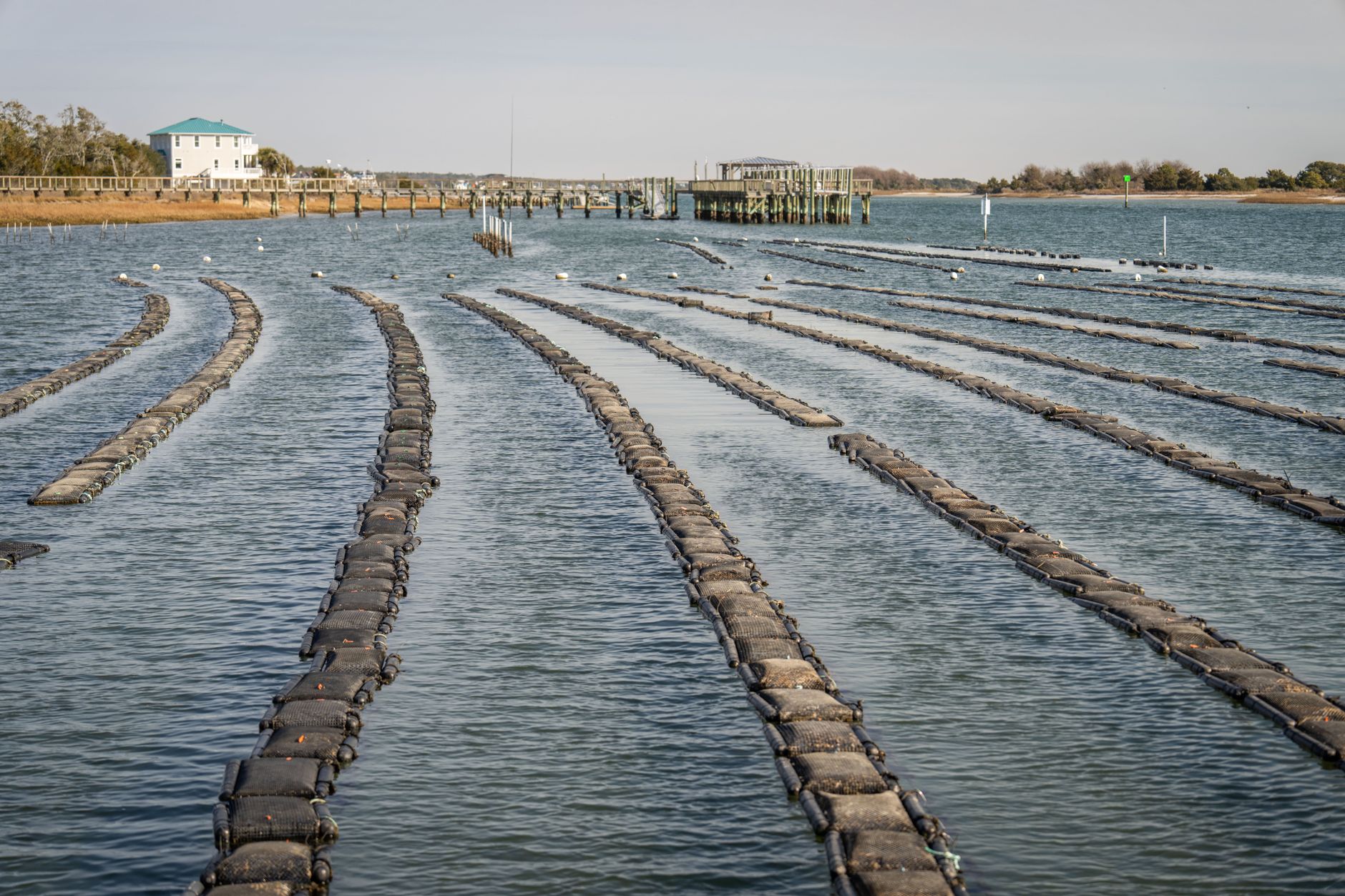

In the summer of 2007, at a hatchery on a small bay on the Oregon coast, oyster larvae began dying by the millions and nobody could say why.
Whiskey Creek Shellfish Hatchery sits on Netarts Bay and supplies seed to growers across the Pacific Northwest. Over 2007 and 2008 its output fell by roughly three quarters each year. In July 2008 every remaining larva in the building died at once.
What was killing them turned out to be the water, and the reason the water had changed turned out to be the first clear case anywhere of ocean acidification shutting down a working American business.
Why a hatchery matters at all
The Northwest shellfish industry does not mostly rely on wild spawning, and understanding that is necessary to see why this was a crisis rather than a bad year at one company.
Growers buy seed: larvae raised in a hatchery and set onto cultch shell or into tanks, then planted out on tideflats and grown to market size over a couple of years. A handful of hatcheries supply an industry worth many millions of dollars across Washington, Oregon and California. Whiskey Creek was, and is, one of the important ones.
So when a hatchery stops producing, the failure does not appear immediately in the oyster you eat. It appears two or three years later as a missing year class, across every grower who bought that seed, in a business where planting decisions are made years ahead. The industry felt it as a slow-motion shortage rather than a single event, which is part of why it took a while for the scale to become obvious.
The first hypothesis was wrong, which is how this usually goes
The natural first suspicion in a hatchery die-off is disease, and there was a plausible candidate.
Vibrio tubiashii is a bacterial pathogen of shellfish larvae, it was present, and it can do exactly this kind of damage. The hatchery responded the way you would: sterilization, filtration, treating the intake water, changing procedures. Some of that helped. None of it explained the pattern.
What did not fit was the timing. The deaths came in episodes rather than continuously, they correlated with when water was drawn into the building, and they happened on particular days rather than in a steady decline. A pathogen established in a system does not usually behave like that.
Alan Barton, working at the hatchery, started paying attention to the intake water itself rather than to what might be living in it, and began measuring its chemistry. The water coming in on the bad days was more acidic. That was the observation that turned the whole thing around.
What upwelling brings up
The Oregon coast in summer runs one of the most productive upwelling systems in the world, and upwelling is why the fishery exists at all. It is also, it turns out, the mechanism that delivered the problem.
Through the summer, north winds along the coast push surface water offshore, and deep water rises to replace it. That deep water is cold and rich in nutrients, which is why the California Current supports the biomass it does.
It is also old. Water that has been below the surface for decades has been accumulating the carbon dioxide released by everything that has decayed in it, and it has not been in contact with the atmosphere in a long time. That makes it naturally low in pH and low in dissolved oxygen before anything human happens to it.
Now add the atmosphere. The ocean has absorbed a large fraction of the carbon dioxide humans have emitted, and dissolved carbon dioxide forms carbonic acid, which lowers pH and, critically, reduces the availability of carbonate ions. So the deep water that upwells onto the Oregon shelf today carries both its natural load and an anthropogenic increment on top of it.
When Barton checked federal CoastWatch records, the strong upwelling events lined up with the days the larvae died.
Acidifying Waters Corrode Northwest ShellfishWhy the larvae specifically
The vulnerable stage is very early and very brief, and the chemistry is specific.
Within about the first day or two after fertilization, an oyster larva has to build its first shell, and it builds it from aragonite, a form of calcium carbonate. This is a large energetic investment made by an animal that has almost no reserves and is not yet feeding effectively.
Whether that is easy or hard depends on the aragonite saturation state of the water, which is a measure of how readily calcium carbonate will form rather than dissolve. In saturated water, building shell is straightforward. As saturation falls, it costs progressively more energy, and below a threshold the water becomes corrosive to aragonite outright.
A larva in undersaturated water does not necessarily dissolve. It runs out of energy. It builds a smaller, thinner, slower first shell, falls behind, feeds worse because it is smaller, and dies days later. The mortality shows up downstream of the actual insult, which is another reason the pattern was hard to read.
This is the part that made the Whiskey Creek story scientifically important. Ocean acidification had been discussed largely as a problem for the end of the century, and here was a commercial hatchery whose production was being determined, day to day, by the saturation state of the water it happened to pump that morning.
The Northwest got it first, and that was predictable
It is worth being clear that this coast is not unlucky so much as early.
Upwelling regions start closer to the threshold than most of the ocean, because the water arriving is already low-pH before any human contribution. Add the anthropogenic increment and this coast crosses the line for aragonite saturation decades before somewhere without upwelling would. The Pacific Northwest is, in effect, a preview.
Local factors stack on top. Estuaries receive freshwater with its own chemistry, organic material decays in them and releases more carbon dioxide, and nutrient runoff drives plankton blooms whose decomposition does the same. Hood Canal, with its poor flushing and its existing low-oxygen problems, is a well-studied example of a place where several of these compound.
So the region ended up with a shellfish industry, in an upwelling zone, in estuaries, at exactly the moment the numbers crossed a biological threshold. That is why the first clear economic casualty of ocean acidification was an oyster hatchery in Oregon rather than a coral reef.
What the industry did about it
The response is the encouraging part of the story, and it is a rare case of a fast, effective, science-led industrial adaptation.
Hatcheries now monitor their intake water chemistry continuously rather than assuming seawater is seawater. Knowing the carbonate chemistry in real time lets an operator simply not draw water during a bad upwelling event, or draw it at a different state of tide, and wait.
Where waiting is not enough, the water is buffered, usually by adding sodium carbonate to raise the saturation state to something larvae can work with. It is the same principle as adjusting the water in an aquarium, applied at industrial scale, and it works.
Researchers, Sea Grant programs and the hatcheries built this together and quickly, and the monitoring network that grew out of it now covers a good part of the coast. Washington convened a state panel on ocean acidification and became one of the first jurisdictions anywhere to treat it as a present economic problem with a policy response rather than a future scientific one.
None of that fixes the ocean. It buys the hatcheries a working process while the underlying chemistry continues to move.
Ocean Acidification Is Putting the Pacific Northwest Shellfish Industry in JeopardyWhat it means for everything that is not in a tank
A hatchery can buffer its water. A tideflat cannot.
The obvious question is what happens to wild populations, and the honest answer is that it is harder to observe and less well resolved. Wild larvae experience the same water without anyone adjusting it, and recruitment failures in the wild are difficult to attribute, because larval survival is naturally variable and many things affect it.
There is reasonable evidence of poor natural set in some Northwest waters during the same period, and there is a plausible mechanism connecting them, and drawing a hard causal line from a single wild bed to carbonate chemistry is not something the science supports cleanly. What is clear is that the sensitivity demonstrated in the hatcheries is real, the animals in the wild are the same animals, and the water is the same water.
Beyond oysters, the concern extends to anything that builds an aragonite shell early in life, which includes mussels, clams, and the pteropods that form a significant part of the food web supporting salmon. That last connection is the one that makes this a fisheries issue rather than a shellfish issue.
The gear
Most of this list belongs to somebody running a hatchery rather than to somebody with a bucket, and it is worth including because it is the equipment that saved the industry.
A pH and alkalinity monitoring setup, if you run a hatchery, is the item that mattered most. The Northwest failures went on for years partly because nobody was measuring intake chemistry continuously, and the fix arrived the moment growers could see the water they were pumping rather than infer it after the larvae died.
Sodium carbonate for buffering, which is the intervention itself. Raising the carbonate saturation of intake water during a bad upwelling event lets larvae build a first shell, and it is unglamorous, cheap and effective.
Access to upwelling forecasts, so intake can be timed rather than reacted to. The bad water arrives with the wind, and the wind is predictable a few days out.
A long memory for the first hypothesis, which was Vibrio, and which was wrong. It was a reasonable answer that fit the pattern, it delayed the real one, and it is a useful thing to remember before being certain about the next die-off.
Patience with attribution, because upwelling is natural and the added anthropogenic carbon rides on top of it, and untangling the two is the hard part of the science rather than a rhetorical dodge.
A tide and closure map at the harvest end, since none of the above changes the rules on a beach.
And the willingness to say what is not known, which is the part of this story the growers themselves handled unusually well.
Why a recreational harvester should care
This is not only an industry story, and there are two practical connections.
The first is that the oysters and clams on a public beach are, in many places, feral descendants of hatchery seed or dependent on natural set in the same waters. The abundance you find on a beach in five years is partly determined by whether larvae are recruiting now.
The second is that the same estuarine processes that worsen acidification, nutrient loading, poor flushing and decaying blooms, are entangled with the low-oxygen events and the harmful algal blooms that close beaches. They are not the same phenomenon, and they share drivers, which is why a bad year tends to be bad in several ways at once. The closure framework is in shellfish biotoxin closures.
There is one more reason this story matters beyond shellfish. The Northwest hatchery failures are among the clearest cases anywhere of an ocean chemistry change producing an immediate, measurable, economic consequence, observed as it happened, by people who had every incentive to find another explanation and looked hard for one. Most climate impacts are argued about in projections. This one arrived in a tank, killed a specific number of larvae on specific days, and was solved by adding carbonate to the intake water, which is about as concrete as environmental science gets.
The short version
In 2007 and 2008, oyster larvae at Whiskey Creek Shellfish Hatchery on Netarts Bay died in numbers that cut production by about three quarters two years running, and in July 2008 all of them died at once.
The first hypothesis was a bacterial pathogen. The answer turned out to be the intake water: summer upwelling was bringing deep, cold, naturally low-pH water onto the coast, carrying an added human increment of dissolved carbon dioxide, and the aragonite saturation was too low for larvae to build a first shell affordably.
The Northwest saw it first because upwelling water starts closer to the threshold, not because the region was unlucky.
The industry adapted by monitoring intake chemistry, timing water intake around upwelling events, and buffering when necessary. It worked, and it does not do anything about the ocean.
And it remains one of the clearest examples anywhere of a global atmospheric change producing a specific, dated, measurable business failure on a particular bay in a particular July.
The oyster that industry produces, and how it got to this coast, is in the Pacific oyster came from Japan. The native it replaced is in the Olympia oyster.
The bay where a large share of the country's oysters are grown, and which has its own separate fight going on at the same time, is in Willapa Bay oysters. Why any of this changes what is in the shell is in why oysters taste different. And the best public beaches to see the species this is all about is in Hood Canal oysters, where the natural set that hatcheries exist to replace still happens on its own.