Fish
Fish Fire
Fire Hike
Hike Bird
Bird

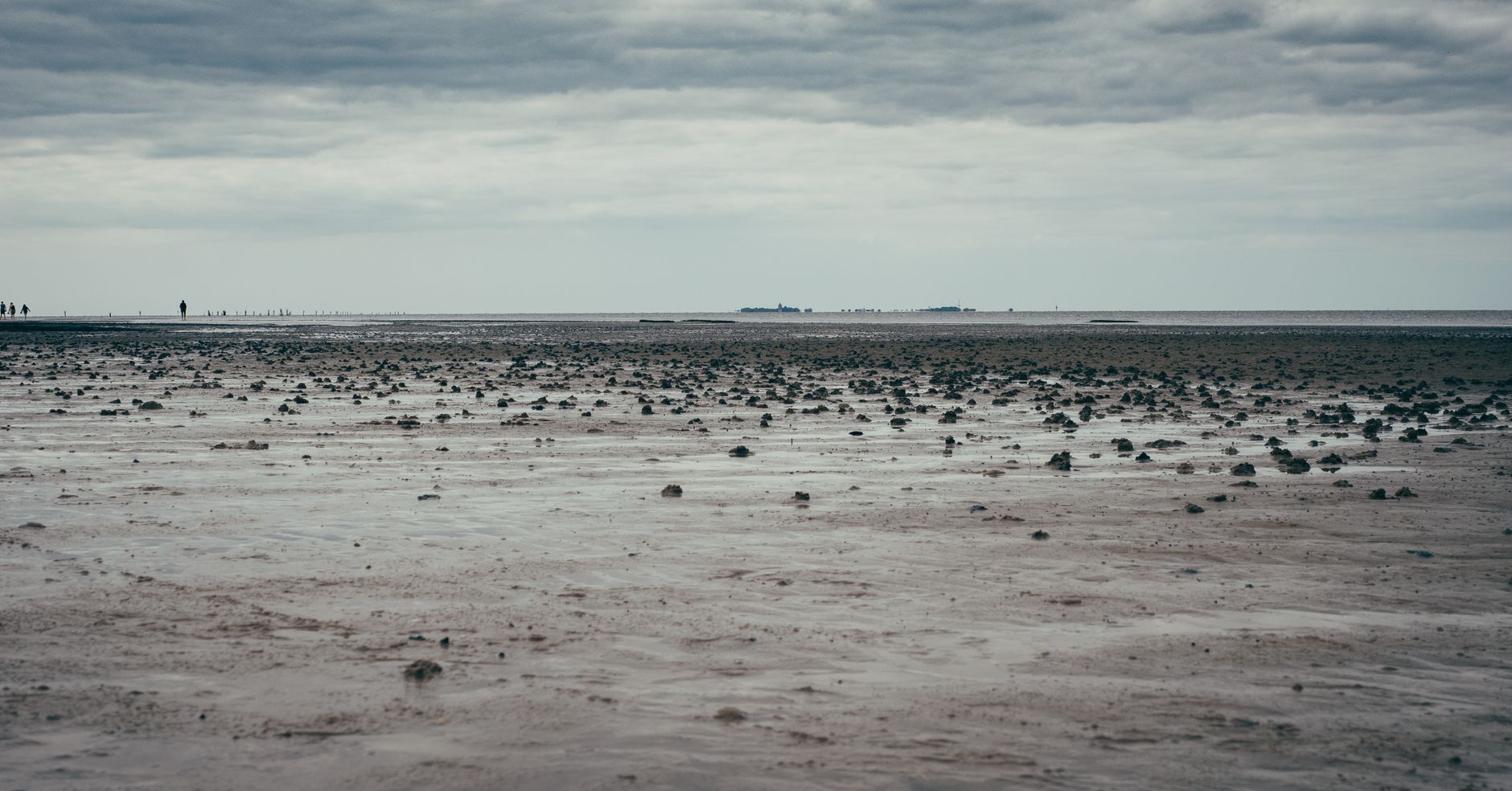
The best bait on the Pacific coast is not sold in a shop. It is pumped out of a sand flat with a length of pipe, by the person who is about to use it.
Ghost shrimp are what sturgeon, surfperch, flounder, greenling and a long list of other fish are eating anyway, and a fresh one on a hook outfishes almost anything you can buy. Getting them requires a slurp gun, a low tide, and the willingness to spend an hour up to your elbows in cold wet sand.
It is also, in Willapa Bay, the animal an entire oyster industry has been fighting for decades, which is a strange thing to hold in your hand.
What they are
Ghost shrimp are burrowing thalassinid shrimp, and the two on this coast are the ghost shrimp proper and the mud shrimp.
The ghost shrimp is pale, translucent pink or cream, soft-bodied, with one oversized claw on the males, and it lives in an extensive branching burrow system in sand and muddy sand. The mud shrimp is stouter, grayer, lives in finer sediment, and is generally less useful as bait because it is softer still.
Both are fragile. A ghost shrimp out of its burrow is a delicate animal that will not survive rough handling, which shapes everything about how they are collected and kept.
They are also ecosystem engineers on a large scale. Their constant burrowing turns over an enormous volume of sediment, which is why they are ecologically significant and why they are an existential problem for shellfish growers, covered in one in six American oysters comes out of this bay.
The slurp gun
The tool is a bait pump, sometimes called a slurp gun or a shrimp gun, and it is essentially a large syringe.
It is a tube, typically three or four feet long and two to three inches in diameter, with a handle and a plunger and a small vent hole. You place the open end over a burrow hole, push it into the sand a few inches, then pull the plunger up, which draws a core of wet sand and water and, if you have placed it well, a shrimp.
Then you eject the core onto the flat and pick through it. Most cores contain nothing. A good flat and a good eye produce a shrimp every few pulls.
Two-handled pumps are easier for most people than the single-handle designs, because the pull requires real force in firm sand and doing it with your back rather than your arms is how people finish an hour of this without an injury.
How To Pump Ghost ShrimpThe gear
Ghost shrimp are bait rather than dinner, and the gear list is built around a single specialized tool.
A bait pump, ideally the two-handled kind, is the entire technique. It is a length of tube with a plunger, you push it into the flat over a burrow and draw up, and the shrimp comes with the core. The two-handled versions are worth the difference because you will do this several hundred times in a session.
Damp newspaper, or a container of damp sand, for keeping them. Ghost shrimp die fast and a dead one is a poor bait. Layered in damp newspaper in a cool container they will keep for a day or two, which is far better than they do in water.
A bait needle and elastic thread, because a ghost shrimp is soft enough that it comes off the hook on the cast unless it is bound. This is the difference between fishing them and losing them.
A shellfish license, since most states treat ghost shrimp as a licensed shellfish rather than as bait, and the limits are real.
Boots you can work in, on ground that is soft by definition.
A tide table, because the beds are exposed on low water only.
And a cooler, kept cool rather than cold. Ghost shrimp on ice go sluggish and die; ghost shrimp in a shaded cooler in damp paper stay alive, and a live one out-fishes a dead one by a wide margin.
Reading the flat
Finding the right ground is most of the skill, and the signs are visible.
You are looking for holes in the sand at low tide, generally between a quarter and half an inch across, often with a small mound or a fan of ejected sediment beside them. On a good flat there are hundreds of them, sometimes thousands, and the density tells you where to start.
The ground matters. Ghost shrimp want sandy mud and muddy sand in protected water, in the mid to lower intertidal, and they concentrate in the sheltered parts of bays and estuaries rather than on open surf beaches.
Water in the hole is a good sign, because it means the burrow is active and occupied. A dry collapsed hole is an old one.
And take the tide seriously. The best ground is usually low on the flat, which means a decent low tide and the same attention to the returning water that everything else in this set requires, covered in minus tides for clamming.
Keeping them alive
This is where most people lose the value of the morning, because a dead ghost shrimp is dramatically worse bait than a live one.
They need to be kept cool, damp and separated, not piled in a bucket of water. The traditional method is layers in damp newspaper or in a container of damp sand, kept cold, which lets them breathe without crushing each other.
An aerated container of seawater works if you have one, kept cold, and changing it regularly. What does not work is a sealed bucket of warm water, which suffocates them within an hour.
They are fragile enough that handling matters. Pick them up gently, do not squeeze, and accept that a proportion will die regardless. Expect to use them within a day or two rather than storing them for a week.
Ghost Shrimp Pumping: Catching Your Own BaitFishing them
The reason to do all of this is that ghost shrimp are exceptional bait for a specific set of fish.
Sturgeon is the headline on the Columbia and in Willapa Bay, where ghost shrimp are a traditional and highly effective bait. Surfperch take them readily from the beach. Flounder, sole, greenling, rockfish and sea-run cutthroat all eat them.
Rigging is the practical problem, because the animal is soft. The standard solutions are a bait needle to thread the shrimp onto the hook lengthwise, elastic bait thread wrapped around the body to hold it together, or both. A shrimp simply impaled on a hook comes off on the first cast.
Fish them where the fish are working the flats: channel edges, the margins of the beds you pumped them from, and the surf line on beaches. You are offering exactly what the fish is already hunting.
Rules, which are real and vary
Bait shrimp are shellfish, and they are regulated rather than a free-for-all.
Oregon sets no daily limit on ghost or mud shrimp, though a shellfish license is still required for everyone twelve and over who collects them. Washington's rules are its own, so check the current rules for the state you are in rather than a remembered figure.
Method restrictions apply too. Pumps are legal for this purpose, and there are rules in some places about what may be used and where, and about digging in areas closed for other reasons.
And every other closure applies. A beach shut for biotoxin is shut, and while you are not eating the shrimp, the areas and access rules govern regardless. Ownership is the same question as ever in Washington, covered in public tidelands and private beaches, and Guidepole carries the beach status and the ownership boundary together, which matters as much for a bait trip as for a food one.
The two species, and which you want
Ghost shrimp and mud shrimp are treated together in most rules and they are not equally useful, so telling them apart saves effort.
The ghost shrimp, Neotrypaea californiensis, is the one you want. Pale, translucent pink or cream, with the males carrying one dramatically oversized claw, and firm enough to stay on a hook when rigged properly. It occupies sand and sandy mud.
The mud shrimp, Upogebia pugettensis, is stouter, grayer and softer, lives in finer sediment, and makes poorer bait because it falls apart more readily. It has also declined substantially in parts of its range, hit hard by an introduced parasitic isopod that castrates the females, which is a genuine conservation concern rather than a curiosity.
That decline is worth knowing because it means a flat that produced mud shrimp reliably twenty years ago may not now, and because it is another example of an introduced organism restructuring an estuary quietly.
Timing and etiquette
Pumping bait is a low-conflict activity and there are still a few things worth doing properly.
Fill your holes. A pumped core leaves a hole and a heap of ejected sediment, and on a flat that also holds clams or is used by other people, leaving a field of craters is poor form and does small damage to the ground.
Take what you need rather than a limit. Ghost shrimp die fast in storage, so pumping seventy when you will use twenty kills fifty, and since Oregon sets no daily limit to stop you, the restraint is yours to keep.
And check whether the flat is somewhere you may be. On Puget Sound that is the ownership question that governs everything, and on a working shellfish bed it is somebody's crop rather than open ground. The general problem is in public tidelands and private beaches.
Eating them, briefly
People ask, and the answer is that you can and mostly should not bother.
Ghost shrimp are small, soft, and mostly shell and water, and cleaning enough for a meal is an enormous amount of work for a modest result. They are eaten in some cuisines, and there is nothing wrong with them, and the effort-to-food ratio is poor compared with almost anything else you could dig on the same flat.
The exception is that they make a reasonable stock, in the same way small crustaceans generally do.
They are bait. That is the honest answer and the reason anyone pumps them.
Buying them instead
Bait shops on the Columbia and around the Washington and Oregon bays sell ghost shrimp, and it is worth knowing when that makes sense.
Bought shrimp are convenient and they are frequently not as good, because the whole advantage of this bait is freshness and a shop shrimp has been in a tray for an unknown period. They are also not cheap for what they are.
Where buying wins is when the tide is wrong. Pumping needs a decent low tide on the right flat, and sturgeon fishing does not, so the days when you want the bait and cannot get it are common. A shop solves that.
The reasonable pattern for anyone doing this regularly is to pump when the tide allows and buy when it does not, and to accept that the pumped ones will outfish the bought ones.
The strange part
It is worth ending on the thing that makes this animal unusual among everything else in this set.
Every other species here is one somebody wants more of. Clams, crabs, oysters, shrimp: the management effort goes into having more of them. Ghost shrimp are the one animal on the American Pacific coast that an entire industry has spent decades and a great deal of money trying to have less of, because their burrowing turns firm oyster ground into soup.
So a recreational digger pumping bait in Willapa Bay is removing, one at a time and for entirely unrelated reasons, a handful of the animals a grower a mile away is trying to control at scale. It makes no difference to the population and it is an odd piece of context for an hour on a sand flat.
The short version
Ghost shrimp are the best bait on this coast for sturgeon, surfperch, flounder, greenling and much else, and they are collected rather than bought.
The tool is a slurp gun, a large tube-and-plunger bait pump. Place it over an active burrow hole, push down, pull, and pick through the ejected core.
Look for quarter to half inch holes in sandy mud in sheltered bays at low tide, with water in the hole indicating an active burrow.
Keep them cool, damp and separated, in damp newspaper or damp sand, never in a sealed bucket of warm water. Use them within a day or two.
Rig with a bait needle and elastic thread, because they are soft and come off a bare hook on the first cast.
And check the current daily limit and license requirement for your state, because they are regulated shellfish rather than free bait.
The licensing rules that cover ghost shrimp, which surprise people who assume bait is unregulated, are in shellfish licenses by state. The shrimp you catch to eat rather than to fish with is in cast net shrimping in Georgia and Florida. And one of the better uses for a bucket of them, on the same tide and frequently the same flat, is in Dungeness crabbing on Puget Sound.