Fish
Fish Fire
Fire Hike
Hike Bird
Bird

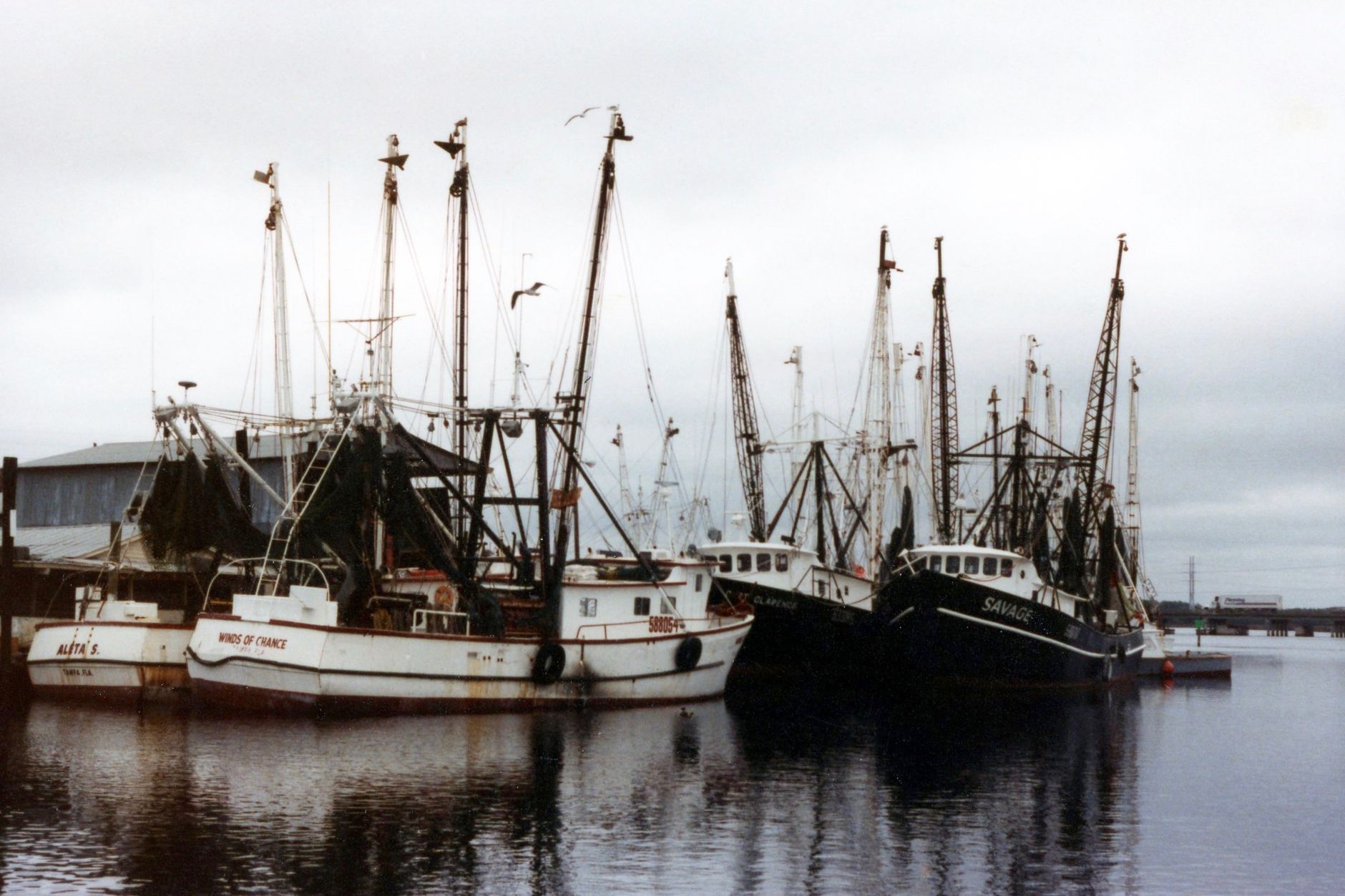

The South Atlantic shrimp run is a public, free, autumn event that most people who live beside it have never tried, and the entire barrier to entry is learning to throw a circular net so that it opens.
Georgia and Florida both allow recreational cast net shrimping. You need a saltwater license, a net, a bucket and a tide. There are no poles, no bait and no special season permit of the kind South Carolina requires, which makes this the accessible version of the same fishery.
Learning the throw is the whole thing, and it takes an afternoon on a lawn rather than a season on the water.
What you are catching, and when
The fishery targets white shrimp on their autumn migration, with brown shrimp running earlier in the summer and pink shrimp present in smaller numbers.
The cycle is the reason the season sits where it does. White shrimp spawn offshore in spring and early summer, the larvae move into the estuaries, and the juveniles spend the summer growing in the salt marsh creeks. Then, as the water cools in autumn, they move back out toward the ocean.
That autumn movement is what a cast net shrimper intercepts. It is why the fishery improves as the season progresses, why a cold snap can concentrate shrimp dramatically, and why the marsh creeks matter: they are the nursery that produced everything in your bucket.
Both states set their own seasons, size or count limits and gear rules, and both revise them, so the current regulations from the state agency are the thing to check rather than a remembered rule.
The net
A shrimping cast net is a circle of mesh with weights around the perimeter and a retrieve line to the center, thrown so it opens flat before it lands and closes into a purse as you pull.
For shrimp, the mesh is small, commonly three-eighths inch, because a larger mesh lets shrimp through. Radius is typically six to ten feet, and the honest advice is to buy the largest one you can reliably open rather than the largest one sold. A ten-foot net that lands half open covers less water than a six-foot net that opens fully, and it is considerably heavier to throw a hundred times.
Weight matters as much as size. A heavier lead line sinks faster, which matters in current and in deeper water, and it is harder work.
The retrieve is the part people skip. Pull the net up rather than dragging it, so the lead line closes and purses the catch rather than sweeping along the bottom and letting shrimp out under the edge.
How to Catch Shrimp with a Cast Net in Jacksonville, FloridaLearning the throw
There are several throwing methods and the important thing is to pick one and practice it on grass.
The common approaches involve some combination of holding the horn or the line in one hand, gathering a portion of the net over a forearm or in your teeth in the traditional versions, and holding part of the lead line so that the net is loaded to open. The mechanics differ; the objective does not, which is that the net leaves your hands as a spreading circle rather than a bundle.
Practice on a lawn, in daylight, without a boat, until you open it consistently. That is not a beginner's concession, it is what everyone who is good at this did first. Trying to learn from a dock at night while shrimp are running is the slow way.
Once the throw works, accuracy is the next thing, then consistency when tired, then doing it from a moving boat. Each of those is a separate step and they come in that order.
The gear
Cast net shrimping in Georgia and Florida is a cheap activity with one expensive skill attached, and the gear list is short because the skill is the hard part.
A cast net you can actually open, which for most people means six to eight feet rather than the ten-footer that looks more serious in the shop. A net too heavy to spread lands in a rope and catches nothing, and the mesh should be three-eighths inch for shrimp rather than the larger bait mesh.
A lawn and an afternoon, which is a real item. Nobody learns to throw a cast net on a dock at night with shrimp in front of them. An hour on grass, throwing at a marked circle, is the difference between a productive night and a frustrating one.
A large cooler and a great deal of ice, because warm-water shrimp deteriorate quickly and the difference between shrimp iced immediately and shrimp iced twenty minutes later is obvious on the plate.
A headlamp and a spotlight, since much of this happens after dark around dock lights.
A saltwater fishing license for the correct state, which matters on the St. Marys River where the state line runs down the middle.
Long sleeves in autumn, because the best runs coincide with the worst sand gnats.
And a tide table for the specific creek rather than the inlet, since inland corrections on this coast run well over an hour and the shrimp move with the tide.
Where and when to throw
Shrimp move with the tide and concentrate in predictable places, which is what makes a shore fishery possible at all.
Creek mouths on a falling tide are the classic spot, because the ebb funnels shrimp out of the marsh through a narrow opening and concentrates them. Dock lights at night are the other reliable pattern: light attracts the small organisms shrimp feed on, shrimp follow, and a lit dock in autumn frequently has shrimp visible in the water column.
Bridges, piers, jetties and the edges of channels all work for the same reason, which is that they concentrate moving water.
Fish the tide rather than the clock. A falling tide through a constriction is the productive window, and the specific timing shifts every day.
Watch the water before you throw. Shrimp are visible at night under a light, and on a good night you can see them and throw at them rather than throwing blind, which changes the whole character of the exercise.
Licenses, limits and the state line
This is the part that varies most and where an assumption gets expensive.
Georgia and Florida each require a saltwater fishing license for recreational shrimping, with their own age thresholds and exemptions. Each sets its own limits, whether expressed as a volume in quarts, a season, or gear restrictions, and each sets its own rules about where cast netting is permitted, since some waters and structures are closed to it.
South Carolina, between them, is a different regime entirely: bait-and-pole shrimping requires a specific license with a sixty-day season and a very high non-resident fee, covered in the season opens at noon on a specific Friday. Cast netting without bait there falls under ordinary rules.
So three adjacent states run three arrangements, the boundaries are rivers and lines on a chart, and a shrimper working near one has a real chance of being under rules they have not read. Guidepole carries the jurisdiction and its current rules against the water you are on, which on a coastline this continuous and this divided is worth more than a memory of last October.
Handling in warm water
This is a September and October fishery on the South Atlantic coast, at night, in warm water, and shrimp spoil quickly in exactly those conditions.
Ice, heavily and immediately. Shrimp go from the net into a cooler with plenty of ice and the drain open, and the goal is to get them cold on the first throw rather than at the end of the night. A thin layer of ice under a night's catch does not cool anything.
Heading them on the water is worth doing if you have the hands for it, because the enzymes that soften the meat are concentrated in the head. It also reduces volume substantially, which matters if the limit is expressed by volume.
The Vibrio consideration applies to warm-water shellfish generally, and the answer is the same as everywhere: cold immediately and cook thoroughly. The framework is in the R rule is right for the wrong reason.
How To Set Up Your Shrimping LightsDoing it from a boat
Most shore-caught shrimping is opportunistic, and a small boat changes the fishery from waiting for shrimp to going and finding them.
The advantage is coverage. Rather than fishing one creek mouth and hoping, you can move between them on a falling tide, checking with the light and throwing where shrimp are visible. On a good night that turns a slow evening into a productive one.
The technique changes slightly. Throwing from a moving or drifting platform is harder than throwing from a fixed dock, and it takes practice on top of the practice you already did on the lawn. Most people learn to throw from a stationary boat first, holding position, before trying it on a drift.
Safety is the trade. Narrow creeks at night with oyster bars, shifting sandbars and no lighting are a genuine navigation problem, and the combination of dark water, a falling tide and unfamiliar ground puts boats aground regularly. Local knowledge matters more here than almost anywhere.
What the marsh is doing
The fishery exists because of the salt marsh, and the marsh is worth understanding as more than scenery.
Spartina marsh along the South Atlantic coast is one of the most productive habitats in North America, and its function for shrimp is specific: the creeks and the flooded marsh edge are where postlarval shrimp settle and where juveniles spend the summer feeding on detritus, sheltered from larger predators.
That means the size of the autumn run is substantially determined by how the marsh performed in spring and summer, and by conditions in it: freshwater inflow, temperature, water quality and the extent of marsh edge available.
It also means the same conservation questions that apply to the Gulf apply here, in a milder form. Marsh loss, development along the creeks, and water quality all bear on how many shrimp move out of the estuary in October. The nursery is the fishery.
What else comes up in the net
A cast net is indiscriminate, and what you do with the rest matters.
Small fish, crabs, jellyfish and occasionally something protected all come up. Sort quickly and return everything you are not keeping, in the water rather than on the dock, because the difference between a fish released in ten seconds and one released in two minutes is substantial in warm water.
Blue crabs come up regularly and are legal to keep under their own rules, which differ by state and are worth knowing, and the Gulf and Chesapeake versions of that fishery are in one crab, three states, three theories and blue crab in the Chesapeake.
And be careful with the jellyfish, particularly in autumn, because a net full of them delivers stings to forearms in a way that ends an evening.
Cleaning and cooking the catch
Shrimp fresh from a cast net are better than anything you can buy, and the handling from here is simple.
Head them if you have not already, which most people do on the water, and rinse. Peeling is optional depending on what you are cooking: shell-on shrimp boiled or grilled hold more flavor, and peeled shrimp are easier for most dishes.
Do not overcook them. Shrimp are done when they turn opaque and curl, which takes two or three minutes at most, and every minute after that costs texture. This is the single most common failure with a good catch.
Freeze what you cannot eat, ideally in water in a container rather than loose in a bag, which prevents freezer burn and keeps them usable for months. Heads-off shrimp freeze better than whole ones because the enzymes that soften the meat are in the head.
And the Vibrio consideration means cooking rather than eating raw, which for shrimp is the normal practice anyway.
The short version
Georgia and Florida both allow recreational cast net shrimping under an ordinary saltwater license, with no poles, no bait and no special permit of the kind South Carolina requires.
The target is white shrimp on the autumn migration out of the marsh creeks, so the fishery improves through the season and a cold snap concentrates them.
Buy the largest net you can reliably open, not the largest one sold, with about three-eighths inch mesh. Practice the throw on a lawn in daylight until it opens every time.
Fish creek mouths on a falling tide and lit docks at night, and look for shrimp in the water before throwing rather than throwing blind.
Ice heavily and immediately, head them if you can, and cook thoroughly, because this is warm water in September.
And check the current rules for the specific state, because Georgia, Florida and South Carolina run three different arrangements across boundaries you cannot see from the water.
The state-by-state paperwork, including the endorsements that a general saltwater license does not cover, is in shellfish licenses by state. And if what you want is bait rather than dinner, the other shrimp on the same flats is in pumping ghost shrimp for bait.