Fish
Fish Fire
Fire Hike
Hike Bird
Bird


South Carolina has a recreational fishery that exists nowhere else in the United States, and it starts at noon on a specific Friday.
You set a line of poles in shallow water, drop bait at the base of each one, and throw a cast net over the poles after dark. The shrimp come to the bait. The season runs sixty days and it needs its own license.
Nobody else does this, and the reason is that South Carolina wrote a rulebook for it instead of banning it.
What shrimp baiting is
The mechanics are simple and the execution is not.
You put out a set of poles, up to ten per boat, in shallow water over a soft bottom. At the base of each pole you drop bait, usually a clay-and-fishmeal ball made for the purpose, which sits on the bottom and releases scent. Shrimp move in to feed on it. You then run the poles in rotation after dark, throwing a cast net over each one and pulling shrimp off the bait.
The poles are markers, not gear. They are how you find the same spot again in the dark and how you know where your bait is. The net is what catches the shrimp, and throwing a cast net accurately over a pole from a moving boat at night is a genuine skill that takes a season to learn properly.
The season, which begins at a scheduled minute
The rule is unusually precise and worth knowing exactly: the season opens at noon on the last Friday on or before the fifteenth of September, and runs for sixty days.
That is a real deadline rather than a formality. Boats stage before it, the good ground gets claimed, and the first afternoon is a scene. The sixty days run into November, and the fishery tracks the fall migration of white shrimp moving out of the estuaries, so the timing is set by the biology rather than by convenience.
The license is separate from an ordinary saltwater fishing license and it is the thing that surprises visitors: twenty-five dollars for a resident and five hundred for a non-resident. That is not a typo and it is a deliberate policy choice about who this fishery is for.
The pole rules, which are mostly about spacing
Most of the regulation here is about keeping sets apart from each other, because the whole fishery depends on people not fishing on top of one another.
A licensed set is limited to ten poles, and all the poles in a set must be within one hundred linear yards of each other, which keeps a set compact rather than strung across a mile of creek. Different sets must be at least twenty-five yards apart, so you may not crowd somebody else's poles. And no poles may be set within fifty yards of any dock, public landing or boat ramp, which keeps the fishery out of the places people need to use.
The daily limit is forty-eight quarts of shrimp measured heads-on, or twenty-nine quarts heads-off, per boat or set of poles per day. Note that it is per boat rather than per person, which is a meaningfully different structure from most recreational limits and catches out groups who assume they can stack individual limits.
The specific dates, permitted areas and gear details are set annually by proclamation rather than fixed in statute, which means the rules can change between seasons and last year's summary is not authoritative.
How to Make Bait Balls for South Carolina Shrimp Baiting SeasonWhere to set, and why it is the hard part
Finding ground is the whole game and it is more constrained than it looks on a chart.
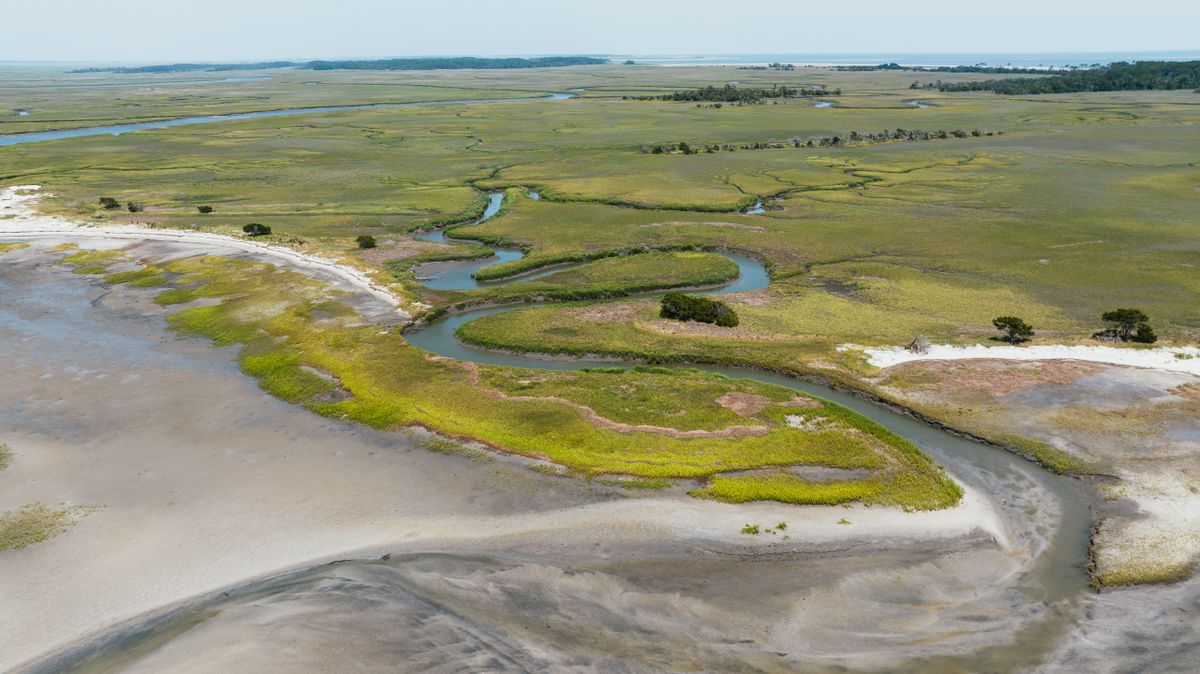
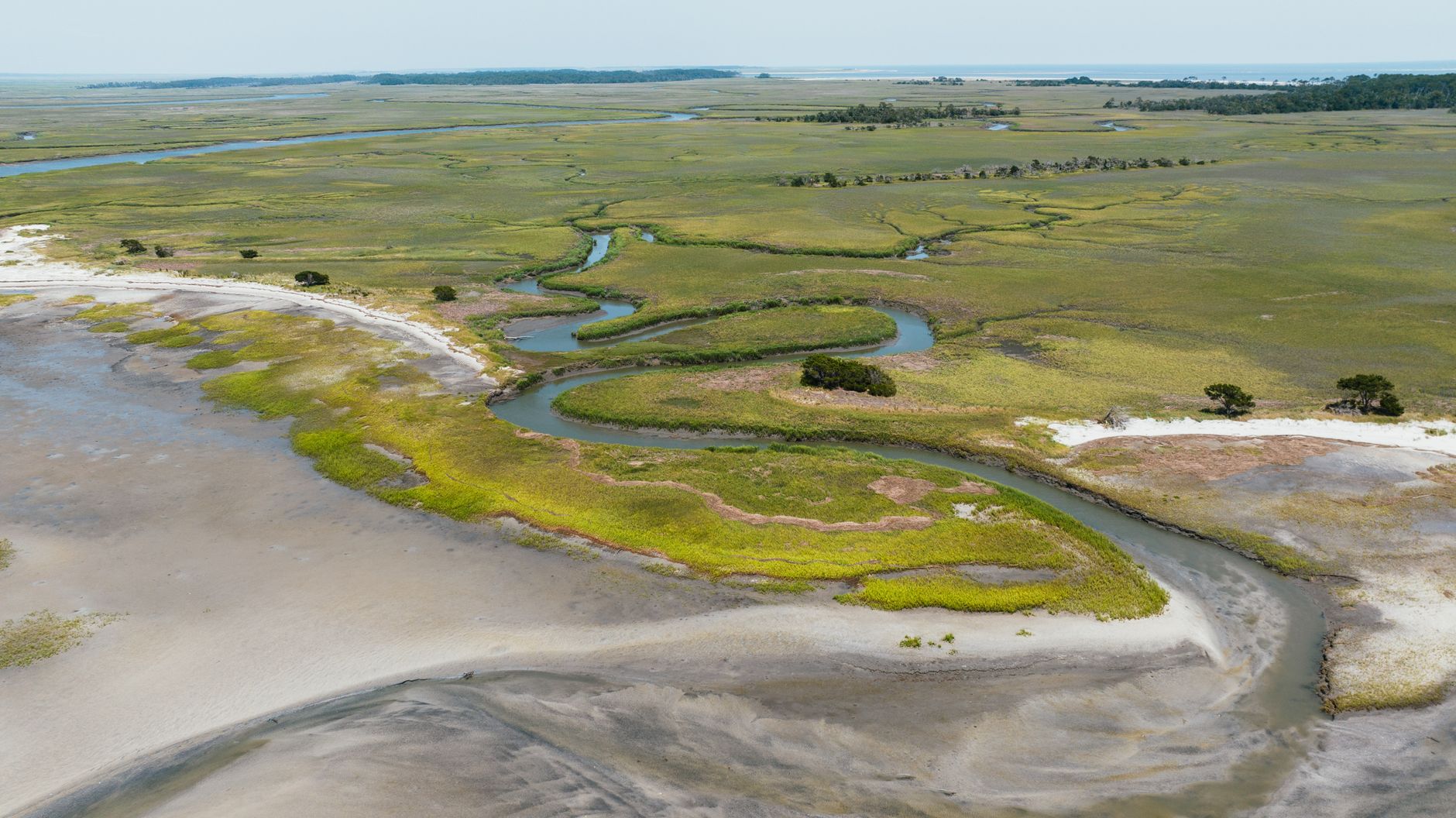
You want shallow water over soft or muddy bottom where shrimp are moving, typically in the creeks, bays and sounds behind the barrier islands, in depths you can effectively throw a net across. Too deep and the net does not cover the bait properly. Too shallow at low tide and your poles are standing in mud with no water on them.
Tide is the variable that decides everything, because the water depth over your poles changes by several feet through the night. A set that is perfect at high water is unfishable at low, so people choose ground that works across a tide window and plan the rotation around it.
And the ground has to be legal, which is where it gets difficult. Shrimp baiting is prohibited in some areas outright, restricted in others, and the fifty-yard rule around docks and landings removes a great deal of otherwise good water in a state where the creeks are lined with private docks. Whether a specific creek is open, and whether the bank you are working near is private, are two separate questions with two separate sources. Guidepole carries the closure and ownership layer against the specific water, which in a fishery defined by spacing rules and area restrictions saves working it out with a tape measure in the dark.
What you are catching
The fishery targets white shrimp, and understanding their year explains why the season sits where it does.
White shrimp spawn offshore in spring and early summer. The larvae move into the estuaries, where the juveniles spend the summer growing in the salt marsh creeks, feeding on detritus in exactly the shallow soft-bottom water the baiting fishery works. Then in autumn, as water temperature drops, they move back out toward the ocean.
That autumn migration is what the sixty-day season is timed to. You are intercepting shrimp on their way out of the creeks, which is why the fishery gets better as the season runs and why a cold snap can suddenly concentrate them. It is also why the marsh matters so much: a salt marsh creek is not scenery here, it is the nursery that produced everything in your cooler.
Brown shrimp are also present and run earlier in the summer, and pink shrimp show up in smaller numbers. All three are caught the same way and eat much the same, and few recreational shrimpers bother distinguishing them in the cooler.
Baiting and Castnetting for ShrimpThe cast net, which is the actual skill
Everything else is logistics. This is the part that separates people who fill a cooler from people who do not.
A shrimping cast net is typically eight to ten feet in radius with a three-eighths inch mesh, weighted around the perimeter, and thrown so it opens into a full circle before it hits the water. A net that lands half open covers half the bait and catches a fraction of the shrimp. Learning to open a net consistently takes practice on a lawn before it takes practice on a boat.
The throw has to be accurate as well as open, because the target is a circle a few feet across at the base of a pole, from a drifting boat, in the dark. Most people learn to throw with the boat positioned so the pole is at a consistent distance and angle, and repeat that setup every time rather than improvising each throw.
Pull the net straight up once it is on the bottom, without dragging, so the lead line closes rather than sweeping. Then shake the shrimp down into the bag and into the cooler.
The gear
South Carolina shrimp baiting is the most equipment-heavy activity in this library, and the list is long because the season is short and there is no borrowing anything at ten at night on a dark creek.
A shrimp baiting license, which is separate from a saltwater fishing license and required specifically for baiting, is sold by DNR on demand throughout the season. Buy it ahead of the opening rather than scrambling on the first Friday.
Ten poles and a way to set them, which is the legal maximum and also the practical one. The poles have to be marked and spaced as the state specifies, and setting them well is most of the difference between a good night and a wasted one.
Bait balls, made from clay and fish meal, mixed stiff enough to hold together on the bottom and soft enough to release scent. Most people make them at home the day before.
An eight to ten foot cast net you can actually open. A larger net you cannot throw catches nothing.
A headlamp and a spotlight, because you are working in the dark and you need to find your own poles again.
A very large cooler and considerably more ice than you expect. Shrimp in September water spoil in a way that is measured in minutes rather than hours, and the single most common mistake is bringing enough ice for the shrimp you hoped to catch rather than the shrimp you caught.
And a tide table for the specific creek rather than the harbor entrance, since the correction inland can be well over an hour and the whole plan is built on the tide.
Two nights that go differently
It is worth knowing what a good night and a bad night actually look like, because the difference is rarely the shrimp.
A good night is the boat set before dark, poles in a compact line on ground that holds water through the tide window, bait down early enough for the scent to work, and a rotation that keeps moving. The cooler gets a heavy layer of ice before the first throw. Shrimp come in ones and twos at first and then in numbers as the tide starts moving, and the last pole of a rotation is often the best because the bait has had longest to work.
A bad night is almost always logistics rather than biology. Poles set where the water drains out from under them. Bait dropped so late that the first rotation is empty and the second is barely better. A net that will not open, thrown at a pole that cannot be seen because the spotlight batteries went. Not enough ice, so the early catch is warm by midnight. And the slow realization that the set is twenty yards from somebody else's, which is both illegal and unproductive.
None of that is about being a good shrimper. It is about having done the setup properly in daylight, which is the actual lesson of the fishery.
Handling, because it is warm
This is a September and October fishery in South Carolina, on warm water, at night, and shrimp spoil quickly in exactly those conditions.
Ice is not optional and there needs to be a lot of it. Shrimp go from the net into a cooler with plenty of ice and a drain open, and the goal is to get them cold immediately rather than at the end of the night. A cooler that starts with a thin layer of ice and forty-eight quarts of warm shrimp added to it does not cool them.
Heading them on the water is worth doing if you have the hands for it, because the enzymes that soften the meat are concentrated in the head, and heads-off is also how the limit is measured at twenty-nine quarts.
The Vibrio consideration applies here as it does to any warm-water shellfish harvest, and the answer is the same: cold immediately, and cook thoroughly. The general picture is in shellfish biotoxin closures.
Shrimping without a baiting license
The baiting license is for baiting. There is a good deal of legal shrimping in South Carolina that does not need it.
Cast netting for shrimp without bait, over natural bottom or around structure, is permitted under an ordinary saltwater license and is how a great many people fish, particularly from docks and bridges. It is less productive than baiting and it is free of the pole rules, the spacing rules and the five-hundred-dollar non-resident fee.
Shrimp also run in creek mouths on a falling tide in a way that makes them catchable without any bait at all, and a person who learns where the water funnels can do very well with a net and a headlamp. The fall run is the same run the baiters are fishing, so the timing is identical even if the method is not.
Neighboring states run their own versions. Georgia and Florida both have recreational cast net shrimp fisheries with their own rules and their own seasons, and none of them use the pole and bait system, because South Carolina is the only state that licensed it rather than prohibiting it.
The short version
Ten poles per boat, all within a hundred yards of each other, sets at least twenty-five yards apart, and nothing within fifty yards of a dock, landing or ramp.
The season opens at noon on the last Friday on or before the fifteenth of September and runs sixty days. The license is separate: twenty-five dollars resident, five hundred non-resident.
Limit is forty-eight quarts heads-on or twenty-nine heads-off, per boat rather than per person.
Learn to throw a cast net so it opens fully before you spend a night trying to do it over a pole in the dark. Bring far more ice than you think, because this is warm water in September and shrimp do not wait.
And check the current proclamation rather than last year's, because the dates, areas and details are set annually rather than fixed in law.
The other way to catch the same shrimp, without a baiting license and without ten poles, is in cast net shrimping in Georgia and Florida, and it is how most people on this coast do it. The crab fishery that shares these creeks is in blue crab on the Gulf coast. What you have to buy before any of it is in shellfish licenses by state. If you want the bait rather than the dinner, that is pumping ghost shrimp for bait, and for a sobering look at what happens when a shrimp fishery goes away entirely, the Maine shrimp moratorium.