Fish
Fish Fire
Fire Hike
Hike Bird
Bird


Three states, one species, and three completely different theories of how to manage it.
Maryland sets a minimum size that rises in the middle of the season and bans keeping egg-bearing females. Louisiana sets no recreational minimum size at all and caps you at twelve dozen crabs a day, but like every state on this coast it bans keeping egg-bearing females. Texas sets a five inch minimum and no bag limit whatsoever.
All three are managing the same animal, Callinectes sapidus, and comparing them tells you more about fisheries management than any one of them does alone.
Louisiana, where the limit is a number of crabs
Louisiana runs the most productive blue crab fishery in the country and its recreational rules are shaped accordingly.
The recreational limit is twelve dozen crabs per person, daily and in possession. That is a hundred and forty-four crabs, which is an enormous number and reflects both the abundance and the cultural place of crabbing in coastal Louisiana.
There is no recreational minimum size for blue crabs, and none for stone crabs or stone crab claws either. Harvest is year-round. One rule is not optional and is easy to miss: you may not keep a female in the berry stage, carrying eggs on her abdomen, and a berried crab goes straight back in the water. Texas bans keeping sponge crabs the same way. The egg-bearing-female protection is not a Chesapeake peculiarity.
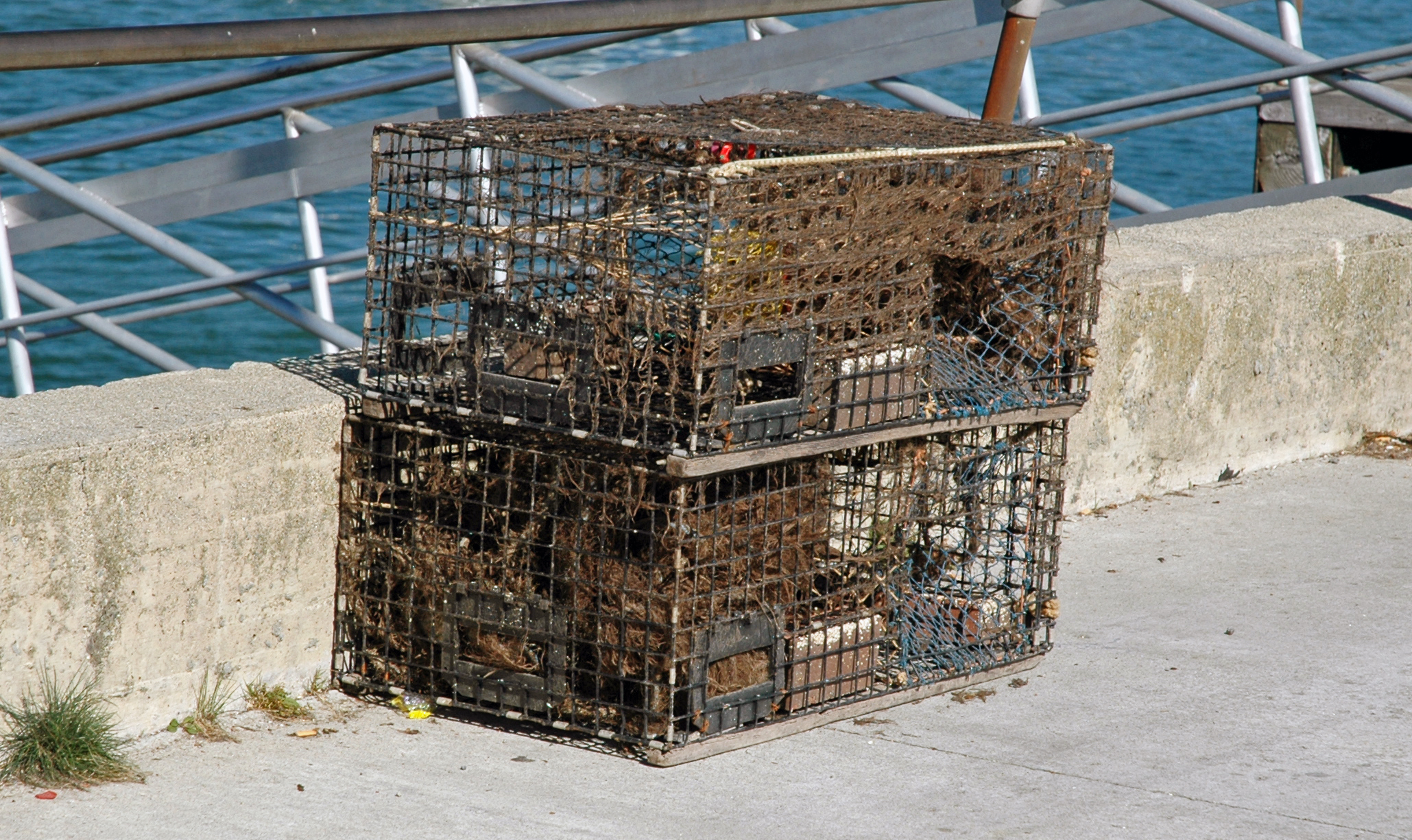
The basic and saltwater fishing licenses permit no more than ten recreational crab traps per licensed individual, and you are required to remove your traps during closures, including the periodic derelict crab trap cleanups the state runs to clear abandoned gear from the marshes.
That combination, a very high crab cap with no size floor, is a management choice rather than an oversight. It bets on abundance and on the practical fact that undersized crabs are not worth the labor of picking, so a size limit would constrain few people while adding an enforcement burden.
Texas, where the limit is a size
Texas takes the opposite approach on both axes.
There is no bag limit for blue crabs. There is a size limit: five inches. Crabbing is year-round with no defined season, and anyone seventeen or older needs a Texas fishing license.
So Louisiana caps the number and not the size, and Texas caps the size and not the number. Both are managing an abundant estuarine species with a short lifespan and high reproductive output, and both have concluded that one lever is enough.
The practical effect for a recreational crabber crossing the state line is that the same afternoon's catch may be legal under one rule set and not the other, in both directions. A bucket of small crabs is fine in Louisiana and illegal in Texas. Two hundred five-inch crabs are fine in Texas and over the limit in Louisiana.
Why the Gulf is different from the Chesapeake
The contrast with Maryland is the interesting part, and it is not that the Gulf states are lax.
Chesapeake blue crab management is unusually intensive because the Bay's population is closely monitored, has crashed within living memory, and supports a commercial fishery of real economic weight in a semi-enclosed estuary where the stock is largely self-contained. An annual winter dredge survey sets the rules each year, the minimum size steps up in mid-July to let the year class grow, and sponge crabs may not be kept at all. That system is covered in blue crab in the Chesapeake.
The Gulf is a different physical situation. The estuaries are numerous, connected along an open coastline, extremely productive, and fed by an enormous river system. The crab population is large, fast-growing and highly variable year to year for reasons largely driven by freshwater inflow and weather rather than by fishing pressure.
That does not make Gulf crabs invulnerable. Louisiana's fishery has faced real difficulties, including habitat loss as coastal marsh disappears, the effects of hurricanes, and the aftermath of the Deepwater Horizon spill. The management response has focused more on the commercial fishery, on derelict gear and on habitat than on constraining recreational take.
Setting Traps for Big Blue Crabs: Catch, Clean, CookHow people crab down here
The methods are the Chesapeake methods plus a few of the Gulf's own, and they are all accessible.
Traps are the standard, and the ten-trap recreational cap in Louisiana is generous enough to be a real fishery rather than a token. They are set in marsh ponds, along canal banks, off piers and from small boats, baited with chicken necks, fish heads or whatever is cheap and pungent.
Hand lining, which is chicken necking, works exactly as it does on the Chesapeake and is how most children in the region learn: bait on a string, a slow retrieve, a net waiting underneath.
Dip netting in the shallows at night with a light is productive in the Gulf marshes, where crabs move into very shallow water to feed. And in Louisiana specifically, crabbing frequently happens alongside recreational shrimping and oystering as part of the same trip, since the licenses and the seasons overlap.
The gear
Gulf crabbing is equipment-light and ice-heavy, and the reason is the heat.
Up to ten traps in Louisiana, which is the recreational limit there, each marked as the state requires. Traps left unattended and unmarked are the standard citation.
A gauge, if you are in Texas, where the limit is a five inch minimum measured point to point. Louisiana has no recreational size minimum on hard crabs, which is one of the sharper differences on this coast and worth knowing before you cross a state line with a cooler.
A long-handled dip net, longer than you think you need, which is the tool for both trap work and for the chicken-neck-on-a-string method that catches most Gulf crabs by volume.
Far more ice than you expect. This is the single most important item on the list. Blue crab in Louisiana summer heat deteriorate fast, a crab that dies before it is cooked is a discard, and the usual failure is a cooler packed with crab and a single bag of ice.
A headlamp, because the productive hours here run early and late.
Cheap pungent bait, which in practice means chicken necks, fish racks or anything a day past acceptable.
And something that tells you which state you are in, which sounds like a joke and is not. The Gulf marsh does not announce state lines, the rules on either side of one differ in ways that matter, and the boundary is invisible from a boat.
The marsh, which is the real story
Anyone crabbing the Louisiana coast is fishing in a landscape that is disappearing, and it is worth knowing.
Coastal Louisiana has been losing land for decades, at a rate that has made it one of the more dramatic examples of coastal erosion anywhere. The causes are layered: levees on the Mississippi that stopped the sediment supply that built the delta, canals cut for oil and gas that let saltwater into freshwater marsh, subsidence, and sea level rise.
Blue crabs depend on that marsh. Juvenile crabs shelter in marsh edge and submerged vegetation, and marsh edge is precisely what is being lost. So the long-run question for the fishery is not the recreational limit, it is whether the nursery habitat survives.
That is the honest reason Louisiana's management attention sits where it does. A twelve dozen recreational limit is not what determines whether there are crabs in twenty years.
The other Gulf states
Louisiana and Texas are the two extremes and the states between them fill in the range.
Mississippi and Alabama both run recreational blue crab fisheries with their own limits and trap allowances, and Florida operates on a different structure again, with a recreational blue crab regulation set that includes trap numbers, a required identification on gear, and closed periods in some regions for derelict trap removal.
The point is not to memorize five states. It is that the phrase "the Gulf rules" does not refer to anything. Each state sets its own bag limit or lack of one, its own size minimum or lack of one, its own trap allowance, its own licensing age and its own closure schedule, and the differences are large rather than technical.
If you crab in more than one Gulf state, the only workable approach is to check the current rules for the specific state each time, rather than carrying a general impression across a line you cannot see.
Stone crab, on the same coast
Louisiana's lack of a recreational minimum size extends to stone crabs and stone crab claws, which is a striking contrast with Florida.
Florida runs the strictest stone crab regime in the country: a season from mid-October to the start of May, a claw minimum of two and seven-eighths inches along the propodus, one claw only per crab, no claws from egg-bearing females, and an absolute prohibition on landing the body. That fishery is covered in you take the claw and the crab goes back.
Louisiana, on the same body of water, sets no recreational minimum size on stone crab claws at all.
Both states are managing stone crabs. One has built an elaborate structure around the animal's ability to regenerate a limb, and the other has decided the recreational take is small enough not to need one. That is the Gulf in miniature: the same species, the same water, and management philosophies that do not resemble each other.
Recreational versus commercial, and why it matters here
The Gulf recreational rules make more sense once you know the size of the commercial fishery sitting alongside them.
Louisiana lands a very large share of the nation's blue crab, and the commercial fishery there is a substantial industry with its own licensing, gear limits, seasons and reporting. Recreational take, even at twelve dozen per person, is a small fraction of the total.
That proportion is why the management attention sits on the commercial side. When Louisiana has tightened blue crab rules in recent years, the measures have generally concerned commercial effort, gear, and seasonal closures aimed at letting the stock reproduce, rather than the recreational bag.
It is also why derelict gear cleanups exist as a specific program. Abandoned commercial and recreational traps continue to catch and kill crab for years, exactly as lost pots do on the Pacific coast, so the state declares closure periods during which all traps must be removed and crews collect what is left behind. That is the same ghost-fishing problem described in crab pot rules explained, addressed with a different mechanism.
For a recreational crabber the practical obligation is short: know when the closures are, get your traps out, and do not leave gear behind at the end of a season.
Crabbing for Blue Crabs in LouisianaHandling in heat
Gulf crabbing happens in warm water and often in serious heat, and the handling consequences are more acute than on the Pacific coast.
Crabs go into a cooler with ice, damp rather than submerged, drained. Fresh water kills them. A crab that dies before cooking begins breaking down immediately, and in ninety-degree heat that is a matter of a short time rather than hours.
The Vibrio consideration is live here in a way it is not in cold water: warm coastal water and warm shellfish are exactly the conditions in which Vibrio multiplies, and thorough cooking is what deals with it. The general framework is in the R rule is right for the wrong reason.
Boiling is the regional method, heavily seasoned, and crabs go in live. Anything that died in the cooler goes in the bin rather than the pot.
Knowing which rules you are under
The practical problem in the Gulf is that the state line is the rule change, and on a marsh coastline the state line is not obvious.
Louisiana and Texas differ on size, on bag limit, on trap numbers and on licensing age. Mississippi, Alabama and Florida each run their own. A boat working a bay system near a state boundary can cross it without any visual cue at all, and the crabs do not carry passports.
Guidepole carries the jurisdiction and its current rules against the water you are on, which on a coastline this flat, this connected and this divided between states is worth more than a folded regulation summary in a dry bag.
The short version
Louisiana: twelve dozen crabs a day per person, no recreational minimum size, year-round, up to ten traps on a basic or saltwater license, traps out during closures.
Texas: no bag limit, five inch minimum size, year-round, license required from seventeen.
Maryland: five inches rising to five and a quarter in mid-July, sponge crabs banned, seasonal, and rules reset annually against a winter dredge survey.
Same species, three philosophies. Louisiana caps the count, Texas caps the size, the Chesapeake caps everything and revisits it every year.
Ice heavily, because this is warm water and dead crabs spoil fast, and cook thoroughly because Vibrio is a genuine consideration in the Gulf in a way it is not in Puget Sound.
And the long-run question in Louisiana is not the limit. It is the marsh.
The other thing worth a cooler on the same creeks, in the same months, is in cast net shrimping in Georgia and Florida. And the state-by-state paperwork that decides whether any of this is legal where you are standing is in shellfish licenses by state, which matters more on this coast than most, because the Gulf marsh does not tell you which state you are in.