Fish
Fish Fire
Fire Hike
Hike Bird
Bird

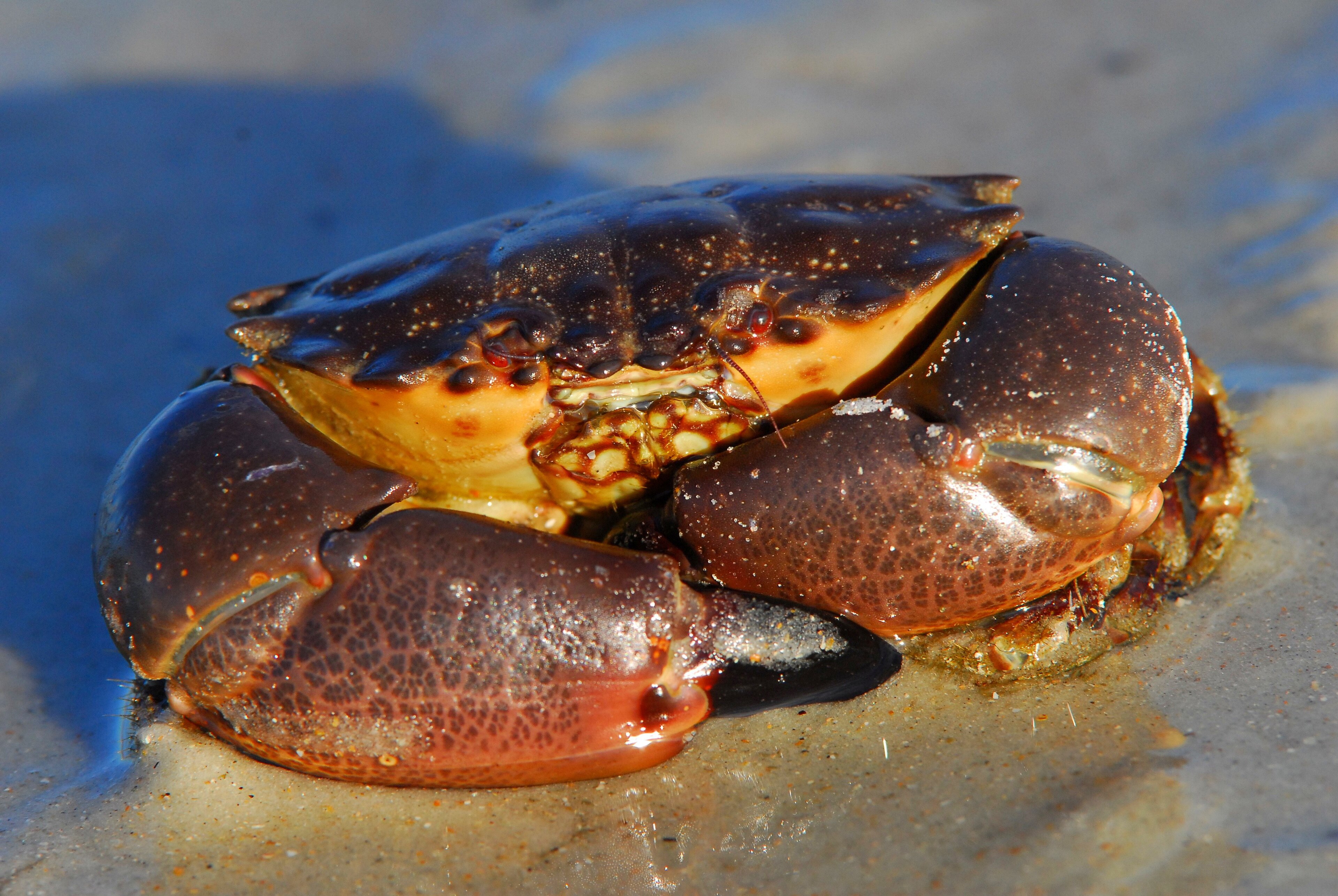

There is one commercial and recreational fishery in the United States where you take part of the animal and put the rest back alive, and it is the Florida stone crab.
You remove a claw. The crab goes over the side. It regrows the claw over about a year, and in theory you catch it again.
It is either the most elegant piece of fisheries design in the country or a comfortable story people tell themselves, and the honest answer involves both.
How the harvest works
The rules are specific and they are the entire fishery.
The season runs from the fifteenth of October to the first of May, closing on the second. The claw must measure at least two and seven-eighths inches, taken along the propodus, which is the larger immovable section, from the elbow joint to the tip. The recreational bag limit is one gallon of claws per person, or two gallons per vessel, whichever is less.
Both claws may lawfully be taken if each one is of legal size. That surprises people, and it is worth being precise about, because the widely repeated claim that Florida permits only one claw is not the law. What the state does say is that a crab left with one claw can feed more efficiently while it regenerates the other, so taking a single claw is a recommended practice and a harvester's choice rather than a requirement.
Harvest from egg-bearing crabs is prohibited entirely, with the orange or brown egg mass visible on the underside, and no claws may be taken from them at all.
The whole crab may not be kept. That is the rule that makes this fishery what it is: there is no legal way to land a stone crab body, so the animal is always returned, alive, minus a limb.
How to Harvest a Stone Crab Claw (Florida FWC)Whether it works, honestly
This is the part most writing about stone crab skips, and it is the most interesting thing about the fishery.
The theory rests on two claims: that removal is survivable, and that the claw regrows. The second is straightforwardly true. Stone crabs, like other crustaceans, can shed a limb at a natural fracture plane and regenerate it over successive molts, with an adult taking roughly a year to regrow a harvested claw to useful size.
The first claim is where the research is uncomfortable. Studies of declawing mortality have found substantial death rates, and they are markedly higher when both claws are taken than when one is. Even single-claw removal shows meaningful mortality, and a crab that survives without its crusher feeds less effectively and is more vulnerable while it regrows.
That body of work is the reason to take one claw rather than two, and it is the reason the state recommends it. It is a conservation argument rather than a legal one, and it is a good argument.
Removal technique matters enormously and is the part an individual controls. The claw has to break at the joint, cleanly, so the natural fracture plane seals. A claw twisted or torn away from the body takes tissue with it, and a crab damaged that way frequently neither regenerates nor survives. This is the single strongest argument for learning the technique from somebody who knows it before harvesting any.
So the fair summary is that the fishery is a genuine attempt at something unusual, that it is better than landing whole crabs, and that describing it as harmless is not supported. A recreational harvester who takes one claw, breaks it correctly, and returns the animal immediately is doing the version that works.
Where they live and how to catch them
Stone crabs occupy hard bottom, rock, rubble, oyster bar and structure through Florida's coastal waters, with the Gulf side from the Ten Thousand Islands north through the Big Bend being the heart of it and the Keys and the Atlantic side also productive.
Recreational harvest is by trap, by hand while diving, or with a dip net. Traps are the standard, with recreational trappers limited to a small number of traps that must be registered and marked, and the rules on trap construction, buoy marking and tending are specific enough to be worth reading rather than summarizing.
Diving for them is the other real method. Stone crabs hole up in rock crevices, under ledges and in burrows, and a diver working structure finds them by looking for the claws at the entrance. They are not fast and they do not need to be, because the crusher claw is capable of injuring a hand, and the standard advice about reaching into a hole you cannot see into applies with unusual force here.
Sponge crabs go back untouched. Undersized claws go back attached to the crab.
The claw, which is a remarkable piece of engineering
Worth understanding, because it explains the price and the danger.
A stone crab is asymmetric: one claw is a crusher, thick and blunt, and the other is a smaller pincer used for handling. The crusher generates enormous force for the animal's size, sufficient to break open oysters, clams and small conchs, which is what the crab eats. Measurements of stone crab claw force put it among the strongest of any crustacean relative to body size.
That is also why the claw is what gets sold and eaten while the body is not. The crusher is dense muscle, the yield is high, and the meat is firm in a way that no other crab's is.
And it is why handling a live stone crab carelessly is a genuine injury risk rather than a nuisance. A Dungeness pinch hurts. A stone crab crusher on a finger is a hospital visit.
The commercial fishery you are sharing water with
Recreational stone crabbing happens alongside a commercial fishery that is considerably larger, and knowing that changes how you fish.
Commercial trappers work hundreds of traps in long lines, marked with their own buoy colors, and they are running a business on ground they have fished for years. Setting recreational gear inside a commercial line is legal in most places and is a reliable way to lose it, because gear gets tangled, moved and cut, sometimes accidentally.
The etiquette is simple and worth observing: do not set inside somebody's line, do not pull a trap that is not yours under any circumstances, and give working boats room. Pulling another person's trap is theft and it is treated as such, and it is worth stating because a stone crab trap looks much like any other and the temptation is real when yours are empty.
How To Catch Stone Crabs from Zero to HeroThe gear
Stone crab is the one fishery in this library where the animal goes back and only a part of it comes home, and the gear list is shaped by that.
Registered and marked recreational traps, up to five, with the required buoy and the trap number issued to you. Florida requires the registration before the traps go in the water and it is free, which removes the only excuse for skipping it.
A claw gauge, and use it on the forearm rather than eyeballing the whole claw. The measurement is the propodus, taken from the elbow to the tip, and the minimum is two and seven-eighths inches. This is the measurement that decides whether the claw is legal, and it is not the measurement most people take on their first trip.
Heavy gloves, because a stone crab is holding a tool designed to break oyster shell and it does not distinguish between an oyster and a finger.
A cooler with ice, ready before you start rather than after, since claws deteriorate quickly in Florida heat and the meat sticks to the shell if they warm.
A recreational saltwater fishing license, which covers stone crab for recreational harvest along with the trap registration.
A mallet for cracking, which happens after cooking rather than before.
And somebody who has done it before. Removing a claw correctly so the crab survives and regrows is a technique rather than a description, the first attempt is where most crabs are killed by accident, and there is no substitute for watching it done once.
The bottom, and how to find it
The hardest part of this fishery is not the rules, it is locating structure, because stone crabs are tied to hard bottom in a way that most Florida species are not.
They want rock, limestone outcrop, rubble, oyster bar, riprap, seawall footings, channel edges and the margins where soft bottom meets hard. On the Gulf side much of that is limestone hard bottom scattered through otherwise featureless sand, and on the Atlantic side and in the Keys it is more often reef margin and rubble.
Some of that structure sits in areas closed to trapping, inside navigation channels, in state park or preserve waters, or on privately held submerged land, and none of those boundaries are visible from a boat. Guidepole carries the closure and jurisdiction layer against the specific spot, which on a fishery where the productive bottom is small, scattered and frequently adjacent to something restricted is the difference between a good set and a confiscated trap.
Cooking, which happens immediately
Stone crab claws are almost always sold cooked, and there is a reason that is not commercial convenience.
The meat adheres to the shell in a raw claw and tears apart when cracked, so claws are cooked promptly after harvest, then chilled. A claw cooked within a short time of coming out of the water releases cleanly; one that has sat raw does not. If you are harvesting your own, plan to cook them the same day rather than freezing them raw.
The standard is boiling for a few minutes depending on size, then straight into ice water to stop the cooking and set the meat, then chilled. They are then served cold with mustard sauce, which is the settled Florida convention, and reheating a cooked claw is generally considered a waste of it.
Cracking is a skill. The shell is thick and the goal is to fracture it without driving fragments into the meat, which means a firm strike with a mallet on the flat of the claw rather than a crushing squeeze.
Season, and why it ends when it does
The May closure is not arbitrary and it is the counterpart to the size limit.
The closed season covers the warm months, which is when stone crabs mate and when females carry eggs, and it also covers the period when claws removed are least likely to be regenerated successfully. Closing then protects the reproductive period and gives the population a stretch of the year in which nothing is being taken.
The mid-October opening is also why stone crab is culturally a winter food in Florida, appearing on menus from the middle of October and vanishing at the beginning of May. That is a real season rather than a marketing one, and a restaurant selling fresh Florida stone crab in July is selling something else or something frozen.
Landings have declined over the past two decades and the fishery has been tightened in response. The 2020 changes raised the claw minimum from two and three-quarter inches to two and seven-eighths, moved the end of the season from the fifteenth of May to the first, and added trap escape rings and registration requirements. That trajectory is worth knowing because it means the rules you learned a few years ago are probably not the current ones, and the current ones are what get enforced.
Getting started without a boat
Recreational stone crabbing is accessible, which is not true of most Florida fisheries.
A small number of traps set from a dock, a seawall or a kayak on hard bottom will catch, and the gear is inexpensive. A recreational saltwater fishing license is required, traps must be registered and marked to the rules, and the number permitted is small, which keeps the entry cost low.
The harder question is where, because stone crabs want structure and hard bottom rather than open sand, and the productive spots are local knowledge. Oyster bars, rocky patches, channel edges, riprap and the margins of hard bottom all hold them, and finding one takes a season of trying places rather than an afternoon.
Some of that structure sits in areas closed to trapping, in navigation channels, or on private submerged land, and those boundaries are not marked on the water. Guidepole carries the closure and jurisdiction layer against the specific spot, which on a fishery where the productive bottom is small, scattered and frequently adjacent to something restricted is the difference between a good set and a lost trap.
The short version
Season is the fifteenth of October to the first of May. Claws must be at least two and seven-eighths inches along the propodus from elbow to tip. Take a single claw by choice rather than requirement, never from an egg-bearing female, and the crab always goes back because keeping the body is illegal.
Break the claw cleanly at the joint, because a torn claw usually means a crab that neither regrows nor survives. Learn the technique from somebody who knows it.
Cook the claws the same day, then chill them, because meat in a claw that sat raw will not release from the shell.
And treat the fishery honestly. It is a real attempt at taking a renewable part of an animal, it is better than landing whole crabs, and mortality from declawing is meaningful rather than zero.
Other crab fisheries and how their rules differ are in Dungeness crabbing in Puget Sound and blue crab in the Chesapeake, and the trap rules that exist because lost gear keeps fishing are in crab pot rules explained.
The other crab on this coast, and the one most people mean when they say crabbing, is in blue crab on the Gulf coast. The paperwork for both, including the trap registration that catches people out, is in shellfish licenses by state. And if you are already on the water in Florida in autumn, the other thing worth a cooler is in cast net shrimping in Georgia and Florida. Florida's other seasonal shellfish run, and the one that draws the bigger crowd, is covered in bay scalloping in Florida.