Fish
Fish Fire
Fire Hike
Hike Bird
Bird


Stuart, Florida calls itself the Sailfish Capital of the World, and the geography backs it up. The Gulf Stream, that massive river of warm, blue water carrying pelagic fish north along the Atlantic coast, runs closer to shore off Stuart than almost anywhere else on the Eastern Seaboard. The 100-fathom line sits just 15 to 20 miles out, putting world-class offshore fishing within a short boat ride. From November through March, Atlantic sailfish pour through "Sailfish Alley", the stretch of water from Stuart Inlet south to Palm Beach, in numbers that draw tournament anglers from around the world.
But Stuart is not just an offshore town. The Indian River Lagoon, the most biodiverse estuary in North America, runs through the heart of the Treasure Coast, and the St. Lucie River feeds into it from the west. Together they create hundreds of miles of inshore habitat: mangrove shorelines, grass flats, oyster bars, dock-lined canals, and the tidal flow through St. Lucie Inlet. Snook, redfish, spotted seatrout, and tarpon inhabit this system year-round. The inshore "grand slam" (snook, redfish, trout, and tarpon in a single trip) is a realistic goal on the right day.
If you have fished Miami, the sailfish techniques are identical, kite fishing and live baiting, but Stuart puts you closer to the fish with less boat traffic. If you have fished Naples or Fort Myers for inshore species, Stuart's Indian River Lagoon is the Atlantic coast equivalent with the same snook and redfish but a different ecosystem.
Sailfish: The Main Event (November-March)
Atlantic sailfish are the fastest fish in the ocean, capable of 68 mph, and they migrate through Stuart's offshore waters in peak numbers from November through March. Fish average 30 to 60 pounds with bills, and their aerial acrobatics (greyhounding, tail-walking, cartwheeling) make them one of the most spectacular gamefish on Earth.
How They Are Caught
Kite fishing: The signature Stuart technique. One or two fishing kites are deployed from the boat, suspending live baits (goggle-eyes, blue runners, or pilchards) on the surface from clips attached to the kite line. The kites keep the baits splashing on the surface, mimicking injured baitfish, while keeping the fishing lines out of the water so the sailfish cannot see them. When a sailfish rises behind a bait, the angler drops back, the fish eats, and the fight begins. Kite fishing is highly visual and wildly exciting, you watch the entire attack unfold on the surface.
Live bait drifting: Free-line live goggle-eyes, blue runners, or threadfin herring in the current along the Gulf Stream edge. No weight, no kite, just a live bait swimming on a circle hook with 20-pound fluorocarbon leader, drifting in the deep blue water. Simpler than kite fishing but equally effective when sailfish are feeding subsurface.
Trolling: Early in the season (November-December), trolling dead ballyhoo rigged on circle hooks with dredge teasers is effective for covering water and finding scattered fish. Run 4 to 6 rods at 6-8 knots along the Gulf Stream edge. Switch to live bait once fish are located.
Sailfish Gear
Sailfish are caught on conventional tackle, 20- to 30-pound class spinning or conventional reels on 7-foot rods. The light tackle is intentional: sailfish are not powerful fighters in the way tuna or marlin are, but their speed and acrobatics require a reel with a smooth, reliable drag. A Shimano Saragosa 5000 or Penn Slammer III on a 7-foot medium rod handles the job. Leader: 30- to 40-pound fluorocarbon, 5/0 to 7/0 circle hook.
The release ethic: Stuart's sailfish fishery is almost entirely catch and release. Tournament scoring is based on releases, not kills. Sailfish are released at the boat, a quick bill grab, remove the hook, and the fish swims away. The goal is the fight, the jumps, and the photo at boatside. Nobody eats sailfish.
Sailfish Seminar, Kite Fishing, Tackle Selection, Baits Stuart Florida Fishing, Sailfish and SnookOther Offshore Species
While sailfish are the headliner, the same Gulf Stream access produces a full roster of pelagic and bottom fish.
Mahi-mahi (dolphin): Spring through fall. School mahi (5 to 15 pounds) and bull mahi (20 to 50 pounds) on weedlines, floating debris, and along current edges. Trolled ballyhoo, small lures, or live pilchards. Fast action, colorful fish, excellent eating.
Wahoo: Winter and spring, running along the Gulf Stream edge. Trolled high-speed lures (12-14 knots) or live-baited deep with downriggers. Wahoo are explosive and extremely fast, they hit at 50+ mph and strip line like nothing else in the ocean.
Blackfin tuna: Year-round but best in winter. Chunking with cut sardines over deep structure, live-baiting on the Gulf Stream edge, or trolling small feathers and cedar plugs. Great fighters on light tackle.
King mackerel: Fall through spring. Slow-trolled live baits or dead cigar minnows on wire leader along the reef line at 60 to 90 feet. Kingfish hit with shocking speed and make blistering runs.
Bottom fish: Red snapper (during open season), mutton snapper, yellowtail snapper, grouper (gag and black), and amberjack on the reefs and wrecks from 60 to 200 feet. Standard bottom-fishing techniques, cut bait, heavy tackle, get them off the structure fast.
Inshore: The Indian River Lagoon and St. Lucie
The Indian River Lagoon (IRL) is a 156-mile estuary running along Florida's east coast, and the Stuart section is among its most productive. The St. Lucie River enters the lagoon from the west, and St. Lucie Inlet connects the system to the Atlantic, creating tidal flow that drives the entire food chain.
Snook
Stuart has one of the best snook fisheries on the Atlantic coast. Snook hold along mangrove shorelines, dock pilings, bridge shadows, and the jetty rocks at St. Lucie Inlet. Fish average 24 to 30 inches, with slot fish (28 to 33 inches) common and the occasional 40-inch trophy.
Technique: Live pilchards free-lined near structure on the outgoing tide. Or DOA CAL Shad (glow or white) on a 1/4-ounce jighead, cast tight to mangroves and docks. At night, fish lighted bridges and docks with dark-colored soft plastics, snook are ambush feeders that use the light/shadow edge to attack baitfish silhouetted against the illumination.
St. Lucie Inlet: The inlet jetty is the premier shore-fishing spot for snook. Walk out on the south jetty (accessible from Bathtub Reef Beach) and cast live bait or artificials into the current on the outgoing tide. Giant snook stage in the deep channel of the inlet, ambushing baitfish flushing from the lagoon.
Redfish
Redfish cruise the grass flats, oyster bars, and mangrove shorelines of the IRL in schools. Average 18 to 27 inches (slot size). Sight-fishing for tailing reds on the flats is the highlight, polarized glasses, quiet approach, accurate cast.
Technique: Gold spoon (Johnson Silver Minnow), Gulp! Shrimp on a jighead, or live shrimp under a popping cork. Fish the flats on low-to-mid tide when reds are concentrated in shallower water and easier to spot.
Tarpon
Tarpon enter the St. Lucie system from April through August. Juveniles (20 to 60 pounds) inhabit the river and lagoon year-round. Adult tarpon (80 to 150 pounds) stage in the inlet and along the beaches during the spring migration.
Technique: Live mullet, pinfish, or crabs drifted through the inlet channel on heavy tackle (50-pound braid, 60-pound fluorocarbon, 7/0 circle hook). For juveniles in the river, lighter gear with live shrimp or DOA Baitbusters. Tarpon rolling on the surface at dawn in the IRL is a common sight from April through July.
Spotted Seatrout
Trout hold on grass flats throughout the IRL, averaging 14 to 20 inches with occasional 5-pound gator trout. They are the most accessible and consistent species in the lagoon.
Technique: Live shrimp under a popping cork drifted over grass flats. Or MirrOlure MR17 twitchbaits in morning glory or MirrOdine suspending baits. Trout respond to the pop-pop-pause cadence of the cork.
Offshore Fishing for Whatever Takes the Bait, Stuart FLThe Mullet Run (September-November)
The annual mullet run is Stuart's most exciting inshore event. Schools of finger mullet and adult mullet migrate south along the beaches and through the inlet, pursued by everything with teeth, snook, tarpon, jack crevalle, sharks, bluefish, and ladyfish. The water erupts as predators slash through the mullet schools. Every inch of the inlet, beach, and jetty holds fish during the run.
Technique: Cast net a few live mullet and free-line them on a circle hook near the action. Or throw topwater plugs (Rapala Skitter Walk, Heddon Zara Spook) into the blitzes. The mullet run is chaotic, fast, and unpredictable, keep multiple rods rigged and be ready to switch targets.
The Grouper Couldn't Resist These Juicy Baits, Offshore Fishing Stuart FLAccess Points
St. Lucie Inlet (south jetty): Walk-in from Bathtub Reef Beach on Hutchinson Island. The best shore spot for snook, tarpon, and jacks. Parking at the beach lot. Free.
Sandsprit Park: Boat ramp, fishing pier, and shore access on the north side of the St. Lucie River near the inlet. Good snook and trout fishing from the pier.
Stuart Causeway (A1A bridge): Walk-on bridge fishing for snook, sheepshead, and jacks around the pilings. Free parking at both ends.
Roosevelt Bridge: Night-fishing hotspot for snook under the bridge lights. Shore access from the park on the south side.
Sailfish Splash Waterpark Pier (Indian Riverside Park): Short pier on the IRL with trout and snook fishing.
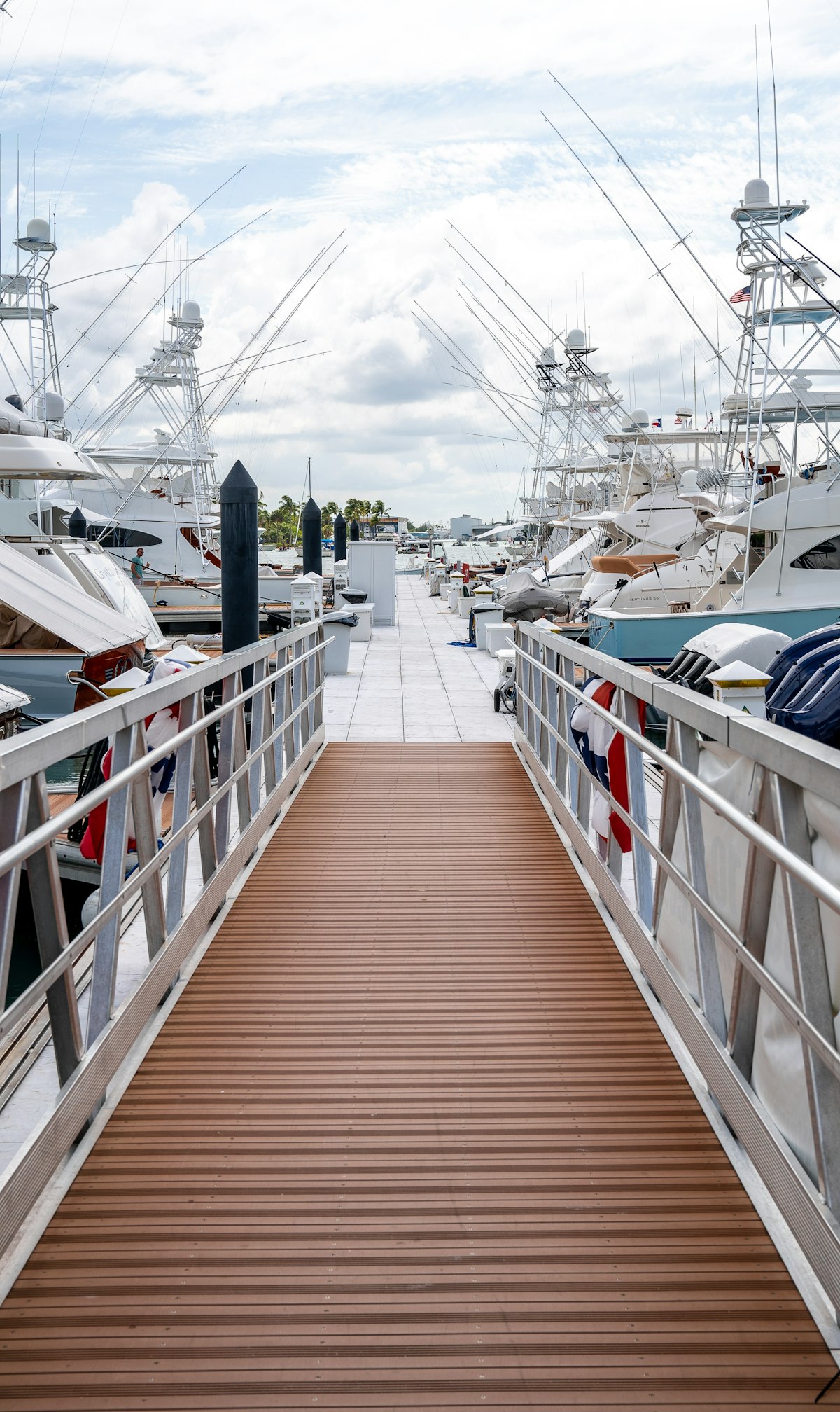
Offshore: Multiple marinas on the St. Lucie River and in Stuart launch charter boats. Sailfish Marina, Pirate's Cove Resort & Marina, and Sandsprit Park ramp provide offshore access. The inlet run to the Gulf Stream is 15 to 20 miles.
Charter Fishing
Sailfish charters: Full-day trips (8-10 hours) $1,500 to $2,500 for up to 6 anglers during peak season (November-March). Half-day trips $800 to $1,200. All kite fishing gear, live bait, and tackle included. Book early for January and February, peak sailfish tournament season.
Inshore charters: $450 to $650 half-day for 1-3 anglers. Covers the IRL, St. Lucie River, and inlet for snook, redfish, trout, and tarpon. All tackle and bait included.
Offshore bottom fishing: $800 to $1,200 half-day for up to 6 anglers targeting snapper, grouper, and kingfish on the reefs.
Fishing License and Regulations
Florida saltwater fishing license required for anyone 16 and older. No license needed on a licensed charter boat.
| License Type | Cost |
|---|---|
| Resident annual | $17 |
| Nonresident annual | $47 |
| Nonresident 7-day | $30 |
| Nonresident 3-day | $17 |
Snook: Catch-and-release December 1 through February 28 and May 1 through August 31. Open season slot: 28-33 inches, 1 per day. Circle hooks required with natural bait.
Redfish: Slot 18-27 inches, 1 per day.
Sailfish: Catch and release strongly encouraged (virtually all are released). $50 tarpon/sailfish tag required only if keeping for a potential record.
Red snapper: Federal season only (typically June-August). 2 per day, 16-inch minimum. Check current NOAA regulations.
When to Come
November-March (Winter): Peak sailfish season, the main draw. Inshore snook and trout fishing remains strong. Cooler weather, dry season, comfortable fishing. The best all-around period for Stuart.
April-June (Spring/Early Summer): Tarpon migration through the inlet and along beaches. Mahi-mahi appear offshore. Snook become aggressive before the spawn. Cobia run along the beaches in April.
July-September (Summer): Juvenile tarpon in the backcountry. Snook in catch-and-release mode. Mahi-mahi and kingfish offshore. Afternoon thunderstorms daily but mornings are productive.
September-November (Fall): The mullet run, the most exciting inshore event. Everything feeds aggressively. Sailfish season begins in November. The transition from summer to winter brings the best diversity of species.
Practical Details
Getting there: Stuart is on Florida's Treasure Coast, about 100 miles north of Miami, 2 hours south of Jacksonville, and 2.5 hours east of Tampa. Palm Beach International Airport (PBI) is 40 minutes south. Orlando (MCO) is 2 hours north.
What to bring: Polarized sunglasses (essential for sight-fishing the flats), sunscreen, rain gear for summer. For sailfish trips, the captain provides everything. For DIY inshore, bring a quality cast net for live bait.
Where to stay: Stuart and Jensen Beach have hotels, motels, and vacation rentals. Hutchinson Island (the barrier island) puts you within walking distance of Bathtub Reef Beach and the inlet jetty. Downtown Stuart has a charming riverfront with restaurants and shops.
Kite Fishing Tactics for Sailfish