Fish
Fish Fire
Fire Hike
Hike Bird
Bird

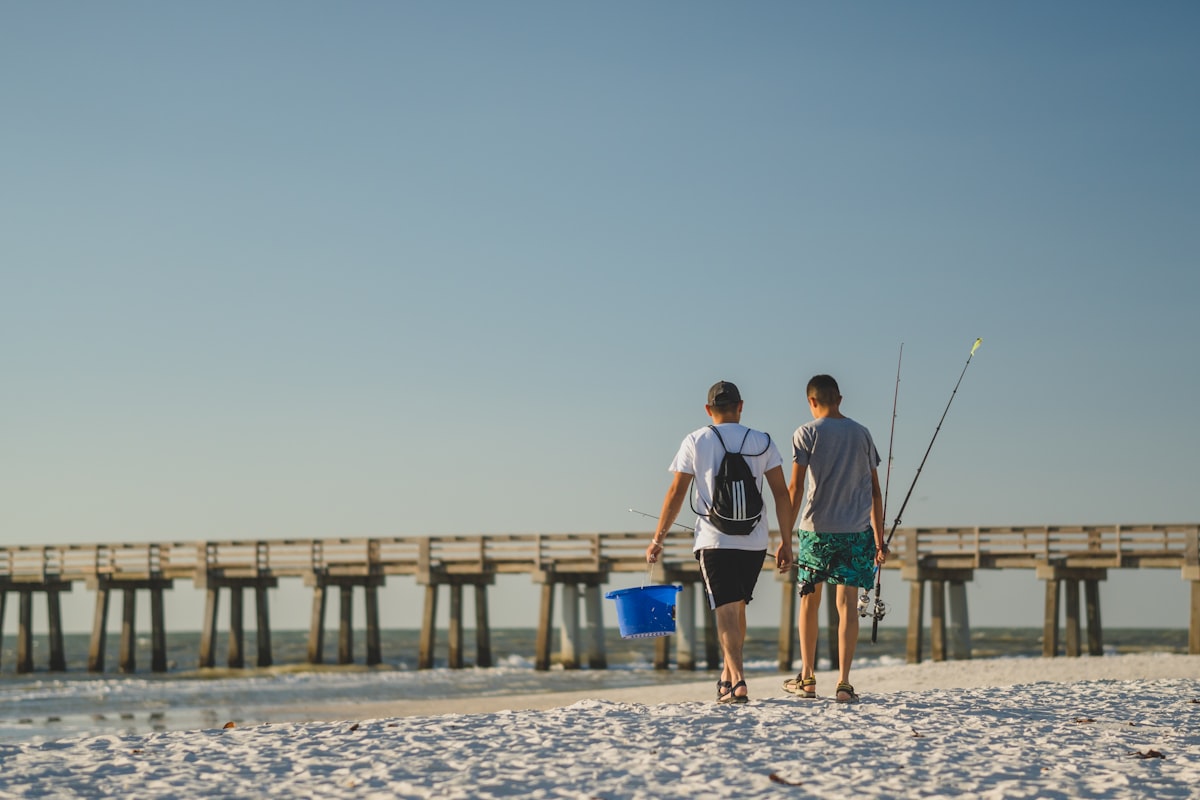

Destin sits on the Emerald Coast of Florida's Panhandle, where Choctawhatchee Bay funnels through East Pass into the Gulf of Mexico. The fishing here is world-class, but if you've never rigged a rod or set foot on a pier, the sheer number of options can be overwhelming. This guide covers the practical side: what gear you need, how to set it up, what bait to use, and how to actually catch fish in Destin's four main fishing environments.
For a full overview of Destin's fishery, the species, the seasons, the charter fleet, and where to go, read our complete Destin fishing guide.
Gear: What You Need (and What You Can Rent)
You don't need to show up with a truck full of tackle. Destin has excellent rental options, and if you're booking a charter, the captain provides everything. But if you want your own setup, here's what works for each type of fishing.
Pier and inshore fishing: A 7-foot medium-action spinning rod paired with a 3000-size reel is the workhorse. Spool it with 15- to 20-pound braided line and tie on a 20-pound fluorocarbon leader. This rig handles redfish, speckled trout, pompano, sheepshead, and anything else you'll encounter from the Okaloosa Island Pier or on Choctawhatchee Bay. A Penn Battle III combo or a Daiwa BG combo in this size range will last for years in saltwater if you rinse it after each trip.
Surf fishing: Step up to a 9- to 10-foot medium-heavy rod with a 5000- or 6000-size reel. The extra length gives you the casting distance to reach the sandbars where pompano and whiting feed. Spool with 20- to 30-pound braid and use a 30-pound fluorocarbon leader.
Offshore charters: Don't buy offshore gear as a beginner. The captain provides heavy conventional rods, reels, terminal tackle, and bait. Your job is to show up, listen, and hold on.
Renting gear: If you don't want to buy, outfitters in Destin rent complete surf fishing setups with daily and weekly rates, including rod holders and tackle, some deliver right to your rental. The Okaloosa Island Pier also rents rods at the bait shop on-site.
Rigs: How to Set Up for Each Type of Fishing
Knowing which rig to tie is half the battle. Here are the four setups that cover 90% of the fishing you'll do in Destin.
The Pompano Rig (Surf Fishing)
This is a two- or three-hook dropper rig with small floats or beads on each dropper line. The beads, usually orange or pink, mimic the egg sacs of sand fleas and attract pompano. Tie a 2- to 3-ounce pyramid sinker at the bottom to hold in the surf current. Use #1 or #2 circle hooks. Bait with sand fleas (the undisputed best pompano bait) or peeled fresh shrimp.
Cast it out past the first sandbar, set your rod in a sand spike, and wait. Pompano feed on the bottom, so keep the rig planted. If you get no bites in 15 minutes, reel in, rebait, and cast to a different distance, the fish move through in schools, so covering different zones is key.
How to Tie a Pompano Rig for Surf FishingThe Popping Cork Rig (Inshore Bay Fishing)
A popping cork is a foam or hard-plastic float threaded on a wire with beads above and below. When you snap your rod tip, the cork pops against the beads, the sound mimics feeding fish and draws speckled trout and redfish to investigate.
Tie your mainline to the top loop of the cork. Below the cork, attach 3 to 4 feet of 20-pound fluorocarbon leader to a 1/0 circle hook. Bait with a live shrimp hooked under the horn, or thread on a Berkley Gulp Shrimp in New Penny color on a 1/8-ounce jighead. Cast near grass flats, oyster bars, or dock pilings in Choctawhatchee Bay. Pop it, let it sit for five seconds, pop again. When the cork disappears, set the hook.
Popping Corks for Beginners: The Complete SetupThe Carolina Rig (Pier and Jetty Fishing)
Thread your mainline through a 1/2- to 1-ounce egg sinker, add a small plastic bead, and tie on a barrel swivel. To the other end of the swivel, tie 12 to 18 inches of fluorocarbon leader to a 1/0 or 2/0 circle hook. The sinker holds your bait on the bottom while the leader lets it drift naturally in the current.
This is the go-to rig for the Okaloosa Island Pier and the East Pass Jetties. Bait with a live shrimp, a chunk of cut mullet, or a sand flea. It catches everything, redfish, sheepshead, black drum, flounder, and whiting.
How to Tie a Carolina Rig for Inshore FishingThe Sabiki Rig (Catching Your Own Bait)
A sabiki is a pre-made rig with six small gold hooks dressed with Mylar flash, weighted with a small bell sinker at the bottom. Drop it off the pier, jig it with a "jerk-jerk-reel" motion, and you'll load up with cigar minnows, threadfin herring, and other small baitfish. These make excellent live bait for king mackerel, redfish, and snapper. Use a light spinning rod for sabiki work, a heavier rod makes it hard to feel the bait loading on the hooks.
How to Rig a Sabiki Rig and Catch Live BaitBait: What to Use and Where to Get It
Live shrimp are the universal bait in Destin. They catch redfish, trout, sheepshead, flounder, pompano, and most reef fish. Available at every bait shop in the area and at the pier bait shops. Hook them under the horn (the spike between the eyes) for a natural presentation.
Sand fleas (mole crabs) are the top pompano bait. You can catch your own with a sand flea rake, they burrow in the wet sand at the waterline, or buy them at local bait shops. Hook them through the shell from bottom to top so the hook point exits the back.
Cigar minnows work for king mackerel, red snapper, and larger inshore fish. Buy them frozen at tackle shops or catch them live off the pier with a sabiki rig, live ones dramatically outperform frozen.
Cut mullet is cheap, available everywhere, and catches bottom fish on the pier and jetties. Cut it into one-inch chunks.
Artificial lures: A Berkley Gulp Shrimp in New Penny or Molting color on a 1/8-ounce jighead is the most versatile artificial in Destin. Fish it under a popping cork for trout, bounce it along the bottom for redfish and flounder, or drift it along dock pilings. Gold spoons (1/4-ounce Johnson Silver Minnow in gold) are deadly on redfish over grass flats. For pier fishing, a 1-ounce silver or white Gotcha plug catches Spanish mackerel when they're running.
Techniques by Species
Redfish
Work the oyster bars, dock pilings, and grass flat edges in Choctawhatchee Bay. Cast a live shrimp on a Carolina rig or a gold spoon tight to structure and retrieve slowly. Redfish have a downward-facing mouth, they feed on the bottom, so keep your bait low. Best times are early morning and the last hour before dark, on moving tides. Look for "nervous water", subtle ripples that signal feeding fish underneath.
Speckled Trout
Target sandy potholes in the grass flats and the edges where grass meets sand in Choctawhatchee Bay. A Gulp Shrimp under a popping cork is the classic approach, cast over the pothole, pop the cork, and wait. Trout have paper-thin mouths, so set the hook gently and keep steady pressure. The best bite is early morning during spring and fall, with a secondary push in the evening.
Pompano
Pompano feed in the surf troughs between sandbars. Use a pompano rig baited with sand fleas, cast past the first sandbar, and set your rod in a spike. Fish multiple rods at different distances to find the school. Pompano run in waves, you might wait 30 minutes, then catch three in a row. The spring run (April through early May) and fall run (October) are peak times.
King Mackerel (Pier Fishing)
When kings are running past the pier, spring and fall primarily, use a live cigar minnow or threadfin herring on a wire leader with a treble hook, free-lined with no weight. Let the bait swim out from the pier on the current. Kings are fast and toothy, the wire leader is non-negotiable. When one hits, let it run before setting the hook. Bring a pier net for landing, these are not fish you can lift by the line.
Red Snapper (Offshore Charter)
This one you'll do on a charter boat. The captain positions over reef structure, and you bottom-fish with cut bait or live cigar minnows in 60 to 200 feet of water. Drop your bait to the bottom, reel up two cranks, and wait. Red snapper are aggressive, the challenge is getting them off the bottom before they dive into the reef and break you off. Use the rod the captain gives you and crank hard when you feel the bite. Federal season typically runs June through August, check current dates before you book.
For a full breakdown of Destin's offshore options by trip length, see our complete Destin fishing guide.
Four Knots Every Beginner Needs
You can fish Destin successfully with just three or four knots. Learn these before your trip, practice at home with a piece of rope until they're automatic.
Palomar Knot, The strongest and simplest hook connection. Double six inches of line, pass the loop through the hook eye, tie an overhand knot with the doubled line, pass the hook through the loop, and pull tight. This knot retains over 95% of your line strength and works with braid, fluorocarbon, and mono.
Improved Clinch Knot, Thread the line through the hook eye, wrap it around the standing line five times, pass the tag end through the small loop near the eye, then through the big loop you just created. Good for lighter lines under 20-pound test. Faster to tie than the Palomar once you have the muscle memory.
Uni-to-Uni Knot, Connects your braided mainline to your fluorocarbon leader. Overlap the two lines by six inches, tie a uni knot with each line around the other (four wraps each), and pull the knots together until they cinch tight. Trim the tags close. This is the one knot that takes practice, tie it ten times at home before you need it on the water.
Loop Knot, Creates a small loop at the end of your leader, giving lures more freedom to move and swim naturally. Use it when fishing with artificial lures like Gulp Shrimp or spoons for a more lifelike action.
How to Tie a Palomar Knot Double Uni Knot: How to Tie Braid to Fluorocarbon 3 Great Fishing Knots in 5 Minutes: Improved Clinch, Uni-Knot, and LoopPractical Details
Fishing license: Florida requires a saltwater fishing license for anyone 16 and older. Non-residents can buy a 3-day license or 7-day license ($30) at local bait shops, Walmart, or tax collector offices. Annual non-resident licenses ($47) are available online at GoOutdoorsFlorida.com. You do not need a license to fish from a licensed pier (including the Okaloosa Island Pier), and fishing charters cover everyone on board.
Pier fishing fees: The Okaloosa Island Pier charges $8 for adults, $6 for seniors, and $5 for kids 6-12. Under 6 is free. The pier is 1,262 feet long, open 24 hours from mid-March through October, and has a bait shop on-site that sells tackle and rents rods.
What to wear: Light-colored moisture-wicking shirt (long sleeves if you burn easily), shorts, non-slip shoes, a wide-brimmed hat, and polarized sunglasses. Apply SPF 50+ sunscreen before you leave and reapply every two hours, the Florida sun reflecting off the water is brutal.
What to bring: Water (more than you think you need), snacks, a small cooler with ice if you plan to keep fish, a towel, needle-nose pliers for removing hooks, and a rag for handling fish. If you're prone to seasickness and booking a charter, take Dramamine an hour before departure.
Best times to fish: Early morning (first light to 9 AM) and late afternoon (two hours before sunset) produce the best action for inshore species. Pier fishing can be productive all day, with king mackerel often hitting midday. Offshore charters fish all day by nature.