Fish
Fish Fire
Fire Hike
Hike Bird
Bird


In Texas the recreational oyster limit is two sacks a person, and the regulations tell you what a sack is: one hundred and ten pounds, including the dead shell and the sack itself.
Two hundred and twenty pounds of oysters, per person, per day.
Washington's limit is eighteen oysters. That is the range this library covers, and the Gulf sits at the far end of it.
The Gulf is a different oyster fishery
The animal is the eastern oyster, Crassostrea virginica, the same species as the Chesapeake and the whole Atlantic seaboard, and a different animal from the Pacific oyster that dominates the West Coast.
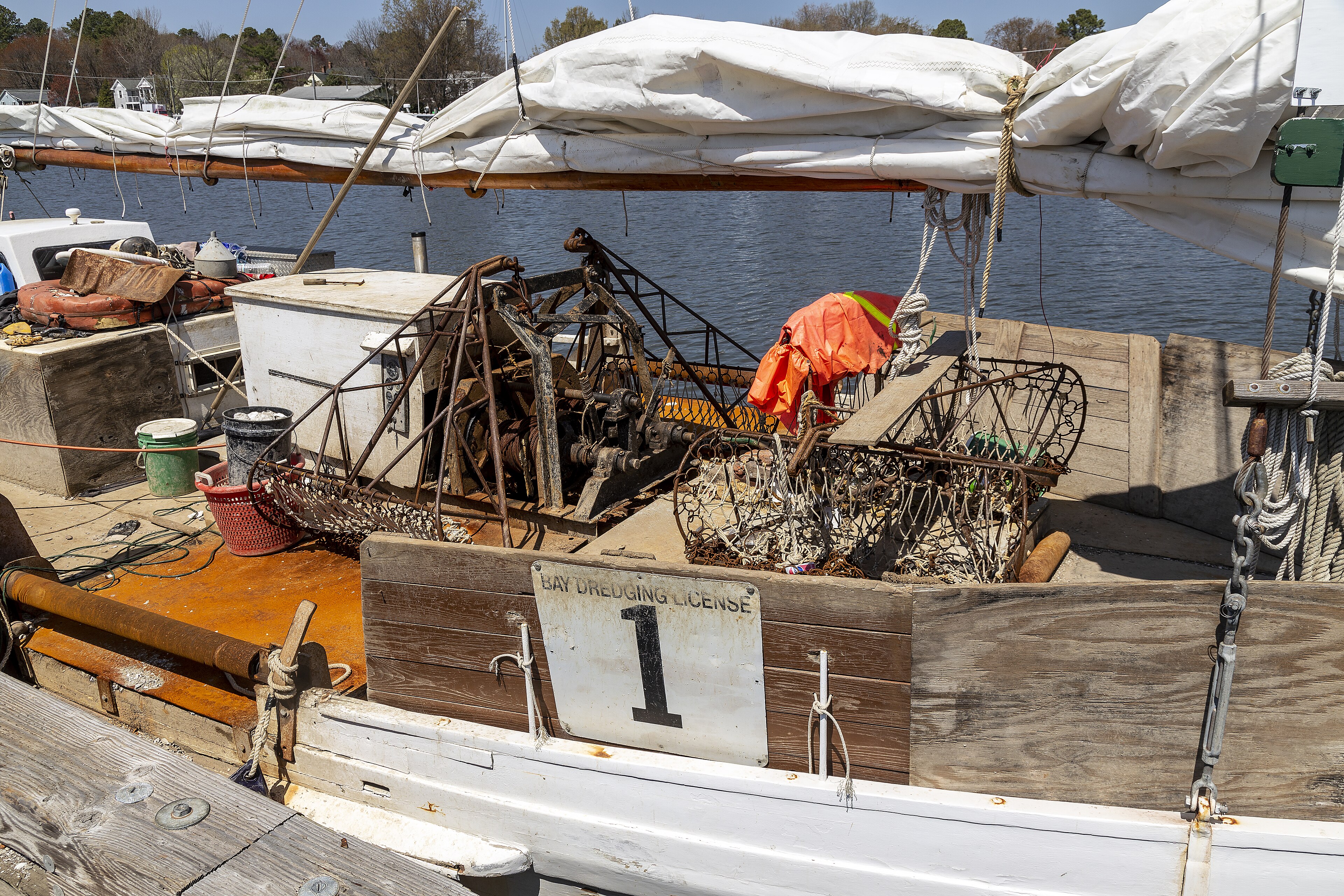
It grows on subtidal reefs in brackish bays rather than on intertidal beaches. That single fact changes everything downstream. You do not walk out at low tide and pick them up. You work from a boat, over the side, with tongs or a dredge, on ground you cannot see.
Which is why the Gulf rules are written around boats and gear rather than around beaches and tides, and why the limits are in sacks rather than in numbers of animals.
Louisiana
Louisiana requires a Basic Fishing License and a Saltwater Fishing License. Recreational harvest is limited to tonging or gathering by hand, which means no dredge.
Oysters from public oyster areas must be three inches or greater in length from hinge to mouth.
The limit is two sacks per person per day for personal consumption, with one exception: in the Calcasieu Lake Public Oyster Area it is one sack per person per day.
Louisiana's recreational rules state that limit in sacks and do not define a sack. Texas does define one, at a hundred and ten pounds, and it would be a mistake to carry the Texas figure across the state line and assume it applies here. If you are working to the edge of the limit in Louisiana, that is a question for the department rather than for arithmetic.
Harvest at night is prohibited, defined as the period from half an hour after sunset until half an hour before sunrise.
The season is the part that is not fixed. Louisiana's Wildlife and Fisheries Commission sets public oyster area seasons based on biological conditions, so the answer changes year to year and area to area, and the current status lives on the department's oyster season page rather than in a printed calendar. Private leaseholders may work their own leases year-round.
Texas
Texas runs a fixed season and it is short: Monday through Saturday, November 1 through April 30, from sunrise to three thirty in the afternoon.
That afternoon cutoff is unusual and it is the detail most likely to catch somebody out. It is not sunset. It is half past three.
The limit is no more than two sacks of legal oysters possessed per person, and Texas defines the sack as one hundred and ten pounds including dead oyster shell and the sack.
Minimum size is three inches, measured as the greatest length of the shell.
Gear is hand, tongs or an oyster dredge, and a dredge may not be more than fourteen inches wide. Using tongs or a dredge requires a sport oyster boat license, thirteen dollars for residents and fifty one for non-residents, on top of a basic recreational fishing license.
Six specific areas are closed to harvest: Christmas Bay, Carancahua Bay, Powderhorn Lake, Hynes Bay, St. Charles Bay and South Bay. Separately, within waters the state health department has approved or conditionally approved for shellfish, the strip extending three hundred feet from the water's edge is closed to oyster harvest, so you have to stay outside that band before you anchor.
How Louisiana Oysters Are HarvestedThe differences that matter
Same species, same coast, two states, and the rules diverge in ways that are easy to carry across a state line by accident.
Dredges. Texas permits a recreational dredge up to fourteen inches. Louisiana does not permit a recreational dredge at all: tongs or hands.
Seasons. Texas is fixed and printed, November through April. Louisiana is variable and set by the Commission on biological data, which means the calendar cannot tell you and the department's current page can.
Hours. Texas stops at three thirty in the afternoon. Louisiana runs to half an hour after sunset.
Measurement. Both states use three inches, and they measure it differently: Louisiana from hinge to mouth, Texas as the greatest length of the shell. On most oysters those give the same answer, and on an irregular one they do not.
Licenses. Texas adds a sport oyster boat license if you use tongs or a dredge. Louisiana requires the Basic and Saltwater licenses and stops there.
The general lesson is the one in shellfish licenses by state: the Gulf marsh does not tell you which state you are in, and the rulebook changes at a line you cannot see.
The reef, and why the boundaries exist
Gulf oysters build subtidal reefs, and a reef is the point rather than a detail.
Oyster larvae settle on hard calcareous surface, overwhelmingly old oyster shell, so a reef accumulates over generations and rises off the bottom. Take the shell away and the next generation has nowhere to land. That is the same constraint described in the Chesapeake, and the Gulf has it too.
It is also why the closed areas exist. Texas names six of them, plus a separate three-hundred-foot shoreline buffer. Louisiana manages public seed grounds that are opened and closed on biological grounds by the Commission. In both cases the closure is doing the same job: protecting the ground where the shell and the young oysters are, so that the fished areas have something feeding them.
And in Louisiana there is the lease question on top. A great deal of Louisiana's oyster bottom is under private lease, and harvesting from a lease without the leaseholder's written permission is not a technicality. If you are not certain the ground under you is public and open, it is not.
Working a pair of tongs
If you have never used oyster tongs, it is worth knowing what the job actually is before you buy a pair.
Tongs are two long wooden or metal shafts hinged near the middle, with opposing rakes at the bottom, working like enormous scissors. You stand at the side of the boat, lower them open onto the reef, close them by pulling the handles apart at the top, and haul up whatever the rakes closed around. Then you sort it on a culling board and put back everything undersized, along with the shell.
Three things surprise people. The first is the weight: a loaded pair of tongs is heavy and you are lifting it repeatedly from a standing position on a moving boat. The second is that most of what comes up is not oysters. It is shell, mud, and clumps that have to be broken apart by hand. The third is that the culling is the actual work, not the tonging, and it is what determines whether the day is legal.
Put the shell back. On a reef fishery this matters more than almost anywhere else in this library, because the shell you return is the surface the next generation settles on. Culling over the side, on the reef you took it from, is the traditional practice and the reason it exists.
And go with somebody the first time. Reading about tongs is not a substitute, the reefs are unmarked, and the difference between productive bottom and empty bottom is invisible from the surface.
Health closures, which are separate again
The other closure is the health one and it comes from a different agency.
In Louisiana the Department of Health may close areas for public health reasons regardless of what the Wildlife and Fisheries Commission has done with the season. In Texas the health department designates approved areas, and within them the strip extending three hundred feet from the water's edge is closed to harvest.
Two agencies, two independent answers, and both have to be yes. This is the same trap described in shellfish biotoxin closures, and on the Gulf it has an additional wrinkle: warm water.
Vibrio is a genuine and seasonal risk here in a way it is not on a cold coast. The Gulf is warm for much of the year, Vibrio vulnificus multiplies in warm water and in shellfish left warm after harvest, and the illness it causes in vulnerable people is serious rather than inconvenient. The handling rules that address it are in the R rule is right for the wrong reason, and on this coast they are not optional advice.
The gear
Gulf oystering is boat work, and the list is short and heavy.
Tongs, which are the traditional tool and the only legal one for recreational harvest in Louisiana. A pair of oyster tongs is a long scissoring rake, they are awkward until they are not, and working them from a small boat in a chop is genuinely hard labor.
A dredge no more than fourteen inches wide, if you are in Texas and have the sport oyster boat license for it.
A three inch gauge, because both states use three inches and measure it differently, and at two sacks a person you are making that decision many hundreds of times.
Heavy gloves, since oyster shell cuts easily and a cut in warm Gulf water is worth taking seriously.
Sacks, and a realistic view of what a full one weighs. A hundred and ten pounds is a genuine lift, and two of them per person is a boat-loading problem rather than a bucket.
Far more ice than you expect. This is the item that matters most on this coast, because the whole Vibrio question turns on how quickly the catch gets cold and stays cold.
And the current season and closure status for the specific area, from the state agency and the health department both, checked the morning you go.
Galveston Bay Oyster Reef RestorationWhat has happened to the resource
The Gulf produces a large share of the American oyster crop and the fishery has taken a run of hard years.
Storms are the visible part. A major hurricane can bury a reef in sediment or move it, and the Gulf has had several in a short span. Freshwater is the other half: oysters need brackish water, and too much fresh water for too long kills them as surely as too little. Flood years, river management and diversion projects all move salinity around, and a reef sitting in the wrong salinity for a season does not simply pause, it dies.
That is why Louisiana manages its public grounds on biological data rather than on a fixed calendar, and why Texas has needed reef restoration work in Galveston Bay. It is the same pattern as the Chesapeake at a different point in the story: a resource whose limiting factor is habitat rather than fishing pressure alone.
Eating them
Gulf oysters have a reputation and it is only half deserved.
They are larger, milder and less briny than a cold-water oyster, because the bays they grow in are warmer and generally less salty. That is the merroir argument set out in why oysters taste different and it is not a criticism, it is a description.
They are also the classic oyster for cooking rather than for a raw bar. Chargrilled, fried, in a po-boy or in a stew, a Gulf oyster is doing what it is best at, and a two-sack limit is a cooking quantity rather than a tasting one.
If you do eat them raw, do it in the cold months and get them cold fast. That is the Vibrio rule and it is the one that matters here.
When to go
Both states put their harvest in the cold half of the year, and there are three separate reasons stacked on top of each other.
The eating reason. Oysters spawn in warm water, and a spawning oyster is thin, soft and milky. Cool water animals have recovered condition and are fat. On the Gulf that seasonal swing is more pronounced than on a cold coast, because the summer water is genuinely warm.
The safety reason. Vibrio multiplies in warm water and in shellfish that stay warm after harvest, and it is the main reason Gulf oysters have the reputation they do. A November oyster iced immediately is a very different proposition from a July oyster in a bucket.
And the practical reason. Texas simply closes: November 1 to April 30 and nothing outside it. Louisiana's Commission sets its seasons on biological data, and in practice the public grounds tend to open in the cooler months as well.
Within the season, pick calm weather over anything else. These are shallow bays that turn to short steep chop in wind, tonging from a small boat in a chop is miserable and unsafe, and the reefs are not going anywhere.
The short version
Texas: Monday to Saturday, November 1 to April 30, sunrise to three thirty in the afternoon, two sacks a person at a hundred and ten pounds a sack, three inches greatest length, hand or tongs or a dredge up to fourteen inches, with a sport oyster boat license for the gear.
Louisiana: seasons set by the Commission on biological data rather than a calendar, two sacks a person except one sack in Calcasieu Lake, three inches hinge to mouth, tongs or hands only, no harvest between half an hour after sunset and half an hour before sunrise.
Both states close specific areas, and in both the health agency closes separately from the fisheries agency. Both answers have to be yes.
In Louisiana, assume the bottom is leased unless you have established otherwise.
Ice everything immediately, because this is a warm coast and Vibrio is the real risk rather than a theoretical one.
The other Gulf fishery on the same water is in blue crab on the Gulf coast, and the shrimp are in cast net shrimping in Georgia and Florida. The Atlantic version of the same species and the same collapse is in the Chesapeake.