Fish
Fish Fire
Fire Hike
Hike Bird
Bird

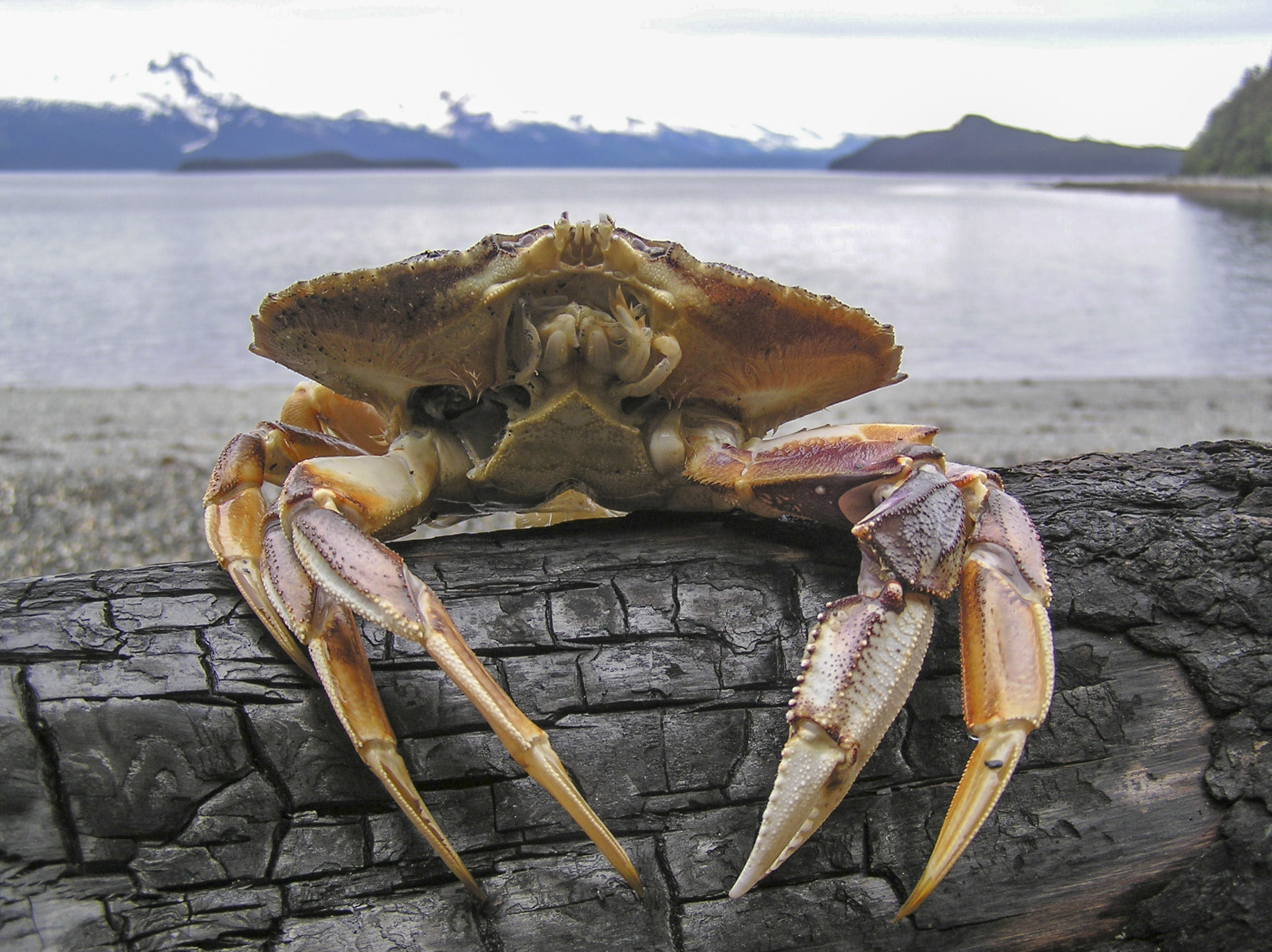
Almost everybody who thinks about crab in Alaska is thinking about king crab. It is the one on the television program, the one in the airport restaurant, the one people picture when they picture a pot coming over a rail.
In Southeast Alaska you cannot take one unless you live there.
The state's 2026 shellfish regulations put it in capitals: king crab is open to residents only, under personal use regulations. There is no nonresident version of that fishery. A visitor with a sport fishing license, a boat and a pot is not permitted to take a king crab, and no amount of paperwork changes it.
What a visitor can do is Dungeness and Tanner, and both are excellent. That is the article.
Personal use versus sport, which decides everything
Alaska splits its non-commercial fisheries into three categories and the distinction is not cosmetic.
Personal use is defined as taking fishery resources by Alaska residents for personal use and not for sale or barter. The department states plainly that personal use fishing is open to Alaskan residents only, and that you must hold a valid resident sport fishing license to participate.
Sport fishing is the category a visitor falls into. It has its own limits, its own seasons and, in places, its own closures aimed specifically at nonresidents.
Subsistence is a third category again, with its own rules, and is outside what this article covers.
The critical part is that these do not stack. Harvest, bag, possession and pot limits for shellfish may not be added to those allowed under another fishery. You cannot take a sport limit and then a personal use limit, and you cannot combine gear across categories to exceed what one allows.
So the first question is not what you want to catch. It is which category you are in.
King crab: residents only
Under personal use rules, which are the only rules that open it, male red and blue king crab may be taken from July 1 through March 31, and male golden king crab from July 1 through June 15, unless closed or reduced by emergency order.
Only males with a shell width of seven inches or wider may be kept. Every female that comes up has to go back in the water immediately and unharmed.
Gear is capped at four pots or ten ring nets per vessel. A personal use permit is required for each household, and a household may not hold multiple permits of the same type in a year.
Daily bag limits are not printed in the regulations booklet. The department directs you to current advisory announcements and to check for emergency orders and permits with the nearest ADF&G office, which tells you how actively this one is managed.
If you are visiting, none of the above applies to you, because the fishery is not open to you at all. The legal way for a visitor to eat Alaskan king crab is to buy it.
Dungeness, which is the one you can actually do
This is the fishery a visitor should be planning around, along with Tanner, and it is a good one.
For a nonresident fishing under sport rules the daily limit is three male crab, Dungeness and Tanner in combination rather than three of each. Dungeness must be at least six and a half inches in shoulder width. There is a hard geographic catch as well: several areas are closed to nonresident Dungeness harvest outright, so in those waters a visitor may take none at all. On Prince of Wales that means Klawock and Shinaku Inlets, Coffman Cove, Thorne Bay and Whale Pass, and the Yakutat area is closed too.
Undersized males and all females must be returned to the water immediately and unharmed. There is no closed season for Dungeness, and a nonresident needs only a sport fishing license, not a separate crab permit.
The gear allowance while taking Dungeness is four crab pots or ten ring nets per person, with a maximum of ten pots or twenty ring nets per vessel.
One thing to check before you set anything: parts of Southeast are closed to sport fishing for Dungeness crab by nonresident anglers specifically. The regulations carry a map of those closures, and they are the sort of restriction that does not appear in a general summary. Look at the map for the water you are actually in.
How to Catch Dungeness Crab in AlaskaTanner, which nobody plans for
Tanner crab is the sleeper in Southeast, though for a visitor it does not add a separate limit.
Your three-crab daily total is Dungeness and Tanner in combination, so Tanner is part of that three rather than a fishery on top of it. Tanner must be five and a half inches or greater in shell width. Females go back, and no separate crab permit is required beyond your sport fishing license.
The season runs July 1 through June 15, which is to say it is closed for two weeks, June 16 to 30, to both sport and personal use fishing.
Gear while taking Tanner falls under the same overall nonresident cap that governs Dungeness: no more than four pots per person and ten per vessel.
The fishery is managed by emergency order and can close or have its limits cut at any time, so the department's advice is to check with the local ADF&G office before you fish. That is not boilerplate in Southeast; emergency orders here are frequent.
Shrimp, and the permit that differs by residency
Shrimp are worth knowing about because the permit structure makes the residency split unusually visible.
A permit is required either way, but which one depends on who you are. Residents obtain the Personal Use or Subsistence Shrimp permit. Nonresidents obtain the Sport Shrimp permit. Reporting is required whether or not you went.
For a nonresident fishing under sport rules the shrimp limit is three pounds or quarts, whole or deheaded, per day, with no size restriction. The generous no-limit rule people hear about, with its ten-gallon exception for spot shrimp in the District 13 Sitka area, is the resident personal-use rule and does not apply to a visitor.
The season is closed March 1 through April 30 to both sport and personal use fishing. In 2026 the personal use shrimp fishery near Juneau, Tenakee Inlet, Crawfish Inlet, Hoonah Sound, Kasaan Bay and Skowl Arm is closed by emergency order. As with Dungeness, some areas are closed to sport shrimping by nonresident anglers specifically.
For a nonresident, gear is five shrimp pots per person with a maximum of ten per vessel, and shrimp pots may not be longlined.
The pot rules, which are strict and specific
Southeast has some of the most prescriptive pot requirements in this library, and they are worth getting right because they are checkable at a glance.
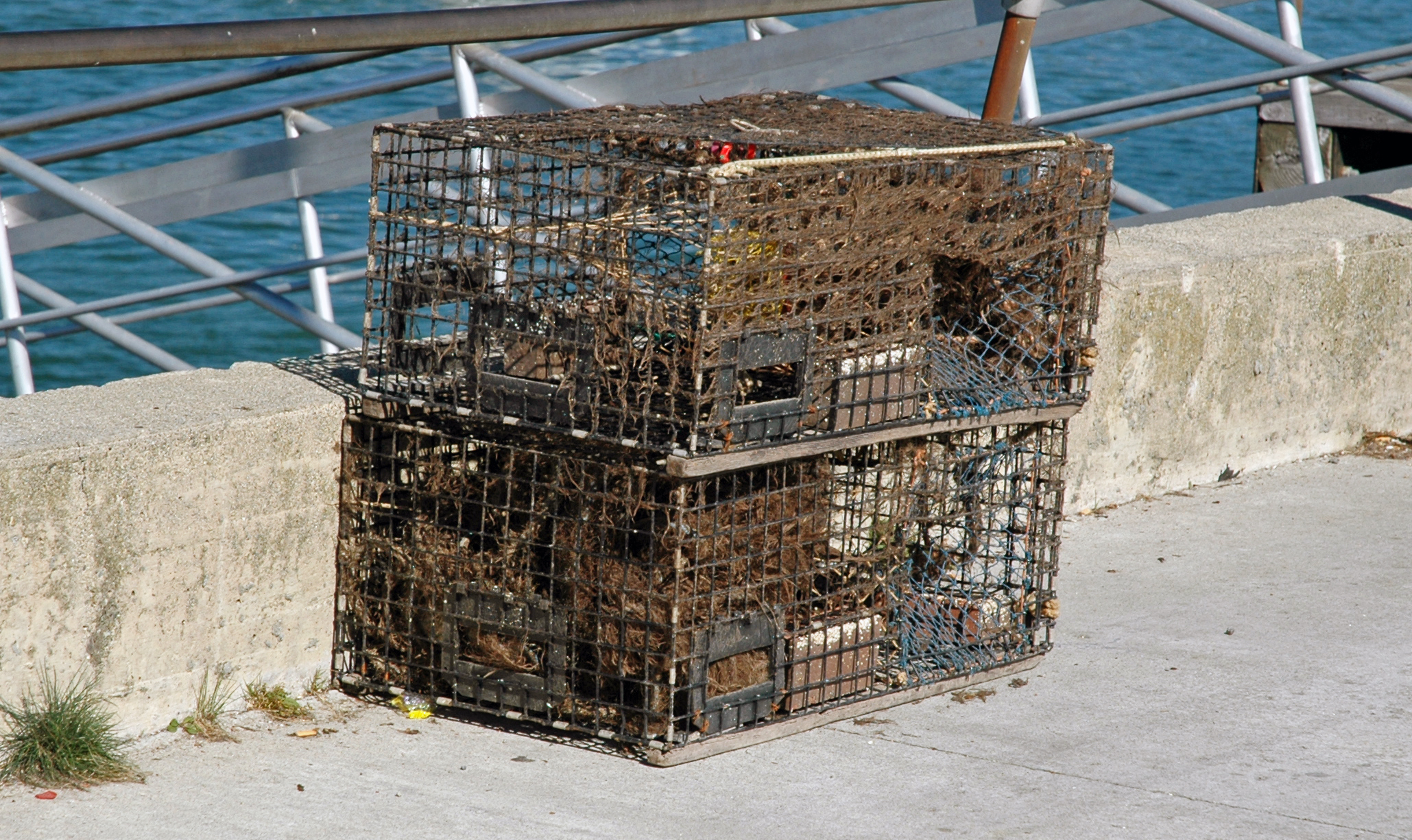
Every pot used for Dungeness, Tanner or king crab must carry a minimum of two escape rings on opposite sides. On Dungeness pots those rings must sit on the upper half of the vertical plane of the pot.
Every pot also needs a biodegradable escape mechanism, and the specification is by species. For Dungeness the opening must be a minimum of eighteen inches long, or alternatively a panel of at least ten by six inches, or the lid tie-down straps may be secured at one end by a single loop of untreated hundred percent cotton twine no larger than sixty-thread, arranged so that when the twine rots the lid no longer closes. King and Tanner pots need an eighteen inch opening. Shrimp pots need six inches.
Pots must be labeled with the angler's first initial, last name, home address, and the name or Division of Motor Vehicles registration number of the vessel.
And there is an overall cap that catches people running mixed gear: for a nonresident, no more than four pots per person and ten pots per vessel for taking shellfish, regardless of pot type. Shrimp pots sit on top of that allowance rather than inside it, at five per person and ten per vessel.
The gear
Crabbing in Southeast is boat work in cold water, and the list is short.
Pots or ring nets that already meet the specification, which for a visitor usually means renting locally rather than shipping gear. Escape rings, biodegradable panels and labeling are all checkable, and a pot that fails on any of them is a citation.
Buoys and line with your details on them, since the labeling requirement is about the pot being identifiable as yours.
A crab gauge, used on the boat rather than in the box. Six and a half inches shoulder width for Dungeness and five and a half for Tanner are different measurements on different animals, and eyeballing them is how people end up over.
Bait that stays put, because these are long soaks in water with a great deal of else in it.
A cooler with a wet towel rather than standing fresh water, and ice for the run home.
The current regulations and the closure maps, downloaded, because the nonresident-specific Dungeness and shrimp closures are shown as maps rather than described in text.
And the local ADF&G office number, since this is a region managed by emergency order and the office is the only source that reflects today rather than the printing date.
Pulling Dungeness Crab Pots in Hoonah, AlaskaWhere people actually do this
Southeast is a thousand miles of island coastline with almost no road on it, and that shapes the trip more than the regulations do.
Juneau, Sitka, Ketchikan, Petersburg and Wrangell are the practical bases, because each has an airport, a harbor and somewhere to rent or charter. Almost none of the good crab ground is reachable without a boat, and the protected inside waters that hold Dungeness are exactly the waters you need a boat to work.
The Alaska Marine Highway is worth knowing about as a way to move between towns with gear, since the ferries carry vehicles and run the routes no road covers. It is slow and it is not a fishing platform, but it is how a trip that visits two or three towns gets assembled without flying every leg.
For most visitors the honest answer is a charter. A skipper with local pots, current knowledge of which areas are shut to nonresidents this year, and a read on where the crab are that week is worth considerably more than the gear you would otherwise be renting. It also removes the emergency-order problem, because they will already know.
If you are working from a rented skiff instead, keep it inside. Southeast weather turns hard and fast, the channels are long, and a crab trip is not a reason to be out in it.
The things that apply to all of it
A few rules run across every shellfish species in Southeast.
Possession equals one daily bag limit. Whatever the daily number is, you may not have more than that in your possession at any time, which matters on a multi-day trip.
Selling is unlawful. You cannot buy, sell, trade or barter shellfish, their parts or eggs taken under personal use or sport rules.
Crab may be taken by pots, ring nets, diving gear, hand, dip nets and hooked or hookless hand lines. Clams by rakes, shovels, hand or manually operated clam guns, with hydraulic clam diggers permitted for geoducks by residents only. Abalone by abalone irons, diving gear or hand, with scuba and hookah gear prohibited outright.
And paralytic shellfish poisoning has occurred on Alaskan beaches. Crab and shrimp are not the biotoxin risk that bivalves are, but if you are combining a crab trip with clams, that is a separate check and a serious one, covered in shellfish biotoxin closures.
Handling and cooking what you keep
Dungeness and Tanner are different animals on the table and they want different treatment.
Kill and clean Dungeness before cooking if you are doing any quantity. Backing a crab, which means removing the carapace and rinsing the gills and viscera out, then dropping the two halves into boiling salted water for around fifteen minutes, produces cleaner meat than boiling whole and gives you far more in the cooler. It is also the standard practice on a boat working several pots.
Cook them the day you catch them. Crab held alive in a wet cooler will keep for the run home, and crab that dies before cooking does not. If a Dungeness is sluggish and unresponsive when you get in, it goes in the pot first rather than last.
Tanner is sweeter and finer than Dungeness, more like snow crab, and it is easier to overcook. Ten to twelve minutes for sections is plenty and the difference between right and rubbery is a couple of minutes.
Freeze cooked rather than raw. Both species freeze acceptably once cooked and picked, and neither freezes well raw in the shell.
And keep the shells out of the water at the cleaning station if the harbor asks you to, which several in Southeast do, because piles of crab waste in a small boat harbor draw exactly the wildlife nobody wants around the docks.
The short version
King crab in Southeast is residents only, under personal use rules. A visitor cannot take one legally, and buying is the alternative.
For a nonresident under sport rules, Dungeness and Tanner share a single daily limit of three male crab in combination, Dungeness at six and a half inches and Tanner at five and a half. Several areas, including Thorne Bay, are closed to nonresident Dungeness harvest entirely. Tanner is closed June 16 to 30.
Personal use and sport limits do not stack, and which category you are in is decided by where you live rather than by what you buy.
Check the nonresident-specific closure maps for Dungeness and shrimp before you set gear, because they exist and they are not in the text.
Every pot needs two escape rings on opposite sides and a biodegradable opening sized by species, and for a nonresident no more than four pots per person and ten per vessel for shellfish regardless of type.
Then call the local office, because Southeast runs on emergency orders.
The same species further south, where the rules are entirely different, is in Dungeness crabbing on Puget Sound and Dungeness crabbing on the Oregon coast. The pot mechanics are in crab pot rules explained, the shrimp equivalent is in spot prawns on Puget Sound, the licensing landscape is in shellfish licenses by state, and the other Alaskan fishery split by access is in razor clamming Alaska.