Fish
Fish Fire
Fire Hike
Hike Bird
Bird

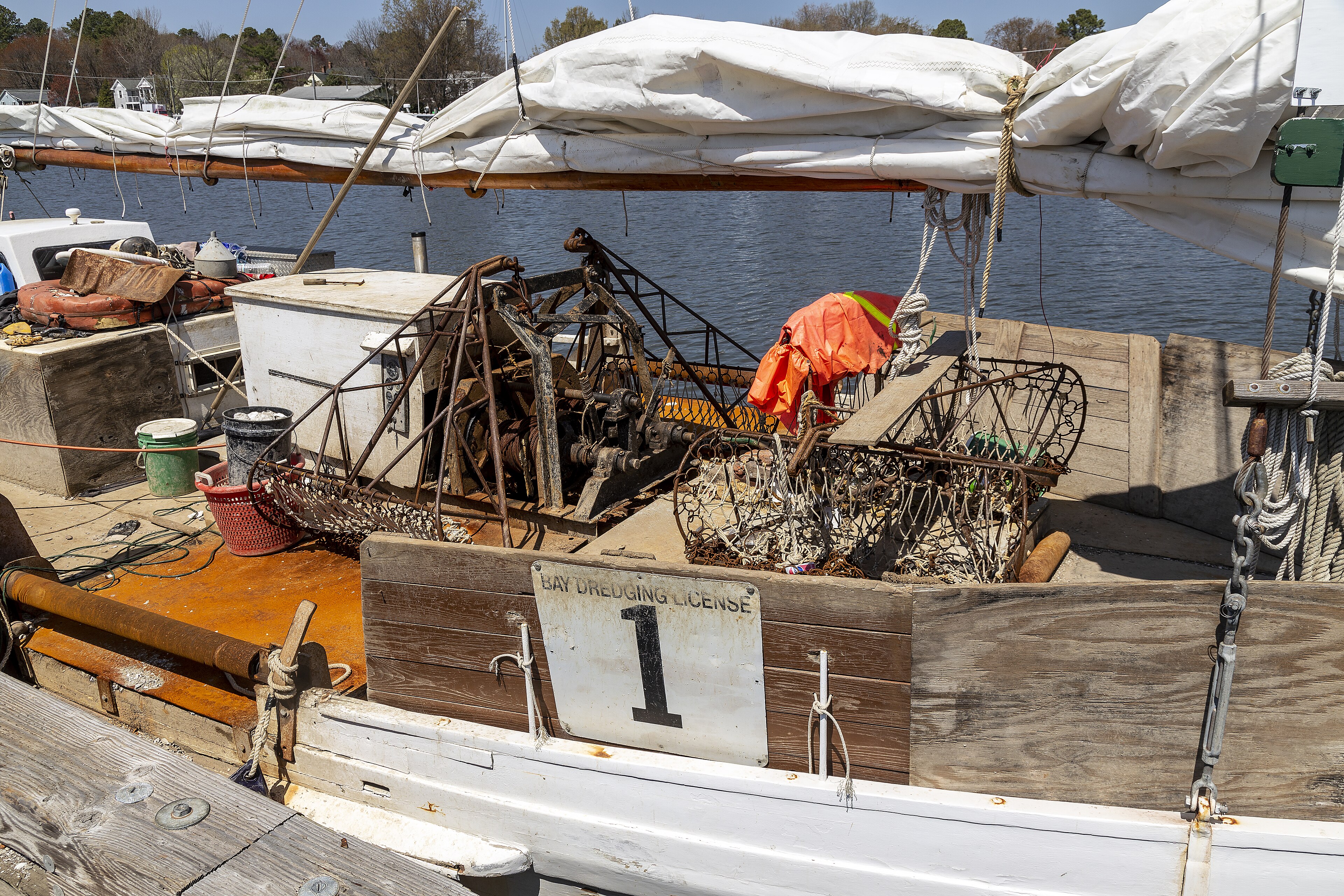

In the 1850s the Chesapeake produced more than a million and a half bushels of oysters a year. Thirty years later it produced twenty million.
Today the population is less than one percent of what it was.
That is the number to hold on to, because everything else about oysters in this bay, the restoration programs, the sanctuaries, the disease research, the argument about who may dredge where, follows from it.
What the Bay used to be
The scale is hard to picture now, so here is a way to picture it.
In the late nineteenth century the oysters in the Chesapeake could filter a volume of water equal to the entire bay in three or four days. The present population takes nearly a year to do the same job.
That is not a statement about seafood. It is a statement about the bay as a machine. Oysters are filter feeders, and a reef of them pulls sediment and algae out of the water column continuously. Remove them and the water gets murkier, less light reaches the underwater grasses, the grasses decline, and the nursery habitat that the crabs and the fish depend on goes with them. The oyster was doing structural work for the whole system.
Reefs were the other half of it. A Chesapeake oyster reef was a three-dimensional structure rising off the bottom, built of generations of shell, and it housed a great deal more than oysters.
What happened, in two stages
The collapse had two causes and they arrived in order.
The first was harvest and the way it was done. Dredging removed enormous volumes of oysters and, more damagingly, flattened the reefs themselves. A dredge does not simply take the crop; it takes the structure the crop was growing on. Over-harvesting removed huge volumes from the bay and led to the demise of its healthy reefs, and the reefs did not grow back because the shell that would have built them had been landed and sold.
The second was disease, and it arrived once the population was already depleted. Dermo, caused by the parasite Perkinsus marinus, was identified in 1949. MSX, caused by Haplosporidium nelsoni, appeared about a decade later.
Both are contracted between May and October, which is to say in the warm half of the year, and both are lethal at a scale that is difficult to overstate. In a high-disease area, such as the Virginia portion of the bay, eighty percent or more of a single year class of oysters will be dead by age three.
An animal that reaches market size in about three years, dying at that rate before it gets there, does not rebuild a fishery on its own.
The restoration, which is the largest of its kind
What has happened since is the biggest oyster restoration effort anywhere.
The approach is tributary-scale rather than reef-by-reef: pick a river, restore the whole thing, and protect it permanently. Ten tributaries were selected across Maryland and Virginia, and as of 2024 reefs in nine of the ten had been restored.
The mechanics are unglamorous. Substrate goes down first, because oyster larvae need something hard and calcareous to settle on and a century of dredging removed most of it. Then hatchery-reared spat on shell is planted onto the new substrate. Then the area is closed and monitored for years.
The closures are the part that matters most and the part that causes the most friction. A restored reef inside a sanctuary is off limits, permanently, to everybody. That is not a scheduling decision; it is the entire mechanism. A sanctuary that gets worked is a sanctuary that does not accumulate the shell and the multi-year age structure that make a reef a reef.
Completion of Maryland's Tributary-Scale Oyster Restoration SanctuariesYou can still go, and it is a real fishery
None of this means recreational oystering is closed. In Maryland it is open, straightforward, and generous by the standards of most shellfisheries in this library.
The season runs October 1 through March 31. The daily limit is one hundred oysters per person. The minimum size is three inches, measured from hinge to bill along the longest part of the shell.
The license is a Maryland oyster license, a resident license listed at ten dollars and valid for three hundred and sixty five days, with exemptions for those under sixteen, some veterans and disabled harvesters. Because it is a resident license, recreational oyster harvest in Maryland is limited to Maryland residents.
The hours are the detail people miss: sunrise to noon, Monday through Saturday. Not afternoons, not Sundays. If you have driven two hours and arrived at one in the afternoon, you have arrived on a day off.
Gear is limited to rakes, hand, shaft tongs or diving, and diving here includes scuba, which is unusual. Most shellfisheries in this library prohibit scuba outright.
Sanctuaries, and the line you must not cross
This is the one rule where being wrong matters more than the fine.
It is illegal to harvest within a leased area, a harvest reserve area, a sanctuary, or any other area closed by the state. Those categories are not interchangeable and none of them are marked by anything visible from a boat.
A lease is somebody's farm. A sanctuary is restored reef that the state has spent public money building and has closed permanently so that it can accumulate structure. Taking oysters off a restoration sanctuary is not a technical violation of a rule about numbers; it is removing the shell that the entire effort exists to accumulate.
Which means the boundaries are the homework. Maryland publishes them, they are available before you leave, and there is no version of this where you work it out on the water.
The clams, briefly
Maryland's hard clam rules run alongside the oyster ones and differ in every particular, which is worth knowing if you are already out there.
The limit is two hundred and fifty clams per person per day at a one inch transverse measurement. No license is required. Gear is limited to hand-operated equipment including hand rakes, and mechanical harvesting is not permitted.
And there is a residency rule, the same one that governs the oysters: only Maryland residents may recreationally harvest oysters or clams. The one clam-specific difference is that nonresidents may harvest hard clams in Worcester County.
Where the shell goes, which is the quiet problem
There is a constraint on restoration that nobody outside the business talks about, and it is shell.
Oyster larvae will not settle on mud. They need something hard and calcareous, and overwhelmingly what they settle on is old oyster shell. That is why a reef is a reef: each generation cements onto the last, and the structure rises off the bottom over centuries.
A century and a half of dredging landed that shell and sold it. Some of it went into roads and driveways and chicken feed. What it did not do was go back on the bottom. So the bay now has a shortage of the one material its oysters need in order to make more oysters, and every restoration project has to buy or manufacture a substitute.
Hence the shell recycling programs you see at restaurants around Annapolis and Baltimore, collecting shucked shell, curing it in the open for months to kill off anything living on it, and returning it to the water as cultch. It is slow, it is small relative to the need, and it is one of the few parts of this problem an ordinary person can act on directly.
Which is also the argument behind Maryland's rule for recreational harvesters and the reason the same rule exists on the other coast: if you shuck at home, the shell has value beyond the bin. Several Chesapeake programs will take it.
The gear
Recreational oystering on the Chesapeake needs very little, and two items on the list are about boundaries rather than harvest.
The current sanctuary and lease boundaries, downloaded before you leave. This is the item that decides whether the trip is legal, and it cannot be resolved by looking at the water.
A three inch gauge, because the measurement is hinge to bill along the longest part of the shell and it is not something to estimate at a hundred oysters a day.
Shaft tongs, if you are working from a boat in shallow water, which is the traditional Chesapeake tool and is a genuine skill. A rake is the easier alternative in very shallow water.
Heavy gloves, since oyster shell cuts readily and an oyster cut in warm water is worth taking seriously.
A basket or a bushel rather than a bucket, so the catch drains.
A cooler with ice for the drive, because the season is cold but the car is not.
And an oyster knife with a guard, plus the willingness to learn to use it properly, which is covered in the R rule is right for the wrong reason.
Recreational Oystering in Southern MarylandWhy the season is what it is
The October to March window is not arbitrary and it is not only the old rule about months with an R in them.
Oysters spawn in warm water, and a spawning oyster is thin, soft and unpleasant to eat. Cool-water oysters have recovered condition and are fat. That is the eating argument, and it is the same one made in why oysters taste different.
But there is a Chesapeake-specific argument on top of it, and it is the disease. Dermo and MSX are both contracted between May and October. A closed summer is a summer where the fishery is not moving oysters, boats and gear around during the months when transmission happens.
And there is the Vibrio question, which is the warm-water bacterial risk rather than a parasite, and which is a human health matter rather than an oyster health one.
Three separate reasons, one season.
What recovery would actually look like
It is worth being clear-eyed about the target, because the restoration is real and the scale of the loss is enormous.
Nine of ten selected tributaries restored is a genuine achievement and it is not the same thing as a recovered bay. Those tributaries are a small fraction of the historical reef, deliberately chosen, permanently closed, and intended as seed and structure rather than as a fishery.
The disease has not gone away. Dermo and MSX are still present and still kill at the rates described, and the most promising work is on disease-resistant broodstock rather than on eliminating the parasites.
What has changed is that the trajectory is no longer only downward, and that the bay now has protected reef structure it did not have twenty years ago. Against a baseline of less than one percent, that is meaningful and it is also a long way from twenty million bushels.
Eating a Chesapeake oyster
The last thing worth saying is that this is a distinctive oyster and not simply a generic one.
The eastern oyster, Crassostrea virginica, is one species across an enormous range, from the Gulf of Mexico to the Maritimes, and it tastes different in every bay it grows in for the reasons set out in why oysters taste different. Chesapeake oysters sit at moderate salinity, lower than an open-coast Atlantic oyster, and the classic profile is mild and less aggressively briny than a Maine or a Prince Edward Island oyster.
Salinity varies enormously within the bay itself, which is the part worth knowing. The upper bay is nearly fresh in a wet spring and the mouth is close to ocean salinity, so two oysters from the same estuary sixty miles apart are not the same eating at all.
Winter oysters here are the good ones for the same reason they are everywhere: cold water, no spawning, fat animals.
And if you are cooking rather than eating them raw, the Chesapeake tradition is not to be precious about it. Oyster stew, fried oysters and scalloped oysters are all standard and all forgiving, which suits a hundred-oyster limit better than a raw bar does.
The short version
The Chesapeake produced twenty million bushels a year in the 1880s and holds less than one percent of its historical population now. Its oysters once filtered the whole bay in three or four days; now they need nearly a year.
Dredging flattened the reefs, then Dermo arrived in 1949 and MSX about a decade later, killing eighty percent or more of a year class by age three in high-disease areas.
Restoration is tributary-scale and permanent: nine of ten selected Maryland and Virginia tributaries restored as of 2024, closed to harvest forever, because the closure is the mechanism.
Recreational harvest is open October 1 to March 31, one hundred oysters a day at three inches, sunrise to noon Monday through Saturday, by rake, hand, shaft tongs or diving.
Get the sanctuary and lease boundaries before you go, because none of them are visible from the water and a restoration reef is the worst possible place to make an honest mistake.
The West Coast native oyster on the same long road back is in the Olympia oyster. The species that replaced native oysters commercially on the Pacific side is in the oyster on your plate came over on a steamship, and the other great Chesapeake fishery is in blue crab on the Chesapeake. Licensing across state lines is in shellfish licenses by state.