Fish
Fish Fire
Fire Hike
Hike Bird
Bird

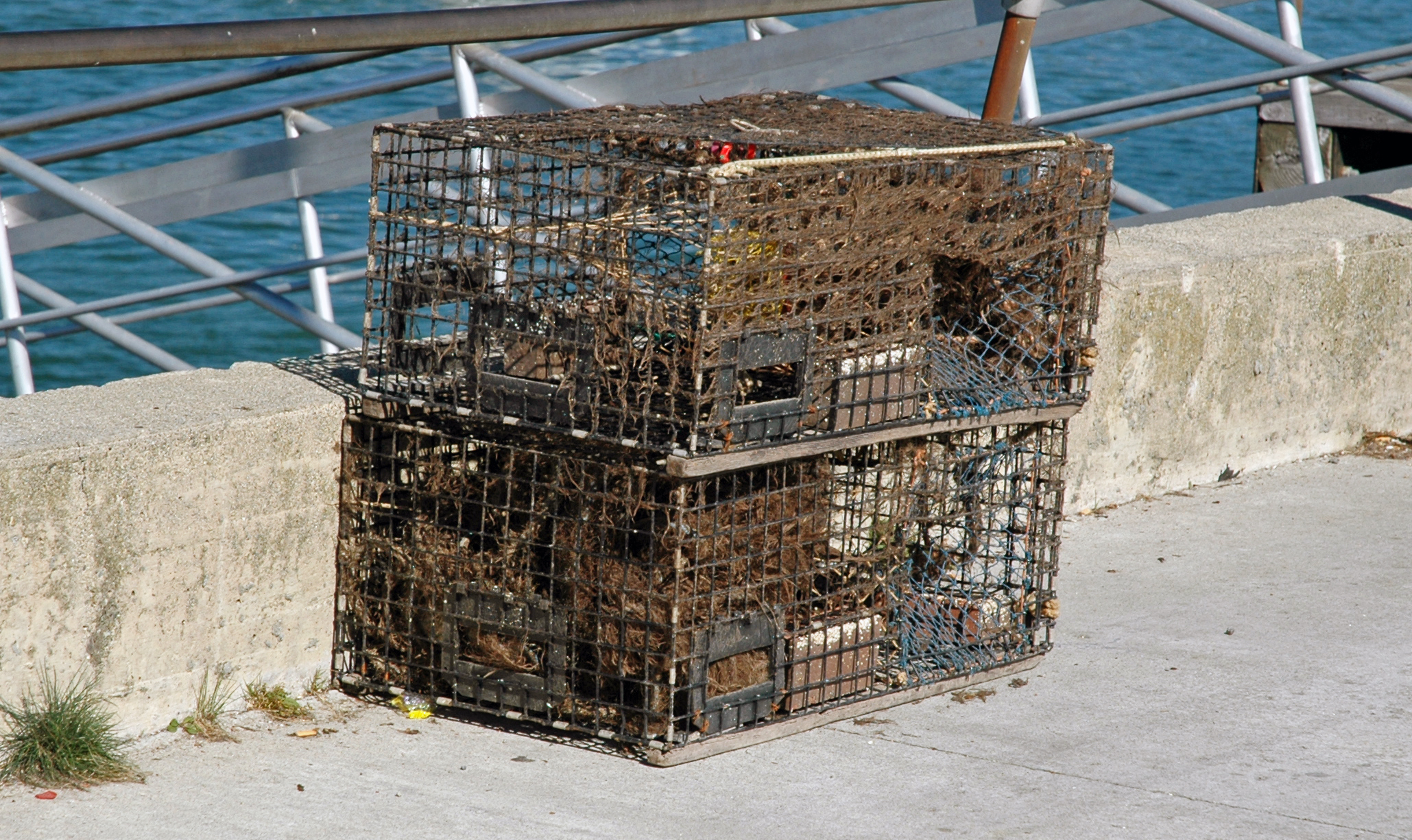

Maine will license you to set five lobster traps. It will not let you sell what you catch, and it will not let you take the meat out of the shell.
That last clause reads like an oddity and it is the key to the whole fishery.
The license
Maine's noncommercial lobster and crab fishing license is its recreational tier, and the statute is short and specific.
A holder may not submerge more than five lobster traps at any one time in the coastal waters of the state. Five, not five per trip or five per day. Five in the water.
The license may only be issued to a resident. There is no visitor version. If you are here for two weeks in August, this is not available to you, and the legal way to eat a Maine lobster is to buy one.
And it is conditional on competence. To qualify you must either have passed a lobster and crab fishing written examination, or have previously held a Class I, Class II or Class III lobster and crab fishing license and landed lobster under it. Maine asks you to demonstrate that you know the rules before it hands you traps.
What the license does not authorize
The restrictions are as important as the permissions, and the statute lists them plainly. The license does not authorize the holder to sell lobsters. It does not authorize removing lobster meat from the shell. And it does not authorize taking, possessing, transporting or shipping lobster parts or meat.
The no-selling rule is obvious enough: this is a personal-use fishery sitting beside a commercial one worth a great deal of money, and the wall between them has to be solid.
The whole-lobster rule is less obvious and more interesting. You cannot measure a lobster that has been taken apart. Every conservation rule in this fishery, the minimum, the maximum, the notch, the eggs, depends on the animal arriving intact and readable. Allow parts and meat to move around and the entire enforcement structure stops working, because a cooler of tails tells a warden nothing at all.
So the rule is not squeamishness about processing. It is what makes the rest of the rules checkable.
The gauge, which measures two things
A lobster gauge is a brass tool with a fixed jaw, and it does two jobs.
The measurement runs from the rear of the eye socket along a line parallel to the center line of the body shell to the rear end of the body shell. That is the carapace, not the whole animal, and not the tail.
The legal window is three and a quarter inches at the bottom and five inches at the top. A person may not buy, sell, give away, transport, ship or possess a lobster shorter than the first or longer than the second.
The gauge itself has to be certified for accuracy by the Office of Sealer of Weights and Measures within the Department of Agriculture, Conservation and Forestry. Maine regulates the ruler.
The maximum size, which is the unusual part
Almost every fishery in this library has a minimum size. Very few have a maximum, and the reason Maine has one is the whole argument for why this fishery still exists.
A minimum protects animals that have not bred yet. A maximum protects the ones that breed best.
Lobster fecundity rises steeply with size. A large female carries far more eggs than a small one, not proportionally more but dramatically more, and a large male is the one able to mate with large females. Cap the top of the range and those animals stay in the water permanently, spawning year after year, no matter how hard the fishery is worked in the middle.
It is a simple idea and it is rare, because it means giving up the biggest and most valuable animals in the catch. Maine has done it since 1933.
How to V-Notch a Female Egg-Bearing LobsterThe V-notch
The second conservation measure is a mark cut into the animal, and it is the one people find strange until it is explained.
A v-notch is a notch cut in the right flipper next to the middle flipper, with right determined by holding the lobster underside down with the tail toward you. It is put there by a fisherman, on a female found carrying eggs, before she goes back over the side.
Once she carries that notch, nobody may take, transport, sell or possess her. Not the person who notched her, not the next boat, not for years, until the notch grows out across successive molts. The narrow exceptions are for a lobster immediately liberated alive into coastal waters when taken or discovered in a pound, and for a pound owner with a permit selling to the department.
The statute prohibits possessing a notched female. It does not require anyone to cut the notch in the first place. That distinction matters, because it means the marking half of the system is voluntary, done by fishermen to each other's benefit, enforced by the fact that everybody else must then honor it.
A proven breeder gets marked as off limits, for years at a stretch, by the person who caught her. It is one of the better ideas in American fisheries management and it came from the industry rather than from a regulator.
Egg-bearing females
Alongside the notch is the simpler rule: you may not take, transport, sell or possess an egg-bearing lobster.
Eggs are carried on the underside of the tail, and a berried female is unmistakable once you have seen one. She goes back immediately, and in practice she goes back notched.
Between the two rules, a female that has demonstrably bred is removed from the fishery for years at a time. Combined with the maximum size, Maine protects the largest animals and the proven breeders simultaneously, which is a substantially different strategy from simply setting a minimum and hoping.
What a molt does to all of this
Everything above turns on the shell, and a lobster changes its shell regularly, which has consequences the rules are built around.
A lobster grows by molting: it splits the old carapace, backs out of it, and emerges soft and considerably larger. It then spends weeks hardening. That single fact explains several things at once.
It explains why a notch is not permanent. The mark is cut into the flipper, and each molt regrows the flipper a little cleaner, so a notched female is protected for a number of years rather than forever. It is a long lease rather than a life sentence, which is one reason fishermen keep re-notching.
It explains the shedder season. A newly molted lobster has a soft shell, a lot of water inside it and less meat, and in Maine the summer months are when a great deal of the population is in that state. Soft-shell lobsters are sweeter and more fragile, they do not ship well, and they are why local prices move the way they do through the year.
And it explains why handling matters. A soft lobster is easily damaged, and one that is injured going back over the side does not survive to breed. Sorting quickly, keeping animals out of the sun and returning them promptly is not sentimentality; it is the difference between a released lobster and a wasted one.
The gear
Recreational lobstering in Maine is a small operation and the list is short, but two items are legal requirements rather than conveniences.
A certified lobster gauge, meaning one certified by the Office of Sealer of Weights and Measures. Not a printed card, not an app.
Traps to the current specification, which is the item most likely to be out of date. Maine requires escape vents so undersized lobsters can leave, and gear modifications intended to reduce risk to whales apply in state coastal waters. Both change, and the department publishes the current requirements.
Buoys marked with your license colors and number, since a trap in Maine waters is identified by its buoy and an unmarked one is abandoned gear.
Bait, and a bait bag. Maine maintains approved and prohibited bait lists, which exist to keep disease and invasive material out of the water, and they are worth reading rather than assuming.
Heavy gloves, because a lobster trap is wire, the bottom is wet, and lobsters are not friendly.
A hauler or strong shoulders, depending on depth. Five traps is a small enough number to haul by hand, which is part of the point.
And a way to keep them alive and cold, since you cannot legally take them apart, so they travel whole.
Pulling Recreational Lobster Traps in MaineWhere five traps actually go
The number shapes the fishery more than any other rule.
Five traps is not a living and it is not intended to be. It is a few dinners across a season, and it means the recreational fishery sits inside a commercial one without competing with it in any meaningful way.
It also means placement matters more than volume. A commercial boat fishing hundreds of traps can afford some in poor ground. With five you cannot, so people set them close to home, in water they know, and move them when they stop producing.
Gear conflict is the thing to avoid. Maine's coastal waters are densely fished by people whose income depends on it, and setting five traps in the middle of somebody's established string is a good way to make an enemy of a neighbor. Local knowledge, or a conversation at the wharf, is worth more than any chart.
Why this fishery gets held up as a model
The Gulf of Maine lobster fishery is routinely cited as one of the better-managed fisheries in the country, and it is worth being precise about why.
It is not that lobsters are inherently resilient. It is that the rule set is unusually well aimed: a minimum size protecting immature animals, a maximum size protecting the most productive breeders, mandatory release of egg-bearing females, a voluntary marking system that extends that protection for years, escape vents so undersized animals leave the trap alive, and trap limits that cap effort.
Several of those came from the industry rather than being imposed on it, which is the part people find surprising and which explains why compliance is what it is.
None of that makes the fishery safe from what is actually threatening it, which is water temperature. The Gulf of Maine is among the fastest-warming bodies of water in the world's oceans, and the species has been shifting northeast. That is the same force described in the Maine shrimp moratorium, and it is not something a gauge and a notch can address.
Cooking one whole
Since the license requires the animal to stay intact until you eat it, the cooking is whole-lobster cooking, which is simpler than people expect.
Keep them alive and cold until the pot. A cooler with a damp cloth and an ice pack, not standing fresh water, which kills them. A lobster that dies before cooking should be cooked immediately or discarded.
Boil or steam in heavily salted water, roughly seawater strength. Steaming is more forgiving and boiling is faster, and the common failure is overcooking: a pound-and-a-quarter lobster wants somewhere in the region of eight to ten minutes, not twenty.
Judge by the shell and the tail rather than the clock alone. The shell goes bright red and the tail curls firmly under. If the tail is limp, it is underdone; if the meat has gone stringy, it went too far.
Save the shells. Lobster shells make a better stock than almost anything, and with a five-trap limit you are not going to be swimming in meat, so the broth is a real part of the yield.
And eat the tomalley sparingly or not at all. It is the digestive gland, it is where contaminants concentrate, and several New England states have issued advisories about it over the years. The tail and claws are the food.
The short version
Maine's noncommercial lobster and crab license permits five traps in the water at any one time, is issued to residents only, and requires either a written examination or prior experience under a commercial class license.
It does not authorize selling lobsters, removing meat from the shell, or possessing or transporting lobster parts or meat. That last rule exists because a lobster that has been taken apart cannot be measured.
Legal size is three and a quarter inches minimum and five inches maximum, measured from the rear of the eye socket to the rear of the body shell, on a certified gauge.
Egg-bearing females and v-notched females may not be taken, transported, sold or possessed. The statute does not require anyone to cut a notch; fishermen do it anyway.
If you are visiting, buy your lobster. The license is not available to you, and Maine's shellfishing that is open to nonresidents is a different subject, covered in steamer clams in Maine and New England.
The neighboring state's shellfishery, licensed quite differently, is in quahogging in Rhode Island. The general pot and trap mechanics are in crab pot rules explained, the West Coast equivalent trap fishery is in Dungeness crabbing on Puget Sound, and the licensing landscape across state lines is in shellfish licenses by state.