Fish
Fish Fire
Fire Hike
Hike Bird
Bird

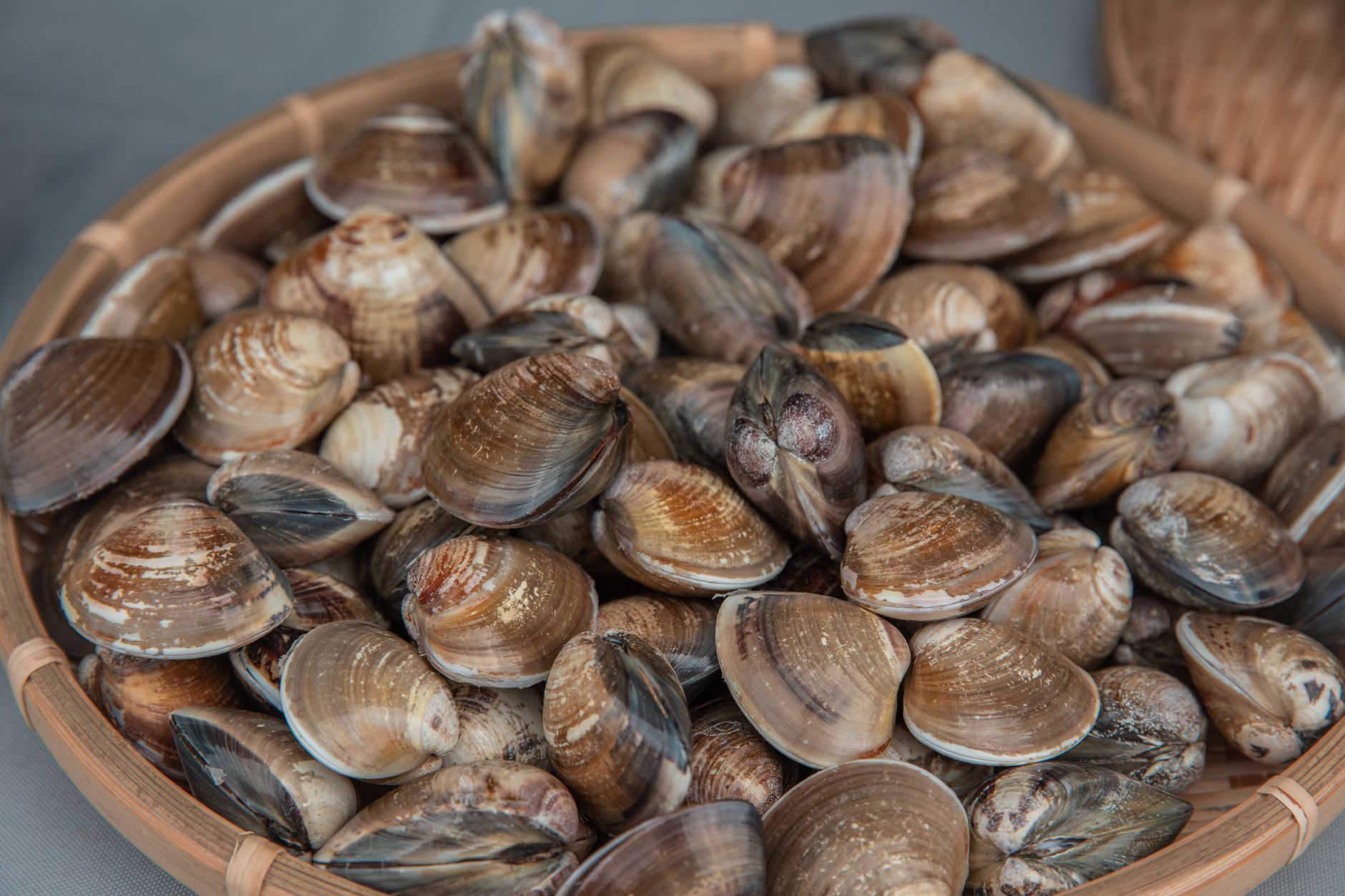

Littleneck, cherrystone and chowder clam are not three species. They are one animal at three sizes, and the price runs in the opposite direction to the size.
The small ones are worth the most. A littleneck goes on the half shell, a cherrystone gets grilled or stuffed, and a chowder clam ends up chopped, because by the time a quahog is that big the meat is too tough to eat whole.
Rhode Island is the place to learn this, because quahogging there is a public activity in a way it is not almost anywhere else.
One clam, several names
Mercenaria mercenaria is the hard clam of the American Atlantic, and the naming is entirely about width across the shell.
A littleneck is the smallest legal size, roughly an inch across the hinge, and it is the raw bar clam. A topneck is the next step up. A cherrystone is larger, sweet enough to eat whole and usually cooked. And a quahog, or chowder clam, is the big one, sometimes the size of a fist and decades old, destined to be chopped into chowder or stuffies.
The name quahog comes from the Narragansett word for the clam, and its shell was the source of the purple wampum that gave the species its scientific name, from the Latin for wages or reward. That is a rare case of a species name that is about money.
Rhode Island's minimum size is one inch across the hinge, measured at the thickest part, which is what a littleneck is. Anything smaller goes back.
The Rhode Island arrangement
Rhode Island is unusually generous about this, and it is a deliberate policy going back a long way.
The recreational limit depends on where you are. In the bay's open waters, which is most of it, a resident may take a half bushel a day, two pecks or about sixteen dry quarts, and a licensed non-resident a full peck. Inside the designated shellfish management areas the limits are tighter, one peck for residents and half a peck for non-residents. Either way it is a substantial quantity of clams. Residents do not need a license for recreational shellfishing in the way most states require, which is close to unique on the Atlantic coast, and the state maintains that access deliberately as a public right rather than a privilege.
Narragansett Bay is the ground, and it is productive. The bay has been quahogged commercially for well over a century, it supports a working bullraking fleet that still fishes by hand from small boats, and the recreational and commercial fisheries share the same water under different rules.
Management is by area and by season, with parts of the bay closed permanently on pollution grounds, parts opened seasonally, and some areas designated as spawner sanctuaries or managed shellfish areas with their own rules. Those boundaries are lines on a chart, they change, and none of them are visible from a boat or a beach.
Bullraking, treading and the tools
There are three ways to get quahogs and they suit completely different situations.
A bullrake is the traditional Rhode Island tool: a wide, heavy, long-toothed rake on a very long handle, worked from a boat in ten to twenty feet of water. You drop it, drag it along the bottom, feel for the clams through the handle, and haul. Handles run to thirty feet or more in sections, and a commercial bullraker works water most recreational diggers never touch. It is hard, skilled work and it is the reason Rhode Island quahogs have a reputation.
A short clam rake or a basket rake is the shallow-water version, worked wading or from a small boat in a few feet of water, and it is where most recreational quahogging happens.
And treading is the oldest method and the one children learn: you wade barefoot in shallow water and feel for clams with your feet, then reach down and pick them. It works, it costs nothing, and in warm water on a sandy-muddy bottom it is an efficient way to fill a bucket.
The feel is the skill in all three. A quahog underfoot or on a rake tooth is unmistakable once you have found a few, and completely ambiguous before that.
The Quahog King: Raking Clams in Narragansett BayWhere they live
Quahogs want a mix of sand and mud, and they are not deep, which is what makes them accessible.
They sit within a few inches of the surface in protected water: coves, bay bottoms, the lee side of points, tidal rivers and salt ponds. They do not want pounding surf and they do not want pure soft mud. Eelgrass margins and the transition from sand to mud are reliable.
Depth is a preference rather than a rule. Recreational diggers work anywhere from ankle-deep to chest-deep, and the bullrake fleet works considerably deeper, so the same species is available across an enormous range of access levels.
Salinity matters more than most people expect. Quahogs tolerate a wide range, which is why they are found well up into brackish tidal rivers, and the upper end of an estuary frequently holds clams in water nobody thinks to look in.
The gear
Rhode Island quahogging is unusual in that the honest first entry on the gear list is nothing at all.
Nothing, to start, because treading works. You wade a sand or mixed flat in waist-deep water, feel with your feet, and pick up what you find. It is how a great many Rhode Islanders learned, it costs nothing, and it will tell you within an hour whether you want to buy a rake.
A short clam rake or basket rake is the next step, and it is what most recreational diggers actually use. The long-handled bullrake worked from a boat over the side is a commercial tool with a real learning curve and it is not where to start.
A clam gauge, since the state minimum is one inch in shell thickness measured across the hinge, which is not a measurement you can eyeball, and the littleneck, cherrystone and chowder grades all sit above it.
An inner tube with a net bag, or a floating basket, so the catch follows you rather than sitting on shore while you work out from it.
Something on your feet, because Narragansett Bay bottom holds broken shell and old glass and treading barefoot is how a good afternoon ends early.
A cooler, but without standing fresh water in it.
And a proper clam knife rather than a paring knife, which is a different tool from an oyster knife: thinner, flatter, made to slide between two hard shells that close tightly rather than to lever a hinge apart.
Closures, and the rainfall rule
Narragansett Bay is a heavily developed estuary and the closure regime reflects that.
Some areas are closed year-round on water quality grounds. Some are conditionally closed, meaning they shut automatically after a specified amount of rainfall and reopen after a set number of days, because stormwater carries bacteria off the land and into the bay. That rule catches people out constantly: a flat that was open all week closes on Sunday because of Friday's storm, with nothing visibly different about the water.
Biotoxin closures run on top of that, on the same PSP and domoic acid framework used everywhere, and they are separate from the pollution closures with a separate source.
So the checks before a trip are the same three as in Maine: is the area open on water quality grounds, is it open on biotoxin grounds, and has it rained enough in the last few days to trigger a conditional closure. Three answers from two agencies, changing on a rainfall trigger. Guidepole carries the closure status against the specific area alongside the tide, which on a bay where the rule changes with the weather rather than the calendar is worth more than a chart printed in spring.
Reading a bay you cannot see into
Quahogging is done by feel, which means finding ground is more inference than observation, and a few signals do most of the work.
Shell hash on the bottom or along the tide line is the strongest indicator: broken quahog shell means quahogs, living or recently dead, and a beach littered with old shell fragments is telling you the bottom nearby holds them. Look at what the gulls have dropped on the rocks and the parking lot, because gulls carry clams up and smash them, and the species they are dropping is the species below.
Bottom composition matters more than depth. You want the give of sand mixed with mud rather than the softness of pure mud or the resistance of hard-packed sand, and you can feel that difference through a rake or through your feet within a few steps.
Eelgrass margins are reliable, and so are the edges of channels where current keeps the bottom from silting. Areas that go completely still and soft are usually poor.
Rhode Island DEM's Come Clam With Me ClassesWorking legally on a crowded bay
Narragansett Bay is small, heavily used, and the rules are spatial in a way that is easy to fall foul of.
Beyond the closures, parts of the bay are designated as spawner sanctuaries or managed shellfish areas with their own access rules and seasons, aquaculture leases occupy defined areas of bottom that are private working farms rather than open ground, and the commercial bullrake fleet works specific areas at specific times.
None of those boundaries are visible from a boat or from a beach. An aquaculture lease looks like water. A spawner sanctuary looks like water. A conditionally closed area looks like water, and whether it is closed today depends on how much it rained on Thursday. Guidepole carries the closure and management-area layer against the specific piece of bottom you are working, which on a bay this small and this regulated is what turns a promising cove into a legal one.
Handling, purging and the stuffie
Quahogs are hardy, which is a relief after razor clams.
They keep well for days in a fridge in an open container covered with a damp cloth, not sealed and not in water. They will close tight and stay alive. Discard any that stay open when tapped.
Purging is less necessary than with soft-shells, because quahogs hold less grit, though a few hours in clean seawater does no harm. Never fresh water.
The Rhode Island institution is the stuffie: a large chowder quahog, chopped, mixed with breadcrumb stuffing, chorizo or linguiça, peppers and seasoning, baked in the shell. It exists because the big clams are too tough to eat whole and somebody worked out what to do about it, which is the honest origin of a great many regional dishes.
Littlenecks go raw on the half shell, and the shucking technique is worth learning properly rather than attacking the clam with a screwdriver, which is how people end up in an emergency room with a hand injury.
The wider picture on this coast
Quahogs run the length of the Atlantic and the rules do not.
Massachusetts licenses shellfishing municipally in much the same way Maine does, so the town office is the gate. Connecticut, New York and New Jersey each run their own systems, with New York's Great South Bay historically one of the largest hard clam fisheries in the country before it collapsed in the 1970s and 1980s. Restoration efforts there continue and the fishery has not recovered to anything like its former scale.
That history is worth knowing because it is the counterexample. A hard clam fishery can be fished down, and Narragansett Bay's relative health is the product of active management, closures, spawner sanctuaries and area rotation rather than luck.
One further thing about Narragansett Bay specifically. The bay is divided into management areas that open and close on their own schedules, some of them seasonally and some in response to rainfall, and the boundaries are lines on a chart rather than features you can see from the water. The state publishes the current status area by area, and checking the area rather than the bay is the habit that keeps a trip legal. It is the same discipline as the biotoxin check and it is a separate question with a separate answer.
The short version
One species, three names, sized across the hinge. One inch minimum in Rhode Island, which is a littleneck.
Rhode Island residents get up to a half bushel a day in open waters, a peck inside the management areas, and without the licensing most states require. Non-residents get a peck and a half-peck respectively, with a license. That is unusually generous and it is deliberate.
Bullrake from a boat in deep water, short rake in the shallows, or tread barefoot and feel for them. All three work and the feel is the whole skill.
Check three things: the water quality closure, the biotoxin closure, and whether recent rainfall has triggered a conditional closure. The last one is the one that catches people.
Keep them cold, damp and unsealed, never in fresh water. Little ones raw, big ones chopped.
The closure mechanism is explained in shellfish biotoxin closures, the New England licensing pattern in steamer clams in Maine, and the ownership question behind all of it in public tidelands and private beaches.
The other clam on this coast, dug on the flats rather than in the water and licensed town by town, is in steamer clams in Maine and New England. The licensing arrangement across state lines is in shellfish licenses by state, and the tide arithmetic that governs the shallow-water work is in minus tides for clamming. If you want to understand why a Narragansett Bay oyster tastes nothing like a Rhode Island quahog from the same water, that is why oysters taste different.