Fish
Fish Fire
Fire Hike
Hike Bird
Bird

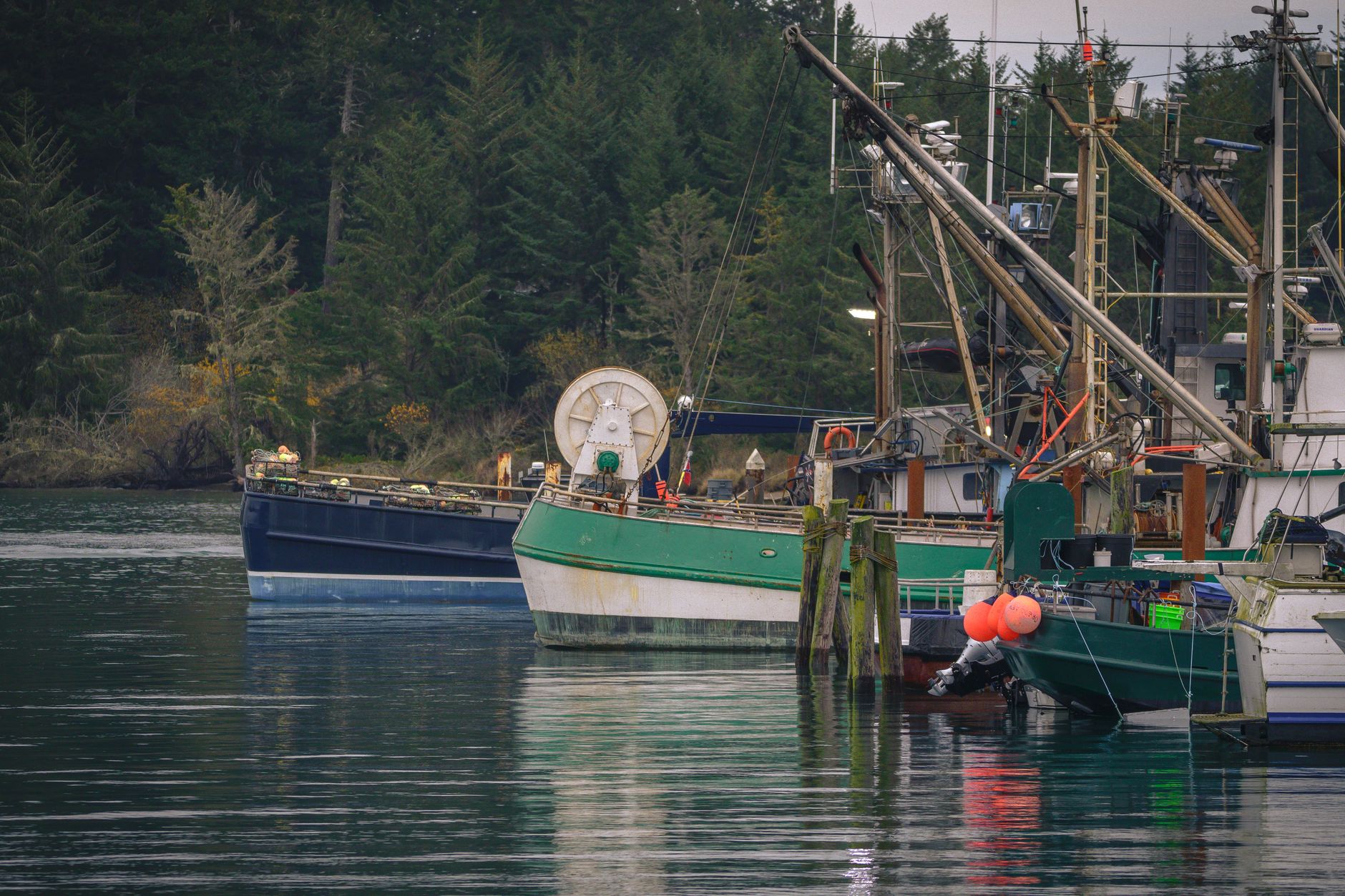
Oregon lets you keep twelve Dungeness crab a day, year-round, from a dock, and the state next door lets you keep five in a season that opens in July.
Same species, same coast, a river between them. The difference is not that Oregon is careless. It is that Oregon's crab fishery is mostly in estuaries where the population is replenished continuously from an enormous coastal stock, and Washington's Puget Sound fishery is in a semi-enclosed inland sea where it is not.
For anyone learning to crab, that makes the Oregon bays the best entry point in the country.
The limits
Oregon's recreational crab rules are simple, generous and stable, which is unusual enough to be worth stating plainly.
Dungeness crab: twelve per day, males only, minimum five and three-quarter inches across the shell. Red rock crab: twenty-four per day, any size, either sex. Both are open year-round in the estuaries.
Compare that with Washington, where Puget Sound gives you five male Dungeness at six and a quarter inches in an announced summer season by marine area, and the coast gives you six at six inches. The Oregon rules are more than twice as generous and there is no season to track.
A shellfish license is required for everyone twelve years and older, and Oregon and Washington do not honor each other's licenses.
Measure it correctly
The five and three-quarter inch minimum is measured the same way everywhere on this coast and it is measured wrongly constantly.
Take the width straight across the widest part of the shell, immediately in front of the points at the outside tips. Not including the points, and not around the curve. The difference between measuring to the tips and measuring in front of them is enough to turn a legal crab into a short one, and it is the most common honest error on the water.
Males only for Dungeness, and the identification is on the underside: a narrow, pointed abdominal flap on a male, a broad rounded one on a female. Look at a female deliberately on your first outing rather than working it out later with cold hands.
Hard shell matters too. A recently molted crab is legal size and mostly water, with poor meat yield, and it is far more likely to die from handling. Press just behind the widest point: a hard crab is rigid and a soft one gives.
The bays, and why docks work
Oregon's crabbing happens in the estuaries, and the estuaries have public docks, which is the whole reason this fishery is so accessible.
Crab move into the bays on the flood tide to feed and back out on the ebb, so a dock in the right part of a bay puts you directly in their path without a boat. Public crabbing docks exist on most of the productive bays, several purpose-built with cleaning stations, and the equipment needed is a ring, a line, some bait and a license.
Tillamook Bay, Netarts, Nehalem, Yaquina at Newport, Alsea, Siletz, Umpqua at Winchester Bay and Coos Bay are all productive. Newport and Garibaldi have the best-known dock crabbing and the most infrastructure.
The trade-off is that dock crabbing catches fewer and smaller crab than a boat working good bottom. It also costs almost nothing and requires no expertise, which is why it is where nearly everybody starts.
The gear
The reason Oregon bay crabbing is the best entry point in the country is that the entire setup costs less than a tank of fuel.
A ring and fifty feet of line is the whole dock rig. Rings lie flat, close into a basket as you pull, and hold nothing, which is why you check them every ten to twenty minutes and why the frequent checking suits standing on a dock. A pot suits a boat, soaks unattended for an hour, and brings the escape ring, rot cord and marked buoy requirements with it.
Bait is oily and the more pungent the better: herring, shad, salmon carcasses, tuna heads, chicken and turkey parts. Contain it in a bait box so it works through the soak rather than feeding the neighborhood in ten minutes.
A crab gauge is the item people skip and should not. Five and three-quarter inches for Dungeness, measured straight across in front of the points rather than to them, checked on every crab before you decide.
Gloves matter here more than for clams, because Dungeness pinch and red rock pinch considerably harder. Pick a crab up from behind the rear legs and it cannot reach you.
Then a cooler with a wet towel and a little ice, drained rather than filled, and a tide table for the specific bay, because you want high slack and the first of the ebb and a twenty-mile estuary does not have one tide time.
An Oregon license from age twelve completes it, and it does not carry across the Columbia in either direction.
Timing it
Crab do not care about the tide the way clams do, and the tide still decides how well you do.
The best crabbing in an Oregon bay is generally around the high slack and the first of the ebb, because crab have moved in on the flood and are concentrated in the bay rather than out at the mouth. Working an hour either side of high slack is the standard pattern.
Water clarity matters more than most people expect. After heavy rain, freshwater pushes down into the bays, salinity drops, and the crab move out toward the ocean or stop feeding. A bay that fished well in September can be poor in December for exactly that reason, which is why crabbing here is frequently better in late summer and autumn than in the depths of winter despite the season being open.
The commercial ocean season opening also affects the bays, and the state closes areas for domoic acid, which is a separate matter entirely and comes from the Department of Agriculture rather than ODFW. That split is covered in Oregon will not let you pick an oyster, and the closure mechanism is in shellfish biotoxin closures.
Best Bait and Pot Depth for Successful Winter Crabbing Puget Sound | Catch & CookRings versus pots
The two gear types suit different situations, and in Oregon the ring is more common than it is further north.
A ring lies flat on the bottom and closes into a basket as you pull, so nothing holds the crab in and it has to be checked every ten to twenty minutes. It is cheap, it is the standard dock gear, and the frequent checking is part of the appeal on a dock where the alternative is standing around.
A pot is a baited trap crab enter and mostly cannot leave. It soaks unattended for an hour or more and suits a boat, and it is the gear that becomes a derelict hazard when lost, which is why the escape ring and rot cord rules exist. Those rules and the reasoning behind them are in crab pot rules explained.
Bait is oily fish, and the more pungent the better: herring, shad, salmon carcasses, tuna heads, and chicken and turkey parts, which catch. Contain it in a bait box or cage so it works through a full soak rather than being stripped in ten minutes.
How to Catch, Clean, and Cook HUGE Dungeness Crab on the Beach!Handling and cooking
Between the ring and the pot of water is where a good day gets wasted, and the rules are simple.
Pick a crab up from behind, thumb and fingers on the back edge of the shell behind the rear legs, and it cannot reach you. Measure and sex it before it goes in the box, not after.
Keep them cool and damp, never submerged. A cooler with a wet towel and a little ice, drained, holds live crab for hours. Fresh water kills them, a sealed bucket kills them, and a crab that dies before cooking spoils almost immediately.
Cleaning before cooking is standard on this coast and worth doing. The crab is dispatched, the shell removed, the gills and viscera rinsed away, and the halves cooked. It cooks faster, packs smaller, and during a domoic acid advisory it is the recommended handling, because domoic acid concentrates in the viscera rather than the meat.
Boat crabbing, when the dock stops being enough
Most people who crab Oregon bays for a season eventually want a boat, and what changes is depth and choice of ground rather than technique.
From a boat you can set pots on the bottom you want rather than the bottom the dock happens to sit over, which usually means working the channel edges and the deeper holes where crab hold on the ebb. Depths of ten to forty feet cover most bay crabbing, and the productive ground shifts through the season as crab move between the bay and the ocean.
Pots rather than rings become practical, because you can leave several soaking and run a circuit rather than standing over one ring. Mark them properly, note the position rather than trusting the buoy to still be visible, and give commercial gear a wide berth.
The bar is the thing to respect. Several Oregon bay mouths have dangerous bars, and the combination of an ebb tide against an ocean swell produces conditions that kill people every year. Crabbing does not require crossing a bar and it is worth being clear with yourself that a bay is the destination.
Cleaning and cooking
The Oregon dock tradition is to clean crab on the spot, and most public crabbing docks have a station for it.
Dispatch the crab, remove the back shell, and rinse the gills and viscera away under running water, leaving two halves of clean crab. It cooks faster, packs smaller, and during a domoic acid advisory it is the recommended handling, because domoic acid concentrates in the viscera rather than in the meat.
Then boil in well-salted water, roughly the salinity of seawater, for around fifteen minutes for cleaned halves and longer for whole crab. Cool them quickly rather than letting them sit hot, which is what makes the meat pull cleanly from the shell.
Crab that died before cooking goes in the bin rather than the pot. A crab dead in a cooler for an unknown period is not worth the risk of finding out how long.
Red rock crab, which nobody bothers with
Twenty-four a day, any size, either sex, year-round is an extraordinarily generous limit and almost nobody fills it.
Red rock crab are smaller than Dungeness, with a heavier shell, a lower meat yield and claws that are capable of hurting you. They are also abundant, easy to catch, frequently in the same gear, and perfectly good eating, with sweet dense claw meat that many people prefer to Dungeness.
The reason they are ignored is partly cultural and partly that picking them is more work per crab. On a slow Dungeness day, or in a bay where the Dungeness are undersized, a limit of red rock is a full cooler that most people throw back.
The Washington version of this crab is managed quite differently and is covered in red rock crab in Puget Sound.
What a first trip looks like
The shape of a good first Oregon crabbing day is worth spelling out, because the failure mode is usually timing rather than technique.
Pick a bay with a public dock and check the tide for a high slack that falls in daylight. Arrive an hour before it. Buy the license on the way if you have not already, and pick up bait, which most bait shops near the docks sell frozen and ready.
Set two rings if you have them, spaced along the dock rather than side by side, and check each one every ten to fifteen minutes. That rhythm is the whole activity: drop, wait, pull, sort, rebait, repeat.
Sort every pull on the dock rather than in the bucket. Measure across the shell in front of the points, check the underside for the narrow male flap, and press the shell to confirm it is hard. Everything that fails goes back in the water immediately rather than sitting in air while you decide.
Expect to keep a fraction of what you catch. A dock pull that produces eight crab and two keepers is a normal pull, not a bad one.
Then clean them at the station on the dock, ice them, and go home. A limit is twelve, and most first trips do not come close, which is fine.
The rest of the trip
Oregon bay crabbing combines well with things that are open when it is not much good.
Bay clams are on the same tideflats at twenty in aggregate with no more than twelve gapers, and razor clams are on the ocean beaches with the Clatsop closure to work around, covered in razor clamming the Oregon coast. Mussels are seventy-two a day on the rocks.
And a crab dock is a good place to take people who are not sure they like fishing, because something happens every fifteen minutes, the gear costs almost nothing, and the failure mode is an afternoon on a dock rather than a wasted day.
The short version
Twelve Dungeness a day, males only, five and three-quarter inches, year-round in the bays. Twenty-four red rock crab, any size or sex.
Measure straight across in front of the points, not to them. Males only for Dungeness, and hard shell only if you want meat rather than water.
Public docks on Tillamook, Netarts, Yaquina, Alsea, Umpqua and Coos put you in the crab's path without a boat, and the gear is a ring, a line and some bait.
Fish around high slack and the first of the ebb, and expect the bays to fish poorly after heavy rain when freshwater pushes the crab out.
License from age twelve, and Oregon and Washington do not honor each other's.
The Washington version of this fishery, with its marine areas and catch record card, is in Dungeness crabbing in Puget Sound. The crab most Oregon crabbers throw back is in red rock crab in Puget Sound. And the clams on the same tideflats are in purple varnish clams in Oregon and razor clamming the Oregon coast.