Fish
Fish Fire
Fire Hike
Hike Bird
Bird


Seventy-two clams a day is not a typo, and it is the most generous shellfish limit on the Oregon coast by a wide margin.
The purple varnish clam is an invasive that arrived in the Northwest in ballast water in the 1980s, established itself in enormous density in the upper reaches of estuaries, and is now abundant enough that the state sets a limit most people could not carry.
It is also easy to dig, shallow, in soft ground, close to the parking lot. If a shellfish trip has gone wrong for any other reason, these are the answer.
What it is
Nuttallia obscurata goes by several names, which is part of why it stays obscure: purple varnish clam, varnish clam, mahogany clam, savory clam, and purple mahogany.
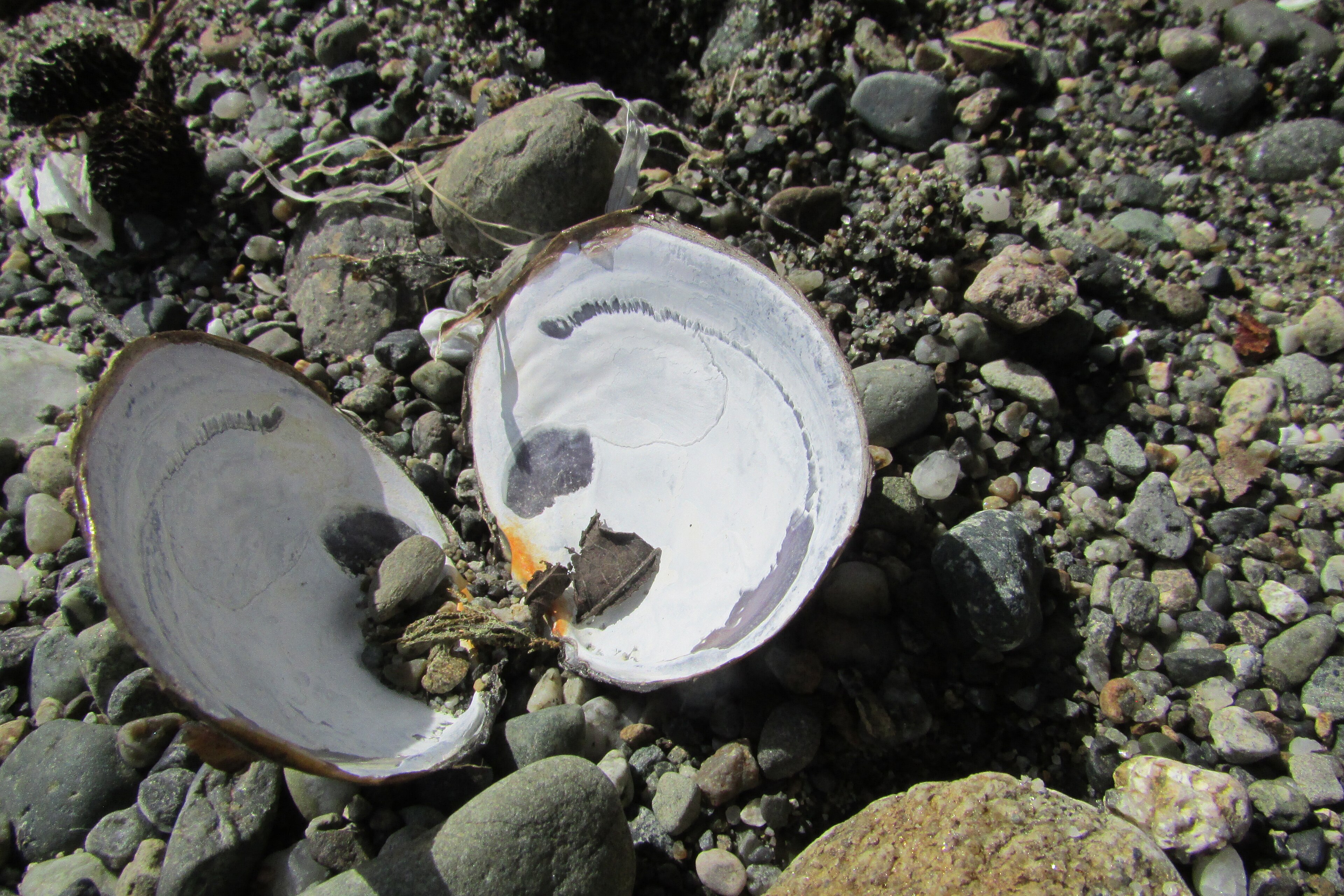
The shell is the giveaway. It is oval, flattened, and covered in a glossy brown periostracum that looks varnished, and the interior is a striking deep purple. Nothing else on the Oregon coast looks like it, and once you have opened one the identification is permanent.
They arrived from Asia, almost certainly in ballast water discharged in the late 1980s, first appeared in British Columbia, and spread south through Puget Sound and down the Oregon coast over the following decades. They are now abundant in most Oregon estuaries.
Why the limit is so high
Seventy-two clams is a policy statement rather than a biological calculation.
Varnish clams are introduced, they are extremely abundant, they compete with native species for space in the upper intertidal, and there is no conservation reason to restrain harvest. A generous limit encourages people to take them, which is a small good in itself and a much larger good if it takes pressure off native bay clams.
That is the same logic behind generous limits on introduced species elsewhere, and it is a rare case where the recreational digger and the resource manager want exactly the same thing.
They are not, however, subject to the eradication-oriented rules that apply to some invasives. Unlike European green crab in Washington, which is a prohibited species you may not possess alive, varnish clams are a normal legal harvest under a generous limit. The distinction is that green crab is being actively contained and varnish clams are simply here.
Where they live, which is not where the other clams are
This is the useful part, because varnish clams occupy ground most clam diggers walk past.
They sit high in the intertidal, higher than gapers, butter clams or cockles, frequently in the upper third of the beach near the high water line. They want soft ground: mud, muddy sand, and the fine sediment found in the upper reaches of estuaries and around river mouths where salinity is lower.
They also sit shallow, in the top two to four inches, which means a shovel turns them up easily and often a garden fork or even hands will do.
The consequence is that a beach that is disappointing for bay clams may be dense with varnish clams a hundred feet up the slope, in ground nobody has bothered to dig. Tillamook, Netarts, Yaquina, Alsea, Coos and most other Oregon estuaries hold them, generally in the upper, muddier, fresher parts.
Look for a pattern of small holes in the mud surface, often in remarkable density. That is the giveaway: tiny holes in the sand with an abundant clam a few inches underneath each one.
Purple Varnish Clamming with ODFWThe gear
Purple varnish clams are the cheapest shellfishing entry point on the Oregon coast, and the gear list is correspondingly short.
A shovel or a garden fork, which is all the digging tool required. Varnish clams sit shallow, frequently in the top two to four inches, and a clam gun is the wrong tool for ground this soft and this shallow.
A large container, because the Oregon limit is seventy-two per person per day. That number is not a typo and it is not aspirational: on the right flat you will hit it, and the bucket you brought for a normal clam limit is not big enough.
A bucket for purging seawater, carried home full. This is the item people skip and regret. Varnish clams hold considerably more sand than Manilas and they need at least twenty-four hours in clean cold seawater, changed once, before they are worth cooking.
An Oregon shellfish license, per harvester.
Boots that stay on in mud, since varnish clams live high in the intertidal in soft muddy gravel near freshwater influence, which is exactly the ground that takes footwear.
Cloth for straining broth, because even a well-purged varnish clam will put some grit into the pot and the broth is the best part of the animal.
And a modest tide rather than a big one. These clams sit high enough that a zero tide exposes plenty of them, which means you can dig them on ordinary weekends rather than waiting for the minus tide series everything else requires.
Digging them
The method is the simplest in this whole set of articles.
Find the holes, put a shovel in beside them, and turn the ground over. They are shallow enough that a single spade depth reaches them and soft enough that the digging is easy. Pick them off the turned mud by hand.
Fill your holes, which applies here as everywhere, and rinse the clams in seawater as you go, because upper-estuary mud is exactly as adhesive as it looks.
Bring more container than you think. Seventy-two clams is a serious volume and the practical limit on most trips is what you are willing to carry back across a mudflat.
How to Clam Purple Varnish Clams at Siletz BayPurging, which is not optional here
Varnish clams hold more sediment than almost anything else you will dig, and skipping the purge ruins them.
Purge in clean cold seawater for several hours, ideally overnight if you can keep them cold, changing the water at least once. Never fresh water, which kills them without purging. Some people add cornmeal; the evidence is mixed and the seawater is what matters.
Then discard any that stay open when tapped. A varnish clam that will not close is dead and goes in the bin.
Even well-purged, they carry more grit than a Manila, which shapes how they are best used.
Cooking, and the honest assessment
They are good, and they are not a Manila clam, and pretending otherwise is how people end up disappointed.
The meat is softer and more strongly flavored than a Manila or littleneck, with a distinctly savory, almost mushroomy quality that gives the animal one of its names. Steamed and eaten straight, they are a slightly acquired taste and many people prefer other clams.
Where they excel is broth. The liquor from steamed varnish clams is deeply flavored, more so than any other local clam, and it makes an outstanding base for chowder, stew and noodle dishes. Chopped into a chowder or a fritter batter, the softer texture stops being a drawback.
Steam them briefly, use everything, and strain the broth through cloth to catch whatever sediment survived the purge.
Are they actually a problem
Calling something invasive implies harm, and with varnish clams the honest answer is that the harm is real and modest rather than dramatic.
They occupy the upper intertidal densely, which is ground that native clams use less heavily, so the direct competition is smaller than it would be if they had colonized the middle of the beach. There is evidence of effects on sediment chemistry and on the invertebrate community where densities are very high, and they are food for crabs, birds and other predators.
What they are not is a green crab. They do not eat native shellfish, they do not destroy habitat structure, and no agency is running an eradication program. The generous limit reflects that: a species abundant enough that harvest is encouraged, without the prohibition-and-report regime applied to a species being actively contained, which is set out in do not kill the green crab you think you found.
The reasonable summary is that they are established, they are not going anywhere, they have changed the upper estuary somewhat, and eating a lot of them is a small good rather than a conservation act.
Reading the upper flat
Because varnish clams live where other diggers do not go, learning to read that ground is worth a paragraph of its own.
You want the transition zone where a bay's sandy lower flat gives way to finer, darker, softer sediment further up and further into the estuary. Often this is near a creek mouth or the head of a bay, where fresh water lowers salinity and fine material settles out.
The surface tells you. Dense small holes, sometimes hundreds in a square meter, are the giveaway, and once you have found one patch the pattern repeats along the same elevation band. Working along the contour rather than up and down the beach is the efficient way to move.
Softer ground also means messier digging and heavier boots, which is the practical cost of a species nobody competes with you for.
The Washington situation
Varnish clams occur in Puget Sound as well, and the rules differ, which is worth a sentence for anyone crossing the state line.
Washington includes varnish clams in its shellfish rules with their own limit and treatment, separate from the forty-clam aggregate that covers Manilas, native littlenecks, butter clams and cockles. Closures also apply to them by species: a beach notice may be open for some species and closed for varnish clams, which is the same species-by-species pattern that matters so much for butter clams and is covered in butter clams and PSP.
The general Washington beach rules, including ownership and the public beach list, are in digging Manila clams and public tidelands and private beaches.
Check the current limit for the state you are in rather than carrying the Oregon number north.
Storing and freezing
Varnish clams keep less well than a Manila, which shapes how a large haul gets handled.
Live, they hold for a couple of days in a refrigerator in an open container under a damp cloth, never sealed and never submerged, and they are more prone than Manilas to giving up in storage. Check them and discard anything that gapes and stays open.
Because seventy-two clams is a great deal to eat at once, most people cook the whole haul and freeze the results rather than trying to keep the animals alive. Steam them, pick the meat, strain the broth, and freeze meat and broth separately. Both freeze well, and the broth in particular is worth having in a freezer.
Frozen meat goes into chowder, fritters and pasta rather than anything where texture is the point, which suits this clam anyway.
The rest of the trip
Varnish clams combine well with everything else because they occupy different ground and need a different tide.
Because they sit high, you can dig them on a mediocre tide that would be useless for gapers or geoducks, which makes them the reliable fallback when the tide series is poor. And because they are in the upper estuary, they are frequently close to a road.
Bay clams are lower and need a better tide, at twenty in aggregate with no more than twelve gapers. Crab is year-round in the Oregon bays at twelve Dungeness and twenty-four red rock, covered in Dungeness crabbing on the Oregon coast. And the oysters, as ever in Oregon, are somebody else's.
A day that combines a modest low tide, a crab ring on a dock and a shovel in the upper estuary is a good Oregon coast outing that requires almost no tidal luck at all.
One more practical note on the limit. Seventy-two clams per person is a great deal of shellfish and it exists because the state would like you to take them. Purple varnish clams arrived in Oregon on their own, they are abundant, and there is no conservation argument for restraint here of the kind that applies to gapers or cockles. The practical constraint is your own appetite and freezer space, and the honest advice is to dig what you will actually eat rather than to fill the limit because it is there.
The short version
Seventy-two purple varnish clams per person per day in Oregon, which is the most generous shellfish limit on the coast, because they are an abundant introduced species.
They arrived in ballast water in the late 1980s and spread from British Columbia south. Oval, flattened, glossy brown outside and vivid purple inside.
They live high in the intertidal in soft mud in the upper estuary, in the top two to four inches, which is ground most clam diggers walk past and a tide most diggers would not bother with.
Purge them thoroughly in seawater, because they hold more sediment than anything else you will dig, and never in fresh water.
Use them for broth and chowder rather than steaming them straight, where the strong savory flavor is an asset instead of a surprise.
The other Oregon bay clams, which take more work and are better eating, are in razor clamming the Oregon coast. The tide window for all of it is in minus tides for clamming, though varnish clams need less of one than anything else in this library. And the Oregon licensing rules, including the fact that oysters are off the table entirely here, are in oystering on the Oregon coast.