Fish
Fish Fire
Fire Hike
Hike Bird
Bird

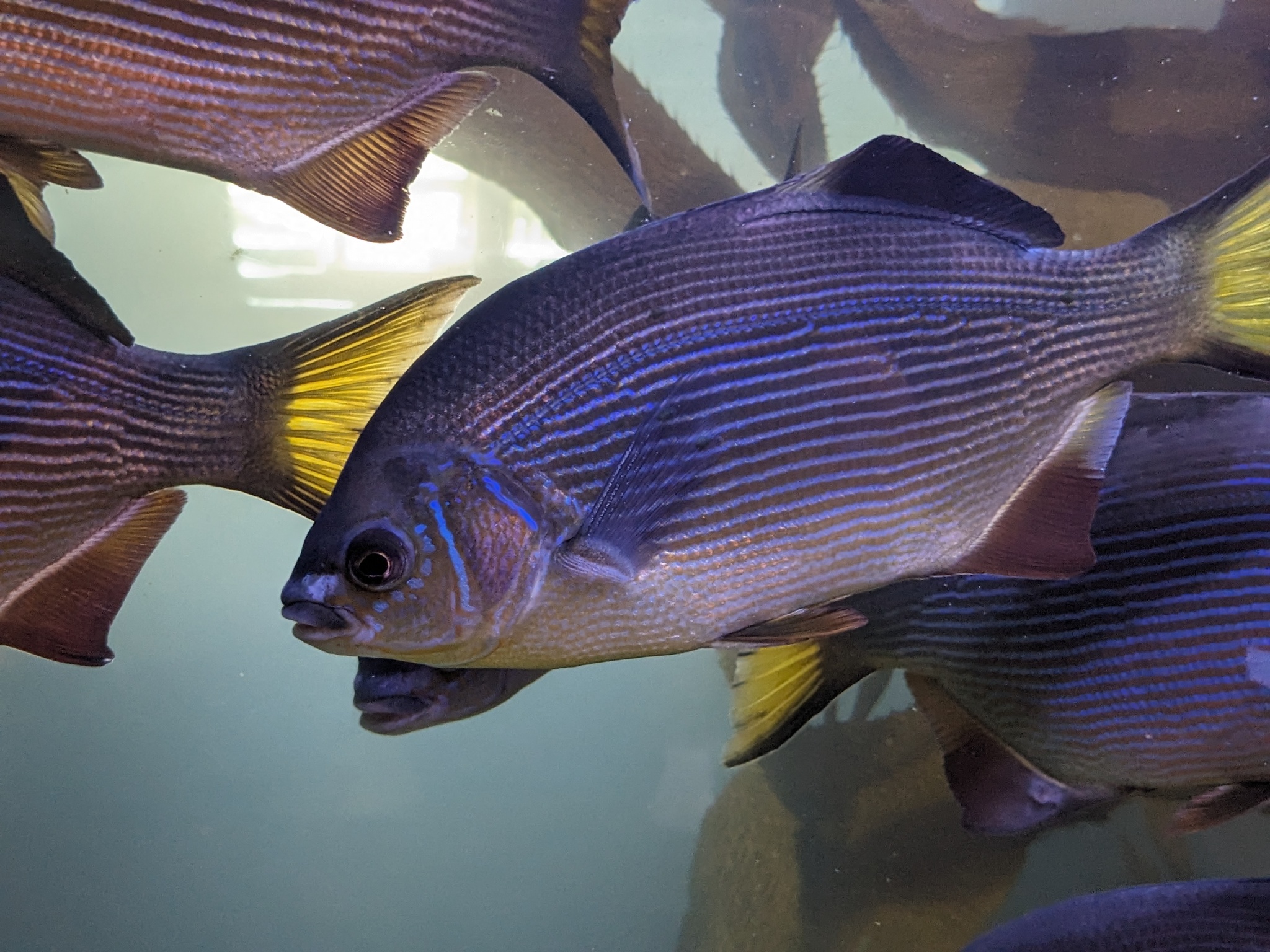

Surfperch are the perfect beach fish. Scrappy, abundant, willing biters that live right in the waves breaking on the sand, they're catchable by anyone with a rod, a few hooks, and a walk to the shoreline, no boat, no long run offshore, no expensive gear required. Barred surfperch, redtail surfperch, calico surfperch, and their many cousins gather in the surf zone all along the Pacific coast, and on a good day you can catch them one after another while your feet are in the sand. Learn to read the beach and pick the right bait, and surfperch become one of the most accessible and rewarding species in saltwater fishing.
This guide covers everything: how to identify the common surfperch, where and when to find them, how to read a beach for the troughs and holes that hold fish, the baits, lures, and rigs that produce, and how to land and clean your catch.
What is a surfperch?
Surfperch belong to the family Embiotocidae, a group of deep-bodied, silvery inshore fish found mostly along the Pacific coast of North America. The most common surf-zone targets include the barred surfperch (Amphistichus argenteus), silvery with yellowish vertical bars on the sides; the redtail surfperch (Amphistichus rhodoterus), a favorite from Central California north with reddish fins; and the calico surfperch, plus a host of others like walleye and silver surfperch. Most run a modest half-pound to a couple of pounds, with big barred and redtail perch pushing 2 to 3-plus pounds.
One of the most interesting things about surfperch is that they are livebearers, unlike most fish, they don't lay eggs but give birth to live, fully-formed young. This is worth knowing for conservation: fish caught in spring are often carrying developing young, so many anglers release the biggest females during that season.
Surfperch feed on the small invertebrates churned up by the waves, sand crabs (mole crabs), small clams, marine worms, and tiny crustaceans. They cruise the wash right where the waves break, using the turbulence to find dislodged food, which is exactly why they're within casting range of anyone standing on the beach.
This feeding style shapes everything about how you catch them. Because surfperch key on food that's being tumbled and exposed by the surf, they hold tight to the zones where wave action stirs the sand, the face of the breakers, the edges of troughs, and the churn behind a wave. A bait that drifts and rolls naturally in that wash looks like a dislodged sand crab and gets eaten; a bait pinned rigidly to the bottom far outside the action often gets ignored. Understanding that you're imitating storm-tossed food in moving water is the mental model that turns occasional catches into consistent ones.
Surfperch Fishing: Complete Tips and SetupWhere and when to find surfperch
Surfperch range along the Pacific coast from Baja up through California, Oregon, Washington, and into British Columbia. They live in the surf zone of sandy beaches, and knowing exactly where in the surf they hold is the whole game (covered in the next section). Beyond open beaches, surfperch also gather around piers, jetties, and in bays.
Timing matters. Surfperch bite year-round, but many beaches fish best in the cooler months (fall through spring) when barred perch move in to feed and, in late winter and spring, to give birth in the shallows. A rising or high tide is generally prime, because it lets fish move into the shallow troughs and pushes food around; the last couple hours of the incoming and the first of the outgoing are classic windows. Overcast days and low-light periods can also improve the bite. Always check local regulations for any seasonal or size rules.
How to Read the Beach for Surf FishingHow to read the beach
This is the single most important skill in surfperch fishing, and it's why the video above is so valuable. Surfperch don't spread out evenly along a beach, they hold in specific features, and learning to spot them turns a blank day into a great one.
Look for:
- Troughs (inshore holes), Deeper channels running parallel to the beach between the sand and the first sandbar. Fish cruise these, especially on a higher tide. A trough often shows as a darker, calmer strip of water where waves aren't breaking.
- Cuts and rip channels, Gaps in the sandbar where water funnels back out to sea. These channels concentrate food and fish.
- Structure and color changes, Points, the ends of jetties, and any change in bottom color or wave pattern that signals a depth change.
The best time to read a beach is at low tide, when the troughs, bars, and cuts are exposed or easy to see; note them, then fish those spots as the tide comes up. A beach that looks featureless at high tide often reveals its structure at low water. Fishing the right feature is far more important than casting far, many surfperch are caught within a short lob of the sand.
A practical routine that catches a lot of perch: arrive around low tide, walk the stretch you plan to fish, and mentally map the troughs and cuts while they're visible. Drop a pin or a mental landmark on the best-looking features. Then, as the tide begins to push in, start fishing those spots, because the rising water lets perch move into the shallow troughs to feed on freshly stirred-up crabs and worms. Stay mobile, if a promising trough doesn't produce in fifteen or twenty minutes, move to the next feature rather than soaking dead water. Surfperch are usually right where the structure is, so covering the good spots efficiently beats camping on one rod holder all day. On beaches with a lot of moving sand, the features shift with every big swell, so it pays to re-read the beach each trip rather than assuming last week's honey hole is still there.
Best baits for surfperch
Match the surf zone's natural menu and you'll rarely go wrong:
- Sand crabs (mole crabs), The number-one natural surfperch bait, bar none. These small crabs are the perch's primary food; you can often dig them right out of the wet sand at the beach you're fishing. Soft-shell (molting) crabs are especially deadly.
- Marine worms, Bloodworms, lugworms, and pile worms are excellent.
- Shrimp and mussel, Fresh shrimp and mussel meat work well.
- Berkley Gulp! and other scented soft baits, Sandworm and sand-crab imitations in scented soft plastic are hugely popular and effective, and far more convenient than gathering live bait.
If you can find and use fresh sand crabs, you have the ultimate surfperch bait, and gathering them is half the fun: at low tide, look for the little V-shaped ripples in the receding wash that mark a colony, then scoop a handful of wet sand and sift out the crabs. Keep them cool and damp and they'll stay lively for hours. Hook a sand crab through the shell from the bottom up so the point comes out near the top, keeping it looking natural. Soft-shell crabs, ones that are molting and feel squishy, are prized because perch find them irresistible, so pick those out of your catch when you can. When live crabs aren't available, a scented Gulp sand crab or sandworm fished the same way is the next best thing and keeps you fishing without a bait-gathering session.
How to Hook Sand Crabs for Surf FishingLures: grubs and soft plastics
Surfperch will readily hit small artificials, which makes lure fishing a fun, mobile way to cover water. Small soft-plastic grubs, curly-tails, and sandworm imitations on a light leadhead are the go-to. Scented plastics like Gulp add a bait-like advantage. Cast into the trough or cut, let the lure sink, and work it back slowly with small hops and a steady swim along the bottom in the wash. Because you're not re-baiting, lures let you move quickly down the beach and prospect multiple features until you find the fish.
Color and size can make a difference on lures. Motor oil, red, clear-with-flake, camo, and natural sand-crab hues are all proven surfperch colors, and it pays to carry a few options and switch if the bite is slow. Rig your grub on a light leadhead, just heavy enough to reach the trough and stay near the bottom in the surge, but light enough to drift naturally. Some anglers thread a grub on a Carolina rig instead of a leadhead so the bait floats and tumbles more freely behind a sliding sinker; both approaches catch fish, and it's worth experimenting to see which the perch prefer that day. The mobility of lure fishing is a real advantage: you can walk a long stretch of beach, fire a few casts into each promising trough, and quickly locate the schools rather than waiting for them to come to a soaking bait.
Grubs vs. Gulp: Surf Fishing LuresRigs and how to fish them
Two simple rigs cover almost all surfperch fishing:
Carolina rig, A sliding egg or bullet sinker above a swivel, then a fluorocarbon leader to the hook (or a small grub). It keeps bait near the bottom in the wash and lets a perch pick it up without immediately feeling the weight. It's the favorite for casting soft plastics and bait alike.
The Carolina Rig for Barred SurfperchHigh-low (dropper) rig, A pyramid or bank sinker on the bottom with one or two baited hooks on droppers above it. It holds bottom in the surf and presents baits at slightly different levels, a classic bait rig from the beach.
Whatever the rig, use a sinker heavy enough to hold in the moving surf (pyramid sinkers grip sand well), a modest hook (size 4 to 2) matched to your bait, and a leader that lets the bait move naturally. Cast into or just past the trough, keep a fairly tight line to feel the bite, and set at the tap. Surfperch bites can be subtle taps or a solid grab, stay in touch with your rig against the wave surge.
Managing your line in the surf is a skill worth developing. The waves and current constantly push a bow into your line, which pulls your rig out of the strike zone and makes bites hard to feel. Keep your rod tip high to hold as much line as possible out of the wash, reel up slack after each wave, and use just enough weight to hold the bottom without so much that the rig can't roll naturally in the trough. Some anglers deliberately let the rig tumble a short way in the current to imitate a dislodged crab, then hold it in the trough, a mobile, natural presentation that can out-fish a rig locked rigidly in place. When you feel the distinctive tap-tap of a perch, resist yanking; a short pause and a firm sweep hooks a much higher percentage than a reflexive jerk.
Downsizing often helps on tough days. Perch have modest mouths, so a smaller hook and a neatly trimmed bait or a compact grub can turn lookers into biters. Fluorocarbon leader in the clear, shallow surf also matters more than you'd think, the water where surfperch feed is often gin-clear between waves, and a lighter, less visible leader draws more strikes.
Landing, handling, and eating
Surfperch fight hard for their size, using their deep, flat bodies against the current, so they're genuinely fun on light tackle. Landing from the beach is simply a matter of timing a wave to help slide the fish up onto the sand. Because surfperch are livebearers, consider releasing large females in spring when they're carrying young.
For the table, surfperch are good eating, mild, white, and sweet, best pan-fried or in tacos. They're small and have a fair number of bones, but a fresh-caught mess of perch makes an excellent meal. Bleed and ice your catch, and clean them soon after fishing.
Because they're small, many anglers simply scale and gut smaller perch and pan-fry them whole, which is quick and keeps the delicate flesh moist; larger perch are worth filleting. Either way, freshness is everything, surfperch don't hold up as well as firmer fish, so ice them down as you catch them and cook them within a day or two. Given how abundant and easy to catch they are, surfperch are also a great catch-and-release species for a fun day on the beach: keep a few for dinner, and let the rest, especially the big spring females carrying young, swim off to keep the population strong.
How to Fillet a SurfperchWhere to catch them
Sandy beaches all along the Pacific coast hold surfperch, California, Oregon, and Washington offer outstanding, accessible surf fishing, and the fish are reachable from any beach with the right structure, plus piers, jetties, and bays. Surfperch are one of the best species for beginners, families, and anyone who wants to fish the ocean without a boat. A little scouting of the tides and beach features will put you on fish fast: check the tide tables, find a beach with good structure and legal access, and you'll be hooking perch from the sand in no time.
If you're fishing the Pacific surf and shoreline, keep building your skills with our guides on how to catch california halibut, how to catch greenling, and how to catch rockfish.