Fish
Fish Fire
Fire Hike
Hike Bird
Bird


Lake Michigan is the only Great Lake that lies entirely within the United States, a vast inland sea of some 22,000 square miles bordered by Wisconsin, Illinois, Indiana, and Michigan. For anglers it's two great fisheries in one enormous package: a world-famous open-water troll for hard-fighting salmon and trout, and a superb nearshore fishery for trophy smallmouth bass, yellow perch, and, in its huge western arm of Green Bay, giant walleye and muskie. From the salmon-crazy harbors of the eastern shore to the smallmouth reefs of Door County, this whole-lake guide covers what swims here, where to find it, and how to catch it.
The Salmon and Trout Troll: Kings, Coho, Steelhead, Browns, and Lakers
Lake Michigan's signature fishery is the open-water troll for salmon and trout, a stocked and self-sustaining bounty that draws anglers from across the country. Five species share the cold, deep water. Chinook (king) salmon are the big, aggressive prize, routinely 15 to 25-plus pounds and pulling drag like a freight train. Coho salmon (silvers) run 5 to 12 pounds, feed shallower and closer to shore, and provide explosive, acrobatic action, especially in spring. Steelhead, chrome-bright rainbow trout, fight with incredible stamina and are caught out over open water and in the tributaries. Brown trout grow huge in the nutrient-rich lake, and nearshore browns are a spring staple. And native lake trout, deep-dwelling bruisers that top 40 pounds, hold near bottom in summer and move shallow in spring and fall. Together they make Lake Michigan one of the great trout-and-salmon lakes on Earth.
Trolling the Great Lakes for Trout and SalmonFishing the Temperature: Downriggers and the Thermocline
The secret to the Lake Michigan troll is temperature. Salmon and trout are cold-water fish, and in summer they hold at a specific depth where the water is the right temperature, the thermocline, which can be anywhere from 30 to over 100 feet down. So the whole game is getting your lure to that exact depth. Anglers use downriggers (a heavy weight on a cable that carries the lure down), dipsy divers (that dive and plane out to the side), and lead-core and copper line to reach and cover the temperature zone, trolling a spread of flashy spoons, dodger-and-fly rigs, and body baits like J-plugs and Rapalas at the same time. A boat may run a dozen lines at different depths and distances until it finds the fish. It's a technical, gear-intensive fishery, which is exactly why so many anglers start with a charter.
Smallmouth Bass: A World-Class Nearshore Fishery
Away from the salmon grounds, Lake Michigan grows some of the best smallmouth bass in the world. The clear, rocky water of the bays, reefs, and harbors, Door County in Wisconsin, the Michigan bays, and the reefs and breakwalls all around the lake, holds outrageous numbers of big, hard-fighting smallmouth. Anglers catch them on tubes, drop-shot rigs, jerkbaits, and topwater over the rock and gravel, with spring (pre-spawn) and fall the peak. A day of Lake Michigan smallmouth on light tackle over clear rock rivals any bass fishing anywhere, and it's far more accessible than the offshore salmon troll, you can catch them from a small boat, a kayak, or even the shore.
Yellow Perch and the Nearshore
For generations, yellow perch were the people's fish of Lake Michigan, schooling by the thousands within reach of city piers and small boats, and filling coolers with the finest eating in fresh water. The perch fishery has had its ups and downs as the lake's food web has changed, but perch are still caught nearshore, especially in late summer and fall, on simple bottom rigs baited with minnows or worms over sand and gravel. Where they're abundant, perch remain the easiest, most family-friendly fishing on the lake, and a bucket of perch fillets is a Great Lakes tradition worth chasing.
Green Bay: Walleye, Muskie, and Whitefish
Lake Michigan's huge northwestern arm, Green Bay, between Wisconsin's mainland and the Door Peninsula, is a world-class fishery all its own. Warmer and more fertile than the main lake, it grows giant walleye (some of the biggest in the country), trophy muskellunge, outstanding smallmouth bass, and runs of lake whitefish that anglers now target through the ice and open water. The bay's reefs, river mouths (the Fox and the Menominee), and flats produce trophy walleye trolling crankbaits and casting jigs, and its musky fishing has become nationally famous. If the main lake is the salmon-troll king, Green Bay is the walleye-and-musky crown jewel, a completely different, and completely fantastic, side of Lake Michigan.
Walleye Fishing TechniquesWhitefish and the Rest of the Cast
Beyond the headliners, Lake Michigan holds a deep supporting cast. Lake whitefish, long a commercial species, have become a popular sport target, caught jigging over deep water and through the ice, especially in Green Bay and the northern lake, and prized on the table and in the smoker. Northern pike prowl the weedy bays and river mouths, largemouth bass fill the warmer backwaters and harbors, and channel catfish, freshwater drum, and rock bass round out the mix. The lake's food web keeps changing, invasive mussels have cleared the water and reshaped the forage base, which is part of why the fisheries shift over the years, but the variety remains, and a slow day for one species is often a good day for another. Lake Michigan is simply too big and too rich to ever be one thing.
The Fall Run: Salmon and Steelhead in the Rivers
Every fall, mature salmon and steelhead leave the open lake and stage off the harbors and river mouths before running up the tributaries to spawn. This is when the great migration comes within reach of everyone: boat anglers troll and cast around the harbor mouths, pier anglers cast spoons and float spawn for staging kings and coho, and river anglers drift eggs, jigs, and flies to fish pushing upstream. From late August through October, rivers all around the lake, in Michigan, Wisconsin, Indiana, and Illinois, fill with salmon, and it's the most accessible shot at these big fish all year. The steelhead run continues through fall, winter, and spring, giving river anglers a long season of chrome.
The Great Lakes Salmon Story
It's worth knowing that Lake Michigan's salmon fishery is a human creation, and one of the great fisheries-management stories in the world. Pacific salmon aren't native to the Great Lakes; they were introduced in the 1960s, when biologists stocked Chinook and coho to control an explosion of invasive alewife baitfish and to build a sport fishery where the native lake trout had collapsed. The salmon thrived on the alewives, grew huge, and turned Lake Michigan into a world-class trolling destination almost overnight. Today the fishery is carefully managed through stocking and natural reproduction, and constantly balanced against the shifting, invasive-species-driven food web, which is why salmon numbers and sizes rise and fall over the years. When you troll up a twenty-pound king, you're fishing a fishery that was deliberately built, and is deliberately kept alive, by decades of science and stewardship, a reminder that even a wild-feeling day on a great lake rests on a lot of careful work.
Fishing From Shore, Pier, and Harbor
You don't need an offshore boat to fish Lake Michigan. The lake's countless piers, breakwalls, and harbor mouths put shore anglers on salmon and trout (especially during the spring brown-trout and the fall salmon runs), smallmouth bass, and yellow perch. The Chicago and Milwaukee lakefronts, the Indiana harbors, and the Michigan pier towns all offer productive public fishing, and pier fishing for staging fall salmon is a beloved tradition. Casting spoons and body baits, float-fishing spawn, and bottom-fishing for perch all produce from shore. For a first-timer, a pier on a fall morning is a real shot at a king salmon without ever leaving the concrete.
Reading the Lake: Wind, Water, and Structure
Lake Michigan is enormous and moody, and reading it is part of the game. Because the salmon and trout follow the temperature, the key variable offshore is the water: a hard wind can stack warm surface water on one shore and pull cold water up on the other, moving the fish and the bait overnight, so successful trollers watch water temperatures and the location of the temperature breaks and current edges as closely as anything. Nearshore, the smallmouth and perch relate to the rock, gravel, reefs, and drop-offs, and a stretch of calm, warming water after a blow often triggers a strong bite. And always, the wind rules your safety: Lake Michigan builds big, dangerous seas fast, its shoreline offers few places to hide, and every year it catches boaters off guard. Watch the marine forecast, respect the waves, and be willing to fish nearshore or stay home when the big water turns angry. On a calm day, though, it's as beautiful and generous as any water in the country.
The Ports and Piers: Where to Start
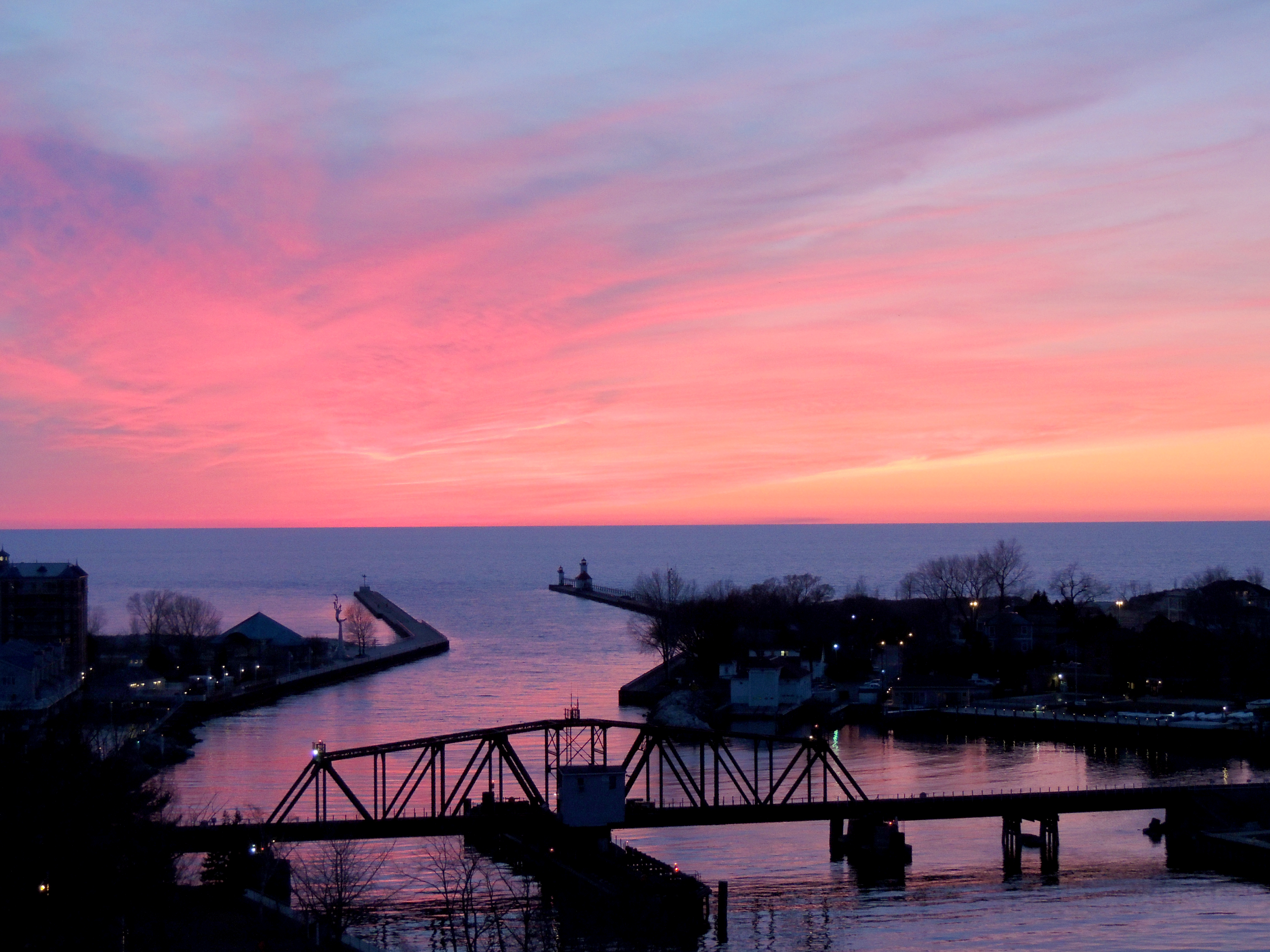
One of the joys of Lake Michigan is how many communities open onto it, each with its own harbor, ramps, and fishing scene. On the eastern Michigan shore, pier towns like St. Joseph, South Haven, Ludington, Manistee, and Frankfort are salmon-fishing hubs with famous harbor mouths and rivers. On the western side, the Wisconsin ports from Kenosha and Milwaukee to Sheboygan and the Door Peninsula, plus the Illinois lakefront at Chicago and the Indiana harbors at the south end, all put you on fish. Each port opens onto slightly different water, deeper or shallower, warmer or colder, closer to a good reef or river mouth, and locals key on their home port's strengths. Wherever you are on the lake, a public harbor with a pier, a ramp, and often a charter fleet is rarely far, which makes this giant lake surprisingly accessible.
When to Go
- Spring (April–June): Nearshore brown trout and coho close to shore and in the harbors; steelhead in the tributaries; pre-spawn smallmouth heating up.
- Summer (July–August): Peak offshore troll for trophy chinook, plus coho, steelhead, and lake trout out over the temperature zone; Green Bay walleye and muskie.
- Fall (September–November): "Trophy time", the salmon and steelhead run stages off the harbors and rivers, big brown trout return nearshore, smallmouth feed hard, and perch school up.
- Winter: Ice fishing where safe, Green Bay is famous for its whitefish, walleye, and perch hard-water fishery, plus winter steelhead in the open rivers.
Licenses and the Four States
Lake Michigan is bordered by four states, Wisconsin, Illinois, Indiana, and Michigan, and each manages and licenses its own waters, so you need a fishing license for the state whose water you're fishing (most require a Great Lakes salmon/trout stamp or its equivalent for the trout and salmon). Seasons and limits for salmon, trout, walleye, bass, perch, and muskie vary by state and change over time, so always check the current regulations for your state and target. Major charter ports ring the lake, from Chicago and the Indiana harbors to the Michigan pier towns, the Wisconsin ports, and Door County, each opening onto a different piece of this enormous water.
A Beginner's First Trip
The classic introduction to Lake Michigan is a summer salmon charter out of one of the harbor towns: the captain runs the downriggers and the spread, and puts you on a screaming king or coho without your needing to own thousands of dollars of trolling gear. If you'd rather keep it simple and cheap, chase smallmouth bass over the nearshore rock and reefs, or fish a pier for staging fall salmon and perch. In the northwest, a Green Bay walleye trip is hard to beat. Any of these gets you onto one of the greatest freshwater fisheries in the world.
Guides and Gear
A charter is the smart way into the offshore troll, given how technical and gear-heavy it is. If you're rigging your own boat, you'll want trolling rods and reels, downriggers, dipsy divers, and lead-core or copper line, plus a spread of spoons, dodger-and-fly rigs, and J-plugs, and a good sonar to mark the fish and the thermocline. For nearshore fishing, a 7-foot medium spinning rod with tubes, drop-shots, and jerkbaits covers smallmouth, and a light rod with a perch rig fills the cooler. In Green Bay, a walleye trolling and jigging setup and a heavy musky outfit are the tools. Whatever you fish, respect the lake, Lake Michigan is big, cold, and capable of dangerous seas, so watch the marine forecast and never underestimate open water.
Lake Michigan rewards anglers who match the method to the season and the shore. Troll the temperature zone for a trophy king, work the clear rock for smallmouth, chase a Green Bay walleye, or catch a fall salmon off a pier, check the rules for your state, respect the big water, and fish one of the great inland seas of the world.