Fish
Fish Fire
Fire Hike
Hike Bird
Bird

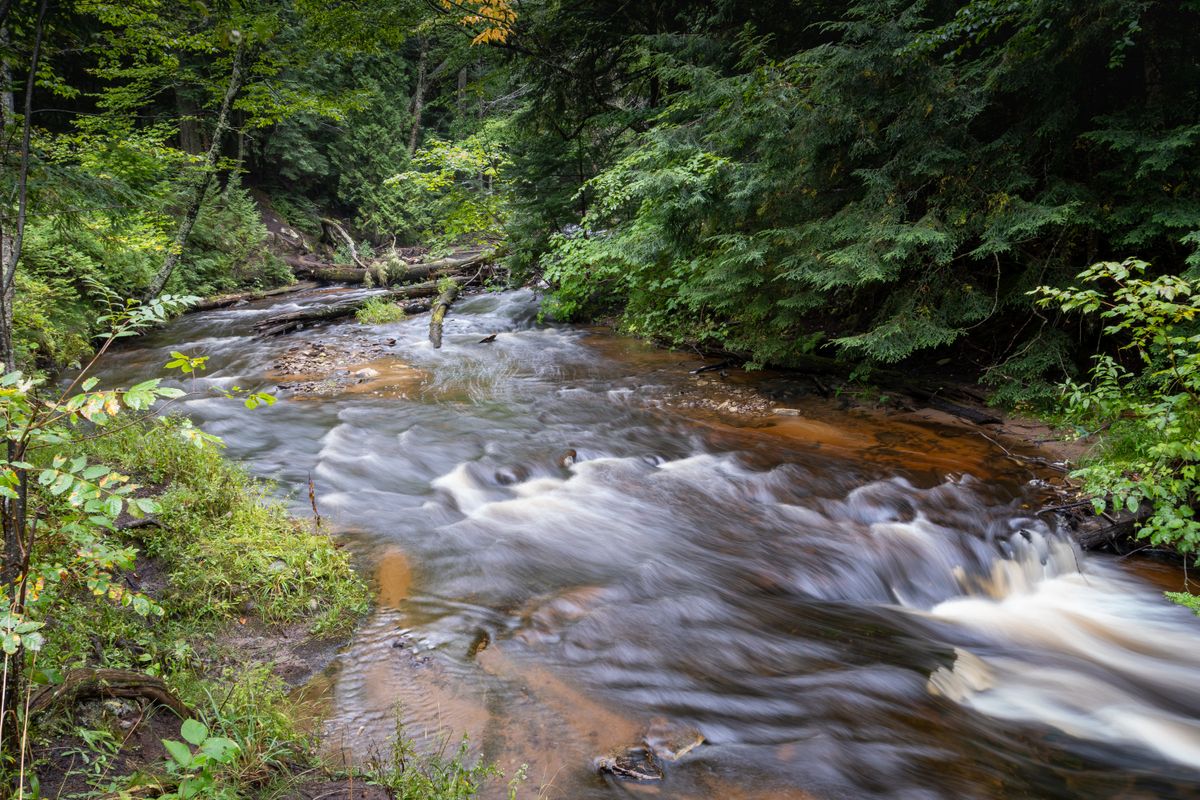

The Pere Marquette River is the Great Lakes answer to the question most fly anglers eventually ask: what if one river had everything? Spring steelhead that cartwheel out of the water on chrome-bright runs. Summer brown trout rising to the legendary hex hatch after dark. Fall chinook salmon stacking in the pools by the thousands. Winter steelhead in solitary, frozen-landscape stillness. The PM delivers all four, and it's the longest unregulated river in Michigan's Lower Peninsula, flowing free from its headwaters east of Baldwin to Lake Michigan at Ludington without a single dam.
That unregulated flow means the river runs on nature's schedule, not a dam operator's. The hatches emerge when the water temperature says so. The steelhead enter when the lake says so. The river rises and falls with the rain. And the trout that live in the PM year-round, wild brown trout that have adapted to this specific river's rhythms, are as wild as trout get in the Midwest.
The Steelhead, Spring and Fall Runs
Spring Steelhead (March–May)
The spring run is the PM's headline. Lake Michigan steelhead begin entering the river in early March, pushing upstream to spawn on the gravel in the river's upper reaches. The run peaks in late March through mid-April, and the fish, chrome-bright, ocean-fed (lake-fed), averaging 6 to 10 pounds with fish over 15, are the most powerful freshwater fish most Midwest anglers will ever hook.
The spring technique on the PM is primarily indicator nymphing, drifting egg patterns, stonefly nymphs, and Pheasant Tails under a strike indicator through the runs and pools where steelhead hold. The fish position behind spawning salmon redds and in the deeper bucket water, and the presentation, dead-drifting the fly along the bottom at the same speed as the current, demands the same precision as any Western nymphing but with heavier tackle.
Swinging flies also produces on the PM, particularly in the wider, more even-paced runs. Two-handed spey rods (12-13 feet, 7-weight) cast across and let the fly swing through the run, the same technique used on the Lower Deschutes and Olympic Peninsula, adapted for a narrower, more wooded Midwestern river. The casting lanes are tighter (overhanging trees, brushy banks), which makes Skagit-style short-head casting valuable.
Spring flies: Egg patterns (Clown Egg, Sucker Spawn, #8-12), Hare's Ear (#10-14), stonefly nymphs (#6-10), Woolly Bugger (#4-8, black/olive), bright streamers for swinging.
Fall Steelhead (November–February)
Fall-run steelhead enter the PM following the chinook salmon spawn, feeding on the eggs the salmon leave behind. The fish arrive in November and persist through the winter, providing steelhead fishing from November through February for anglers willing to fish in snow, ice-rimmed guides, and air temperatures that make every cast an act of determination.
The fall fish are often larger on average than the spring run, they've been feeding in Lake Michigan through the summer and enter the river at peak condition. Fresh fall steelhead are chrome-bright and powerful, and they eat egg patterns (Clown Eggs, Sucker Spawn, #8-12) drifted through the tailouts of salmon spawning beds where eggs are abundant in the drift.
Winter steelheading on the PM is the essence of solitude. You won't see another angler. The river is quiet, the landscape is frozen, and the fish, steelhead that have been in the river for weeks, holding in deep, slow pools, eat egg patterns and small nymphs (Pheasant Tail #14-16, Hare's Ear #12-14) drifted along the bottom with the patience of a monk. The hookup rate is lower than spring, but every winter steelhead feels earned in a way that no other fish can match. The frozen landscape, the steam rising off the river, the sudden violence of a hookup in absolute silence, winter PM steelheading is addictive for the anglers who discover it.
The Hex Hatch, After Dark
The Hexagenia limbata hatch is the PM's other legendary event, and it happens in the dark. Hex mayflies are the largest in North America (size 4-6), and they emerge after sunset from late June through mid-July on the lower PM from Walhalla to Scottville. The hatch turns the surface into a feeding frenzy as the river's largest brown trout, fish of 20 to 28 inches that hide in deep water during the day, come to the surface to eat insects the size of small birds.
Hex fishing is done by sound and feel. You stand in the river in the dark, listening for the heavy, gulping rises of big browns eating hex duns off the surface. You cast a #6 Extended Body Hex toward the sound, let it drift, and wait for the thwump of a take you can't see. The fight happens in pitch black, headlamp on only for netting and release.
The hex hatch is not for the faint of heart. It's hot, buggy (the mosquitoes during hex season are legendary), physically demanding (wading in the dark), and technically challenging (casting big flies to rises you can only hear). But a 24-inch brown trout on a dry fly at midnight on the Pere Marquette is one of the great achievements in Midwestern fly fishing.
The Resident Trout, Summer Dry-Fly Fishing
Between the steelhead runs and the salmon invasion, the PM is a legitimate brown trout river with wild fish averaging 10 to 16 inches and occasional browns over 20. The summer dry-fly fishing, late May through early August, is the PM's quietest season and some of its best fishing.
The hatches are classic Midwestern: Hendricksons (#12-14) in late April, Sulphurs (#14-18) in May-June, BWOs (#16-20) in spring and fall, caddis (#14-16) all summer, and the hex in late June. Between the hatches, terrestrials, ants (#16-18), beetles (#14-16), hoppers (#8-10), produce along the grassy banks. The dry-fly fishing on the PM is comparable to the Farmington or the Battenkill, technical enough to be interesting, productive enough to be rewarding.
Summer flies: Parachute Adams (#12-18), Elk Hair Caddis (#14-16), Comparadun Sulphur (#14-18), Stimulator (#12-14), Extended Body Hex (#4-6), Pheasant Tail (#14-18), Hare's Ear (#12-16), Griffith's Gnat (#18-22)
The Fall Salmon, September Through October
Chinook salmon (kings) enter the PM in late August and flood the river by the tens of thousands through mid-October. Fish of 15 to 30 pounds, chrome torpedoes that have spent three years in Lake Michigan, stack in every pool, run, and riffle.
Salmon fishing on the PM is a different discipline, heavier rods (8-10 weight), larger flies (egg patterns, streamers, leeches), and a more aggressive approach. The fish are spawning, which makes them territorial and willing to eat (or attack) flies that drift through their holding water. A 25-pound chinook on a fly rod in a river barely 60 feet wide is a fight that tests every knot, every backing connection, and your physical endurance, a big king in heavy current can take 20 minutes to land.
The salmon also bring an ecosystem shift. Brown trout follow the salmon upstream, feeding on the eggs that wash downstream from the spawning beds. Fall egg-pattern fishing for big browns, swinging egg-sucking leeches and dead-drifting Clown Eggs through the runs below active redds, produces some of the largest brown trout of the year. A 20-inch brown that's been gorging on salmon eggs for three weeks is a thick, heavy fish that fights differently from a summer dry-fly brown.
The Gear
Steelhead setup: 10-foot 7-weight single-hand rod for indicator nymphing. 12-13-foot 7-weight spey rod for swinging. Floating line with a strike indicator and split shot for nymphing. Skagit head with sink tips for swinging. Reel with 150+ yards of backing.
Trout setup: 9-foot 5-weight for summer dry-fly and nymph fishing. Standard trout leaders (9-foot, 5X). The PM's resident trout don't demand the extreme finesse of spring creek fishing.
Hex setup: 9-foot 6-weight for throwing the oversized hex patterns in the dark. A headlamp you trust. Mosquito repellent (industrial grade).
Salmon setup: 9-foot 8- or 9-weight. Heavy leaders (12-15 pound). The strength to fight a 25-pound fish in moderate current.
The Culture, Baldwin and the PM Community
Baldwin, Michigan (population 1,200) is the PM's hub, a small town on the river's upper stretch that caters to anglers year-round. Local fly shops and guide services anchor the community, providing flies, river reports, and hard-won local knowledge through every season.
The PM guide community is experienced and diverse, some guides specialize in spring steelhead indicator nymphing, others in swinging, others in the hex hatch, and still others in fall salmon. The year-round nature of the fishery means the best PM guides fish 10+ months a year on the same river, developing the kind of intimate knowledge that seasonal guides can't match.
The PM is designated a National Wild and Scenic River, and the conservation ethic on the river is strong. Catch-and-release for steelhead is the norm (though not legally required outside of specific sections). The river's wild, unregulated character is its defining asset, and the community protects it.
When to Go
- Late March–April: Spring steelhead, the main event, the biggest runs, the chrome fish
- Late May–June: Summer trout, Hendricksons, Sulphurs, caddis, the quiet season
- Late June–mid-July: Hex hatch, brown trout after dark, the midnight dry-fly experience
- September–October: Chinook salmon, the river fills with 15-30 pound fish
- November–February: Winter steelhead, solitude, frozen landscapes, the fish that feels earned