Fish
Fish Fire
Fire Hike
Hike Bird
Bird

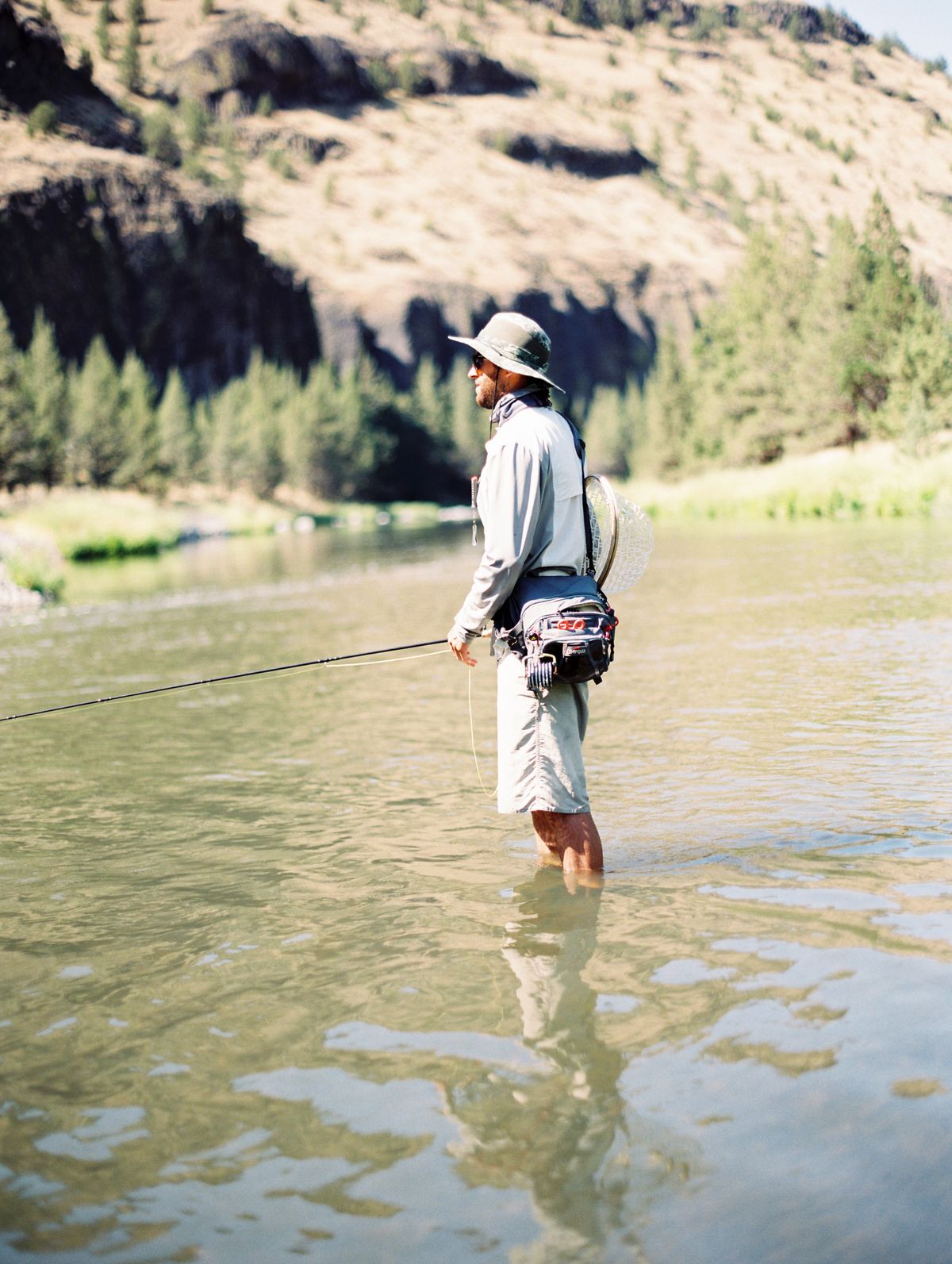
The Lower Deschutes is Oregon's river. Not its prettiest (the McKenzie might win that), not its biggest (the Columbia), not its most accessible (the Willamette runs through Portland). But the Lower Deschutes is the river that Oregon fly anglers build their seasons around, the river they float for three days through a basalt canyon, sleeping on gravel bars under a sky that doesn't see a cloud from June through October, wading into runs where native redband rainbow trout eat salmonflies off the surface with a violence that rattles your grip.
The river flows 100 miles from Pelton Dam to the Columbia River, all of it designated Wild and Scenic, all of it holding wild fish in water that hasn't been stocked since the dam was built. The redbands are genetically native, a subspecies of rainbow trout that evolved in this specific desert canyon, adapted to its warm summer temperatures, its violent spring runoff, and its extraordinary insect life. They're not like other rainbows. They're harder, faster, more colored, and they eat dry flies with an aggression that trout from gentler waters can't match.
And then there are the steelhead, wild summer-run fish that enter the river in July, push upstream through the canyon all summer, and provide the finest traditional steelhead-on-the-swing fishery in the lower 48 from August through November.
But the thing that truly defines the Lower Deschutes, the regulation that shapes every trip, every technique, and every angler's relationship with the water, is this: you cannot fish from a floating device. Your feet must be touching the river bottom. The drift boat carries you to the water. Then you get out, wade in, and fish like every angler on the river is equal, whether they own a $60,000 drift boat or hitchhiked to the access point with a backpack and a 5-weight.
That regulation is the Lower Deschutes' soul.
The River, 100 Miles of Canyon

The Lower Deschutes carves through a canyon of columnar basalt, rimrock, and sagebrush, high desert Oregon, where the air smells like juniper and the temperature hits 100°F in July. The canyon walls rise 500 to 1,000 feet above the river, and the only way to access most of the water is by boat or by foot on the railroad grade that parallels the east bank.
Warm Springs to Trout Creek (10 miles)
The upper section below Pelton Dam. The water here is coldest, the trout density is highest (3,500+ per mile), and the access is easiest, the Warm Springs boat ramp puts you on the river with a short drive from Bend or Madras. The 10-mile float from Warm Springs to Trout Creek is the standard day trip, and it's the section most visiting anglers fish first.
The redbands here average 10 to 14 inches, with fish over 16 in the deeper runs and along the shaded banks. The water is riffle-dominant, fast, broken, oxygen-rich water that redbands thrive in. You wade the edges of the riffles, cast upstream with a dry fly or dry-dropper rig, and the fish eat on the swing or the dead-drift with a splashy confidence that never gets old.
The Camp Stretch, Trout Creek to Maupin (35 miles)
This is the heart of the Lower Deschutes, 35 miles of roadless canyon accessible only by boat, with BLM campsites dotting the gravel bars every few miles. The multi-day float through the Camp Stretch is the definitive Deschutes experience: three days, two nights, camping on the river, fishing from dawn to dark, and not seeing a road or a cell signal for the entire trip.

The Camp Stretch holds redbands, steelhead (in season), and the occasional bull trout in a canyon that gets progressively wilder as you float downstream. The campsites are first-come, first-served, and the etiquette is established: arrive by mid-afternoon to claim a site, set up camp, then fish the evening hatch from the gravel bar in front of your tent. The evening caddis hatch on the Camp Stretch, thousands of insects bouncing on the water at dusk, redbands slashing at them from every direction, is one of the great spectacles in Western fly fishing.
Maupin to the Mouth (65 miles)
Below Maupin, the river continues through the canyon to the Columbia. The lower sections hold fewer trout per mile but larger average size, and the steelhead fishing improves as you move downstream, the fish entering from the Columbia push through the lower river first. The section from Maupin to Sherars Falls (5 miles) is the most accessible lower water, with road access and walk-in wading.
Sherars Falls is a significant landmark, a natural falls and tribal fishing site where the Warm Springs people have fished for salmon with dip nets for thousands of years. The falls is impassable for drift boats, so floating trips end above or begin below.
The Trout, Redbands
The Lower Deschutes' native redband rainbow trout are a desert-adapted subspecies, genetically distinct from hatchery rainbows or the redbands in other Oregon rivers. They've evolved in warm water (the Deschutes runs 55-68°F in summer, warmer than most trout rivers), fast current, and a canyon environment that demands power and speed.
The result is a trout that fights harder than its size suggests. A 14-inch Deschutes redband pulls like an 18-inch rainbow from a cold mountain stream. They run downstream, they jump, and they use the current as an amplifier, hooking a good redband in a fast Deschutes riffle and watching your backing disappear is a humbling experience for anglers accustomed to more cooperative fish.
The redbands eat dry flies with commitment. The Deschutes is a dry-fly river above all else, the salmonfly hatch, the golden stone hatch, the caddis hatch, and the October caddis hatch all bring fish to the surface aggressively, and the redbands eat with a slash-and-grab violence that makes every take audible.
The Steelhead, Summer Run
Wild summer steelhead enter the Lower Deschutes from the Columbia beginning in July, with fishable numbers in the lower sections by late July and fish spread throughout the 100-mile canyon by September. The run peaks in late September through early October, and the steelhead fishing continues into November.
Deschutes steelhead average 24 to 28 inches and 6 to 8 pounds, chrome-bright ocean-run fish that have traveled hundreds of miles from the Pacific. They're caught by swinging wet flies on two-handed spey rods, the traditional steelhead method that the Deschutes is famous for.
The Swing
Steelhead fishing on the Deschutes is a swinging game. You wade into the head of a run, cast across and slightly downstream with a spey rod (12.5 to 13.5 feet, 6-7 weight), and let the current sweep your fly across the run in a broadening arc. At the end of the swing, when the fly straightens below you and hangs in the current, the steelhead eats. The take is a pull, a weight, and then the fish is running and you're holding on.
The swing is meditative and violent simultaneously. You make hundreds of casts, stepping downstream three feet between each one, covering the run systematically, and nothing happens for hours. Then a steelhead grabs and the world explodes. That contrast, the patience and the violence, is what makes Deschutes steelhead fishing addictive.
When water temperatures are above 50°F (most of the season), dry lines and traditional hair-wing flies, Green Butt Skunks, Purple Perils, Freight Trains, Muddlers, work on the swing. When temperatures drop below 50°F or the sun is on the water, sink tips with larger leech and intruder patterns get the fly deeper.
Skaters, dry flies that wake across the surface on the swing, produce some of the most dramatic steelhead takes on the Deschutes. A 7-pound steelhead blowing up on a skating Muddler in two feet of water is a moment you never forget.
The Hatch Chart
The Lower Deschutes' hatch cycle is driven by the canyon's desert climate, warm days, cold nights, and minimal rain from June through October:
- Late April–May: BWOs (#16-20) and midges. The early-season fishing before the stoneflies arrive. Parachute Adams and Comparadun in olive.
- Mid-May–late June: Salmonfly hatch, THE event. Giant Pteronarcys stoneflies (#4-6) blanket the canyon walls and fall into the water. The hatch starts downstream and moves upstream over 3-4 weeks. Chubby Chernobyl Pteronarcys, Stimulator orange (#4-6), Sofa Pillow. The redbands eat them with explosive, slashing takes against the banks.
- June–July: Golden stoneflies (#6-10) follow the salmonflies by 1-2 weeks. Stimulator gold, Chubby Chernobyl gold. Often more fishable than the salmonfly hatch because it's less concentrated.
- June–September: Caddis, the Deschutes' daily bread. Spotted Sedge and Green Sedge caddis (#14-18) hatch every evening from June through September, and the evening caddis rise is the most consistent surface fishing on the river. Elk Hair Caddis in tan and olive (#14-16).
- June–August: PMDs (#16-18), sporadic but present. Sparkle Dun in pale yellow.
- July–September: Terrestrials, hoppers (#8-10), ants (#16-18). The desert banks produce grasshoppers that fall into the water all summer. Chubby Chernobyl tan with a Pheasant Tail or Hare's Ear dropper.
- September–November: October Caddis (#6-8), large, orange caddis that hatch in the fall and bring up the biggest trout of the year. The October Caddis hatch overlaps with the steelhead run, creating a window where you can swing for steelhead in the morning and dry-fly fish for trout eating October Caddis in the evening. Stimulator orange (#8-10), Elk Hair Caddis large (#8-10).
- November–March: Winter BWOs (#18-20), midges. The canyon is cold and quiet, but the river fishes year-round. Zebra Midge, Griffith's Gnat.
The Fly Box
Trout dry flies: Stimulator orange/gold (#4-10), Chubby Chernobyl Pteronarcys/gold/tan (#4-10), Elk Hair Caddis tan/olive (#14-16), Parachute Adams (#14-18), October Caddis (#6-8), foam hopper (#8-10)
Trout nymphs: Pheasant Tail (#14-18), Hare's Ear (#12-16), Pat's Rubber Legs (#4-8), Zebra Midge (#18-22), caddis pupa (#14-16)
Steelhead flies: Green Butt Skunk (#4-6), Purple Peril (#4-6), Freight Train (#4-6), Intruder (black/blue/purple), Muddler (#4-6, for skating), Egg Sucking Leech (#2-6)
Streamers: Woolly Bugger (#4-8, olive/black), Sculpzilla (#4-6)
The Gear
Trout Setup
Rod: 9-foot 5-weight or 6-weight. The 6-weight is the Deschutes standard, the wind blows hard in the canyon, the stonefly patterns are big, and the redbands fight hard enough to justify the extra backbone. A 5-weight works for caddis fishing on calm evenings.
Leaders: 9 feet tapered to 3X or 4X. The Deschutes is not technical tippet water, the broken riffle water and aggressive fish don't demand 6X. Heavier tippet protects against the violent takes and the basalt rocks.
Steelhead Setup
Rod: 12.5- to 13.5-foot spey rod, 6-7 weight. Scandinavian or Skagit shooting heads on a running line. The two-handed rod is standard for steelhead on the Deschutes, the wide river and the long swings demand the casting efficiency of a spey rod.
Leaders: 10 to 12 feet of straight monofilament or fluorocarbon, 10-12 pound test. Steelhead leaders are simple, no tapered leaders needed for swinging.
Wading
Wading is the entire game on the Deschutes. Felt soles on the basalt and cobblestone (still legal in Oregon). A wading staff is essential, the Deschutes' current is powerful, the rocks are uneven, and the consequence of a swim in fast water with waders on is serious. Wade with respect.
The Culture, Maupin and the River Community
Maupin is a town of 400 people that exists because of the Deschutes River. Rafting and fly fishing are the economy from May through October, and the town has the infrastructure to support both: a handful of motels, a couple of restaurants, and the fly shops and guide services that anchor the fishing community.
The local fly shops in Maupin are the anchor, detailed fishing reports, Deschutes-specific flies, and the local knowledge that turns a 100-mile canyon into a manageable fishing trip. The fly shops in Bend provide the second essential outfitting for the upper sections.
The multi-day float trip is the Deschutes tradition that no other Western river replicates at the same scale. Three days on the Camp Stretch, floating through roadless canyon, camping on gravel bars, fishing morning and evening, watching the canyon change as the light moves, is the trip that Oregon fly anglers talk about for years. The logistics require a drift boat (or a raft), a shuttle vehicle, camping gear, and a boating pass from BLM. Most visiting anglers book a guided float with a licensed outfitter who handles the boats, the camping, the shuttle, and the cooking.
The wade-only regulation creates a culture of equality on the Deschutes that doesn't exist on most rivers. The angler walking in from the road has the same water as the angler who floated 20 miles to get there. The river belongs to whoever is standing in it.
When to Go
- Mid-May–late June: Salmonfly hatch, the main event, the most exciting dry-fly fishing of the year
- July–August: Caddis evenings, hoppers, early steelhead in the lower sections, the full summer
- September–October: Peak steelhead + October Caddis, the double feature, the best all-around window
- November: Late steelhead, fall BWOs, the quiet end, the canyon almost to yourself