Fish
Fish Fire
Fire Hike
Hike Bird
Bird

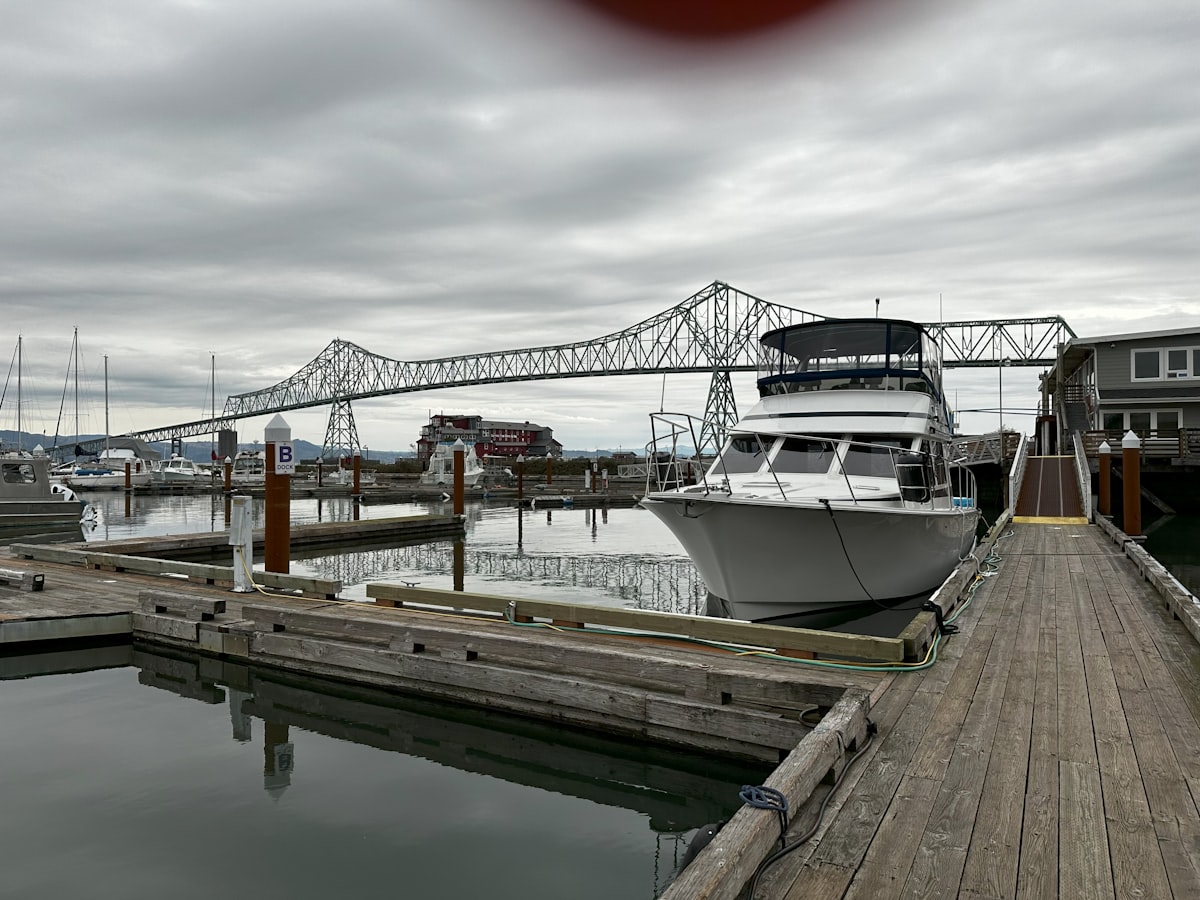

Astoria sits where the Columbia River, the biggest river on the West Coast, pours into the Pacific, and that location makes it one of the great fishing towns of the Northwest. Salmon stream through the river mouth by the hundreds of thousands every fall, prehistoric sturgeon prowl the deep channels, the ocean just outside the bar holds salmon and bottomfish, and the bays and docks are full of Dungeness crab. For a first-timer, Astoria is a big-water fishery defined by the river and the seasons. Here's how to make sense of it.
For the full overview, the runs, the charter fleet, and the season-by-season rundown, read our complete Astoria fishing guide.
First: License and the Barbless Rule
You need an Oregon (or Washington) fishing license to fish here, plus a Combined Angling Tag for salmon, steelhead, and sturgeon. Because the Columbia is the border between the two states, a license from either Oregon or Washington is valid when you launch from Astoria and fish the main-stem river, handy, but know which state's regulations apply where. For crabbing and clamming you need a shellfish license (Oregon's is separate from the angling license).
The rule that surprises newcomers: the Columbia requires barbless hooks for salmon, steelhead, and sturgeon. Pinch your barbs down before you fish. Seasons here are also heavily regulated and change yearly, Buoy 10 open dates, salmon retention (Chinook vs. coho, hatchery vs. wild), and sturgeon rules are set season by season. In 2026, for example, sturgeon in the Columbia estuary is catch-and-release only, no keepers. Always check the current ODFW (and WDFW) regulations before you keep anything.
Buoy 10: The Famous Salmon Season
"Buoy 10" is the name of the navigation buoy that marks the boundary of the lower Columbia salmon fishery at the river mouth, and it's one of the most famous salmon fisheries in the world. Starting August 1 and running into September and October, enormous numbers of fall Chinook and coho salmon stack up at the mouth as they stage to head upriver, and the boats gather to intercept them.
You catch them by trolling. The classic Buoy 10 presentation is a plug-cut or whole herring behind a flasher (a Fish Flash or a chrome dodger), trolled with the tide through the rip lines where bait and salmon concentrate. Spinners (a Yakima Bait Spin-N-Glo) and bait-wrapped Brad's Super Bait plugs also produce. The tide is everything at Buoy 10, the bite turns on as the current moves, so time the troll to the exchange. You'll fish a medium trolling rod with a line-counter reel like a Shimano Tekota 600 so you can repeat the exact depth and leader length that produced.
When a Chinook hits, don't swing, let the rod load against the barbless hook and keep steady pressure; a barbless hook falls out the instant you give slack, so never let the line go limp.
The season has two acts. August is the big-Chinook show, heavy "kings" pushing in on the first strong tides, often fished lower in the estuary near the buoy line and the bar. As the run shifts in September and October, coho (silver) salmon take over and the fishing moves around with them, often a bit further up into the estuary; coho are aggressive, hit spinners and lighter herring well, and put on an acrobatic show. Knowing which species is running (and which is open for retention) determines where the boats fish and what they pull, which is one more reason to sort out the run timing before your first Buoy 10 trip. The fishery draws big crowds of boats on weekends, going midweek means more room and a calmer experience.
Columbia River Salmon and Steelhead FishingSturgeon: The River's Living Dinosaurs
The lower Columbia holds one of the best white sturgeon populations anywhere, fish that can top 6, 8, even 10 feet. The estuary sturgeon fishery is strongest in early summer (roughly June into July), and it's currently a catch-and-release fishery (no keepers in 2026), but hooking a giant sturgeon is an experience by itself.
Sturgeon are fished at anchor on the bottom. The boat anchors in a deep channel, and you drop a bait, sand shrimp, anchovy, or a chunk of shad in season, on a heavy sliding-sinker rig to the bottom and wait for the distinctive "pump-pump" of a sturgeon mouthing the bait. This is heavy tackle: a stout Lamiglas X-11 rod and a Penn Squall 30 loaded with 80-pound braid, a barbless circle hook, and enough lead (6 to 16 ounces) to hold bottom in the Columbia's current. When a big one takes off, it can pull line for minutes, pace yourself, and for catch-and-release keep the fish in the water beside the boat.
The Ocean: Salmon, Bottomfish, and the Jetties
When the ocean is calm enough to cross the Columbia bar, Astoria boats run outside for ocean salmon (the season opens in late June, ahead of Buoy 10) and bottomfish, lingcod, black rockfish, and others over the offshore reefs. Bottomfish are caught on heavy jigs and shrimp flies dropped to structure, similar to anywhere on the Pacific coast. Drop a Point Wilson Dart or a leadhead with a swimbait to the bottom, reel up a couple of cranks, and work it with sharp lifts, black rockfish often come up in numbers, and a lingcod will frequently grab a hooked rockfish on the way to the surface. Bottomfishing is one of the most reliable, action-packed options Astoria offers because the fish are resident and biting all season, weather permitting, it's a great fallback when the salmon are slow or a closure is on, and the lingcod and rockfish are superb eating. Like the salmon and crab seasons, rockfish and lingcod have bag and depth/area rules that change, and there are seasonal closures and required descending devices for releasing rockfish from deep water, so confirm the current ODFW marine regulations before you keep a limit.
You don't need a boat to fish the ocean side, though. The South Jetty at Fort Stevens and the Columbia's jetties give shore anglers a shot at salmon, surfperch, and rockfish, and the beaches hold surfperch on incoming tides. Note the Columbia bar is one of the most dangerous stretches of water in the country, crossing it is for experienced captains only, which is exactly why a first-timer fishes the ocean from a charter, not a rented skiff.
Rigging Up to Catch Salmon Off the Jetty at the Columbia MouthDungeness Crab: The Easiest Win in Astoria
If you do one thing in Astoria besides salmon, go crabbing. Dungeness crab are abundant in the lower Columbia and the bays, the gear is cheap, and kids love it. You drop a baited crab ring or crab pot (a Danielson ring is the classic starter) off a dock, a pier, or the side of a boat, wait 15–20 minutes, then haul it up and sort the catch.
The rules matter: in Oregon you may keep 12 male Dungeness crab per day that meet the minimum size (measure across the back with a crab caliper, undersized and all female crab go back). Bait the ring with chicken, turkey, or fish carcasses. Peak crabbing runs October through December when the crab are full and heavy, but you can catch them much of the year. The docks around the Astoria waterfront and the bays are productive shore spots.
Razor Clams: A Coastal Bonus
A short drive south to the Clatsop beaches (Seaside, Gearhart, Fort Stevens) puts you on some of the best razor clam digging in the country. On a low tide, watch for the clam's "show" (a dimple in the sand), then dig fast with a clam gun or shovel, razors are quick. You need a shellfish license, there's a daily limit, and the beaches occasionally close for marine toxins, so check the ODFW razor-clam status before you go. It's a fun, family-friendly bonus when the tide is right.
Gear: What to Bring
On a charter, everything's provided, rods, reels, bait, tackle, crab gear, and the captain handles the bar and the regulations. Fishing on your own:
- Salmon trolling: a medium trolling rod, a Shimano Tekota 600 line-counter, 30-pound braid, flashers, and herring or a Brad's Super Bait.
- Sturgeon: a heavy Lamiglas X-11 rod, a Penn Squall 30, 80-pound braid, sliding-sinker rig, barbless circle hooks.
- Crabbing: a couple of Danielson crab rings or pots, bait, a crab caliper, and a cooler.
- Clothing: this is the rainy Northwest coast, bring Grundens raingear and warm layers. The river and ocean are cold year-round.
Reading the Columbia: Tides and the Bar
Nothing matters more at Astoria than the tide. The Columbia moves an enormous volume of water past the mouth on every exchange, and that current sets up the rip lines where salmon and bait concentrate at Buoy 10. The bite is a tide game: plan the troll around the incoming or outgoing exchange, often fishing the last of one tide and the start of the next. A slack tide is usually a slow tide. Before you fish, look at the day's tide table and plan to be on the water for the moving current.
The other thing to respect is the Columbia River Bar, the stretch where the river meets the Pacific, nicknamed the "Graveyard of the Pacific" for good reason. Conditions there can turn deadly fast when an outgoing tide meets an incoming swell. This is precisely why a first-timer fishes the ocean and the bar area only with an experienced charter captain who reads the conditions and the bar reports, never a rented boat. Inside the river at Buoy 10 it's far more forgiving, but even there the wind against the tide can build a steep, nasty chop, so dress warm and hold on.
How to Tie a Palomar KnotSurfperch and the Beaches
When salmon seasons are closed or the river's blown out, the surf is a reliable, no-boat option. The long Clatsop beaches and the South Jetty area hold redtail surfperch, which feed in the trough just off the sand, especially on an incoming tide. Fish a two-hook surf rig baited with sand shrimp, a bit of clam, or a Berkley Gulp Sandworm, cast just past the first breakers, and hold the rod or set it in a sand spike. It's simple, productive, family-friendly fishing, and the perch are good eating. A 9- to 10-foot surf rod with a 4000-size spinning reel covers it.
Wild vs. Hatchery, and Fishing Responsibly
A Columbia rule worth understanding: much of the salmon and steelhead retention here is hatchery-only, meaning you can keep fin-clipped (adipose-clipped) hatchery fish but must release wild ones unharmed. Learn to spot the clipped fin, and with barbless hooks already required, releasing a wild fish is quick and clean, keep it in the water, back the hook out, and let it go. The Columbia's runs are a managed resource that supports the whole region, so knowing and following the current retention rules (which change by area and season) isn't just legal, it's what keeps the fishery open. When in doubt, check the day's rules before you keep a fish.
When to Go
- June–July: Ocean salmon opens late June; catch-and-release sturgeon is strong; summer steelhead arrive.
- August: Buoy 10 opens August 1, peak fall Chinook at the river mouth.
- September–October: Buoy 10 coho and upriver Chinook; crabbing ramps up after Labor Day.
- October–December: Peak Dungeness crabbing, full, heavy crab, plus winter bottomfish on calm days.
A First-Timer's Plan
For a first Astoria trip, book a Buoy 10 salmon charter in August–September, it's the signature experience, and the captain handles the tide, the troll, the barbless gear, and the notorious bar. Pair it with a crabbing add-on (many charters drop pots while you fish). No boat? Drop a crab ring off a waterfront dock, cheap, easy, and you'll likely come home with dinner, and dig razor clams on a Clatsop beach at low tide. Get your Oregon license and shellfish tag online first, and pinch those barbs.
For the full seasonal calendar and the charter rundown, see our complete Astoria fishing guide. Fishing more of the Northwest? We also have first-timer guides for Portland and Long Beach, WA just across the river.