Fish
Fish Fire
Fire Hike
Hike Bird
Bird

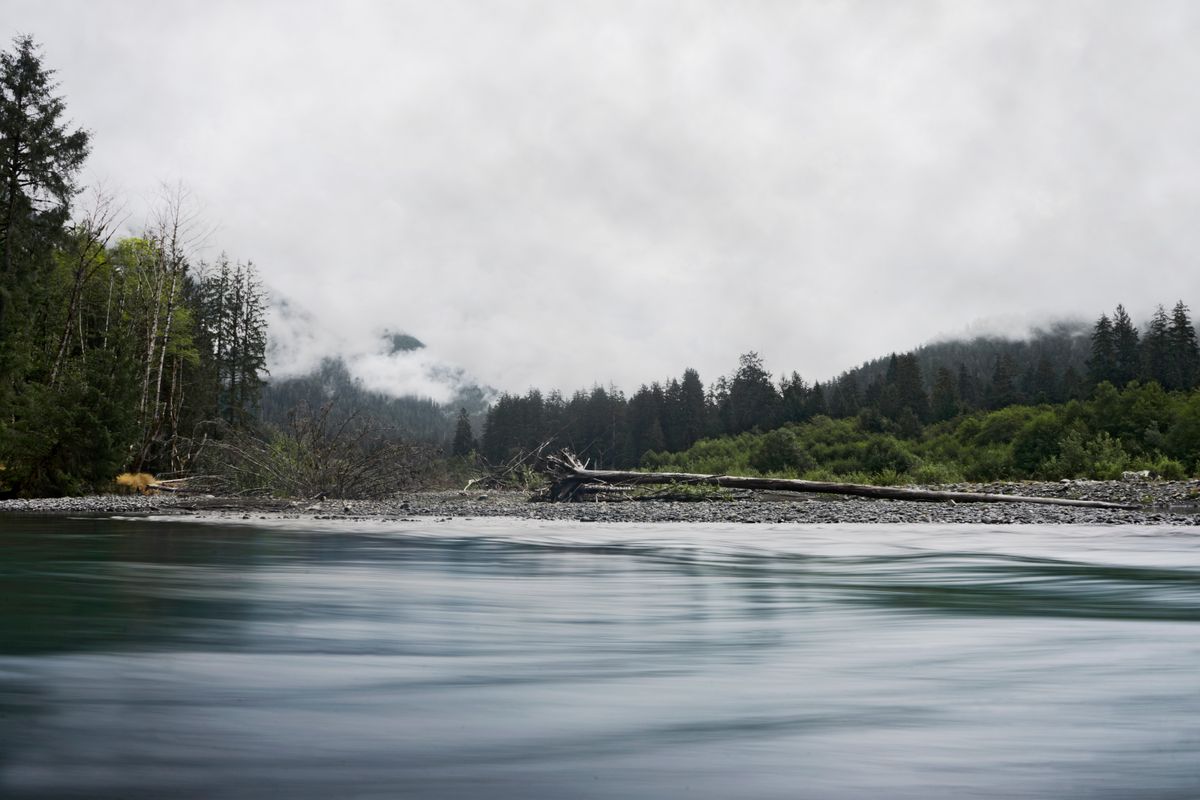

The Olympic Peninsula is where steelhead fly fishing reaches its purest expression. The rivers that drain the western slopes of the Olympic Mountains, fed by over 12 feet of annual rainfall, flowing through temperate rainforest so dense the canopy blocks the sky, hold the last significant populations of wild winter steelhead in the contiguous United States. These are not hatchery fish. They're ocean-run wild steelhead that have navigated 50 miles of Pacific Ocean, fought through coastal currents, entered a river mouth, and pushed upstream through old-growth forest to spawn in the same gravel their ancestors have used for thousands of years.
The fish average 8 to 12 pounds, with fish over 15 common and occasional steelhead exceeding 20. They're chrome-bright from the ocean, muscled from the migration, and they fight with a power that no river-resident trout can match. Hooking a wild Olympic Peninsula steelhead on a swung fly in a rainforest river, the pull, the run, the jump, is the single most intense experience in freshwater fly fishing.
But this article comes with a caveat that most fly-fishing guides don't include: some of these rivers are in trouble. The Queets and Quinault are closed to sport fishing after failing escapement goals. The Hoh season is limited to four months. NOAA has determined that Olympic Peninsula steelhead face moderate extinction risk. The fishing is extraordinary, but the fish need advocates more than they need anglers right now. Fish these rivers with reverence. Handle wild fish carefully. Support the conservation organizations fighting to protect them. And understand that the privilege of casting to a wild OP steelhead may not be available forever.
The Rivers, Rainforest Water

The Hoh River
The Hoh is the Olympic Peninsula's most iconic steelhead river, a glacier-fed system draining the slopes of Mount Olympus through the Hoh Rain Forest, one of the largest temperate rainforests in the Western Hemisphere. The river runs milky-green with glacial flour in summer and clears to a jade-green in winter when the glaciers slow.
The Hoh produces some of the largest steelhead on the peninsula, fish over 20 pounds are caught every season. The river offers miles of easy wading over gravel bars, and the setting, old-growth Sitka spruce, moss-draped maples, Roosevelt elk on the gravel bars, is the most visually dramatic steelhead water in the country.
Current season: December 1 through March 31. Wild steelhead must be released. Check WDFW regulations before planning, seasons change.
The Sol Duc
The Sol Duc is a spring-fed tributary of the Quillayute system, clearer than the glacier-fed rivers, more stable in flow, and consistently productive for both winter and summer steelhead. The Sol Duc's clarity and moderate size make it the best fly-fishing water on the peninsula for anglers who prefer to see their swing and read the water visually.
The Sol Duc's winter run peaks in January and February, with fish in the system from December through March. The river also receives a summer steelhead run that provides fishing from June through October, a warmer, lower-water fishery that allows lighter tackle and shallower swinging.
The Bogachiel
Many OP guides consider the Bogachiel the finest fly water on the peninsula. It's a clear freestone river originating from Bogachiel Peak in Olympic National Park, with classic swing water, long, even-paced runs over gravel that are textbook for covering with a spey rod. The Bogachiel produces some of the region's biggest steelhead, and the river's consistency (it doesn't blow out as quickly as the glacier rivers after rain) makes it the most reliable option during the volatile winter weather.
The Queets and Quinault, Closed
The Queets River, once considered the greatest wild steelhead river in Washington, has been closed to sport fishing since November 2023 after failing to meet escapement goals in 8 of the last 10 years. The Quinault is similarly closed. These closures are conservation measures, and they're necessary. The fish come first.
The closures underscore the fragility of wild steelhead populations and the importance of catch-and-release, barbless hooks, and careful fish handling on the rivers that remain open.
The Technique, Swinging in the Rain
Olympic Peninsula steelhead fishing is a swinging game. You wade into the head of a run, cast across and downstream with a two-handed spey rod, mend to control the swing speed, and let the current carry your fly broadside across the run. The fly pulses, breathes, and moves through the water column, and somewhere in the swing, a steelhead intercepts it.
The take is different from a trout eat. There's no subtle sip. The line tightens, the rod loads, and the fish is running before your brain processes what happened. A winter steelhead's first run, 50 yards of line stripping off the reel in seconds, is the moment that steelhead anglers spend entire seasons chasing.
Cold Water, Sink Tips and Intruders
When water temperatures are below 45°F (most of winter), steelhead hold deep and are less willing to move to a fly. Skagit heads with 12- to 15-foot sink tips (T-11 through T-17, heavier as the water gets colder and higher) get the fly into the zone. Intruder-style flies, large, articulated patterns with marabou, rabbit, and flash tied on tubes or shanks, create maximum movement and profile at slow swing speeds.
The Hoh Bo Spey is the #1 fly on the peninsula, a pink/orange intruder variant that produces in every river, every condition, every month. Black and blue intruders work in clear water. Pink, orange, and chartreuse produce when the river has color after rain.
Warm Water, Dry Lines and Classic Wets
When water temperatures climb above 50°F (late season and summer runs), the game opens up. Floating lines with unweighted flies, traditional hair-wing patterns like the Green Butt Skunk, Purple Peril, and Freight Train, swing through the upper water column. The takes are closer to the surface, more visual, and more violent.
Skating dry flies, waking a Muddler or a riffle-hitched wet fly across the surface, produces the most dramatic steelhead takes imaginable. A 10-pound steelhead blowing up on a skating fly in two feet of water is an image that stays with you permanently. Skating works best in the warmest water (above 55°F), typically in the late afternoon on sunny winter days or during summer steelhead season.
The Gear
Rod: 13- to 14-foot spey rod, 7-8 weight. The Olympic Peninsula's rivers are wide enough to demand two-handed casting distance, and the winter conditions (rain, cold, heavy flies) require a rod with backbone. Skagit shooting heads are the standard, their compact, heavy design turns over sink tips and large intruders in the tight casting lanes created by the riverside timber.
Reel: Large arbor with a strong, smooth drag and 200+ yards of backing. Winter steelhead run hard and long.
Tips: 12- to 15-foot sink tips in T-11, T-14, and T-17. Lighter tips for lower, clearer water; heavier for higher, faster flows. Carry at least three weights.
Leaders: 4 to 6 feet of straight 12-15 pound fluorocarbon. Steelhead leaders are simple, no tapers needed for swinging.
Flies: Hoh Bo Spey (pink/orange, #2-4), black/blue Intruder (#1/0-2), Egg Sucking Leech (#2-4), Green Butt Skunk (#4-6), Purple Peril (#4-6), Muddler (#4-6, for skating). Carry dark flies for clear water, bright flies for colored water.
Wading: The OP rivers are cold in winter (38-45°F). Neoprene waders or high-quality breathable waders with thermal layers underneath. Felt soles for the slippery river rock. Studded boots for the boulders. A wading staff is essential, the current is powerful and the consequence of a swim in January water is hypothermia.
The Culture, Forks and the Steelhead Community
Forks, Washington (population 3,900) is the base camp for Olympic Peninsula steelhead fishing. The town sits at the junction of the Sol Duc and Bogachiel (which merge to form the Quillayute), with the Hoh and Calawah nearby. Every motel, diner, and gas station in Forks knows what you're here for.
The deepest local knowledge here belongs to the anglers and guides who live on the peninsula, fish these rivers daily through the winter, and understand the steelhead's behavior, the river's moods, and the weather patterns that determine whether you'll be fishing or watching the river blow out.
The classic Forks steelhead experience runs on more than the fishing: the river lodges around town, the shared meals, and the kind of fireside evening conversation that only happens when a group of anglers has spent the day swinging flies in the rain for fish that may or may not have been there.
The OP steelhead culture is intense, contemplative, and conservation-minded. These anglers have watched rivers close. They've seen fish counts decline. They handle every wild steelhead with the care of someone who understands that this fish is not guaranteed to be here next year. The barbless hooks, the wet hands, the fish that never leave the water during release, these aren't regulations on the OP. They're convictions.
The Conservation Reality
This guide would be incomplete without addressing what's happening to Olympic Peninsula steelhead. Wild winter steelhead populations across the OP have declined significantly over the past two decades. The Queets and Quinault closures are symptoms of a broader decline driven by habitat degradation, climate change (warming ocean temperatures affect ocean survival), and legacy impacts from logging and road-building that damaged spawning habitat.
Organizations like the Wild Steelhead Coalition, Native Fish Society, and Trout Unlimited are fighting to protect and restore OP steelhead habitat. If you fish these rivers, support these organizations. The price of a guided trip is nothing compared to the cost of losing these fish permanently.
When to Go
- December–January: Early winter run, hatchery fish first, wild fish building, the coldest and wettest conditions
- February–March: Peak wild steelhead, the largest fish, the most fish, the best combination of numbers and size
- Late March–April: Late season, bigger average fish, improving weather, some rivers closing (check regulations)
- June–October: Summer steelhead on the Sol Duc, warmer water, lighter tackle, dry-line swinging