Fish
Fish Fire
Fire Hike
Hike Bird
Bird

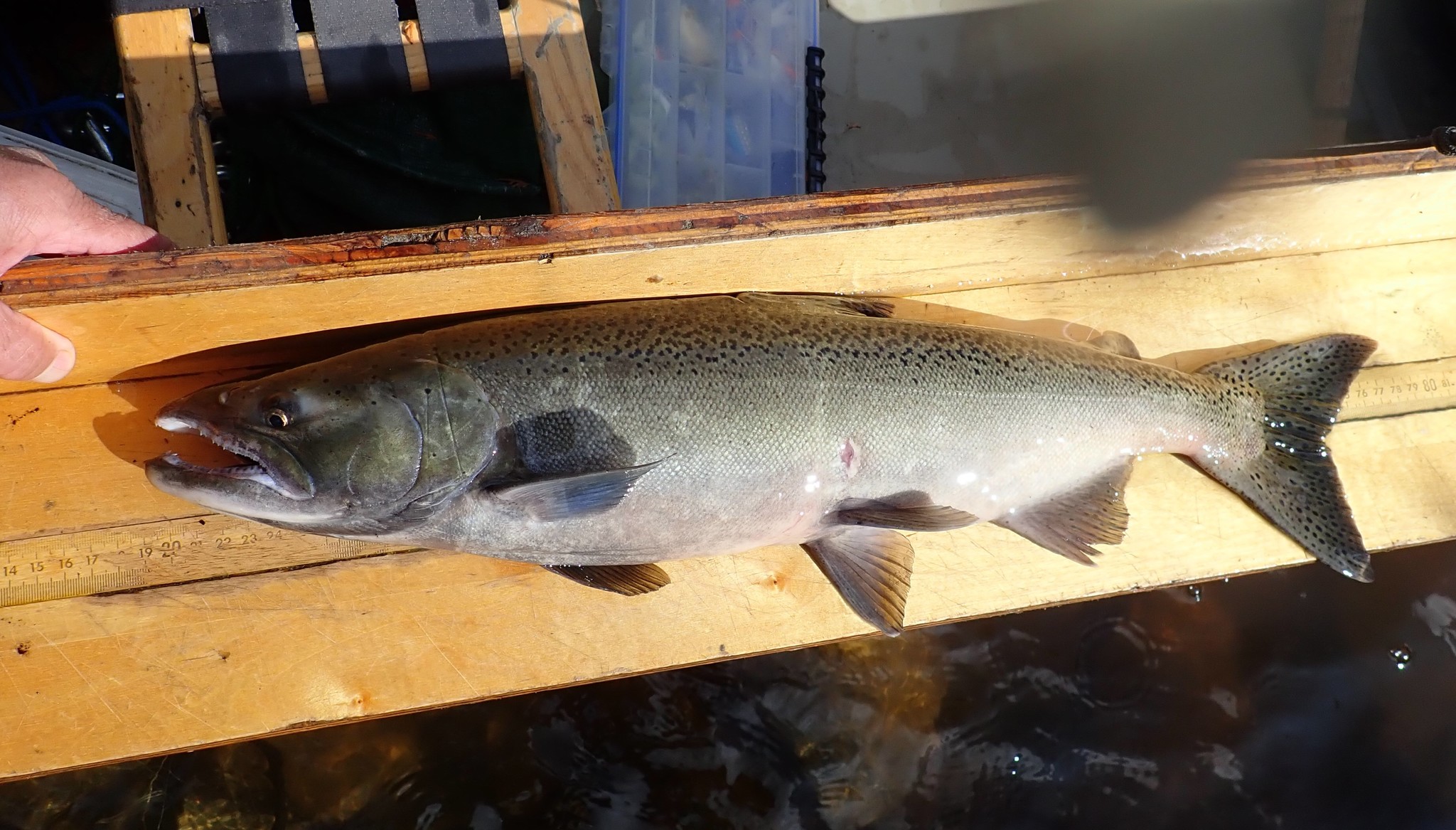

The chinook salmon is the king, literally. The largest of the Pacific salmon, a "king" can top 50 pounds, and hooking one is among the most powerful experiences in fishing, whether it comes on a downrigger 100 feet down in the ocean, on a flasher off a Great Lakes port, or on a drifted cluster of roe in a coastal river. Chinook are pursued across three very different arenas, the salt, the Great Lakes, and the rivers, each with its own methods, and each producing that same bulldogging, drag-screaming fight. This guide covers the king's remarkable life, the three fisheries where you'll chase them, and every core technique, with step-by-step instruction, to catch one.
Chinook are close cousins of the steelhead and other Pacific salmon, see our guides on how to catch steelhead and how to catch coho salmon.
The King of Salmon
The chinook salmon (Oncorhynchus tshawytscha), "king," "spring," "tyee," or "blackmouth", is the biggest Pacific salmon. In the ocean and the Great Lakes it's a bright chrome torpedo with small black spots on the back and both lobes of the tail; the surest ID is the black gum line at the base of the teeth (the "blackmouth" nickname). As kings enter fresh water to spawn they darken to olive, copper, or maroon. Most run 10 to 30 pounds, a fish over 30 is a great king, and the giants exceed 50 pounds (the largest ever topped 90).
Like all Pacific salmon, chinook are anadromous and semelparous, they hatch in fresh water, migrate to the ocean (or, in the Great Lakes, the open lake) to feed and grow for several years, then make a one-way spawning run back to their home river, after which they die. This life cycle is the key to catching them: in the ocean and lake they're actively feeding (so you imitate baitfish), while in the river they've largely stopped feeding and strike from aggression, territoriality, and instinct (much like steelhead). Native to the Pacific and famously stocked throughout the Great Lakes, kings offer world-class fishing across the northern tier of the continent.
Three Arenas: Ocean, Great Lakes, and River
Where you fish for kings determines how you fish for them:
- The ocean: Chinook feed on baitfish (herring, anchovies, sardines) in the salt, so trolling and mooching baitfish imitations and cut bait rule. This is prime through spring and summer.
- The Great Lakes: Introduced kings grow huge feeding on alewives, and a massive charter fishery trolls spoons and flasher-flies behind downriggers, especially spring through the late-summer staging period near river mouths.
- The rivers: As kings run upriver to spawn (spring, summer, and fall runs depending on the system), they're caught by drifting roe, float fishing, back-trolling plugs, and casting spinners and jigs, reaction and instinct fishing for fish that have stopped feeding.
Match your techniques to the arena and the run timing, and you'll be fishing the right way for where the kings are.
The Techniques That Catch Chinook Salmon
Kings are caught trolling and mooching in open water and by a suite of river techniques. Here are the core methods, how to fish each, and when to use it.
Trolling with Downriggers, ocean and Great Lakes
Downrigger trolling is the dominant open-water king technique, presenting lures at a precise depth while you fish manageable line.
How to fish it: Run trolling spoons, plugs, or flasher-and-fly (or flasher-and-bait) combos behind a downrigger that carries the lure to the exact depth you're marking fish and bait. Troll slowly (1.5–3 mph), stagger multiple rods at different depths, and use the downrigger counter to repeat the productive depth. In the ocean, target bait schools and structure; in the Great Lakes, work the temperature breaks and staging areas near ports and river mouths. It's the most efficient way to find and catch open-water kings.
How to Use Downriggers for SalmonMooching and Cut-Plug, the classic salt technique
Mooching, drifting or slow-trolling a cut or whole herring so it spins seductively, is a time-honored, deadly ocean king method, especially in the Pacific Northwest.
How to fish it: Rig a cut-plug herring (angled cut so it rolls) or a whole herring on a mooching rig (a sliding banana weight above a two-hook leader), and let it down to the fish's depth, then work it with a slow lift-and-drop or a slow troll so the bait spins and flashes like a wounded baitfish. Kings track the spinning bait and inhale it. Mooching is a subtle, engaging way to fish the salt that many anglers consider the purest form of salmon fishing.
How to Mooch for SalmonDrift Fishing Roe, the river standard
In the river, drift fishing a cluster of salmon roe (eggs) along the bottom is a classic, highly effective way to trigger a king.
How to fish it: On a drift rig with pencil lead or a slinky weight to tick bottom, present a cluster of cured salmon roe (often with a Corky or bead for buoyancy and color) on a leader, and cast up and across so it drifts naturally along the bottom at current speed through the holding water. Keep light tension to feel the bite, and set when the drift stops or you feel the grab. Roe is a king's kryptonite, migrating salmon key on drifting eggs, and drifting it through holding water is a foundational river technique.
Drift Fishing Roe for SalmonFloat Fishing, suspend the bait through the run
Float fishing (bobber-dogging) suspends roe, a jig, or a bead at a set depth and drifts it drag-free through holding water, showing the subtlest take.
How to fish it: Below a float, set your leader so a jig, a cluster of roe, or a bead rides just off the bottom, and trot it downstream at the current's speed through the slot where kings hold, managing your line for a natural drift. Watch the float, when it dips or shoots under, set hard. Float fishing presents the bait cleanly over snaggy bottom, shows light bites, and is one of the most popular and effective ways to fish rivers for kings.
How to Bobber Fish for SalmonBack-Trolling Plugs, hover a lure in their face
Back-trolling (or back-bouncing) plugs holds a diving lure hovering and wobbling in front of holding kings until an aggravated fish slams it, a favorite from a boat.
How to fish it: Let a diving plug (a Yakima Bait Kwikfish or MagLip), often wrapped with a sardine fillet for scent, out behind the boat, and hold the boat against the current so the plugs hover and wobble in place just off the bottom, slowly working down through a run. The plug's throbbing action and invasion of the fish's space provoke violent, rod-burying strikes. Back-bouncing roe on a similar setup is another deadly boat technique for kings.
How to Fish Plugs for Salmon in RiversSpinners and Spoons, cover water and trigger strikes
Casting spinners and spoons covers water quickly and triggers reaction strikes from fresh, aggressive river kings.
How to fish it: Tie on a big inline spinner (a Blue Fox or Vibrax) or a spoon, cast across and slightly upstream, and let it sink and swing through the holding water at a steady pace so the blade or wobble works just off the bottom. The flash and thump provoke a grab as it swings in front of a king. Cover a run with a fan of casts, stepping through it, an active, effective, and simple way to fish for kings, especially fresh chrome fish.
How to Fish Spinners for King SalmonTwitching Jigs, the aggressive river tactic
Twitching jigs, hopping a heavy marabou jig aggressively through holding water, is an increasingly popular, exciting way to trigger reaction strikes from river salmon.
How to fish it: Cast a heavy marabou jig (1/4 to 1/2 oz) into holding water, soft pockets, slots, and frog water, and work it with a sharp, rhythmic twitch-and-drop of the rod, letting it fall on slack line between twitches. The darting, pulsing marabou draws vicious, aggressive strikes, often as the jig falls. It's a hands-on, engaging technique that's deadly on coho and also takes kings holding in slower, softer water.
How to Twitch Jigs for SalmonWhen to Go: Runs and Timing
Chinook fishing follows the runs. In the ocean, kings feed and are caught spring through fall, with peaks varying by region. Rivers have distinct runs, spring, summer, and fall Chinook depending on the system, with the fish entering fresh water and moving upstream over weeks; fresh, chrome fish fresh from the salt fight best and are the prime targets. In the Great Lakes, trolling is strong spring through summer, and the fall staging run near river mouths and up the tributaries is a spectacular, accessible fishery. As with steelhead, river conditions matter, a river dropping and clearing after rain, with some color, is prime. Know your system's run timing and fish it when fresh kings are moving.
The Great Lakes King Fishery
One of the great fishing stories in North America is the Great Lakes chinook fishery. Kings were introduced to the Great Lakes in the 1960s to control invasive alewife baitfish, and they thrived, growing into a world-class salmon fishery hundreds of miles from any ocean. Today, ports across Lakes Michigan, Huron, Ontario, and Superior host huge charter fleets that troll for kings, and the fishing rivals or exceeds the salt.
If you're new to salmon, the Great Lakes are one of the most accessible places to catch a big king. The spring-through-summer trolling bite off the ports is fast and productive, and the late-summer and fall staging run, when mature kings gather near river mouths and then push up the tributaries to spawn, brings the fish within reach of pier, shore, and river anglers. Great Lakes kings are caught with the same techniques as their ocean cousins, flasher-flies and spoons behind downriggers in the lake, and roe, plugs, spinners, and jigs in the rivers, so everything in this guide applies. For an inland angler, a fall king run on a Great Lakes tributary is the closest thing to a Pacific salmon river, and it's a spectacular, hard-fighting fishery worth planning a trip around.
Fighting and Landing a King
Hooking a big chinook is one thing; landing it is another. Kings are powerful, they run hard, and a fresh one will test your drag, your knots, and your patience. Don't try to muscle a king, set your drag firmly but with enough give to protect your line, keep steady pressure with the rod, and let the fish run when it wants to run rather than trying to stop it. Pump and reel to gain line when the fish gives you the chance, and be especially ready for the strong dives and head-shakes a king makes near the boat or the bank, which is where many are lost.
In a river, try to keep a hooked king out of heavy current and downstream snags, using the rod to steer it toward softer water. Have a large net ready and net the fish head-first. If you plan to release a wild fish, keep it in the water, minimize handling, and revive it fully before letting go. A big king earned through a long, careful fight is one of fishing's great rewards, take your time and enjoy it.
Gear for Chinook Salmon
King gear is heavy, matched to the arena:
- Trolling combo: A medium-heavy trolling rod with a line-counter reel for downriggers, flashers, and spoons; a mooching rod and reel for the salt.
- River combo: A 8-foot-6 to 10-foot-6 salmon rod (a longer "float" rod for float fishing) with a baitcasting or spinning reel for drift, float, plug, and hardware fishing.
- Line: 15- to 30-lb monofilament mainline (or braid with a mono/fluoro leader), scaled to the size of fish and the water.
- Terminal tackle and lures: Downriggers, flashers/dodgers, trolling spoons, cut-plug herring and mooching rigs, cured roe, Corkies and beads, diving plugs (Kwikfish/MagLip), big spinners and spoons, and marabou jigs cover every technique above.
Eat Well, Fish Responsibly
Chinook are superb eating, rich, oily, deep-orange fillets that are the prize of the salmon world, best from bright, ocean-fresh or Great Lakes fish (river fish darken and their quality declines the longer they're in fresh water). Salmon fisheries are tightly and importantly regulated: know and follow the rules for your water, including where wild fish must be released and only fin-clipped hatchery fish kept, and observe seasons, limits, and gear restrictions closely. Many wild Chinook runs are fragile, so handle and release wild fish gently. Responsible harvest keeps both the fish and the fishing healthy.
Planning Your King Trip
Chinook fishing covers a lot of ground, ocean trolling, Great Lakes charter and pier fishing, and river drift and plug fishing, and each involves specialized gear and hard-won local know-how. The single biggest factor in success is being on the right water at the right time: match your technique to the arena, time your trip to the run, and read conditions before you go. Open-water trolling generally means a boat, but the fall staging run puts kings within reach of pier, shore, and river anglers who scout their access ahead of time. If you don't have a boat, hopping on a Great Lakes charter or an ocean trip out of a salmon port is a common way to get on fish and learn the water. Wherever you chase them, check the run timing, launches, and current regulations for your system, confirm what's open and legal, and go when fresh kings are moving.