Fish
Fish Fire
Fire Hike
Hike Bird
Bird

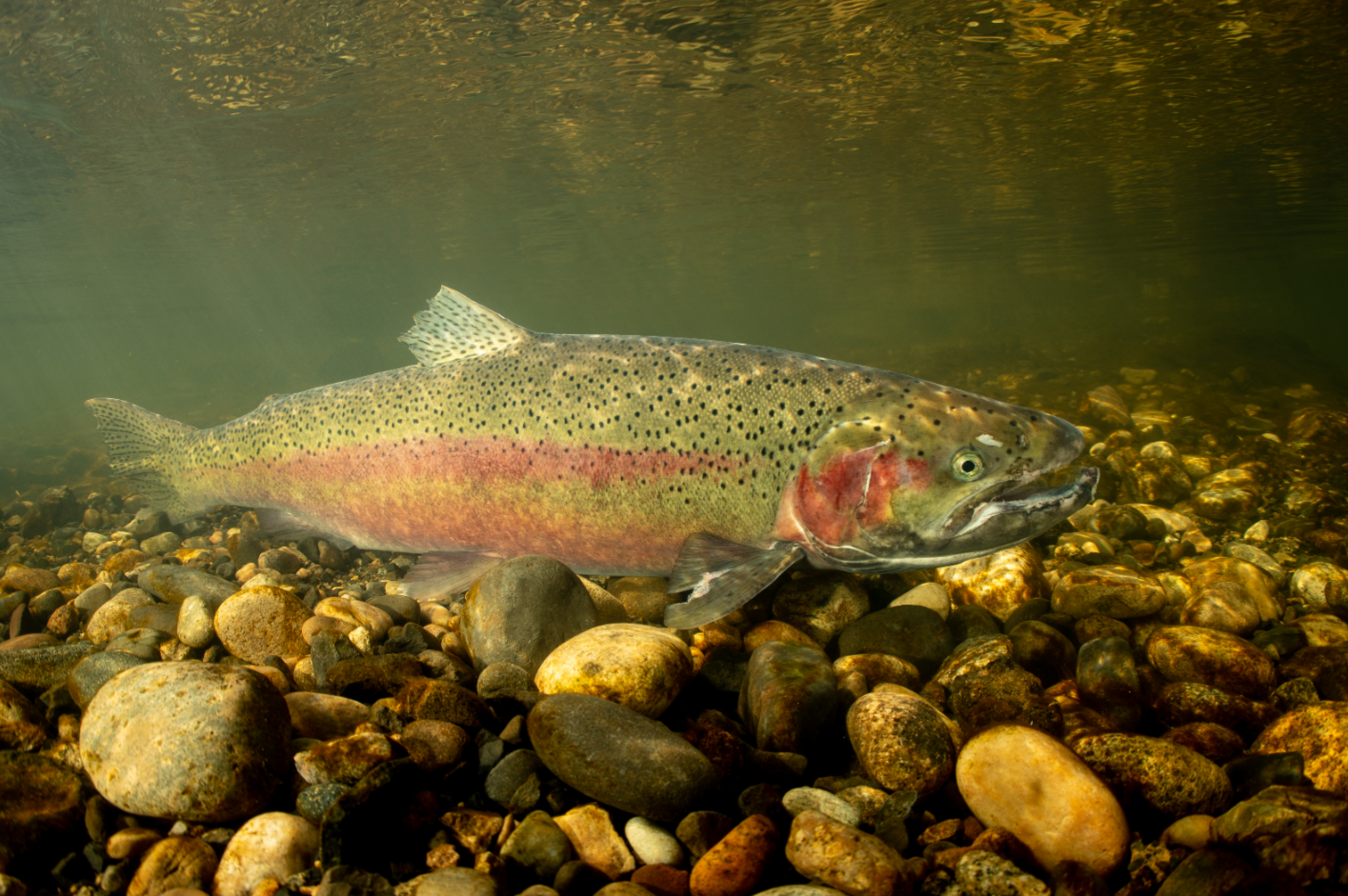

Steelhead are the fish of a thousand casts, and every steelheader will tell you the thousandth cast is worth it. A steelhead is a rainbow trout that migrated to the ocean (or the Great Lakes), grew big and chrome-bright, and returned to its home river as one of the most powerful, acrobatic freshwater fish an angler can hook. They're pursued with an almost religious devotion across the Pacific Northwest, the West Coast, and the Great Lakes, in cold rivers during the gray months when most anglers have hung up their rods. Steelhead are challenging, they don't feed much once they enter the river, so catching them is about reading water, covering it methodically, and triggering a reaction from a fish that isn't hungry. This guide covers how to find steelhead in a river and every core technique, with step-by-step instruction, to hook one.
Since steelhead are sea-run rainbows, our guide on how to catch rainbow trout is a useful companion.
The Sea-Run Rainbow
A steelhead is the anadromous (sea-run) form of the rainbow trout (Oncorhynchus mykiss), genetically the same fish, but with a life history that takes it to the ocean or a big lake to feed and grow before it runs back up its natal river to spawn. That ocean journey transforms it: a river-resident rainbow is spotted and pink-striped, while a fresh steelhead is sleek, muscular, and brilliant chrome-silver, coloring up with a rosy stripe the longer it stays in fresh water.
Steelhead come in two broad types by when they enter the river. Winter-run steelhead return from late fall through spring, close to spawning, and are the classic cold-weather quarry. Summer-run steelhead enter earlier, in summer and fall, immature, and hold in the river for months. Great Lakes steelhead, introduced and now thriving, run the tributaries mainly in fall through spring. Most steelhead run 5 to 12 pounds, fish over 15 are true trophies, and the giants of British Columbia and the Great Lakes exceed 20. Whatever the size, a hooked steelhead's blistering runs and cartwheeling jumps are unforgettable.
Understanding Steelhead: Migrating, Not Feeding
Here's the single most important thing to understand: steelhead in the river are on a spawning migration, not a feeding binge. Unlike a resident trout gorging on insects, a river steelhead eats little. So why does it bite? Strikes come from aggression, territoriality, reflex, and residual feeding instinct, a steelhead will snap at a drifting egg, a flashing spoon, or a swung fly that invades its space or triggers a reaction, not because it's hungry.
That changes your whole approach. You're not "matching the hatch"; you're presenting an attractive target through as many holding fish as possible and provoking a reaction. Success comes from covering water systematically, putting your offering in the strike zone (usually near the bottom, at the fish's level), and reading the river to fish only the water that actually holds steelhead. Persistence and water-reading, more than any secret bait, catch steelhead.
This is why steelheading rewards a certain mindset. You may fish a beautiful run perfectly and touch nothing, because no fish were home, and then, three casts later in the next slot, the rod nearly leaves your hands. The anglers who consistently catch steelhead are the ones who keep a confident presentation in good water hour after hour, cold day after cold day, trusting that the grab will come. Keep your bait in the strike zone, keep moving through fresh holding water, and keep the faith. When a chrome steelhead finally slams your offering and goes cartwheeling across the river, every fishless drift that came before it is instantly forgotten.
Reading Steelhead Water
Steelhead don't hold just anywhere, they rest in specific "travel and holding" water as they move upstream. Learn to read it and you're most of the way there. Look for:
- "Walking-pace" current, water moving at about the speed you'd stroll is the classic steelhead pace, neither too fast nor stagnant.
- Depth of roughly 3 to 8 feet, deep enough to give fish cover and comfort, shallow enough to fish effectively.
- Tailouts of pools, the slots and seams beside faster current, and softer water behind boulders and ledges, the "bucket" where a traveling fish stops to rest.
- Bottom structure, a ledge, boulder field, or depth change that gives fish a break from the current.
Fresh, aggressive fish often hold in the tailouts and the heads of runs; the classic advice is to fish the "greasy," even-flowing water of a run methodically, casting and taking a step downstream after each drift or swing to cover it all.
The Techniques That Catch Steelhead
Steelhead are caught with floats, drift gear, plugs, spoons, and flies. Here are the core methods, how to fish each, and when to use it.
Float Fishing with Jigs, the modern standard
Float fishing (also called bobber-dogging) a jig or bait under a float has become the most popular and effective winter-steelhead method because it presents a bait naturally and shows the subtlest bite.
How to fish it: Below a float (fixed or slip), set your leader so a marabou or worm jig (1/8 to 1/4 oz), a bead, or a bait (spawn/shrimp) rides just off the bottom. Cast up and across, then mend and manage your line so the float trots downstream at the current's exact speed, drifting the jig drag-free through the holding slot. Watch the float like a hawk, when it dips, hesitates, or shoots under, set hard. Line management is everything; a natural, drag-free drift at the right depth is what triggers the take.
Float and Jig Fishing 101 for SteelheadBead Fishing, imitating a drifting egg
A simple plastic bead imitates a single loose salmon or steelhead egg drifting in the current, one of the deadliest and most versatile steelhead presentations.
How to fish it: Rig a soft or hard bead (6–10mm) pegged a couple of inches above a bare hook, and fish it under a float or on a drift rig so it tumbles naturally near the bottom. Match the bead color and size to conditions, natural, pale, or mottled beads in clear water; brighter in high or off-color water, and to the egg stage the fish are keyed on. When the float dips or you feel the tick on a drift rig, set. Beads shine anywhere steelhead and salmon share the river.
Bead Fishing for SteelheadDrift Fishing, the bank angler's classic
Drift fishing, bouncing a bait or lure along the bottom with just enough weight, is the time-honored steelhead method and deadly from the bank.
How to fish it: On a drift rig, use pencil lead or slinky weight on a dropper to tick the bottom, with a leader to a Corky/yarn, bead, bait, or spinner-blade presentation. Cast up and across, and let the rig bounce naturally downstream at current speed, keeping just enough tension to feel it tapping bottom. When the tapping stops or you feel a sharp tug, set. The key is enough weight to bounce but not drag, so your bait drifts naturally in the strike zone.
Drift Fishing for SteelheadBacktrolling Plugs, let the river do the work
Backtrolling plugs (also called plugging or pulling plugs) hovers a diving lure in front of holding fish, wobbling enticingly until an irritated steelhead snaps, a favorite from a drift boat.
How to fish it: Let a diving plug (a Yakima Bait MagLip, Kwikfish, or FlatFish) out behind the boat, and hold the boat against the current (or let it slip slowly downstream) so the plugs hover and wobble in place just off the bottom, slowly working down through a run. The plug's wild action and the way it invades a fish's space provoke aggressive, rod-slamming strikes. It's a superb way to cover holding water thoroughly, and the takes are violent.
Backtrolling Plugs for SteelheadSpoons and Spinners, flash and provoke
Casting spoons and spinners covers water quickly and triggers reaction strikes, especially from aggressive summer-run and fresh fish.
How to fish it: Tie on a spoon (a BC Steel or Little Cleo) or an inline spinner (a Blue Fox or Mepps) and cast across and slightly upstream, letting it sink and then swinging it through the holding water at a steady pace so the blade or wobble is working just off the bottom. The flash and vibration invade the fish's space and provoke a grab. Cover a run with a fan of casts, stepping downstream, a fast, effective way to find willing fish.
Spoons and Spinners for SteelheadSwinging Flies, the soul of steelhead fly fishing
Swinging flies with a two-handed (spey) rod is the classic, addictive fly method, and the grab of a steelhead on a swung fly is one of fishing's great thrills.
How to fish it: Cast a swung fly (a bright or dark streamer, or a wet fly) down and across the current, then let it swing across the run under tension, "on the dangle," as the current sweeps it in an arc toward your bank. Take a step downstream after each swing to methodically cover the water. Keep the swing slow and steady; the steelhead intercepts the fly broadside and the line comes tight in a heart-stopping pull. Let the fish turn before you set.
Swinging Flies for SteelheadCenterpin, the ultimate natural drift
Centerpin fishing uses a free-spinning reel to achieve a perfectly drag-free float drift over long distances, the gold standard for a natural presentation.
How to fish it: With a long float rod and a centerpin reel (a free-spooling reel with no drag), float a jig, bead, or bait and let line peel off the freely rotating spool so the float travels downstream at the exact speed of the current with zero drag, a longer, more natural drift than any other method allows. It has a learning curve (managing the free spool), but for presenting a bait drag-free through a long run, nothing beats it.
How to Fish a Centerpin SetupSummer-Run vs. Winter-Run: When to Go
Steelhead timing depends on your region and the run:
- Winter steelhead (late fall through spring) are the classic cold-weather fishery across the West Coast and Great Lakes tributaries, dress warm and fish float, bead, drift, and plug presentations through the holding water.
- Summer steelhead enter in summer and early fall and hold in rivers for months, often in a bit faster water; they're aggressive and great targets for swung flies, spoons, and spinners.
- Great Lakes steelhead run the tributaries heavily in fall and spring, with beads, jigs, and drifted eggs excelling around spawning salmon and other steelhead.
River conditions matter enormously: steelhead fish best when a river is dropping and clearing after a rain, with a slight green tinge (a couple of feet of visibility). Blown-out brown water or gin-clear low water are both tough. Check flows and time your trips to the "fishable green" window.
Gear for Steelhead
Steelhead gear is specialized to the method, but a float/drift setup covers the most water:
- Float/drift combo: A long 10-foot-6 to 13-foot-6 float ("noodle") rod with a spinning, baitcasting, or centerpin reel gives the reach and line control float and drift fishing demand.
- Plug/spoon combo: A 8-foot-6 to 9-foot medium/medium-heavy rod with a baitcaster for backtrolling plugs and casting hardware.
- Fly setup: A 7- or 8-weight two-handed (spey) rod with the appropriate shooting/skagit line for swinging flies.
- Line and terminal tackle: 10–15 lb monofilament mainline with an 8–12 lb fluorocarbon leader, plus floats, marabou jigs, beads, Corkies and yarn, pencil/slinky weights, a few plugs, spoons, and spinners, and swung-fly patterns cover every technique above.
Wild vs. Hatchery: Handle with Care
Many wild steelhead populations are in serious decline, and in much of their range, wild (unclipped) steelhead must be released while hatchery fish (marked by a clipped adipose fin) may be kept where legal. Know and follow your local regulations closely. When releasing a wild steelhead, the irreplaceable heart of the fishery, keep it in the water, support it gently facing into the current, minimize air time and handling, and let it swim off on its own. Pinch your barbs. These fish travel thousands of miles to return home; treating them with care is how the runs, and the fishing, survive.
Putting It All Together
Steelhead are the definition of a fishery where local river knowledge pays for itself, which run, which slot, which technique, at which river level, on which day. If you're new to a river, going out with an experienced steelheader or a good local guide is one of the fastest ways to shorten the learning curve: the right person will put you on holding water you'd never identify alone, rig you correctly for the conditions, and teach you to read the river and manage your drift or swing. Past that, the formula is simple to say and hard to master, find fresh fish in good holding water, keep a confident, drag-free presentation in the strike zone, and put in the cold hours until the thousandth cast finally comes tight.