Fish
Fish Fire
Fire Hike
Hike Bird
Bird

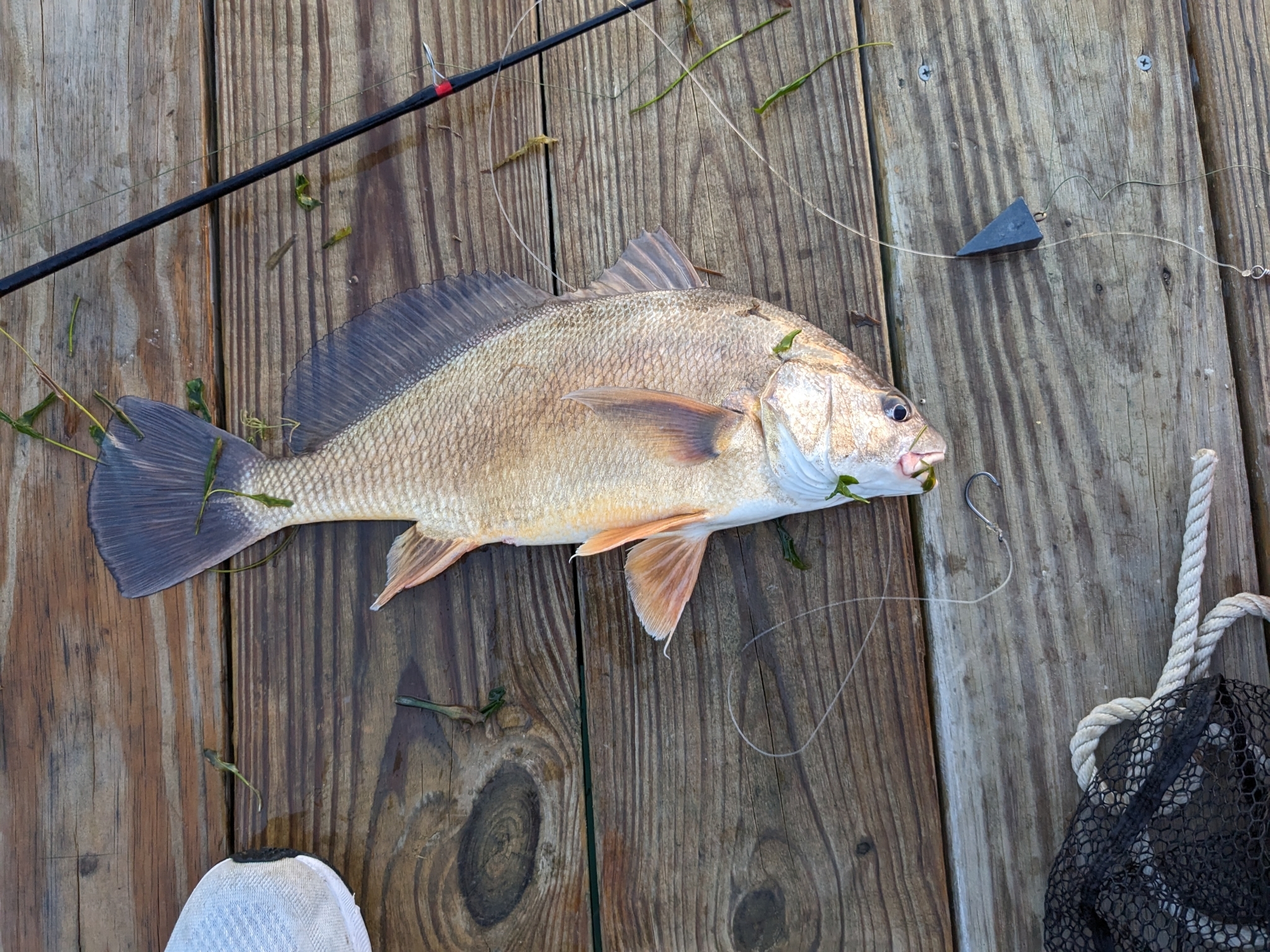

The freshwater drum is one of North America's most widespread, most overlooked, and most underrated fish. Known by a wonderful pile of regional names, sheepshead, gaspergou (or "goo"), grunter, croaker, silver bass, it's a hard-pulling, deep-bodied fish that lives in big rivers and lakes across the middle of the continent and readily takes a bottom-fished bait or a jig. Anglers hooking their first drum are almost always surprised: this humpbacked silver fish fights with a dogged, bulldog pull that outclasses many "better" species, and it's available almost everywhere in the right water.
Add in that it's easy to catch, grows to respectable sizes, and is genuinely good eating despite its poor reputation, and the freshwater drum deserves a lot more attention than it gets. This guide covers everything: identifying a drum, the best bottom rigs and baits, jigging and lure tactics, where and when to find them, and how to clean and cook one.
Life of the Freshwater Drum and How to Catch OneMeet the Freshwater Drum
The freshwater drum (Aplodinotus grunniens) is a deep-bodied, humpbacked, silvery fish with a distinctive high-arched back and a long dorsal fin. It has a blunt, rounded snout with a subterminal mouth (pointing slightly downward) suited to feeding on the bottom, and rough, pharyngeal (throat) teeth for crushing shells. It's the only member of the drum/croaker family that lives its whole life in fresh water, and, like its saltwater cousins, the males can produce a grunting or "drumming" sound with muscles against the swim bladder (hence the names drum and grunter).
Key facts:
- Size: commonly 1 to 5 pounds; good ones reach 10-15 pounds, and the biggest exceed 30. A drum over 5 pounds is a genuinely strong fish.
- Bottom feeder: it roots along the bottom eating insect larvae, small fish, crayfish, and especially mollusks and snails, which it crushes with those throat teeth (drum are major predators of invasive zebra mussels).
- Habitat: big rivers and large lakes, especially over firm bottoms, sand, gravel, rock, and mud, in current and around structure. It tolerates turbid water well.
- Range: enormously wide, from the Great Lakes and Hudson Bay drainage south through the entire Mississippi basin to the Gulf, and into Central America. Few freshwater fish cover more territory.
- A bulldog fight: drum pull hard, deep, and stubborn, using their broad bodies against the current.
That combination, widespread, willing, hard-fighting, and useful (they eat invasive mussels), makes the freshwater drum a fantastic, accessible, and honestly fun target.
Best Bottom Rigs and Baits
Drum are bottom feeders, so bottom fishing with bait is the number-one method, and it's simple and effective.
Drum (Sheepshead) Fishing on the Wisconsin RiverTop baits:
- Nightcrawlers: the classic and arguably the best drum bait, a gob of worms on the bottom is deadly.
- Crayfish: a natural favorite, matching a big part of their diet.
- Cut bait and minnows: fresh cut fish and live minnows both work well.
- Others: leeches, shrimp, and even clams/mussels (their natural prey) all take drum.
Rigging is straightforward:
- Bottom rig: a sliding-sinker (Carolina) rig or a simple bell-sinker bottom rig, with enough weight to hold on the bottom in current, and a strong hook (a circle hook works great).
- Location: cast to firm-bottom areas, current seams, holes, wing dams, bridge pilings, and channel edges, and let the bait sit on the bottom.
- The bite: drum often take with a distinct tap or steady pull; give a moment, then set and hold on for that bulldog fight.
This is beginner-friendly, reliable fishing, often the drum are the ones saving the day when other species won't bite.
Jigging and Lure Fishing
Drum aren't just bait fish, they readily hit jigs and lures worked near the bottom, and vertical jigging in particular is a deadly and fun way to target them, especially in rivers and on the Great Lakes.
Vertical Jigging Freshwater Drum in the Saginaw RiverEffective artificial approaches:
- Jigs: a leadhead jig with a soft-plastic grub, minnow, or curly-tail, or tipped with a piece of crawler, bounced along the bottom. Even light crappie jigs draw hard drum strikes.
- Blade baits and lipless crankbaits: excellent for vertical jigging and covering water, drum love the vibration.
- Bottom-bouncing lures: anything worked slowly along the bottom where drum feed.
Because drum feed on or near the bottom, the key with any lure is keeping it down in the strike zone and working it slowly. On a light jig or crappie pole, a solid drum pulls "like a train", a genuinely fun light-tackle fight that surprises everyone.
Dam Tailwaters: The Drum Hotspot
If you want to find concentrated, reliable drum fishing, head to the tailwaters below dams on big rivers. The churning, oxygenated, food-rich water immediately downstream of a dam is a magnet for drum, which stack up in the current seams, eddies, and slack pockets to feed on the baitfish, insects, and crustaceans the current delivers. Tailwaters are often the single most productive drum spots, and they're usually bank-accessible, making them ideal for anglers without a boat.
Fishing a tailwater for drum is straightforward: position yourself where fast water meets slow, the seam along a current break, the slack behind a wing dam or rock, or the eddy at the edge of the main flow, and get a bait or jig down to the bottom in that zone. Use enough weight to hold or slowly tumble along the bottom without washing away. Drum will often be there in numbers, and once you find the depth and seam they're using, you can catch them steadily. Tailwaters also concentrate other species (catfish, sauger, white bass), so tailwater drum fishing frequently turns into a fun mixed bag.
Where and When to Find Freshwater Drum
Location: freshwater drum are fish of big rivers and large lakes. In rivers, target the main channel, current seams, deep holes, wing dams, tailwaters below dams, bridge pilings, and firm sand/gravel/rock bottoms where they root for food. In lakes and reservoirs (including the Great Lakes), look for them over sand and gravel flats, along drop-offs, and near structure. They tolerate turbid, murky water well.
How to Catch Freshwater Drum (Gasper Goo)Timing: warm months are best. Drum feed most actively from late spring through fall as water warms, and they spawn in late spring/early summer (broadcasting eggs that float). Summer is prime, with the tailwaters below dams offering excellent, concentrated fishing. They're catchable year-round in many waters, slowing but still biting in colder months. Early morning, evening, and after rain (when current picks up and washes food around) can be especially productive.
Telling a Freshwater Drum From Similar Fish
Because drum are so widespread, they get confused with a few other species, knowing the differences helps. The high, arched back and long dorsal fin combined with a blunt, downturned mouth and silvery, chunky body are the giveaways. Drum are sometimes mistaken for white bass or other true bass, but those are more streamlined and have a different, more terminal mouth and distinct stripes; the drum's humped profile and rounded snout set it apart. They can also be confused with carp or buffalo, but carp have barbels (whiskers) at the mouth and buffalo lack the drum's arched, silvery look and downturned mouth. And unlike catfish, drum have scales and no whiskers.
One dead-giveaway trait if you can hear it: drum are named for the grunting or drumming noise males make, and a bucket or livewell of drum will sometimes literally croak at you. Another is the pair of large, hard, chalky-white otoliths (ear bones) inside the head, nicknamed "lucky stones", which are bigger and more distinctive than in almost any other freshwater fish, and are a classic way to confirm you've got a drum.
The Bulldog Fight and a Changing Reputation
For generations, the freshwater drum suffered from being lumped in with "rough fish" and dismissed as a nuisance. That reputation is unfair on two counts. First, the fight: a solid drum pulls with a deep, stubborn, rod-bending power that genuinely rivals or beats the game fish anglers prize, using its broad, slab-sided body to lever against the current. Hook a 5- or 10-pounder on a river current seam and you'll be convinced. Second, the eating: as covered below, a properly cared-for drum is a fine table fish that river cultures, especially in the South and the Great Lakes region, have valued for centuries.
The tide is turning. As multi-species and "roughfish" angling grows in popularity, more anglers are targeting drum on purpose for their fight, their abundance, and the fact that they bite when nothing else will. On a hot, tough day when the walleye and bass have shut down, the drum are usually still willing, and they'll remind you why they earned the nickname "poor man's redfish."
An Ecologically Valuable Native
The freshwater drum isn't just a fun catch, it's a genuinely useful native fish. Those powerful pharyngeal (throat) teeth evolved to crush snails and mollusks, and modern drum have become important predators of invasive zebra and quagga mussels in the Great Lakes and Mississippi systems, eating large quantities of them and helping keep the invaders in check. In this sense, catching (and appreciating) drum connects you to a native species doing real ecological work.
Drum are also remarkably adaptable and resilient. They handle turbid, warm, fluctuating water that stresses more sensitive species, occupy an enormous range spanning most of a continent, and remain abundant even in heavily altered rivers and reservoirs. That toughness is part of why they're so reliably catchable: there are healthy drum populations in a huge amount of accessible public water, and they're rarely under heavy fishing pressure, so the action is often fast and the fish willing.
Seasonal Patterns
Drum activity follows the water temperature. In spring, warming water and the pre-spawn period bring drum into more active feeding, and they spawn in late spring into early summer, broadcasting eggs that drift near the surface, unusual among freshwater fish. Through summer, the peak season, drum feed hard along firm bottoms and stack up in dam tailwaters and current seams, providing fast, reliable action, especially in the warm months when they root aggressively for food. In fall, they keep feeding well as they build reserves, often moving with baitfish and remaining very catchable. In winter, drum slow down and hold in deeper water but can still be caught, particularly in the milder-climate rivers and reservoirs of the South. For the best fishing, target the warm half of the year, focus on moving water and firm bottoms, and try the periods after rain when rising current washes food into their feeding lanes.
Cleaning and Eating Freshwater Drum
Here's the myth-buster: despite a poor reputation, freshwater drum is good to eat, firm, white, and mild when handled properly. The key is caring for the catch: bleed and ice the fish promptly, and eat the smaller ones (under a few pounds), which are the best table fare.
How to Clean and Cook a Freshwater Drum (Sheepshead)- Cleaning: fillet as you would any fish; the meat comes off in firm, white fillets. Trim any red/bloodline for the mildest flavor.
- Cooking: drum is excellent fried, blackened, baked, or in chowder; it holds together well and takes seasoning nicely. In Cajun country, gaspergou is a traditional and respected food fish.
- Fun fact: drum have large, distinctive white "lucky stones" (otoliths, the ear bones), which people have collected as good-luck charms for generations. Each stone even bears a natural "L"-shaped marking, adding to the folklore.
A practical tip for the best eating: because drum feed heavily on the bottom, the smaller, younger fish tend to have the cleanest, mildest flavor, while very large old drum can be coarser. Keep a few eating-size fish, ice them immediately, cook them fresh, and you'll have a meal that rivals many more celebrated panfish and gamefish, and you'll understand why "poor man's redfish" is a compliment, not an insult.
Give a properly cared-for drum a fair try in the pan and you'll understand why so many river cultures have eaten "goo" for centuries.
Give the Drum Its Due
The freshwater drum is the ultimate everyman's fish: found almost everywhere in the big rivers and lakes of middle America, easy to catch on simple bottom rigs or jigs, a stubborn and genuinely fun fighter, ecologically useful (they eat invasive mussels), and good on the table when handled right. It's a perfect species for kids, beginners, and anyone who wants reliable action and a hard pull. Next time you're on a big river or lake, drop a gob of nightcrawlers or bounce a jig along the bottom, and go make friends with a gaspergou.
For other hard-pulling, widely available rough fish of the same big waters, see our guides to the powerful common carp, the whiskered channel catfish, and the prehistoric bowfin.
To get on drum, focus on the big-river tailwaters, wing dams, current seams, and gravel-bottom flats where they stack up, check the flow and water levels before you head out, and find bank access or a launch that puts you within reach of that water. Drop a gob of nightcrawlers or bounce a jig into the nearest seam, and the reliable, bulldog fight of a freshwater drum is rarely far away.