Fish
Fish Fire
Fire Hike
Hike Bird
Bird

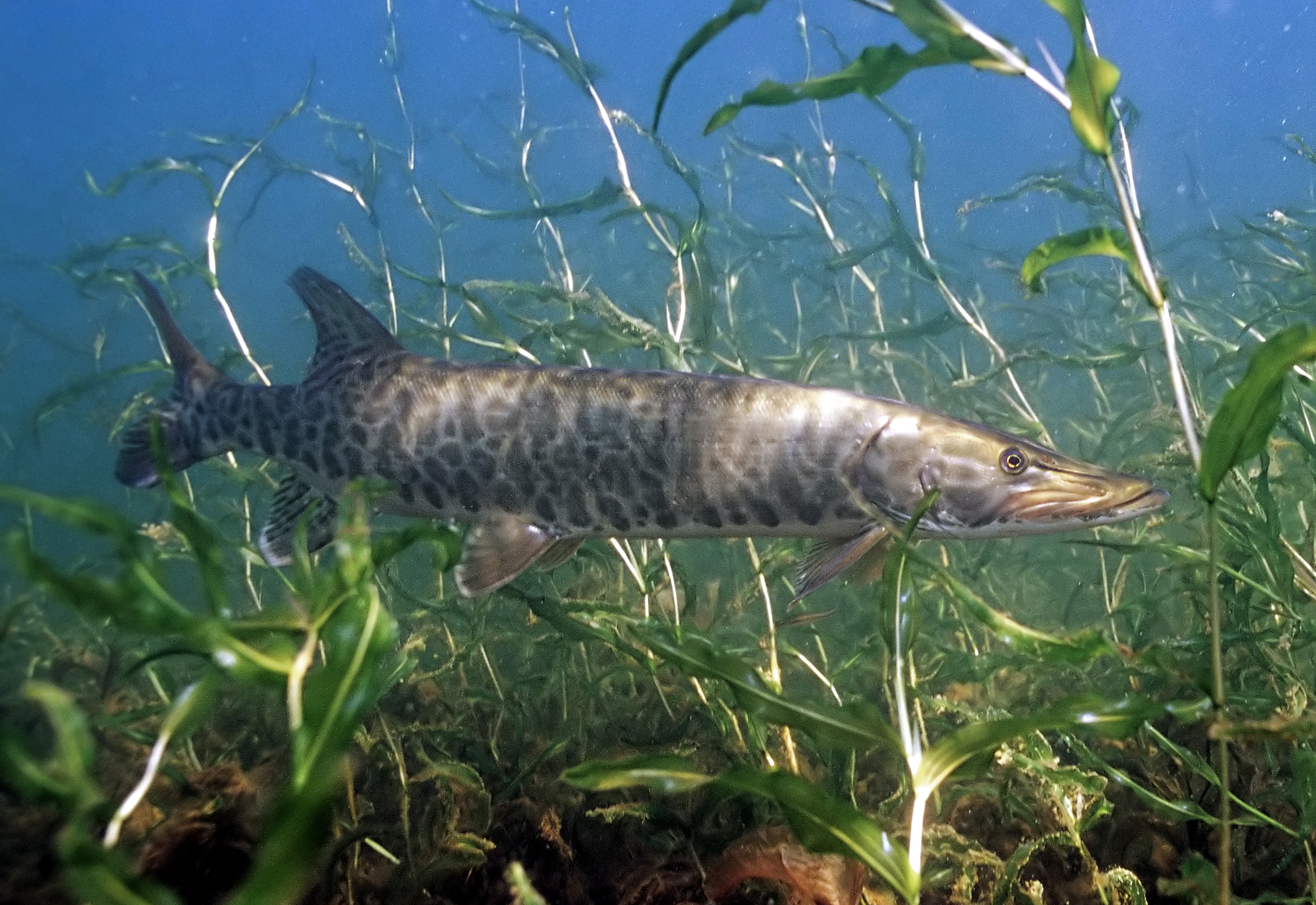

The muskellunge is the apex predator of freshwater and the ultimate trophy for many anglers, the legendary "fish of 10,000 casts." Muskies are the biggest members of the pike family, growing past 50 inches, and they are as elusive as they are enormous: solitary, moody, and warier than their pike cousins, a muskie will follow a lure a dozen times before finally committing, or ignore you entirely for days. That difficulty is exactly why muskie anglers are so obsessed, hooking a fish this big, this rare, and this hard-won is one of the great achievements in fishing. Muskie fishing is a specialized game with its own heavy tackle, its own techniques, and its own culture of conservation. This guide covers everything you need to catch one: the gear, where muskies live, and every core technique, including the all-important figure-eight.
Ready to chase a giant? Set your expectations for a grind, commit to the process, and lean on the techniques below, that is how first muskies get caught. Muskie share water and tactics with their smaller cousin; see our guide on how to catch northern pike.
The Fish of 10,000 Casts
The muskellunge (Esox masquinongy), "muskie" or "musky", is the largest member of the pike family and one of the largest freshwater gamefish in North America. Identify it by its long, torpedo-shaped body with dark markings (bars or spots) on a lighter background (the reverse of a pike's light spots on dark), its pointed tail fin, and the pores on the underside of its jaw (muskies have more than a pike). Like all esox, muskies are toothy ambush predators with a mouthful of dagger-like teeth.
Muskies grow huge and live long. A "keeper" by most standards is over 40 inches; a 50-inch fish is the trophy of a lifetime, and the giants push past 55 inches and 50 pounds. They're less numerous than pike, a lake might hold only a few fish per acre or fewer, and they're apex predators that eat large prey (big baitfish, suckers, ciscoes, and yes, pike and other muskies), which is why muskie baits are so big. Native to the Great Lakes region, the Upper Midwest, the Ohio and Tennessee river systems, and southern Canada, muskies have also been widely stocked, expanding the chance to catch one.
Muskie vs. Pike: Know the Difference
Muskies and northern pike are close cousins and share water, so anglers often confuse them. The quick tells: a muskie has dark markings on a light body and a pointed tail, while a pike has light bean-shaped spots on a dark body and a rounded tail. Muskies also have more sensory pores under the jaw and often no scales on the lower half of the cheek. Muskies grow larger, are far less common, and are considerably harder to fool, where a pike attacks with abandon, a muskie studies your bait and demands a more refined, persistent approach.
Gear Up Right: Heavy Tackle Is Not Optional
Muskie fishing demands heavy, purpose-built tackle, not because muskies pull that hard, but because you're throwing huge baits all day and must land and release big fish quickly and safely. Trying to catch muskies on bass gear will break your equipment, exhaust the fish, and get baits bitten off.
- Rod: A stout 8- to 9-foot heavy or extra-heavy muskie rod to cast big baits, drive hooks through a bony mouth, and control a large fish.
- Reel and line: A strong baitcasting reel spooled with 80- to 150-lb braided line.
- Leader (mandatory): A heavy fluorocarbon or wire leader (80–130 lb) on every bait, muskie teeth demand it.
- Release gear (mandatory): A large rubber-mesh net (to hold the fish in the water), long-nose pliers, hook cutters, and jaw spreaders. You must have these before you make your first cast, a hooked muskie can't be released safely without them.
Where Muskies Live
Muskies relate to structure, cover, and, critically, the location of their food. Focus on:
- Weed beds and weed edges, especially healthy green cabbage, a classic muskie ambush zone.
- Rock structure, reefs, points, humps, and rocky shorelines, particularly in rock-based lakes and rivers.
- Wood and timber in rivers and reservoirs.
- Open water, big muskies often suspend over deep basins following schools of ciscoes and other baitfish, especially in summer and fall.
- Current areas in rivers, around wing dams, current breaks, and the edges of pools.
Muskies also relate to "spots on the spot", the sharpest turn on a weed edge, the tip of a point, the one rock pile, and to the moon and weather-driven feeding windows. Cover water to find active fish, and mark every follow: a muskie that follows is a fish you can often catch on a later pass.
The Techniques That Catch Muskies
Muskie lures are big, and the presentations are built to trigger a strike from a following predator. Here are the core methods, how to fish each, and when to use it.
Bucktails, the muskie workhorse
A big bucktail (an inline spinner with a flashing blade and a hair or flash skirt) is the number-one muskie lure, easy to fish, covers water, and calls fish in with flash and thump.
How to fish it: Tie on a bucktail (a Mepps Musky Killer, a Double Cowgirl, or a Bucher-style blade) and retrieve it steadily so the blades spin and throb, working it over and along weed edges, rock, and points. Vary your speed, a faster "burn" often triggers reaction strikes. Bucktails are the best searching bait in muskie fishing and the ideal lure for a beginner to build confidence and cover water.
Muskie Bucktail BasicsTopwater, the heart-stopping surface strike
Few things in fishing match a muskie exploding on a topwater lure. It's a warm-water game, best in summer and early fall, low light, and calm to lightly rippled conditions.
How to fish it: Work a large topwater, a prop bait, a walking bait, or a "creeper" (a Topraider, Hawg Wobbler, or Pacemaker), across the surface over weeds, rock, and points with a steady, rhythmic cadence. Keep it moving and be ready: a muskie may boil on it several times before it commits, so don't set until you feel the fish's weight. The visual, violent surface strike is what muskie dreams are made of.
Topwater Muskie TipsGlide Baits and Jerkbaits, erratic and irresistible
Glide baits and jerkbaits dart, slide, and hang in wide, seductive sweeps, an erratic, dying-baitfish action that muskies find hard to resist.
How to fish it: Work a glide bait (a Phantom or Hellhound) or a jerkbait (a Suick) with sweeps of the rod and pauses, making it glide side to side and change direction. The pause, with the bait hanging or gliding to a stop, is when a following muskie usually strikes. Fish it around weed edges, rock, and open pockets, and vary the cadence until you find what triggers them. These baits excel on pressured and cold-front fish.
Ultimate Glide Bait Muskie FishingRubber Baits, the big-profile closer
Large soft-plastic "rubber" baits like the Bull Dawg present a big, lifelike, seductively slow-falling profile that often triggers the biggest muskies, including reluctant followers.
How to fish it: Cast a rubber bait (a Bull Dawg or Medussa), let it sink to the depth you want, and retrieve it with a pull-and-drop or steady rip-and-glide cadence so its soft body and tail undulate. The slow, vulnerable action closes the deal on muskies that have followed and refused faster baits, and it can be fished at any depth from shallow weeds to deep open water. It's a favorite for cold water and finicky fish.
How to Work a Bull Dawg for MuskieCrankbaits and Trolling, cover big water
Crankbaits, cast or trolled, cover water efficiently and reach muskies holding along deep edges and suspended over open water.
How to fish it: Cast and retrieve a muskie crankbait (a Believer or Depth Raider) along weed and rock edges, letting it dig and deflect. Or troll crankbaits along contours, weed lines, and over open-water basins at 3–5 mph, using line-counter reels and planer boards to spread lures and reach the fish's depth, an extremely effective way to locate active muskies across a large lake, and legal in most muskie waters (check regulations). Trolling shines in summer and fall when fish suspend over the basin.
Muskie Trolling BasicsLive Suckers, the fall trophy tactic
In the fall, a big live sucker is a classic, deadly big-muskie bait, fished on a quick-strike rig for clean, humane hooking and release.
How to fish it: Rig a large (10–14 inch) sucker on a quick-strike rig (a wire rig with two hooks placed in the bait) and fish it under a large float or on a weighted line near weed edges, rock, and structure, often as a second line while you cast lures. When a muskie takes it and moves off, set immediately, the quick-strike rig hooks the fish in the jaw for a healthy release. Sucker fishing accounts for many giant muskies during the cold-water fall months.
How to Catch Muskies with SuckersThe Figure-Eight, the technique that defines muskie fishing
No technique is more essential in muskie fishing than the figure-eight. Muskies routinely follow a lure all the way to the boat, and a huge share of muskies are caught not on the cast but on the figure-eight at the end of it.
How to fish it: As your lure nears the boat on every single cast, plunge your rod tip into the water and sweep the lure in a big, smooth figure-eight (or wide oval) beside the boat, making wide turns with rounded corners and keeping the bait moving with speed and direction changes. A following muskie, triggered by the turns and the sense of escaping prey, will often smash the lure right at your feet, so keep your drag set, hold on tight, and be ready for a violent strike. Do a figure-eight at the end of every retrieve, and you'll convert followers that would otherwise vanish. This one habit catches more muskies than any lure choice.
Muskie Figure-8: Do It the Right WayWhen to Go
Muskie season runs from late spring through the first ice, with distinct phases. Early summer brings fish shallow and aggressive after the spawn, a great time for bucktails and topwater. Midsummer is prime for topwater, burning bucktails, and trolling suspended open-water fish. Fall is the big-fish season: as water cools, muskies feed heavily to fatten for winter, and the largest fish of the year come on rubber baits, big glides, crankbaits, and live suckers. Muskies feed in windows often tied to low light, wind, and moon phases (dawn, dusk, and moon rise/set are classic), so stay on the water and keep casting through the productive periods. Persistence is the muskie angler's greatest asset.
The Muskie Mindset
More than any other freshwater fish, muskie fishing is a mental game. You will go hours, sometimes full days, without a strike, and the anglers who succeed are the ones who keep making a confident, hard cast and a crisp figure-eight on the thousandth repetition just as they did on the first. Treat every follow as gold: note the spot, the lure, the speed, and the conditions, because a muskie that follows is a fish you've located and can often catch on a return trip with a different bait or in a better feeding window. Many muskie anglers keep detailed logs of follows, moon phases, and weather, and they plan around the feeding windows those patterns reveal. Embrace the grind, celebrate the follows, and understand that in muskie fishing a single fish can make a whole season, that's the mindset that puts giants in the net.
Handle Muskies Like the Trophies They Are
Muskies are apex predators that are slow to replace, and the muskie community lives by a strong catch-and-release ethic, nearly every fish is released to grow bigger and be caught again. Because they're large and fragile, proper handling is essential: keep the fish in the water in a big rubber net while you unhook it, use pliers, hook cutters, and jaw spreaders to remove hooks fast, support a big muskie horizontally with two hands (never hold it vertically by the jaw), minimize air time to seconds, and revive it fully, holding it upright in the water until it kicks away strongly, before letting go. Have all your release tools ready before you fish. Treat these giants right, and the fish of 10,000 casts will be there for the next angler's 10,000.
Catch Your First Muskie
Muskie fishing has a steep learning curve, and the fastest way to flatten it is time on the water with someone who already knows the game, an experienced muskie angler or a good local guide who has the boat, the heavy gear, the release tools, and, most importantly, the knowledge of where the fish are and how to trigger them, including how to execute a proper figure-eight. Short of that, put in the casts, learn one water thoroughly, and trust the methods in this guide: throw bucktails to cover water, work a crisp figure-eight on every retrieve, and switch to rubber baits and live suckers when fall's big fish move in. The muskie is the fish of 10,000 casts for a reason, but every one of those casts is a shot at the freshwater fish of a lifetime.