Fish
Fish Fire
Fire Hike
Hike Bird
Bird

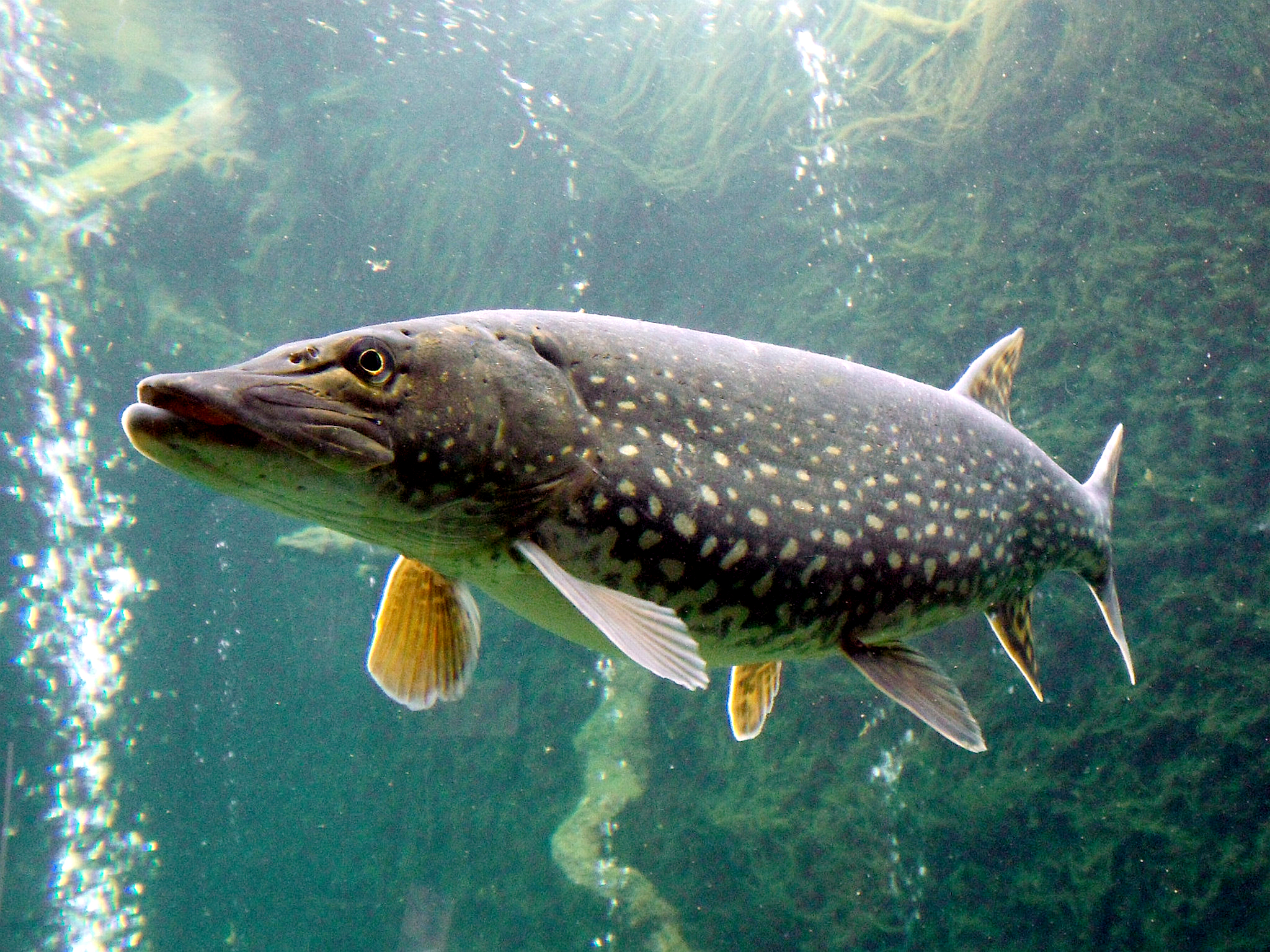

The northern pike is the freshwater "water wolf", a long, mean, toothy ambush predator built to explode out of the weeds and inhale anything that swims. Pike are aggressive, widely distributed across the northern half of the continent (and around the northern hemisphere), and gloriously willing to smash a big lure, which makes them one of the most exciting and beginner-accessible predators in fresh water. They grow long and heavy, into the 40-inch, 20-pound class in good water, and they fight with violent runs and head-shakes. Best of all, catching them is refreshingly straightforward: find the weeds, throw something flashy, and hang on. This guide covers where pike live, the one piece of tackle you can't skip, and every core technique, with step-by-step instruction, to catch them.
Pike share waters and tactics with their giant cousin, see our companion guide on how to catch largemouth bass for more on fishing weedy cover.
The Water Wolf
The northern pike (Esox lucius) is unmistakable: a long, torpedo-shaped body, olive to dark green, marked with rows of light, bean-shaped spots, a flat, duck-bill snout, and a dorsal fin set far back near the tail for explosive acceleration. And then there are the teeth, a mouthful of them, hundreds of needle-sharp and dagger-like teeth designed to grab and hold slippery prey. Pike are pure ambush predators: they lie motionless in or beside cover, then strike with a burst of speed to engulf fish, frogs, ducklings, and even other pike.
Pike are a cool-water fish, most active in the 50–65°F range, and they get big. Most run 2 to 8 pounds (24 to 30 inches), a fish over 34 inches is a strong pike, and the true giants, usually old females in big, cold northern lakes and rivers, exceed 40 inches and 20+ pounds. They're found across Canada, the northern U.S., Alaska, and throughout northern Europe and Asia, thriving in weedy lakes, slow rivers, and cold reservoirs.
First Rule: Always Use a Leader
Before anything else, understand this: a pike's teeth will slice through ordinary fishing line instantly. Tie a lure straight to mono or braid and a pike will bite through it on the strike or during the fight, and you'll lose both the fish and the lure. Always fish a bite-resistant leader, a 6- to 12-inch length of single-strand wire, knottable braided wire, titanium, or heavy (40–60 lb) fluorocarbon between your main line and your lure or hook. A leader is not optional pike gear; it's the first thing you rig, every time. It protects the fish (a bitten-off lure left in a pike is a death sentence) and it keeps you from losing tackle to a slashing set of teeth.
Where Pike Live
Pike relate to cover and ambush points, and their location shifts with the season:
- Weeds above all, pike live in and along cabbage, coontail, and reed beds, especially the deep weed edges and pockets. Green, healthy vegetation is pike magnet number one.
- Weedy bays and shallow flats in spring, when pike spawn and then feed in the warming shallows, often the best big-pike fishing of the year.
- Weed edges, points, and drop-offs in summer, where pike ambush baitfish; the biggest pike may slide to cooler, deeper water and main-lake structure in the heat.
- Shallow feeding areas again in fall as pike gorge for winter, another prime trophy window.
- Under the ice, pike stay active all winter and are a premier ice-fishing target over weed flats and near drop-offs.
If you're new to a lake, start at the first substantial weed bed or weed edge you find and work it thoroughly.
The Techniques That Catch Northern Pike
Pike crush lures and bait alike. Here are the core methods, how to fish each, and when to use it (and remember, leader first, every time).
Spoons, the timeless pike lure
A big wobbling spoon is the classic, can't-miss pike lure, its flash and thump imitate a fleeing baitfish and pike can't leave it alone.
How to fish it: Tie a large casting spoon (an Eppinger Daredevle in Five of Diamonds or red-and-white) to your leader, cast it over and along weed beds and edges, and retrieve it steadily so it wobbles just above or alongside the vegetation. Vary your speed and add occasional pauses and rips, a pike often hits on the flutter. A weedless spoon lets you burn it right over the tops of thick weeds and slop where big pike lurk.
How to Catch Pike on SpoonsSpinnerbaits, Bucktails, and Inline Spinners
Flashing blades drive pike wild, making spinnerbaits, bucktails, and big inline spinners among the most productive and weed-friendly pike lures.
How to fish it: Tie on a spinnerbait, a big bucktail (a Mepps Musky Killer), or an inline spinner, and cast it to weed edges, pockets, and points. Retrieve it steadily so the blades thump and flash, slow-rolling it just over the weeds or bulging it near the surface. These baits are relatively weedless and cover water fast, letting you locate active, feeding pike quickly. When a pike follows without eating, a quick speed-up or a figure-eight beside the boat often triggers the strike.
Spinnerbaits and Bucktails for PikeJerkbaits and Glide Baits
Jerkbaits and glide baits dart, dive, and slide side to side like a wounded or fleeing fish, an erratic action that provokes violent pike strikes.
How to fish it: Tie on a jerkbait or glide bait (a Rapala X-Rap, a Suick, or a soft-plastic jerkbait) and work it with a rhythmic twitch-twitch-pause or a sweeping rod cadence that makes it glide and change direction. The pause, with the bait hanging or gliding to a stop, is when most pike commit. Fish it around weed edges, points, and open pockets, the erratic action is especially deadly on bigger, wary pike.
How to Work Jerkbaits and Glide Baits for PikeSoft-Plastic Swimbaits
Big soft-plastic swimbaits and paddle-tails present a large, realistic baitfish profile that fools pressured and trophy pike.
How to fish it: Rig a large paddle-tail swimbait (a Savage Gear or similar) on a jighead or weighted swimbait hook, and retrieve it steadily so the tail thumps, counting it down to fish weed edges and deeper structure at the right depth. The big, lifelike profile and thumping tail imitate the substantial meals big pike prefer. Swim it just over the weeds, along edges, and past points, adding occasional pauses and twitches.
Soft Swimbaits for PikeLive Bait on a Quick-Strike Rig
A live baitfish is deadly on pike, and the quick-strike rig lets you hook fish immediately and cleanly, which is far better for catch-and-release than letting a pike swallow the bait.
How to fish it: Use a quick-strike rig, a wire leader with two small treble or hooks spaced along it, and hook a large shiner or sucker at two points (near the head and the back) so the hooks sit exposed. Suspend it under a large float over weed edges and flats, or fish it on a bottom rig. When the float goes down or the line moves off, set the hook immediately, no waiting. The quick-strike hooks the pike in the mouth on contact, so you land more fish and release them healthy.
Quick-Strike Rig for Toothy FishDead Bait, the big-pike secret
Counterintuitively, a dead baitfish lying on the bottom is one of the very best big-pike tactics, pike are opportunistic scavengers, and a big, oily dead bait pulls in the largest fish.
How to fish it: Rig a whole dead smelt, herring, cisco, or sucker on a quick-strike rig and fish it on or just off the bottom near weed edges, drop-offs, and known pike areas, an oily sea bait leaks scent that pike home in on. Fish it on a slack or semi-slack line with the reel ready, and set the moment a pike picks it up and moves off. Dead-baiting is a low-effort, high-reward tactic that consistently produces trophy pike, in open water and through the ice.
Dead Bait Fishing for Big PikeIce Fishing with Tip-Ups
Pike stay active all winter, and tip-ups baited with live or dead bait are the classic, effective way to catch them through the ice.
How to fish it: Set several tip-ups (where regulations allow) over and along weed flats and drop-offs, each with a live shiner/sucker or a dead bait on a quick-strike rig suspended a foot or two off the bottom. When a pike takes the bait and runs, the flag pops up, hurry over, pull the line by hand to feel the fish moving, and set. Spreading tip-ups across likely water lets you cover a flat and find where the pike are roaming that day. Jigging spoons and big jigs also take winter pike.
Ice Fishing for Northern Pike with Tip-UpsWhen to Go
Pike are catchable year-round, but the best trophy windows are the cold-water periods. Spring, right after ice-out and post-spawn, is prime, with big pike feeding in warming shallow bays. Fall is the other trophy season, as pike gorge heavily before winter. Summer fishing is good along weed edges early and late in the day, though the biggest pike may go deeper and get sluggish in the heat of midsummer. Winter ice fishing is excellent. Overcast, breezy days extend the bite, and low-light periods are always productive. Match your season: shallow weedy bays in spring and fall, weed edges and deeper structure in summer.
The Figure-Eight: Don't Let a Follower Escape
One of the most important pike habits to know is that they frequently follow a lure all the way to the boat without eating it, you'll see a big pike materialize behind your bait as you finish the retrieve. Reeling up and lifting out at that moment loses the fish. Instead, do a figure-eight.
As your lure approaches the boat, don't stop, plunge the rod tip into the water and sweep the lure in a wide figure-eight (or big oval) pattern beside the boat, keeping it moving with direction changes and speed. A following pike, unable to catch a fleeing meal it thinks is escaping, will often commit and crush the lure on a turn. The keys are a wide figure-eight with rounded corners (not tight, sharp turns), keeping the lure moving at a steady or slightly accelerating pace, and being ready for a violent strike right at your feet. Every cast should end with a figure-eight, it converts curious followers into caught fish, and it's how a huge number of big pike (and muskies) are boated.
Gear for Northern Pike
Pike gear is built to throw big baits and handle powerful fish:
- All-around casting combo: A 7- to 7-foot-6 medium-heavy baitcasting or spinning rod with a solid reel throws spoons, spinnerbaits, jerkbaits, and swimbaits and has the backbone to fight big pike out of weeds.
- Line: 30–50 lb braid is ideal, its thin diameter, no-stretch power, and strength cut through weeds and drive hooks home.
- Leaders (mandatory): A supply of wire, titanium, or heavy 40–60 lb fluorocarbon leaders, you rig one on every setup, every time.
- Terminal tackle and lures: A box of large spoons, spinnerbaits and bucktails, jerkbaits and glide baits, and soft swimbaits, plus quick-strike rigs and floats for live and dead bait, cover every technique above.
- Handling tools: Long-nose pliers or a hook-out, jaw spreaders, a large net or cradle, and a glove are essential for safely unhooking a toothy pike.
Handle Pike with Care (Yours and Theirs)
Those teeth demand respect, for your fingers and for the fish. Never put your hands near a pike's mouth without tools. Use long pliers or a hook-out to remove hooks, jaw spreaders to hold the mouth open, and a knowledgeable grip (under the gill plate, not in the gills) to control the fish. Big pike, especially the large females that carry a population, are best released: keep them in the water or support them horizontally, minimize air time, unhook them quickly, and let them swim off. Barbless or pinched-barb hooks and a quick-strike rig make for fast, clean releases. Handle them right and the water wolves will be there to hunt, and be hunted, for years.
Local Knowledge and the Weed Wolves
Pike reward local knowledge of which weed beds, bays, and drop-offs hold fish. The anglers who catch big pike consistently are the ones who know their water, which shallow bay warms first after ice-out, which cabbage edge holds fish through July, which main-lake drop-off the giants slide to in the heat. Scout new water by starting on the biggest, greenest weed bed you can find, keep track of where and when you move fish, and you'll build that same map in your head over a season. Rig your leaders every cast, learn to read the weeds, work the right lures, and handle these toothy predators with care, and the water wolves will be there to hunt, and be hunted, for years.