Fish
Fish Fire
Fire Hike
Hike Bird
Bird

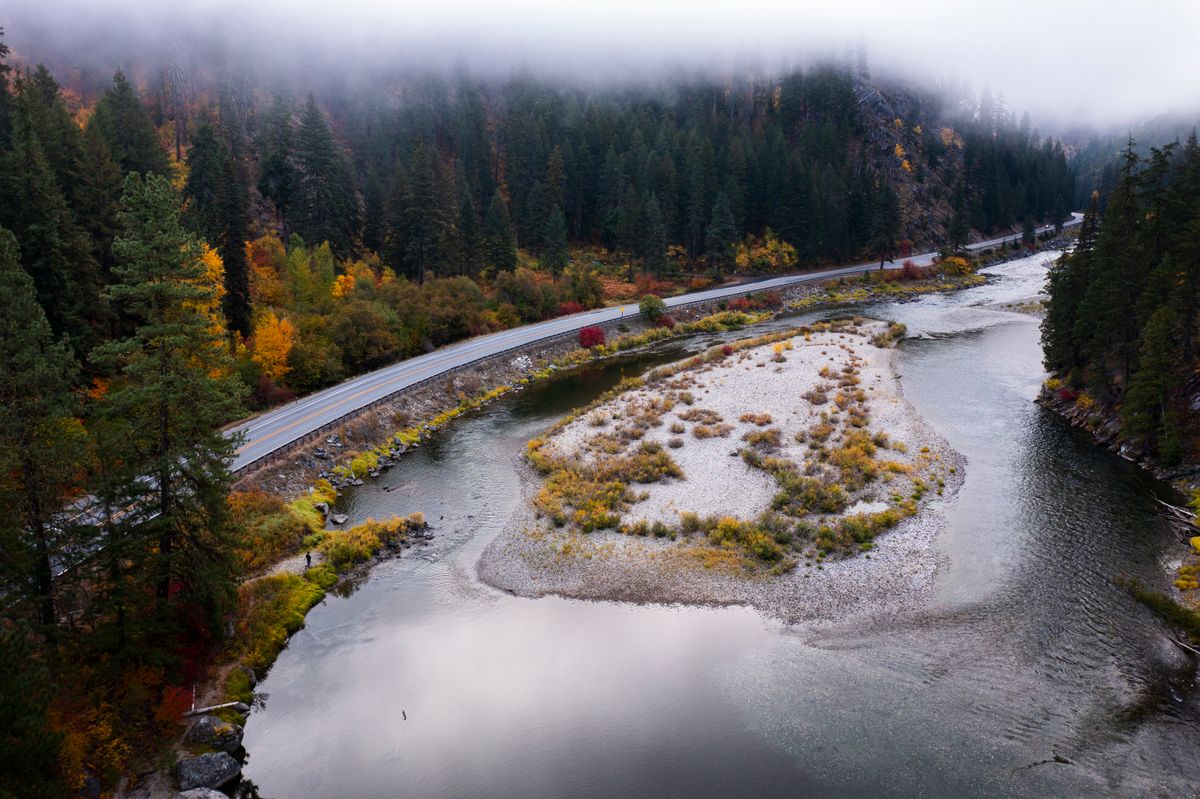
The Methow Valley is the side of Washington that most people don't know exists. Cross the North Cascades via Highway 20, the same road that passes through Diablo Lake and North Cascades National Park, and you descend the eastern slope into a landscape that looks more like Montana than the Pacific Northwest. Ponderosa pine forests. Sagebrush hillsides. Dry, sunny days that Seattle sees maybe 40 times a year. And the Methow River, a free-flowing, undammed river holding the largest wild trout of any floatable river in Washington state.
The Methow isn't famous the way the Yakima is famous. It doesn't have a blue ribbon designation or a Mother's Day Caddis hatch that draws national attention. What it has is wilder fish in wilder water, rainbow trout and cutthroat that average 10-13 inches with fish pushing 18-20, bull trout that exceed 20 pounds in the deeper pools, and a setting that makes the fishing feel like a Montana dream sequence: cottonwood-lined banks, clear water over gravel, and the North Cascades rising above the valley to the west.
The base camp is Winthrop, a genuine Old West town (population ~500) with boardwalk sidewalks, a saloon that serves local beer, and a fly shop culture that runs deep for a town its size. Winthrop is where Highway 20 reaches the valley floor, and it's the launch point for the best fishing on the Methow and its tributaries.
The Fish
Rainbow Trout
Wild Methow rainbows are the primary target, strong, colorful fish that eat dry flies through the summer months. The river's lack of dams means the flow is natural, spring snowmelt brings high, cold water that clears by July, and by late summer the river settles into the perfect trout-fishing condition: clear, cool, wadeable, with fish holding in the classic lies.
The rainbows average 10-13 inches, with consistent fish in the 14-16 range and legitimate 18-20 inch fish available in the deeper pools and at the tributary confluences. The Methow's trout are wild, no stocking, no supplementation. These fish reproduce naturally in a free-flowing system, which means population size varies with water years but fish quality is high.
Cutthroat Trout
Westslope cutthroat share the river with rainbows, particularly in the upper Methow above Winthrop and in the tributary streams (Chewuch, Twisp, Lost River). The cutthroat tend to be slightly smaller than the rainbows but are enthusiastic dry-fly eaters, Parachute Adams, Elk Hair Caddis, and small Stimulators all produce.
Bull Trout, Protected
Bull trout inhabit the Methow system, large, powerful char that can exceed 20 pounds in the main river. Bull trout are protected and must not be removed from the water. If you hook one while fishing for trout, release it immediately with the fish submerged. The regulations are strict and the penalties are real, bull trout recovery is a federal priority in the upper Columbia basin.
Steelhead and Chinook
The Methow historically supported strong steelhead and spring Chinook runs. Both are now ESA-listed. Wild steelhead must be released; hatchery steelhead (adipose-clipped) may be retained when seasons are open. Spring Chinook seasons are announced via emergency WDFW regulations, check before fishing. The salmon and steelhead connect the Methow to the broader Columbia Basin ecosystem and add an anadromous dimension that the Yakima doesn't have.
The Waters
Main Methow, Winthrop to Twisp
The most popular float section, 12 miles of classic dry-side trout water through open ranchland and cottonwood bottoms. The river here is wide enough for comfortable drift boat fishing but small enough to feel intimate. Long gravel runs, deep pools at the bends, and the occasional boulder garden create diverse holding water.
This section fishes best from July through September when flows have dropped from spring runoff. The evening caddis hatches in July bring the biggest fish to the surface.
Main Methow, Twisp to Carlton
A longer, more remote float through a narrowing valley. The character shifts from open ranchland to tighter canyon water with more pocket fishing. Less pressure than the upper section. Fish hold tight to structure, undercut banks, submerged logs, and the deep slots along canyon walls.
Main Methow, Carlton to Gold Creek
The lower float section. Warmer water in late summer means the best fishing here is early season (July) or late season (September) when temperatures are optimal. The lower Methow holds some of the river's largest fish, big rainbows and the occasional bull trout that have moved downstream from the tributaries.
The Chewuch River
The Chewuch joins the Methow at Winthrop and is a premier tributary fishery in its own right. Smaller than the main Methow, the Chewuch holds cutthroat and rainbow trout in classic small-stream pocket water. The river flows from the Pasayten Wilderness through forested canyon to the valley floor. Wade fishing only. The upper Chewuch is accessed by Forest Service roads and offers backcountry fishing with minimal pressure.
The Twisp River
Flowing into the Methow at the town of Twisp, the Twisp River is another excellent tributary. The Twisp originates high in the mountains near Highway 20 and holds cutthroat, rainbow, and bull trout. The upper stretches, accessed via the Twisp River Road, are small, intimate water that fishes best with a short rod and dry flies.
The Lost River and Robinson Creek
Small tributaries in the upper valley near Mazama. These are hike-in fisheries holding small cutthroat in clear mountain water. The setting, surrounded by the North Cascades' eastern peaks, is spectacular.
The Fly Box
The Methow's dry-side character produces different hatches than the west-side rivers:
Dry flies (summer focus):
- Elk Hair Caddis #14-16, evening caddis hatches dominate July
- Parachute Adams #14-18, PMDs and general mayfly
- Stimulator #10-14, stonefly attractor, fast water
- Chubby Chernobyl #10-12, hopper-dropper, the summer staple
- Foam hoppers #8-10, terrestrials from the sagebrush
- Griffith's Gnat #18-20, calm water, tributary pools
- Foam ants #16-18, late summer terrestrials
Nymphs:
- Pheasant Tail #14-18
- Hare's Ear #14-16
- Prince Nymph #14-16
- Copper John #14-16
- Zebra Midge #18-22, early season and winter
Streamers:
- Woolly Bugger #6-10, olive, deep pools, dawn/dusk
- Sculpin patterns #4-6, for the big rainbows and bull trout encounters
The Gear
Rod: 9-foot 4-weight for the tributaries and dry-fly fishing. 5-weight for the main river floats and hopper-dropper rigs. The Methow is lighter water than the Yakima, you don't need the backbone for heavy flows.
Wading: The main Methow is wadeable through most of the summer (after runoff clears in July). Felt soles on the smooth river rock. The tributaries are all wade-fisheries.
Float trips: Drift boats are the standard for the main river sections. Guides operate from Winthrop and Twisp. A full-day float covers 10-15 miles.
License: Washington state fishing license. Trout season June 1-September 30 on most Methow system waters. Check WDFW regulations for specific tributary dates and bull trout restrictions.
When to Go
- June: Season opens. Runoff may still be high, the Methow is undammed, so spring melt directly drives flows. Some years are fishable by mid-June; others require waiting until July.
- July: The sweet spot. Flows clear and drop. Evening caddis hatches begin. The dry-fly fishing turns on.
- August: Peak terrestrial season. Hoppers from the sagebrush banks. Warm days, cool river. The most consistent month.
- September: Late season. Water cools. Fish feed aggressively before winter. Fall colors in the cottonwoods. Fewer anglers. The locals' favorite month.
The Undammed Difference
The Methow is one of the few rivers in Washington that has no flood-control dams on its main stem. This is not a regulatory choice, it's a geographic reality. The valley is too narrow and too steep for dam sites that would make economic sense. The result is a river that runs on nature's schedule: explosive spring snowmelt from the North Cascades, gradual clearing through June, stable summer flows driven by groundwater and snowfield melt, and natural fall drawdown as the mountains stop feeding the system.
For anglers, the undammed character means two things. First, the flows are less predictable than a tailwater like the Yakima or the Green River, a late spring snowpack can keep the river unfishable into mid-July, while a low snow year might produce great fishing by early June. Second, the fish are wilder. There's no dam controlling water temperature, no hatchery supplementing the trout population (steelhead are supplemented, but trout are entirely wild), and no artificial consistency to the river's character. The Methow fishes differently every year, and the fish reflect that variability, they're tougher, more adaptive, and more connected to their ecosystem than fish in managed systems.
The tributaries, Chewuch, Twisp River, Lost River, are even more natural. These are unmodified mountain streams flowing from wilderness through forest to the valley floor. The cutthroat in the upper Chewuch have never seen a hatchery truck. The bull trout in the Twisp River's deep pools are the same population that has used this drainage since the glaciers retreated. Fishing these tributaries is fishing water that hasn't been altered by human infrastructure, a rarity in the modern West.
Methow vs. Yakima, Two Sides of the Same State
The Methow and the Yakima are Washington's two premier trout rivers, but they fish completely differently:
| Methow | Yakima | |
|---|---|---|
| Flow control | Free-flowing, natural | Dam-controlled, irrigation-driven |
| Season | June 1 – Sept 30 | Year-round |
| Average trout | 10-13", max 20" | 12-15", max 20" |
| Character | Wild, variable, natural | Consistent, managed, productive |
| Best month | August | May (caddis) or October (BWOs) |
| Setting | Mountain valley, Old West | Canyon, agricultural |
| Access | Seasonal (Hwy 20 closes winter) | Year-round (I-90) |
The Yakima is the river you fish when you want reliable hatches and consistent catches. The Methow is the river you fish when you want wild water and the chance at a truly wild fish in a setting that makes you forget you're in the same state as Seattle. Fish both, they're complementary, not competitive.
The Methow Valley Lifestyle
The Methow Valley is more than a river, it's a place people move to for the quality of life and never leave. Winthrop's Old West Main Street, the Mazama general store, the Twisp River Pub, the valley has a quiet, independent culture that attracts artists, outdoor athletes, and people who prefer mountains to cities.
In summer, the valley is a hub for mountain biking, rock climbing, and river sports. In winter, the Methow Valley Community Trail system is one of the largest cross-country ski networks in North America. The year-round outdoor culture means the river is respected, protected, and fished by people who care about its health.
The fly shops in the valley, Winthrop's anchor shop in particular, provide daily conditions, hatch reports, and guided trips. The guided float from Winthrop to Twisp is the standard Methow introduction: the guide reads the water and handles the oars while you learn the river's personality. A guided day on the Methow, followed by dinner in Winthrop, followed by a morning walk-and-wade on the Chewuch before driving home over Highway 20, that's the perfect Methow weekend.
For anglers interested in the broader Washington fishing picture, the Methow connects to every other fishery in the state. It's 90 minutes from the Yakima via Highway 97. It's the eastern terminus of Highway 20 through North Cascades. The steelhead that run up the Methow are part of the same Columbia Basin system that feeds the Olympic Peninsula ecosystem debates. And the dry-side trout culture, hatch charts, drift boats, summer evenings on the water, is the same tradition that drives the Montana tailwaters and the Deschutes. The Methow is where Washington joins that conversation.
For the Seattle angler, the Methow is the reward at the end of the Highway 20 road trip, fish Diablo Lake on the way over, then drop into the Methow Valley for dry-side trout water that feels like a different state. The combination of North Cascades alpine lakes and Methow Valley river fishing in a single weekend is one of the best fly-fishing road trips in Washington.