Fish
Fish Fire
Fire Hike
Hike Bird
Bird

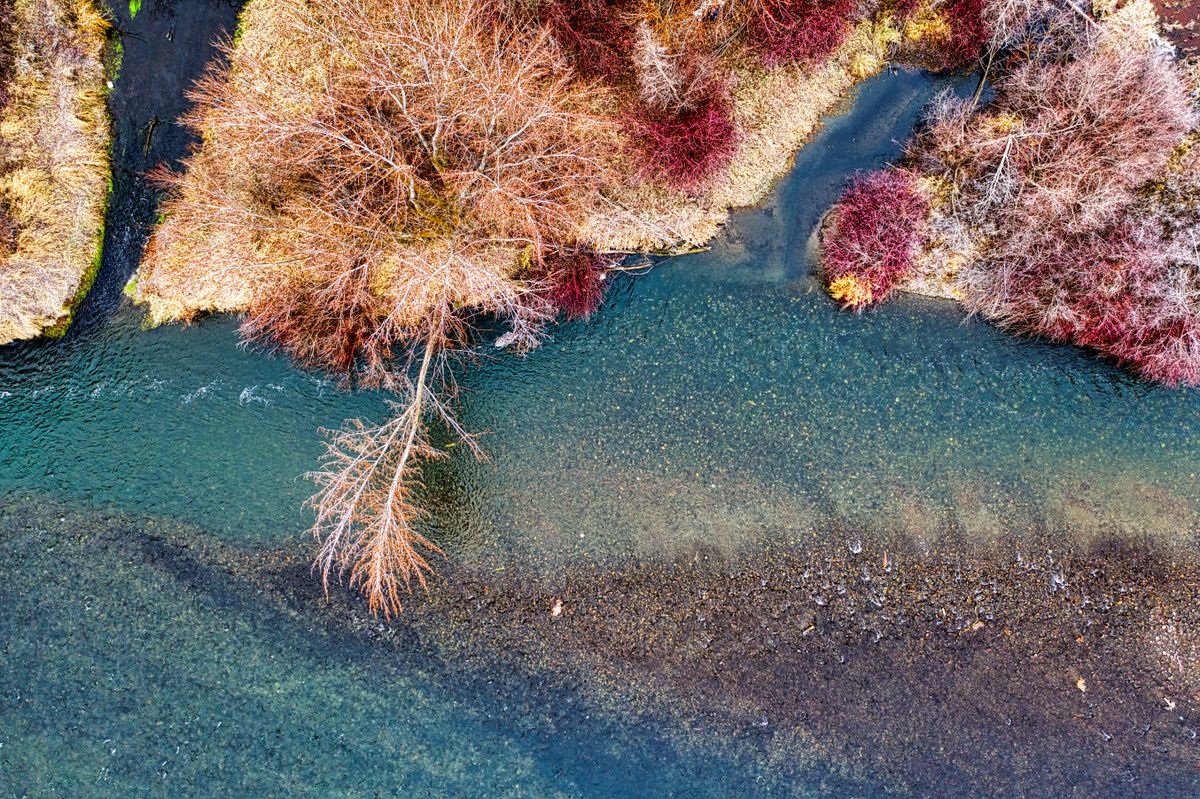
The Yakima River is the trout river that Washington was missing from the national conversation. While Montana has the Madison and the Bighorn, and Oregon has the Deschutes, Washington's contribution to the Western trout canon was, for decades, overlooked. The steelhead rivers on the Olympic Peninsula got the glory. The Puget Sound beaches got the saltwater attention. The Yakima sat quietly on the eastern side of the Cascades, holding wild rainbow and cutthroat trout in 78 miles of blue ribbon water, catching relatively little national press.
That's changed. The Yakima is now recognized as one of the best dry-fly trout rivers in the Pacific Northwest, a catch-and-release fishery with prolific hatches, cooperative wild trout averaging 12-15 inches (with fish to 20), and a canyon section that rivals any drift-boat fishery in the West. The Mother's Day Caddis hatch alone, millions of Grannom caddis blanketing the river from mid-May through early June, draws anglers from across the country.
And it's 90 minutes from Seattle. The same Seattle anglers who fish Puget Sound for cutthroat and North Cascades for alpine trout have a blue ribbon trout river over Snoqualmie Pass. A 5 AM departure from Seattle puts you on the water by 7, earlier than most Montana anglers reach their rivers.
The Fish
Rainbow Trout
Wild Yakima rainbows are the primary target, strong, wild, and accustomed to eating insects off the surface. They average 12-15 inches, with good numbers of fish in the 16-20 inch range, particularly in the canyon section. These fish are not stocked, they're wild, naturally reproducing rainbows that have adapted to the Yakima's unique hydrology (irrigation-driven flows that swing dramatically between seasons).
The rainbows hold in classic trout water: riffles, runs, and the seams along boulders and structure. They eat dry flies with confidence during hatches and respond well to nymph rigs between hatches. In the high-water summer months (June-August), when irrigation releases push flows to 4,000-6,000 CFS, the fish move to the banks and eat terrestrials (hoppers, ants, beetles) that get blown into the heavy current.
Cutthroat Trout
The upper Yakima, above the town of Thorp, particularly the stretch from Easton to the Cle Elum River confluence, holds the highest concentration of cutthroat. Unlike the rainbows that prefer faster, oxygenated water, the cutthroat hold in slower sections, tight to the banks, dipping in and out of current seams. They're generally smaller than the rainbows (10-14 inches) but willing dry-fly eaters, especially on the tributaries (Teanaway, Swauk, Taneum).
Whitefish
Mountain whitefish are abundant throughout the river and provide action between trout eats. They eat nymphs readily and are often the first fish to the fly in a two-nymph rig. Whitefish are not the target, but they're part of the river's ecosystem and provide steady action for beginners learning to nymph.
The Sections, Five Rivers in One
The 78-mile blue ribbon stretch from Easton Dam to Roza Dam is really five different fisheries:
The Upper River (Easton to Cle Elum confluence)
Small, intimate water accessible from I-90 pulloffs. The river here is 30-50 feet wide, wadeable, and holds both rainbows and cutthroat in pocket water, riffles, and small pools. The Teanaway, Swauk, and Taneum tributaries join here, adding cold water and fish. This is the best section for wade fishing and the section with the most cutthroat.
Best for: Walk-and-wade anglers, beginners, cutthroat enthusiasts. Accessible from Cle Elum and Roslyn.
The Upper Canyon (Below Cle Elum to Thorp)
The river enters a forested canyon with deeper pools, larger boulders, and bigger fish. This section is accessible by road but more secluded than the upper flatlands. The fishing here is excellent pocket water and pool fishing, Stimulators and Chubby Chernobyls with Pheasant Tail droppers work through the summer.
Best for: Experienced waders, dry-dropper fishing, stonefly season.
The Lower Flatlands (Thorp to Ellensburg)
Wide, meandering water through agricultural land. The river braids and creates side channels, back eddies, and gravel bars. This section fishes well during hatches (PMDs, caddis) but can be less productive between hatches because the fish spread out in the wider water.
Best for: Float trips during hatches, hopper fishing in summer.
The Yakima River Canyon (Ellensburg to Roza Dam)
The crown jewel. The canyon section runs 25 miles through a basalt canyon south of Ellensburg, the river compressed between dark canyon walls, creating the best float-fishing water on the Yakima. The canyon road (Canyon Road / SR 821) follows the river and provides put-in and take-out access for drift boats.
This is float-fishing water, drift boats are the standard, with the guide on the oars and the angler casting to structure along the canyon walls. The fish in the canyon are the Yakima's best: larger average size, more aggressive feeding, and the dramatic canyon setting that makes every fish feel earned.
Best for: Guided float trips, the classic Yakima experience.
Below Roza Dam
Below Roza Dam, the river enters the agricultural Yakima Valley and the fishing quality declines. The blue ribbon designation ends at Roza Dam. Focus your fishing above the dam.
The Hatch Calendar, Why the Yakima Is Special
The Yakima has one of the most diverse and prolific hatch calendars of any river in the Pacific Northwest:
-
March–April: Skwala stoneflies, the first big dry-fly action of the year. These large (#10-12) dark stoneflies bring the biggest fish to the surface before any other hatch has started. Blue-winged olives (#18-20) and March Browns (#14) overlap. March-April produces the Yakima's best dry-fly fishing for big fish, pre-spawn rainbows eating stoneflies aggressively.
-
May: Salmonflies in the upper river (#4-8). Green Drakes (#10-12) in the upper canyon, a short, intense hatch. Mother's Day Caddis begins mid-May, the Grannom (Brachycentrus) hatch that made the Yakima famous. Millions of caddis blanket the river. Elk Hair Caddis in #14-16 olive is the standard.
-
June: Pale Morning Duns (#16-18), the premier summer mayfly. Parachute Adams and Comparadun/Sparkle Dun in PMD colors. Yellow Sallies (#14-16). Evening caddis hatches continue.
-
July–August: Summer stoneflies, evening caddis, and terrestrials, hoppers, ants, and beetles blown off the sagebrush banks into the high summer flows. The hopper-dropper game takes over: Chubby Chernobyl or foam hopper on top, Copper John or Prince Nymph trailing below. This is the Yakima's most accessible fishing, big, visible dry flies, aggressive fish, and forgiving presentations in the heavy water.
-
September: Transition month. Hatches slow. Terrestrials continue. Flows drop as irrigation demand decreases. The river becomes more wadeable.
-
October: October Caddis (#8-10), the big orange caddis that closes the season strong. BWOs return. Mahogany Duns. October is many Yakima regulars' favorite month, small dry flies, low clear water, technical fishing, fewer crowds.
-
November–February: Winter fishing. Nymphing with small midges and Zebra Midges (#18-22). The fishing is slow but the river is open year-round and the solitude is complete.
The Fly Box
The Yakima demands a diverse box, the hatch calendar is long and varied:
Dry flies:
- Elk Hair Caddis #14-16, olive, Mother's Day Caddis, the Yakima's most important fly
- Parachute Adams #14-18, PMD and general mayfly
- Comparadun / Sparkle Dun #16-18, PMD specific
- Stimulator #8-12, gold/yellow, salmonfly and stonefly
- Chubby Chernobyl #10-12, hopper-dropper anchor, summer essential
- Foam hopper #8-10, July-August
- Griffith's Gnat #18-20, midge clusters
- Skwala stonefly #10, March-April specific
Nymphs:
- Pheasant Tail #14-18, the Yakima standard
- Hare's Ear #14-16
- Copper John #14-16, deep runs
- Prince Nymph #14-16, attractor
- Zebra Midge #18-22, winter and between hatches
- San Juan Worm #12, red, high water point fly
- Pat's Rubber Legs #8, stonefly nymph
Streamers:
- Woolly Bugger #8-10, olive, canyon pools at dawn/dusk
- Muddler Minnow #8, sculpin in the canyon
The Gear
Rod: 9-foot 4- or 5-weight. The 4-weight is ideal for the dry-fly fishing; the 5-weight handles the wind (the Yakima Canyon is windy, afternoon gusts of 15-25 mph are common) and the summer's heavy hopper-dropper rigs.
Lines: Floating only. The Yakima is a surface-and-near-surface fishery, sinking lines are unnecessary.
Leaders: 9-12 feet, 4X-5X for most situations. Go to 6X for PMD spinners and small BWOs in October.
Wading vs. floating: The upper river is wade-friendly year-round. The canyon section is best by drift boat (guides provide boats). During summer high flows (4,000+ CFS), wading the main river below the Cle Elum confluence is dangerous, the current is powerful and the footing is uncertain.
License: Washington state fishing license required. The Yakima from Easton to Roza is catch-and-release, barbless hooks, artificial only, up to 3 flies.
The Local Scene
Ellensburg is the Yakima's base camp, a college town (Central Washington University) with a surprising fly-fishing culture. The local fly shops and guide services have been running canyon floats and reporting Yakima conditions for decades, their hatch reports and flow updates are the first thing most anglers check before making the drive.
Several guide services operate on the Yakima, including Ellensburg-based outfitters with daily reports and Seattle-area operations that run guided float trips. The competition keeps the quality high, if you fish the Yakima, booking a local guide who knows the canyon is well worth it.
The Yakima is the river that Seattle's fly shops sell the most trips on. A guided canyon float, typically booked through Red's or one of the Seattle shops, is the standard introduction. The guide handles the oars and the flows while you learn the river's hatches and holding water.
90 Minutes From Seattle
The Yakima's proximity to Seattle is its superpower. Over Snoqualmie Pass (I-90, year-round), the river is accessible for day trips and weekenders from the Puget Sound metro. A 5 AM departure from Seattle gets you on the water by 7. A spring day chasing Skwalas, a summer float through the canyon on hoppers, or an October afternoon matching BWOs, all within commuting distance of 4 million people.
For the North Cascades angler, the Yakima is the logical next step, the Highway 20 corridor connects to the Methow Valley (another outstanding dry-side trout fishery), and the I-90 corridor connects to the Yakima. A Washington fly-fishing road trip, Puget Sound saltwater Monday, Yakima River dry flies Tuesday, North Cascades alpine lakes Wednesday, is the best three-day fishing trip in the Pacific Northwest without crossing a state line.
The Irrigation Factor, The Yakima's Unique Character
The Yakima is not a natural-flow river. It's controlled by a series of Bureau of Reclamation dams and diversion structures that manage water for the Yakima Valley's massive agricultural industry (the valley produces hops, apples, wine grapes, and other crops). This means the river's flows are driven by irrigation demand, not just snowmelt and rainfall.
The practical impact for anglers:
Summer high water (June–August): When irrigation demand peaks, releases from the upstream reservoirs push flows to 4,000-6,000 CFS, far higher than the river's natural summer baseflow. This is powerful water that most anglers can't safely wade. Float trips become the only option on the main river. The upside: the high flows concentrate fish along the banks and push terrestrial insects (hoppers, ants, beetles) off the sagebrush banks into the current, creating the Yakima's famous summer hopper fishing.
Fall drawdown (September–October): As irrigation demand drops, flows decrease to 800-1,200 CFS, wadeable, clear, and perfect for technical dry-fly fishing. This is when the Yakima shows its true character: a medium-sized Western freestone river with classic riffle-run-pool structure and selective trout that demand good presentations. October's low flows and prolific BWO/caddis hatches are many locals' favorite fishing of the year.
Winter baseflow (November–March): Flows stabilize at 400-800 CFS. Cold water, slow fishing, but the dedicated angler with small midges and Zebra Midges can find willing fish on warm afternoons.
Understanding the irrigation cycle is essential to fishing the Yakima effectively, it dictates not just where to fish but how: float vs. wade, hoppers vs. small dries, bank water vs. mid-river structure.
The contrast with Puget Sound fishing is total. The Sound is saltwater, tidal, baitfish-driven, with Clousers and poppers. The Yakima is freshwater, hatch-driven, dry-fly-centric, with Elk Hair Caddis and Parachute Adams. The Seattle angler who fishes both has the full spectrum, saltwater and freshwater, baitfish and hatches, stripping and dead-drifting, without ever boarding a plane.
The Washington Trout River
Washington isn't known for trout fishing the way Montana or Colorado is. The state's fly-fishing identity is built on steelhead (Olympic Peninsula, Skagit), saltwater (Puget Sound), and the wild salmon runs that define the Pacific Northwest. The Yakima doesn't fit that narrative, it's a dry-side, hatch-driven, catch-and-release trout river that would be right at home in Montana.
That's exactly why it matters. The Yakima proves that Washington has world-class trout fishing to go with its world-class steelhead and saltwater. The Mother's Day Caddis hatch is as prolific as anything on the Madison. The March Skwala dry-fly fishing rivals the early season on the Bighorn. The canyon float is as scenic as the Green River through red rock, except the canyon walls are basalt, the hillsides are sagebrush, and the wine comes from Yakima Valley vineyards instead of Utah's empty desert.
For the Seattle angler, the Yakima isn't a destination trip. It's a Tuesday.