Fish
Fish Fire
Fire Hike
Hike Bird
Bird

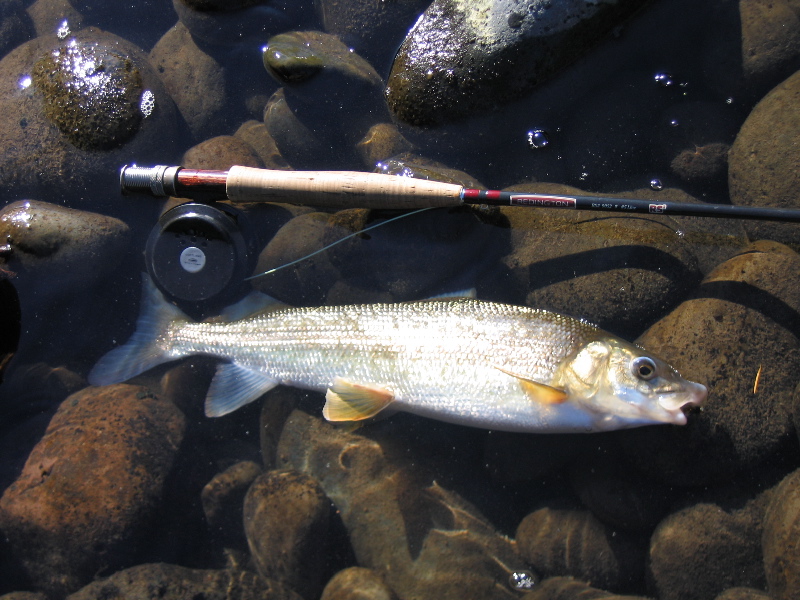

The mountain whitefish is the unsung workhorse of Western trout rivers, an abundant, native, hard-pulling member of the salmon and trout family that shares the same cold, clear streams as trout, eats the same nymphs and bugs, and keeps rods bent all winter long when the trout fishing slows. Often overlooked (and even unfairly maligned) by trout snobs, the "whitey" is actually a wonderful sportfish: plentiful, willing, surprisingly strong, native to the waters it swims, and a great way to stay on fish through the cold months when it feeds actively while other species go quiet.
Because mountain whitefish eat primarily aquatic insects rooted from the bottom, the best ways to catch them are nymphing (with flies or bait) near the bottom, the same drift-fishing approach trout anglers use, just fished deep. This guide covers everything: the whitefish's biology and habits, nymph and fly tactics, bait and float methods, winter fishing, where and when to find them, and how to handle and eat this underrated native.
Mountain Whitefish Catch and Cook (with Underwater Footage)Meet the Mountain Whitefish
The mountain whitefish (Prosopium williamsoni) is a member of the salmon family (Salmonidae), so like trout it has an adipose fin and a forked tail. It's a slender, cylindrical, silvery fish (bronze-to-olive on the back) with large scales, a small head with a small, downturned (subterminal) mouth, the giveaway feature, adapted for picking insects off the bottom, and no teeth to speak of.
Key facts:
- Size: commonly 10-16 inches and up to a pound or two; good ones reach 2-4 pounds and 18-20+ inches. They pull hard for their size.
- Insect eater: mountain whitefish feed heavily on aquatic insect larvae and nymphs (mayflies, caddis, stoneflies, midges) and other invertebrates rooted from the stream bottom, plus fish eggs and occasionally small fish, which is why nymphs and bait fished near the bottom are so effective.
- River fish: they're native to the cold, clear rivers and streams of western North America, living in the same runs, riffles, and pools as trout, and they school up, so where you find one you'll often find many.
- Range: the Rocky Mountain and Pacific Northwest region, from the northern Rockies (Montana, Idaho, Wyoming) through the interior West and up into western Canada and Alaska.
- Winter-active: unlike many species, mountain whitefish keep feeding actively in cold water, making them a prime winter target.
That bottom-feeding, insect-eating, schooling, cold-tolerant nature makes the mountain whitefish an accessible, reliable, year-round river fish, especially rewarding when the trout won't cooperate.
Nymphing: The Best Method
Because mountain whitefish feed on nymphs and larvae drifting or clinging near the bottom, nymphing is the number-one technique, and it's the same approach trout anglers use, just fished deep and dead-drifted along the bottom where whitefish hold.
Mountain Whitefish Fly FishingFly-nymphing for whitefish:
- Flies: small nymph patterns, beadhead pheasant tails, hare's ears, prince nymphs, copper johns, midge larvae, and small stonefly and caddis nymphs (sizes ~12-18). Whitefish have small mouths, so smaller flies hook them better.
- Rig: an indicator (bobber) nymph rig or a Euro/tightline nymphing setup, with enough weight to get the flies down and dead-drifting right along the bottom.
- Presentation: dead-drift the nymphs through runs, riffles, and pools at the whitefish's depth, watching for the subtle take (whitefish bites can be light, set on any hesitation of the indicator).
- Small hooks matter: their small, soft, downturned mouths mean small hooks and a gentle-but-prompt hookset connect best.
Nymph a deep run in a Western trout river and you'll very likely tangle with whitefish, often lots of them.
Bait Fishing for Whitefish
Where legal, mountain whitefish are readily caught on bait, and it's a productive, accessible approach (great for kids and non-fly anglers). They love small, natural, insect-like baits fished on or near the bottom.
Bank Fishing Tips and Tricks for Mountain Whitefish- Baits: maggots (spikes), mealworms, small worms, aquatic larvae, and fish eggs/roe are all excellent. Small bits matched to their small mouths work best.
- Rig: a small hook (size 10-16) fished on the bottom with split shot, or under a float set to ride the bait near the bottom.
- Presentation: drift the bait naturally through runs and pools at the fish's depth, keeping it near the bottom where whitefish feed.
Always check local regulations on bait use, as some blue-ribbon trout waters are fly/artificial-only. Where bait is allowed, a maggot or worm drifted along the bottom is deadly on whitefish.
Float and Long-Rod Tactics
A classic and deadly whitefish method, especially in winter, is float fishing with a long rod, a slip float or centerpin/long-rod setup that suspends a small baited hook or nymph and drifts it naturally through a run at a controlled depth.
Slip Float / Long Rod Tactic for WhitefishThis approach shines for covering deep, slow winter runs: set the float so the bait rides just off the bottom, and let it trot naturally down the current seam, watching the float for the take. Long rods (and centerpins where used) give superb drift control and let you fish a bait or nymph through the whole length of a run at exactly the right depth, a highly effective and enjoyable way to pick apart winter whitefish water.
Winter: Prime Whitefish Time
One of the mountain whitefish's greatest virtues is that it feeds actively all winter, making it a fantastic cold-season target when trout fishing slows and other options close.
Targeting Winter WhitefishIn winter, whitefish concentrate in the deeper, slower runs and pools, and they'll keep eating nymphs, maggots, and drifted bait through the coldest months. Dead-drift a nymph or bait deep and slow through these wintering holes, or float-fish them with a long rod. For anglers who don't want to hang up the river gear when the snow flies, winter whitefish provide steady, rod-bending action on the same rivers, often with the water to yourself. Dress warm, fish the deep slow water, and enjoy one of the few consistent winter river bites in the West.
Where and When to Find Mountain Whitefish
Location: mountain whitefish live in the cold, clear rivers and streams of the West (and some lakes), in the same water as trout. Target deeper runs, riffles, pools, and current seams, especially where the bottom holds insect life. They school, so once you locate them, expect numbers. In summer they spread through runs and riffles; in winter they stack in the deeper, slower runs and holes.
Timing: whitefish can be caught year-round, but they're especially valuable in fall and winter, when they feed actively as trout slow down, winter is a signature whitefish season. They also feed well in spring and summer. They spawn in late fall/early winter over gravel. Anytime you can dead-drift a nymph or bait along the bottom of a good run, you can catch mountain whitefish.
Reading the Run: Where Whitefish Hold
Locating mountain whitefish within a river comes down to finding the water where they can hold near the bottom out of the heaviest current while food drifts to them, very similar to reading trout water, but with an emphasis on the deeper, softer bottom. Focus on the tail-outs and mid-sections of deep runs, the slots and troughs between riffles, deeper pools, and the soft seams along the edge of fast current. Whitefish sit low in these spots, tipping down to pick nymphs and larvae off the gravel, so your fly or bait needs to be ticking right along the bottom to reach them.
Because whitefish school tightly, catching one is a strong signal to keep working the exact same slot, there are almost always more fish stacked in that spot. If you hook several and then the run goes quiet, move to the next deep run and repeat. A productive approach is to methodically drift a nymph or bait through the length of a deep run, covering it at slightly different depths and lanes until you connect, then focus on that zone. In bigger rivers, the deep, walking-pace runs (not the fast whitewater and not the dead-still frog water) are the classic whitefish holding water, and learning to spot them from the bank is half the battle.
A Note on the Trout-Angler Attitude
Mountain whitefish have long suffered a bit of an image problem among trout purists, who sometimes grumble about "getting whitefish" when they were hoping for trout. It's worth pushing back on that attitude, because it's both unfair and a missed opportunity. Whitefish are a native species, they belong in these rivers every bit as much as the trout, and in many Western streams they've lived alongside cutthroat and other natives for millennia. They're not competitors to be scorned; they're a natural, valuable part of a healthy river ecosystem, and their presence is generally a sign of good water quality and abundant insect life.
They're also just genuinely fun to catch. Pound for pound, a mountain whitefish pulls hard, and on a light rod a good one gives an honest, dogged fight. For beginners, kids, and anyone learning to nymph, whitefish are fantastic teachers: they're abundant, willing, and eat the same drifts trout do, so time spent catching "whiteys" directly sharpens the nymphing skills that catch trout. Embracing the whitefish, rather than sneering at it, makes you a more well-rounded angler and puts a lot more bent-rod fun in your day, especially in the off-season.
Conservation and Handling a Native Fish
As a native fish, the mountain whitefish deserves the same care and respect as the trout it swims with. In most of its range whitefish remain abundant and are not of conservation concern, but populations in some rivers have declined due to habitat degradation, warming water, dewatering, and pollution, a reminder that whitefish, like trout, depend on cold, clean, well-oxygenated water and healthy insect populations. Their abundance in a river is often a good indicator of overall stream health.
If you're releasing whitefish (and many anglers release most of what they catch), handle them as you would trout: keep them wet, minimize air exposure, wet your hands before touching them, use barbless or debarbed hooks for easy release, and revive tired fish in the current until they swim off strongly. Follow local regulations, which in some places include specific whitefish seasons or limits (and in a few areas whitefish are more tightly managed). Treating this native river fish with care, keeping only what you'll eat, releasing the rest gently, and supporting cold, clean rivers, is simply part of being a responsible Western angler.
Handling and Eating Mountain Whitefish
Mountain whitefish are good eating, flaky, white, and mild, and (like their lake whitefish cousins) especially prized smoked, which is arguably the best way to enjoy them. They're also good fried or baked fresh. Their reputation as poor table fare is undeserved; handled well, they're a fine meal.
How to Fillet a Whitefish- Keep them cold: whitefish flesh is best when the catch is iced promptly; it can soften if left warm.
- Cleaning: fillet as usual for white, flaky meat; smaller bones can be dealt with by the fillet technique or by smoking.
- Smoking: brined and smoked mountain whitefish is a Western tradition and a genuine treat.
- Handle for release gently: if you're releasing (many anglers do), wet your hands, keep them in the water, and revive them in the current, they're a valuable native fish.
Whether you keep a few to smoke or release them to fight another day, the mountain whitefish is far better than its reputation suggests.
One practical eating tip: because whitefish flesh is on the softer, oilier side, it truly shines with methods that firm it up and add flavor, smoking above all, but also a hot pan-sear or a grill. Brining the fillets before smoking (a simple salt-and-brown-sugar brine) makes a noticeable difference, and many Western anglers who "don't keep whitefish" change their minds entirely after tasting a batch fresh out of the smoker. If you keep whitefish for the table, keep the smaller-to-medium fish, get them on ice immediately, and cook or smoke them promptly rather than letting them sit, treated that way, they're a genuinely excellent, and free, addition to any river day.
Respect the River's Workhorse
The mountain whitefish deserves a lot more respect than it gets: it's a native, abundant, hard-pulling river fish that eats nymphs and bait willingly, schools up for fast action, feeds all winter when little else does, and tastes great smoked. It's the perfect answer to a slow trout day or a cold winter afternoon on a Western river. Rig up a nymph or a maggot, dead-drift it deep through a good run, and enjoy tangling with the unsung workhorse of the Rocky Mountain streams.
For the trout and other coldwater fish that share these Western rivers, and its lake-dwelling cousin, see our guides to the rainbow trout, the cutthroat trout, and the lake whitefish.
Want to find the deep, walking-pace winter runs and the public access to reach them on a Western river? Use Guidepole to scout river access, public land, and boat launches, and to check live flows and conditions before you head out, then rig up and keep the rod bent year-round.