Fish
Fish Fire
Fire Hike
Hike Bird
Bird

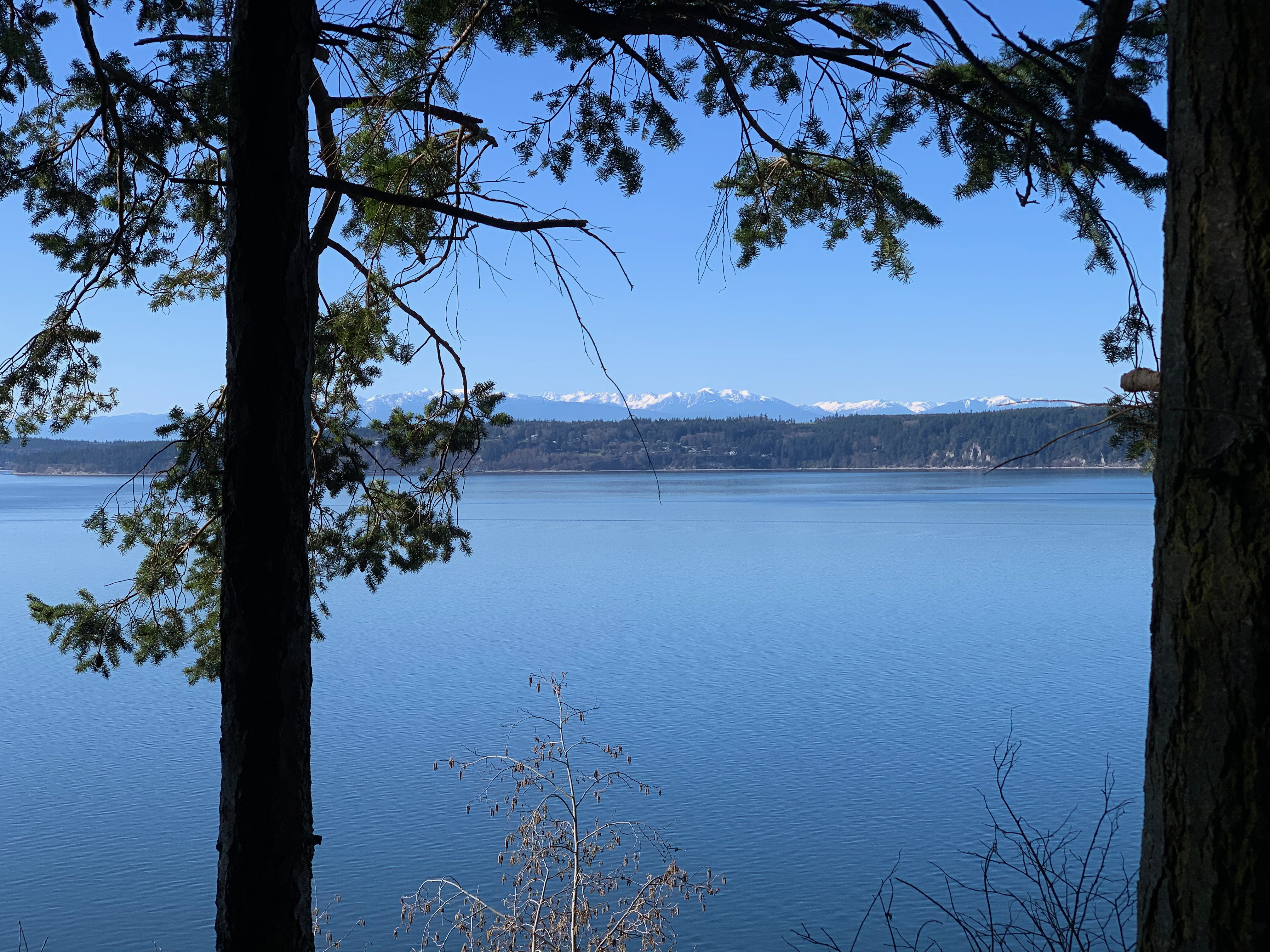

Puget Sound is an inland sea, roughly 100 miles of protected saltwater reaching from the Canadian border down to Olympia, wrapped in evergreen shoreline with the Olympic and Cascade ranges on the horizon. For an angler it is one of the most varied fisheries in the country: five runs of Pacific salmon, hard-fighting bottomfish over rocky reefs, winter squid off the piers, sea-run cutthroat prowling the beaches, and some of the best shellfishing anywhere. You can fish it from a boat, a public pier, or a gravel beach, and something is in season nearly every month of the year.
That variety is also what makes the Sound confusing to a first-timer. Washington divides it into numbered Marine Areas, each with its own seasons that open and close by species, so this guide is organized by what you're chasing, salmon, bottomfish, squid, cutthroat, and shellfish, with the rules and timing that go with each.
Salmon: The Main Event
Puget Sound salmon fishing is built around five runs, and knowing which is around when is half the battle.
Chinook (king) and "blackmouth." Chinook are the prize, big, rich, and hard-fighting. The Sound has a unique twist: resident immature Chinook called blackmouth stay and feed inside the Sound through the winter instead of heading to the ocean, giving you a king fishery in the cold months when little else is going. Blackmouth are targeted by trolling or jigging near the bottom over bait-holding structure in central and south Sound. Mature summer kings move through June through August, and anglers intercept them in places like Elliott Bay in front of Seattle and out toward Sekiu and the Strait when ocean-bright fish are staging.
Coho (silver). Coho pour into the Sound starting in June and stick around into fall, and by mid-September you're into solid 8-to-15-pound fish. They're aggressive, jump like crazy, hold higher in the water column than kings, and are the most beginner-friendly salmon here, happy to chase a fast-trolled hoochie or a cast spoon.
Pink (humpy). Pinks run only in odd-numbered years, arriving in enormous numbers in August. When the humpies are in, everyone fishes, they're eager biters on pink hoochies and small pink spoons, they crowd close to shore, and they are the perfect first-salmon target for a kid or a beginner.
Chum. The last run of the year, chum arrive in fall, often bite a chartreuse or green presentation, and fight as hard as anything that swims in the Sound.
The classic method is trolling with a downrigger to carry a flasher and a cut-plug herring or a hoochie down to the fish's depth, often 60 to 120 feet for kings, shallower for coho, along migration lanes, drop-offs, and current rips. Mooching, drifting a weighted whole or cut herring and letting it spiral through the water column, is the old-school Puget Sound art form and still deadly. For the species deep-dives, see our guides to Chinook salmon, coho salmon, and pink salmon.
Salmon and Halibut Fishing the Inside PassageBottomfish: Lingcod, Rockfish, and Halibut
When the salmon slow down, the bottom comes alive. Lingcod are the headline, mean, toothy ambush predators that hold on rocky reefs, ledges, wrecks, and pinnacles in 60 to 150 feet of water. The lingcod season is short and prized, typically opening in May and June; drop a heavy leadhead jig or a live bait (a small greenling is the classic) to the rocks and hang on, because a big ling will inhale it and bulldog straight back into the structure. Our how to catch lingcod guide covers the gear.
Rockfish share that same rocky structure and come in a rainbow of species, copper, quillback, black, and more. A key conservation note: many rockfish are slow-growing, long-lived, and tightly regulated, and any you release from deep water need a descending device to recompress and survive barotrauma. Washington requires you to have one aboard and rigged. See how to catch rockfish for the details. Cabezon and greenling round out the reef mix, and halibut add a heavyweight target with short, closely managed spring seasons over deeper gravel and banks, mostly in the northern Marine Areas and the Strait.
Squid Jigging: A Winter Puget Sound Tradition
Come late fall and winter, market squid move into the Sound and stack up under the lights of public piers, and squid jigging becomes one of the most beloved, most accessible fisheries here. All you need is a light rod, a weighted squid jig (a small ribbed lure with a crown of barbless spines), and a lighted pier after dark. Piers like Seacrest in West Seattle, the Edmonds pier, and Tacoma's Les Davis pier draw crowds on a good winter night. It's cheap, it's easy, it's family-friendly, and fresh calamari is the reward. The run is best from roughly November into February; check pier rules and the current daily limit.
Sea-Run Cutthroat: The Beach Fly-Rodder's Fish
The Sound's quiet cult fishery is the sea-run cutthroat, a coastal cutthroat trout that lives in the salt, patrolling the beaches, estuaries, and rocky points year-round rather than migrating far offshore. Anglers walk the gravel and cast small baitfish and shrimp patterns on a fly rod or light spinning gear, working the drop-offs and current seams. These fish are almost entirely catch-and-release by ethic and often by rule, and they reward a stealthy, mobile angler who covers water. Our Puget Sound beaches fly guide covers this game in detail. It's the perfect low-commitment way to fish the Sound: no boat, no dawn departure, just a beach and a few flies.
Shellfish: Dungeness Crab and Spot Prawns
Half the fun of Puget Sound isn't finned at all. Dungeness crab are found throughout the Sound and are a summer highlight, drop a baited pot (chicken, fish carcasses, or a bait jar) off a dock or a boat over 30 to 100 feet of mud or sand, soak it, and pull sweet, heavy keepers. You must measure each crab, keep only legal-size males, release females and undersize crab, and record your catch on a separate crab catch record card. Spot prawns are the other treasure: the Sound holds some of the world's best, but the recreational season is famously short, often just a handful of specific days in May, set each year by WDFW, so you drop deep prawn pots on the open days and be ready before they close. Clams, oysters, and geoducks are there for the digging on public tidelands too, subject to seasons and red-tide closures.
Fishing From the Beach and Piers, No Boat Required
You do not need a boat to catch salmon in Puget Sound, and that makes it one of the most accessible saltwater fisheries in the country. Beach anglers cast spoons and jigs for coho and pinks off gravel points where migrating fish funnel close to shore. Point No Point near Hansville on the north Kitsap Peninsula and Point Wilson at Fort Worden in Port Townsend are two of the most famous salmon beaches, giving up Chinook and coho to shore casters every season, and beaches like Lincoln Park and Browns Point add more options closer to the cities. Public fishing piers around Central Puget Sound, Seacrest, Edmonds, Des Moines, let you cast heavy metal jigs into deep water for salmon, jig for winter squid, and soak a crab pot, all from the same rail. If you're basing out of the city, our how to fish Seattle guide zooms in on the in-town options.
Reading Tides and Current
More than almost any other fishery, Puget Sound rewards anglers who fish the tide. The Sound breathes through narrow passages, and that huge tidal exchange creates currents, rips, and back-eddies that concentrate baitfish, and the salmon and cutthroat that hunt them. The rule of thumb is that the fishing turns on when the water is moving and slows when the tide goes slack. Points, humps, and the current lines where fast water meets slow are where predators stack up to ambush bait swept past them.
Before you launch, pull up a current table (not just a tide table) for your Marine Area and plan to be on your spot for the strong flood or ebb, especially the couple of hours around the change. Beach anglers key on the same idea: an incoming tide that pushes bait against a gravel point is often the best window, and a river-mouth estuary fishes best as the tide floods over the flats. In the passes and off the points, the current also dictates how much weight you need to hold bottom, bring a range of leads and downrigger balls, because a modest ten-foot tide swing can double the flow by afternoon. Learn to read the moving water and you'll catch far more than the angler who just shows up at dawn.
Understanding Marine Areas and Seasons
The single most important thing to know about Puget Sound is that it is not one open fishery, Washington splits it into numbered Marine Areas (roughly 5 through 13, from the Strait of Juan de Fuca down to South Sound), and each area opens and closes for each species on its own schedule to protect specific runs. An area might be open for coho but closed for Chinook, open for crab only on certain days of the week, or closed entirely to protect a weak return. Always check the current Washington Department of Fish and Wildlife (WDFW) regulations and any in-season emergency rules for the exact Marine Area you're fishing before you go, it is the difference between a legal fish and a ticket.
When to Go
- Winter (December–April): Blackmouth (resident Chinook) season in open Marine Areas, the Sound's quiet-season specialty, plus prime squid jigging off the lighted piers.
- May–June: The lingcod opener over the reefs; the short, prized spot-prawn season; halibut openers in the north.
- June–August: Summer Chinook move through Elliott Bay and the Strait; coho build through the summer; Dungeness crab season opens.
- August (odd years): The pink salmon run floods the Sound, the easiest, most crowded, most fun salmon fishing of the cycle.
- September–November: Peak coho, then chum; fall is prime for both boat and beach. Sea-run cutthroat fish year-round.
Licenses and Regulations
You'll need a Washington fishing license from WDFW, a saltwater or combination license for finfish, plus a catch record card for salmon (and a separate one for Dungeness crab), and a shellfish/seaweed license for crab and prawns. Anglers under 15 fish free. Beyond the license, the Marine Area seasons and the rockfish, halibut, and salmon rules above are strict and change in-season, so treat the current WDFW regulation pamphlet as required reading. Barbless hooks are required in many salmon fisheries, and selective-fishery rules, release wild, keep only marked hatchery fish, are common. Know before you go.
A Beginner's First Trip
If it's your first time on the Sound and you want to actually catch something, keep it simple. In an odd-numbered-year August, go stand on a public pier or a gravel point and cast a pink Buzz Bomb for humpies, the fish are everywhere, they bite readily, and you don't need a boat or much gear. On a winter night, bring the family to a lighted pier with a couple of squid jigs and a bucket; it's cheap, it's warm-lights-and-thermos fun, and you'll go home with calamari. In summer, drop a crab pot off a dock in the morning, go fish or explore, and pull it in the afternoon. Any of these three puts you on the water for the price of a license and a few dollars of tackle, and each one teaches you a corner of the Sound before you ever step onto a boat. Once you're hooked, a half-day salmon charter is a fast way to learn the trolling game and the current spots, with an experienced skipper running the downriggers while you watch how it's done.
Gear for the Sound
A half-day charter is a fast way to shortcut the learning curve: an experienced skipper supplies the boat, the downriggers, the bait, and the read on which Marine Area is producing this week, which matters enormously in water this complex and this tightly regulated. When you're gearing up to fish it yourself, a medium-heavy Lamiglas salmon mooching rod paired with a line-counter reel handles both trolling and mooching; add a Scotty downrigger to reach the fish. Beach anglers want a 9- to 10-foot spinning rod and a box of Buzz Bomb and Point Wilson Dart jigs. For bottomfish, a stout jigging rod and 6- to 10-ounce leadhead jigs get you to the rocks, and don't forget the required rockfish descending device. Tie your jigs and hooks on with a reliable knot, a Palomar is hard to beat for braided line.
How to Tie the Palomar Knot However you fish it, dress for cool, wet weather in every season, this is the Pacific Northwest, and the water stays cold all year.
Puget Sound rewards anglers who match the season and the Marine Area to the fish. Pick your target, check the current WDFW rules for your area, and whether you troll from a boat, jig squid off a lighted pier, soak a crab pot off the dock, or cast a spoon from a gravel beach, the inland sea will keep you busy every month of the year.