Fish
Fish Fire
Fire Hike
Hike Bird
Bird

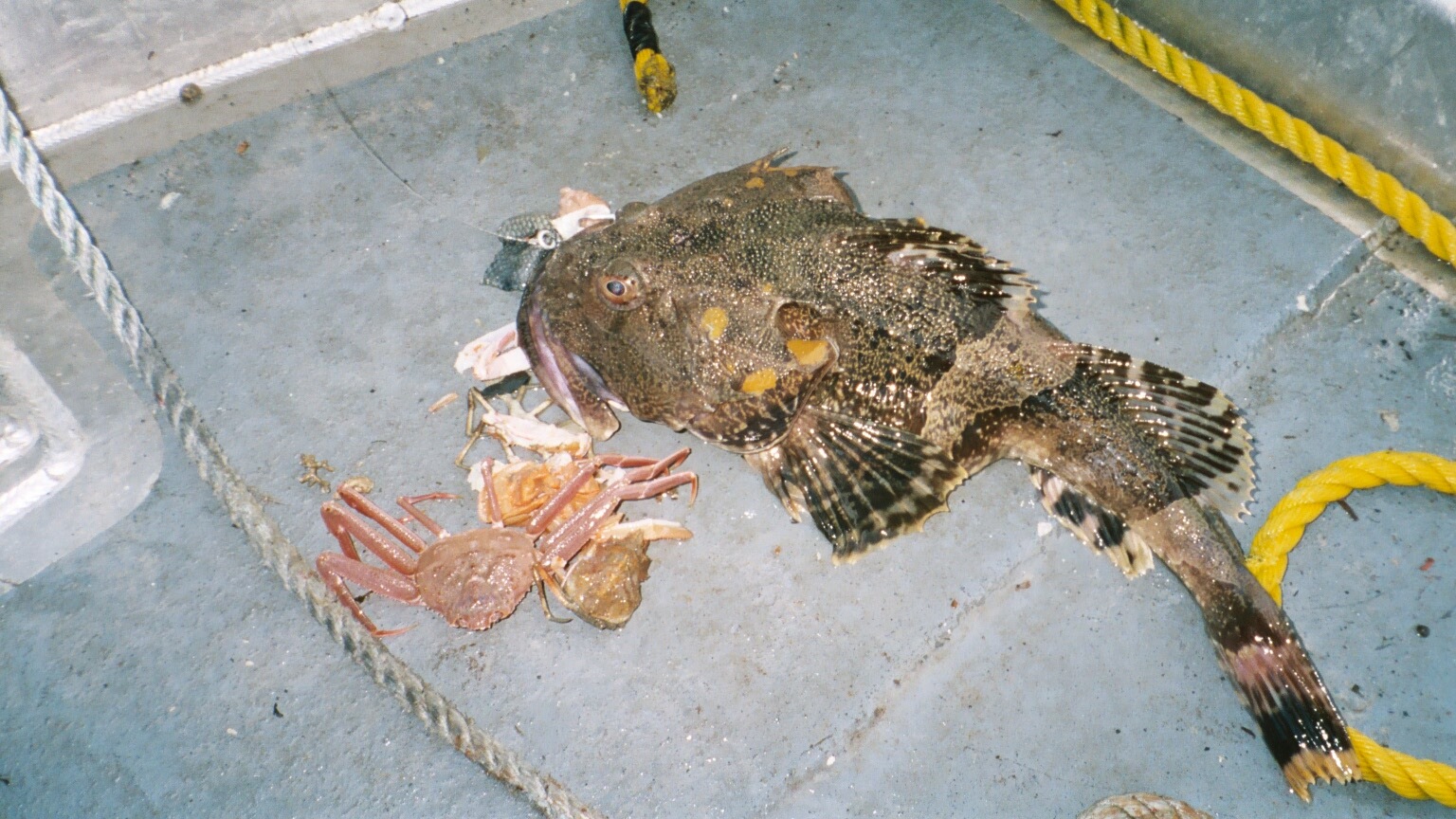

The cabezon is one of the West Coast's most characterful and rewarding inshore fish. A giant member of the sculpin family, it's a broad-headed, scaleless, big-mouthed ambush predator that lies camouflaged among the rocks and kelp waiting to inhale anything that comes close, including your bait or lure. They hit hard, they're accessible from boats, kayaks, jetties, and rocky shorelines, and their firm white (sometimes blue-green) fillets are prized eating. Learn how they hunt and where they hold, and cabezon become one of the most dependable and fun targets on the Pacific coast.
This guide covers everything: how to identify a cabezon and understand its habits, where and when to find them, the baits and lures that produce, the rigs that beat the rocks, and how to land and handle one, including the one part of a cabezon you must never eat.
What is a cabezon?
The cabezon (Scorpaenichthys marmoratus), Spanish for "big head", is the largest of the sculpins, reaching up to 25 inches and around 25 pounds, though most fish caught run 2 to 8 pounds. It has a broad, flattened head, a wide mouth, no scales (its skin is smooth), large fan-shaped pectoral fins, and a distinctive branched flap of skin, a cirrus, above each eye and on the snout. Coloration is highly variable and camouflaged: fish range from mottled green to brown to brick red depending on their habitat, with marbled patterns that help them disappear against the reef. Interestingly, red-colored fish are usually males and greenish fish usually females, and a cabezon can shift its shade to blend with whatever bottom it's sitting on, which is part of why they're so easy to overlook among the rocks.
Cabezon are ambush predators. They sit motionless on the bottom among rocks, kelp, and crevices, relying on camouflage, then engulf prey, crabs, small fish, mollusks, and other invertebrates, with a quick, powerful gulp. They don't roam far; a cabezon holds a home range on a piece of structure, which makes them a reliable target once you find the right rocky bottom.
That homebody behavior is worth understanding, because it shapes how you fish for them. Unlike a roaming pelagic that you have to chase, a cabezon is essentially waiting for you on its patch of reef. If you catch one off a particular rock, another will often move in to claim that prime ambush spot within days or weeks, so productive structure stays productive. It also means presentation matters more than covering water: you're not trying to run down active fish, you're trying to put a bait or lure right into the crevices and rock edges where a camouflaged cabezon is lying in wait. Slow down, work the structure thoroughly, and give each likely-looking rock pile a real chance before moving on.
Cabezon are also members of the greater sculpin/scorpionfish order, which includes some venomous relatives, but the cabezon itself has no venomous spines. Its defenses are camouflage, a big crushing mouth, and the ability to wedge itself into a crevice, which is exactly the behavior that breaks off careless anglers.
One important note: cabezon flesh is excellent eating and sometimes has a striking blue-green tint that cooks up white, that's normal and harmless. However, cabezon roe (eggs) are toxic to humans and must never be eaten. Clean your fish carefully and discard the eggs.
A Big Cabezon on the RocksWhere and when to find cabezon
Cabezon range along the Pacific coast from Baja up to British Columbia and Alaska, and they are utterly tied to hard structure in relatively shallow, cool water. Focus on:
- Rocky reefs and boulder fields, Their classic habitat. Cabezon hold on and around rock structure from the intertidal zone out to about 200 feet, but plenty are caught in less than 60 feet.
- Kelp beds and kelp edges, The broken bottom under and around kelp holds cabezon hunting crabs and baitfish.
- Jetties, breakwalls, and rocky points, Prime, accessible shore structure. Cabezon push right up into the rocks, putting them within reach of shore anglers.
- Rocky shorelines, bluffs, and tide pools, Along much of the coast you can catch cabezon casting into the whitewater and rock gardens from shore.
Cabezon can be caught year-round, but many West Coast states manage them within groundfish/rockfish seasons and depth limits, so the practical season often follows the open rockfish season. They bite well in daylight, and a moving tide, especially the push of an incoming tide bringing crabs and bait into the rocks, reliably improves the bite.
For shore anglers, the best cabezon structure is often the ugliest, snaggiest water you can find: rock gardens, boulder-strewn points, jetty ends, and the turbulent zones where waves wash over reef. Cabezon push right up into that whitewater to ambush crabs and baitfish dislodged by the surge, so don't be afraid to fish tight to the rocks. Timing matters, the hours around a higher tide let fish move into shallow rock that's dry or too shallow at low water. Safety comes first when rock-fishing from shore: watch the swell, never turn your back on the ocean, and wear grippy footwear, because the best cabezon spots are often slippery and exposed.
From a boat or kayak, use your sounder to find rocky, broken bottom and hard relief, and anchor or drift so your baits land in the structure. Because cabezon hold on specific spots, it pays to have several pieces of productive structure marked so you can move down the line, pick a fish or two off each, and keep the action going.
Catching Cabezon from the RocksBest baits for cabezon
Cabezon eat crustaceans and small fish, and they're not picky, but the best baits match their natural diet and stay on the hook in the rocks.
- Squid, Fresh or frozen squid is arguably the number-one cabezon bait: tough, cheap, effective, and it stays on the hook through the rocks. A great starting bait anywhere cabezon swim.
- Crab, Small whole crabs or pieces of crab are a premium natural bait; cabezon love them.
- Shrimp and prawns, Market shrimp or fresh prawns are deadly, especially from shore.
- Cut bait and small live fish, Strips of mackerel or other fish, and small live baitfish, tempt bigger cabezon.
- Mussels, clams, and worms, All natural cabezon foods that work, though softer baits get picked apart faster.
The universal tip: use a tough bait like squid, or a piece of crab with the shell on for the hook to bite into, so you can fish the snaggy rocks where cabezon live without constantly re-baiting.
Cabezon are notably crab-focused feeders, which is why crab baits are so effective and why they'll readily eat crab-imitating soft plastics. If you can gather small shore crabs or use pieces of a larger crab, you're offering a cabezon its favorite food. That said, squid remains the most convenient go-to precisely because it stores well, threads securely onto a hook, and survives the abuse of being dragged across rock. A common and effective approach is to fish a big, tough squid strip on the bottom hook of a dropper loop and a piece of crab or shrimp on the upper hook, covering two of the cabezon's favorite foods at once.
Squid Bait for Cabezon and RockfishLures: swimbaits and jigs
Cabezon are aggressive ambush feeders, which makes them excellent targets on artificials. A leadhead jig dressed with a soft-plastic swimbait or grub, worked slowly along the rocky bottom, draws hard strikes. So do metal jigs and scampi-style plastics.
The key is fishing near the bottom, in and around the rocks, with a slow, deliberate presentation. Let the lure sink to the structure, then hop, drag, or slow-roll it through the ambush zone. When a cabezon eats, it's often a sharp thump followed by dead weight as the fish tries to hunker back into its hole, set the hook and lift immediately to get its head up before it wedges into the rocks. Swimbaits also let you cover water and target bigger fish, and they're a fun, effective way to fish cabezon and lingcod together, since both share the same rocky habitat.
Color and size selection is simple with cabezon: they're not leader-shy or picky, so pick a swimbait that matches the local forage and is big enough to draw a reaction, 4 to 6 inches is a good all-around range. Natural greens, browns, and baitfish patterns work in clear water, while brighter colors like white, chartreuse, or motor oil can help the fish find your lure in murkier or deeper conditions. The retrieve matters more than the color: keep it low and slow, maintain contact with the bottom, and be ready for the strike right as the lure passes a rock edge or drops into a hole. Many cabezon eat on the fall, so watch your line and stay in touch with the jig as it sinks.
A subtle point that catches more cabezon: don't rip the lure off the bottom the way you might for a suspending gamefish. Cabezon feed down and forward from their ambush position, so a lure that stays in the strike zone, crawling and hopping along the rocks, gets eaten far more than one that races through the water column above their heads.
Swimbait vs. Cut Bait for CabezonRigs and how to fish them
Because cabezon live in snaggy rock, your rig needs to reach the bottom, present bait in the ambush zone, and give you a chance to pull a hooked fish up and out.
Dropper-loop rig, The classic West Coast rock-fishing rig: a sinker on the bottom with one or two baited hooks tied on dropper loops above it. It holds bottom in current and presents baits right where cabezon hold. If the sinker snags, you can often break it off and save the hooks and fish.
Carolina / sliding-sinker rig, A sliding egg or bank sinker above a swivel and leader lets a cabezon pick up the bait near the bottom without immediately feeling the weight, good from shore and boat.
Leadhead jig, For artificials, a leadhead of enough weight to reach and hold the bottom, dressed with a swimbait or grub, is a rig and lure in one.
Whatever you fish, use enough weight to hold bottom, a strong hook (2/0–4/0) matched to your bait, and an abrasion-resistant leader that can survive contact with the rocks. When a cabezon bites, don't hesitate, set and lift immediately, because a cabezon that reaches its hole is very hard to pull out.
Surf Fishing for Cabezon from ShoreLanding, handling, and eating
The cabezon fight is short and powerful: a hard initial pull as the fish tries to bulldog back into structure, then a heavy, head-shaking haul to the surface. Keep steady pressure, get its head up fast, and don't give it slack near the rocks. A net makes boatside landing easy; from shore, time the swell to slide the fish up onto the rocks.
Handle a cabezon with respect, while it has no venomous spines like a true scorpionfish, its spiny dorsal and gill covers can poke you, and it has a strong bite, so control the fish behind the head. For the table, cabezon are superb: firm, mild, white fillets (sometimes with that harmless blue-green tint that cooks white) that are excellent grilled, fried, or in fish tacos. Bleed and ice your fish, and remember the one rule, discard the roe, which is toxic.
Before you keep a cabezon, know the rules. West Coast states set minimum size limits and bag limits for cabezon and manage them within the broader groundfish regulations, including depth restrictions and seasonal closures that change from year to year. Cabezon grow slowly and are homebodies tied to specific structure, so a reef can be locally depleted if too many are taken. Always check your state's current regulations for size, bag, season, and depth limits before you fish, measure your fish, and release those that are short or over the limit. Practicing a little restraint, keeping a couple for the table and releasing the rest, especially big breeding females, helps keep your favorite reef productive for years to come.
Cabezon Catch and CookWhere to catch them
The entire Pacific coast holds cabezon, Central and Northern California, Oregon, Washington, and up into British Columbia are all excellent, with productive fishing from boats, kayaks, jetties, and rocky shorelines. Some of the best fishing is close to home for coastal anglers: a rocky point or jetty within walking distance can hold quality cabezon, making them one of the most accessible large gamefish on the West Coast for anglers without a boat. Because cabezon hold on specific structure, the fastest way to get into fish is to scout the right rocky bottom before you go. Use the map to find legal access points, jetties, and rocky shoreline near you, mark the productive reefs you fish so you can move down the line, and check the open rockfish seasons and depth limits before you head out so you stay legal while you target cabezon and the rest of the West Coast rockfish lineup.
If you're fishing the Pacific rocks and reefs, keep building your skills with our guides on how to catch lingcod, how to catch california sheephead, and how to catch calico bass.