Fish
Fish Fire
Fire Hike
Hike Bird
Bird

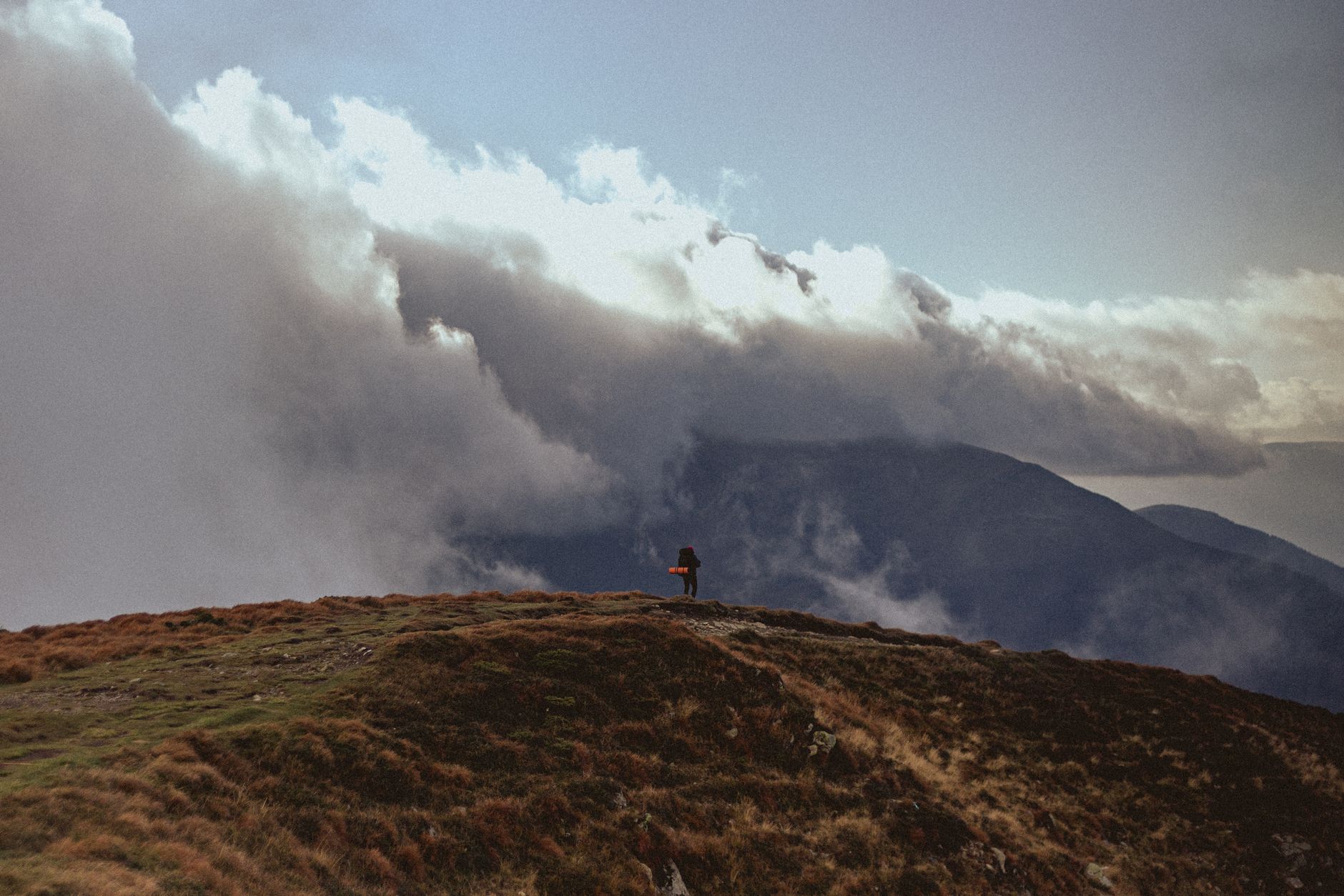

Altitude is the only hiking hazard that does not care how fit you are.
It is not a fitness problem, it is a physiology problem, and the physiology varies between people in ways that do not track with training, age, sex, or how much you can lift. Marathon runners get acute mountain sickness. Sedentary people sometimes do not. The same person can be fine at 11,000 feet one year and ill at 9,000 the next.
Which means the useful skill is not being tougher. It is knowing the numbers, recognizing symptoms early, and being willing to act on them.
What is happening
The percentage of oxygen in the air does not change with elevation. It is about 21 percent at sea level and about 21 percent on the summit of Everest. What changes is atmospheric pressure, and lower pressure means the oxygen molecules are further apart, so every breath delivers fewer of them to your blood. At 8,000 feet the effective oxygen availability is roughly three quarters of sea level, and at 12,000 feet it is closer to two thirds.
Your body responds by breathing faster and deeper, raising your heart rate, and, over days, producing more red blood cells and shifting blood chemistry. That adaptation process is acclimatization and it takes time you cannot compress. Acute mountain sickness is what happens when you ask for performance before the adaptation has happened.
The numbers, and why sleeping elevation is the one that counts
AMS is rare below 8,000 feet, and below that most people feel nothing beyond being more breathless on climbs. Above it the picture changes sharply: a large share of people who ascend rapidly to 11,000 feet will develop AMS, with reported incidence ranging from roughly 40 to 90 percent depending on the speed of ascent and the individual. That is among the most useful figures here, because it reframes altitude illness from bad luck into a common consequence of a specific behavior.
The rule that follows is to ascend no more than 1,000 to 1,600 feet of sleeping elevation per day above about 8,200 feet. The measurement that matters is where you sleep rather than where you walk, and you can climb high during the day and be fine provided you come back down to sleep.
That distinction is the one people miss, and mountaineers compress it into climb high, sleep low. Your body adapts to the altitude it spends time at, particularly overnight, so spending the day at 12,000 feet and descending to sleep at 8,000 gives a strong acclimatization stimulus without the overnight physiological stress that produces AMS. A day hike to 12,000 feet from a trailhead at 9,000, returning to sleep at 7,000, is a completely different proposition from camping at 12,000.
For day hikers the implication is reassuring, because most single-day American hikes, however high they go, are lower-risk than the raw numbers suggest provided you drive down afterward. For backpackers it runs the other way. Where you pitch the tent is the number that governs the trip, and an itinerary gaining 3,000 feet of sleeping elevation in a day is asking for trouble regardless of how easy the walking was.
Recognizing AMS
Symptoms appear within the first day or so of arriving at altitude, typically six to twelve hours in. Headache is the cardinal symptom and usually the first, tending to be frontal, worse when lying down, and unresponsive to ordinary painkillers. Diagnosis needs that headache plus at least one of the following.
-
Nausea or vomiting.
-
Fatigue or weakness disproportionate to the effort.
-
Dizziness or light-headedness.
-
Insomnia, difficulty sleeping, and a characteristic pattern of periodic breathing at night where you stop breathing briefly and then gasp.
The awkward thing about that list is how well it maps onto other explanations. Dehydration, a hangover, a poor night's sleep, sunstroke, or simply being unfit all produce similar complaints, and the common instinct is to assume the innocent explanation and keep going.
At altitude, assume it is altitude. The cost of being wrong in that direction is a rest day. The cost of being wrong in the other direction is considerably higher.
The two serious ones
AMS is unpleasant. Two rarer conditions are life-threatening, and both are progressions from it.
HACE, high altitude cerebral edema, is swelling of the brain, and the defining sign is ataxia, meaning loss of coordination. Someone with HACE cannot walk a straight line heel-to-toe. Add confusion, altered behavior, severe headache and drowsiness. This is a descend-immediately, in-the-dark-if-necessary emergency.
HAPE, high altitude pulmonary edema, is fluid in the lungs. The signs are breathlessness at rest, a dry cough progressing to a wet one, chest tightness, extreme fatigue, and a blue tinge to lips or nails. It can develop without AMS preceding it, and it kills more people at altitude than HACE does.
Both are rare on ordinary American day hikes and both become possible on multi-day trips in the Sierra, the Rockies or the Cascades above about 11,000 feet. For both, the treatment is descent. Not rest, not fluids, not painkillers. Down.
Wilderness Medicine: High Altitude Sickness PreventionThe rules that prevent it
-
Sleep low. Where you sleep the night before matters more than anything you do on the trail, and arriving from sea level to sleep at 3,000 to 5,000 feet before a high day makes a measurable difference, with two nights better than one.
-
Halt at the onset of symptoms. The cornerstone of treating AMS is to stop ascending rather than to push to the pass and see, and stopping at the first headache to give your body a few hours frequently resolves it entirely.
-
Go slower than you can. Minimizing strenuous exertion in the first day or two at a new altitude reduces symptoms, which is unintuitive for fit people who tend to arrive and immediately do something hard.
-
Drink more. The air is dry as well as thin and you lose fluid through increased respiration alone. Dehydration does not cause AMS but it produces symptoms that look exactly like it.
-
Skip the alcohol during the initial days of exposure, which is standard guidance and worth taking seriously, because it worsens sleep and dehydration at the moment both matter most.
-
Do not ascend with symptoms. This is the rule everyone breaks, because summit day is planned and the group is waiting.
Acetazolamide, honestly
Acetazolamide, sold as Diamox, is the standard pharmacological aid. It acidifies the blood, which stimulates breathing and speeds acclimatization rather than masking symptoms, which is a meaningful distinction: it helps you adapt rather than helping you ignore.
Wilderness Medical Society guidance suggests it should be strongly considered for travelers at moderate to high risk, which in practice means people ascending fast, sleeping high, or with a history of AMS. It is a prescription medication in the US, it carries real side effects including tingling in the extremities, increased urination and a peculiar effect that makes carbonated drinks taste flat, and it is not a substitute for sensible ascent. Scheduled acclimatization is preferred over medication where the itinerary allows it, and medication is for when it does not. Talk to a doctor rather than a forum.
Hydration, food, and sleep at altitude
Three practical things degrade at elevation, and each one makes AMS more likely or harder to distinguish from ordinary discomfort.
Fluid loss is higher than you notice, because you breathe faster, the air is dry, and much of what you lose goes out as vapor rather than sweat, so thirst lags well behind need. Drink on a schedule rather than on demand. Appetite disappears at the same time, often sharply, while your energy expenditure rises, so people routinely under-eat on high trips and then attribute the resulting weakness to altitude illness. Eat on a schedule too, favoring carbohydrate, which your body metabolizes more efficiently with less oxygen.
Sleep gets worse as well. Periodic breathing at altitude, where you pause and then gasp, is normal, common and disruptive, and a bad night makes everything the next day feel worse. That is one reason a headache on the second morning is so easy to misattribute to the tent, the pad, or the noise.
The Basics of Altitude Sickness in Three MinutesWho is most at risk
Susceptibility is individual, but a few factors shift the odds meaningfully. A previous episode of AMS is the strongest single predictor, and if it happened before at a given altitude and ascent rate it will likely happen again under the same conditions. Living at low elevation matters too, since someone flying in from sea level starts further behind than someone driving up from Denver. Speed of ascent is the one factor entirely within your control and the one most people optimize in the wrong direction.
Age is not protective in the direction people assume, because younger people are not less susceptible and they are more likely to ascend fast and push through symptoms. Certain cardiopulmonary conditions, pregnancy and some medications change the picture, and those are conversations to have with a doctor rather than a guidebook.
Notably absent from that list is fitness, training volume, and how much you can lift. Aerobic capacity confers no resistance, and the fittest member of a group is often the one who gets ill, because they ascended fastest and dismissed the headache.
The gear
Altitude is mostly managed by itinerary rather than by equipment, but four items on this list change outcomes.
Three-liter hydration capacity, because the air at altitude is dry enough that you lose significant water through breathing alone, and dehydration produces headache and fatigue that are indistinguishable from mild acute mountain sickness.
A pulse oximeter, which is small, cheap and useful. It will not diagnose anything on its own, but a saturation trend that keeps falling overnight while somebody feels worse is information, and it removes some of the guessing from a decision to descend.
Ibuprofen or paracetamol, which treat the altitude headache effectively and are the first thing to try.
Electrolyte tablets, for the same reason as the water capacity.
A warm layer beyond what the forecast suggests, because being cold makes everything about altitude worse and high camps are colder than the valley forecast.
A satellite communicator, since the places where this matters are the places without coverage, and a descent decision that turns into an evacuation needs a way to call.
And a flexible itinerary, which is the actual treatment. Every rule that prevents altitude illness is a scheduling rule: climb high and sleep low, add a rest day, do not gain more than fifteen hundred feet of sleeping elevation a night. None of that works on a fixed plan.
Where this bites in the American West
Most American day hiking happens below the threshold where this matters, and several popular objectives do not. The Eastern Sierra puts trailheads at 10,000 feet reachable by car in a few hours from sea level, with Mosquito Flat at 10,244, and that is the classic setup for trouble because no walking is required to get high and so there is no natural pacing. Colorado's fourteeners start high and finish above 14,000, and Denver at 5,280 is not sufficient acclimatization for that. Mount Whitney at 14,505 is the extreme case of a day hike that is an altitude undertaking.
Rainier, Hood, Shasta and the Cascade volcanoes all reach altitudes where this applies on summit attempts, though most trail hiking on them does not. Glacier, the Tetons and the Wind Rivers put multi-day trips above 10,000 feet, where sleeping altitude becomes the governing number.
Sleeping low is easy to say and harder to arrange, because where you may legally camp is set by whoever manages the ground. Dispersed camping is broadly permitted on national forest and BLM land, which is often what makes a low camp possible below a high trailhead, while the park unit next door will confine you to designated sites on a permit. Guidepole Hike carries trailhead elevation alongside the ownership and camping-rules layer, which on an altitude itinerary is the difference between planning a low night and discovering at dusk that the only legal ground is at 11,000 feet.
What to do if it happens to you
Stop climbing immediately rather than at the next obvious stopping point. Rest, hydrate and eat, and give it a few hours, because mild AMS frequently resolves at the same altitude with rest. If it is not improving, or is worsening, descend, since a thousand feet often makes a dramatic difference and there is no prize for staying. If there is ataxia, confusion or breathlessness at rest, descend immediately regardless of the time of day, the weather, or how far you have come, and get help. Do not leave someone with symptoms alone, and do not let anyone descend alone if they are impaired.
So sleep as low as you reasonably can the night before, and higher than sea level if you can manage it. Ascend gradually where the itinerary is yours to set, go slower than you think you need to on the first day high, drink more than feels necessary, and skip the drink at dinner. Then treat a headache at 10,000 feet as information rather than an inconvenience, and be the person willing to say the trip is over.
Altitude is the hazard where turning around is most often the correct call and least often taken.
The American hikes where this bites hardest are in Mount Whitney as a day hike, Eastern Sierra day hikes and hiking South Sister. Understanding how much climbing a day actually contains is in trail difficulty and elevation gain, and the high-country parks where visitors most often arrive from sea level are in three days in Yosemite and one day at Mount Rainier.