Fish
Fish Fire
Fire Hike
Hike Bird
Bird

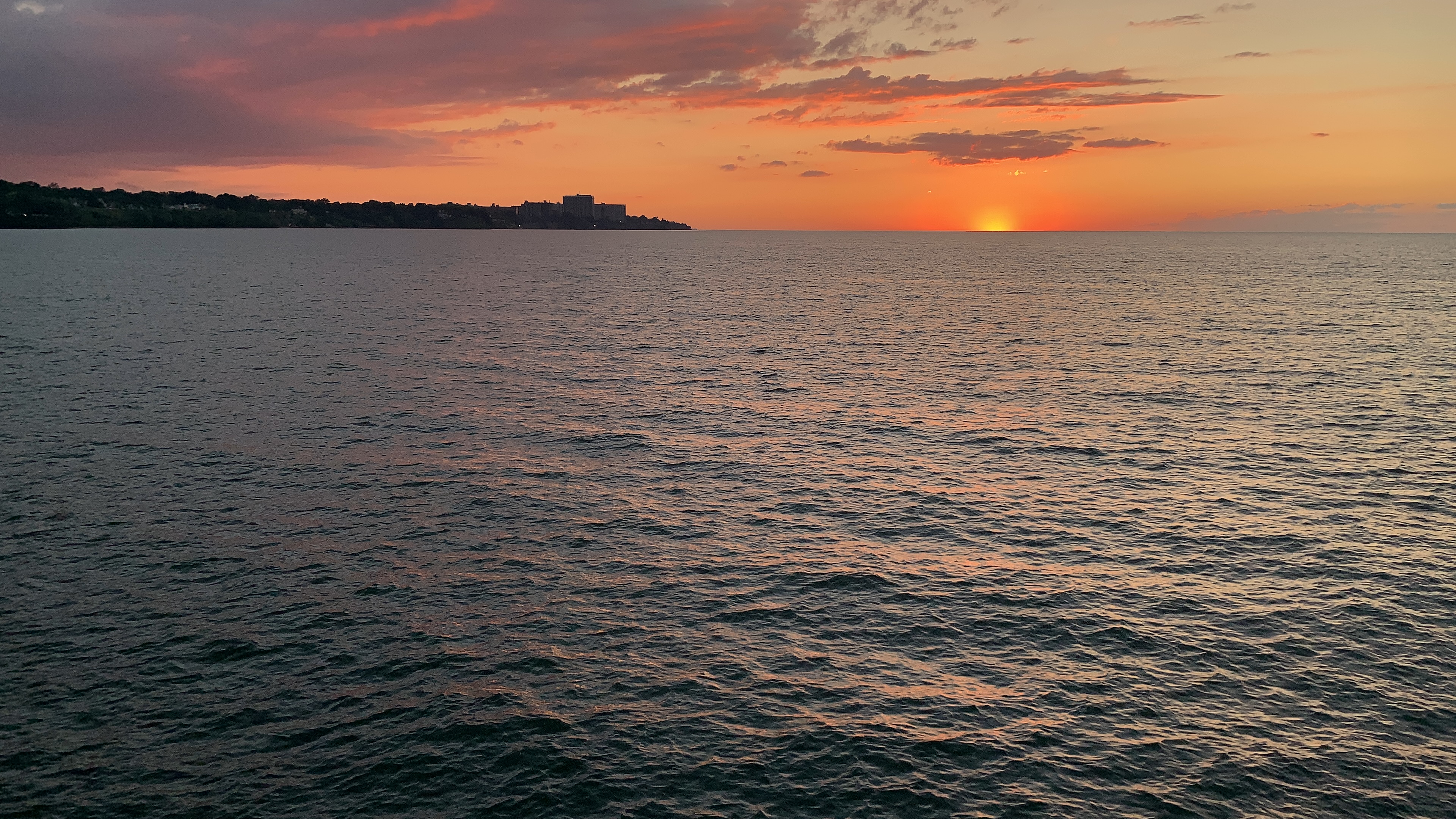

Lake Erie is the shallowest, warmest, and by far the most productive of the Great Lakes, its waters hold an estimated half of all the fish in the entire Great Lakes system. It is the undisputed Walleye Capital of the World, one of the best smallmouth bass lakes on Earth, a jumbo-perch factory, and the beating heart of "Steelhead Alley." Ringed by five jurisdictions, Ohio, Michigan, Pennsylvania, New York, and the Canadian province of Ontario, Erie is really three very different lakes in one, and understanding its basins is the key to fishing it. This whole-lake guide walks through the fish, the basins, the seasons, and how to catch them, wherever on the lake you launch.
The Three Basins: The Key to Lake Erie
Everything about fishing Erie starts with its geography, because the lake divides into three distinct basins that fish completely differently.
The western basin, from Toledo and the Michigan line east past the Bass Islands to around Sandusky, is shallow (often just 25–30 feet), warm, and studded with rocky reefs and islands. It's the walleye spawning factory and the jumbo-perch heartland, and it warms first in spring.
The central basin, the broad, open middle of the lake off Cleveland and the Pennsylvania line, deepens to 80-plus feet. This is big-water trolling country for summer walleye that scatter across the open lake, plus strong perch and smallmouth along the drop-offs and offshore humps.
The eastern basin, off Pennsylvania and New York, is the deepest and coldest, dropping past 200 feet. Its cold, clear water grows trophy smallmouth bass, holds lake trout, and its tributaries anchor the famous steelhead run.
Walleye: The Walleye Capital of the World
Walleye are why most anglers come to Erie, and the lake produces them in staggering numbers and sizes. The fishing follows the fish across the seasons. In spring (late February through April), walleye crowd the shallow western-basin reefs and shorelines to spawn, and anglers cast and vertically jig hair jigs and blade baits to them close to shore. As the water warms into summer (roughly July through September, the prime season), the fish scatter and suspend across the open central basin, and the classic Erie technique takes over: trolling crawler harnesses and crankbaits behind dipsy divers and inline planer boards to cover water and reach suspended fish. Our how to catch walleye guide breaks down the rigs. It's the most reliable trophy-walleye fishing anywhere, and a big lake full of eager fish makes it beginner-friendly on a charter. In the heat of summer, the fish often suspend well off the bottom over deep water, which is why depth control, running your baits at the exact level the fish are marking on the electronics, matters more than anything, and why divers, weighted lines, and planer boards are the tools of the trade. A good day can put a limit of five- to nine-pound "eyes" in the box, and the lake's famous year-classes mean the fishing stays strong season after season.
Walleye Fishing TechniquesYellow Perch: The Lake's Other Icon
If walleye are Erie's kings, yellow perch are its beloved workhorse. The lake grows jumbo perch, fat 10- to 14-inch fish, in enormous schools, and the fall perch bite draws just as many boats as the walleye run. The method is simple and deadly: anchor or drift over 25 to 45 feet of water and drop a crappie-rig spreader baited with emerald shiners or minnows to the bottom, then fill the cooler. Perch fishing is cheap, easy, family-friendly, and produces some of the finest eating in fresh water. Nearshore areas all around the lake, from the western reefs to the eastern-basin flats, hold them, with fall the peak.
Smallmouth Bass: World-Class, Lakewide
Lake Erie is quietly one of the best smallmouth bass fisheries on the planet, and the cold, clear central and eastern basins grow true giants. Smallmouth bass stack on the rocky reefs, points, shoals, and offshore humps, and anglers catch them on drop-shot rigs, tubes, jerkbaits, and jigs worked over structure. The eastern basin off Pennsylvania and New York is famous for trophy smallmouth that push five and six pounds, while the western reefs and island shorelines hold outrageous numbers of scrappy fish. A day of Erie smallmouth on light tackle over rock is about as good as freshwater bass fishing gets.
Steelhead Alley: The Fall and Winter Run
Along the southern shore, from Ohio through Pennsylvania to New York, a string of tributary streams gets stocked with steelhead, sea-run rainbow trout, that grow fat in the lake and run up the creeks to spawn. This stretch has earned the nickname "Steelhead Alley," and it's one of the best and most accessible steelhead fisheries in the country. In fall, anglers troll spoons and crankbaits off the creek mouths as the fish stage; then, from fall through spring, the steelhead push up rivers like the Rocky, Grand, and Conneaut in Ohio, Elk and Walnut Creeks in Pennsylvania, and the Cattaraugus and Chautauqua drainages in New York, where you drift eggs, jigs, and flies to chrome-bright fish. Our how to catch steelhead guide covers the run. It's a completely different, wading-and-drifting side of Lake Erie fishing, and a devoted subculture all its own.
Lake Trout and the Rest of the Cast
The deep, cold eastern basin also holds lake trout, caught by trolling spoons and dodgers down deep or jigging over the basin's depths. Beyond the headline four, Erie serves up white bass that blitz bait in spring and summer runs, freshwater drum (sheepshead) that pull hard on bottom rigs, channel catfish in the harbors and tributaries, and even the occasional muskie in the eastern reaches. It's a lake where a slow walleye day can easily become a fast perch, smallmouth, or white-bass day instead.
Trolling the Great Lakes for Trout and SalmonFishing the Reefs, Islands, and Structure
Structure is everything on Erie. In the western basin, the hard-limestone reef complex, Ruggles Reef, Niagara Reef, and the tangle of shoals between the Catawba and Marblehead peninsulas and the Bass Islands, concentrates spawning walleye in spring and holds fish and perch through the year. The islands around Put-in-Bay are the western-basin hub for both species; see our Put-in-Bay guide. In the central basin, offshore humps and the old lakebed structure that locals call "the mountain" gather summer walleye and smallmouth. Learn to find the rock, the reefs, and the depth changes on your electronics, and you've found Erie's fish.
The Bass Islands: An Erie Institution
No tour of Lake Erie is complete without the Bass Islands. South Bass Island, home to the village of Put-in-Bay, along with Kelleys Island and Middle Bass sit right in the heart of the western-basin reef complex, surrounded by the best walleye and perch water on the lake. Reachable by ferry or small plane, the islands are a summer destination in their own right: you can launch or charter right from the harbor, fish world-class water a short run away, and enjoy the islands' famously laid-back scene when you're off the water. For a family, an island weekend that mixes a morning of easy walleye and perch fishing with an afternoon of exploring is one of the most enjoyable trips on the Great Lakes, the western basin at its most fun and most accessible.
From Shore, Pier, and Breakwall
You don't need a boat to fish Lake Erie. The piers, breakwalls, and tributary mouths all along the shore give up walleye (especially the spring and fall night bite), jumbo perch, white bass on their spring runs, steelhead near the creek mouths, and catfish. Public access is excellent across Ohio, Pennsylvania, and New York, and pier fishing is how countless Great Lakes anglers got their start. For the Ohio shore in depth, see our how to fish Lake Erie, Ohio and fishing Erie, PA guides.
Reading Erie: Wind, Water, and Structure
Lake Erie is shallow for a Great Lake, and that shapes everything. Because it's shallow and warm, it's fabulously productive, but it also means the lake reacts violently to wind. A strong blow stacks up a short, steep, dangerous chop faster than almost any water in the country, and it can turn the western basin to chocolate milk overnight. Savvy anglers watch the wind forecast as closely as the fishing report, plan to fish the protected side of the lake or the lee of the islands on a windy day, and get off the water before an afternoon front rolls through. Water clarity matters just as much: Erie's summer algae and wind-stirred turbidity push walleye to feed by feel and in low light, so early mornings, evenings, and lightly stained water often fish best, and adding a little flash, rattle, or color to your presentation helps fish find it. And always, structure is the key, the reefs, humps, drop-offs, and old lakebed features hold the bait and the predators that eat it. Learn the wind, the water color, and the rock, and you'll fish Erie the way the locals do.
A Lake That Came Back
It's worth knowing that Lake Erie is one of the great conservation success stories in North America. Half a century ago the lake was so polluted it was declared "dead," its water choked and its fishery collapsing. Decades of cleanup, pollution controls, and careful fisheries management brought it roaring back, and today Erie is the most productive of the Great Lakes and a world-class fishery, living proof that a damaged water can recover. The lake still faces challenges, especially the summer harmful algal blooms in the warm, nutrient-rich western basin, and anglers see their effects on water clarity and, at times, on the fishing. Following creel limits, supporting clean-water efforts, and handling released fish with care are all part of keeping Erie the generous lake it has become. Fish it with a little gratitude for the comeback.
When to Go
- Spring (March–April): Reef-run walleye spawn in the shallow western basin; white bass runs build; steelhead still in the tributaries.
- Summer (June–September): Prime open-water walleye trolling in the central basin; trophy smallmouth on structure; perch schools building.
- Fall (September–November): The famous jumbo-perch bite; the walleye fall bite; steelhead staging and running off the creek mouths.
- Winter: Hard-water anglers ice fish the western basin for perch and walleye when it's safely locked up, and steelhead run the open tributaries.
Licenses and the Five Jurisdictions
Lake Erie touches five sets of rules, Ohio, Michigan, Pennsylvania, New York, and Ontario each manage and regulate their own waters, and the international boundary runs down the middle of the lake. You need a valid fishing license for the state or province whose water you're actually fishing, and if you fish across the line into Canadian water you'll need an Ontario license. Seasons, size limits, and daily creel limits for walleye, perch, bass, and steelhead differ by jurisdiction and change over time, so always check the current regulations for the exact waters you plan to fish. Major charter ports, Port Clinton and Sandusky in Ohio, Erie in Pennsylvania, and Dunkirk and Barcelona in New York, each open onto a different part of the lake.
A Beginner's First Trip
The easiest on-ramp to Erie is a summer walleye charter out of a western-basin port like Port Clinton: the captain runs the boat, sets the trolling gear, and puts you on fish in the Walleye Capital of the World. If you'd rather keep it simple and cheap, go perch fishing in the fall, anchor over 30 feet with a perch spreader and a bucket of shiners and catch dinner nonstop. Shore anglers can hit a pier or a breakwall for the spring and fall walleye night bite. Any of the three gets you into fish fast and teaches you a piece of this enormous, generous lake.
Guides and Gear
A charter is the smart way to learn open-water Erie, especially the summer troll. For gear, a medium trolling rod with a line-counter reel and dipsy divers or planer boards handles the walleye troll with crawler harnesses and crankbaits; a 6-1/2- to 7-foot spinning rod with hair jigs and blade baits covers the spring reef-run walleye and smallmouth; a light perch rod with a crappie-rig spreader and shiners fills the cooler; and a long, soft steelhead rod handles the tributary drift with floats, eggs, and jigs. Whatever you fish, respect Erie's temper, the shallow lake stacks up a short, vicious chop in a strong wind faster than almost any water in the country, so watch the forecast and get off before it blows.
Lake Erie rewards anglers who read its three basins and match the season. Troll the central basin for summer walleye, drop a spreader for fall jumbo perch, work the rocks for trophy smallmouth, or swing a fly through a Steelhead Alley creek, then check the rules for your state or province and fish the most productive of the Great Lakes.