Fish
Fish Fire
Fire Hike
Hike Bird
Bird


The Cuyahoga River caught fire on June 22, 1969. An oil slick on the surface ignited near a railroad trestle in Cleveland, and the flames reached five stories high before the fire department put them out in about twenty minutes. The fire itself was not unusual, the Cuyahoga had burned at least thirteen times before, dating back to 1868. What was different in 1969 was that a photographer from Time magazine published a picture (actually from a 1952 fire, the 1969 blaze was out too fast for cameras to arrive), and the image of a river on fire became the symbol of everything wrong with American waterways. Congress passed the Clean Water Act in 1972. The EPA was established. The Cuyahoga River, which had been declared dead, became the most famous environmental cautionary tale in the country.
That was fifty-seven years ago. The river does not burn anymore.
What it does, remarkably, is hold fish. More than sixty species of fish now live in the Cuyahoga River, up from two species found in a single sampling site during a 1968 survey, the other twenty-two sites had no fish at all. The Ohio EPA now rates the stretch of the Cuyahoga between Akron and Cleveland as achieving Full Attainment of Warmwater Habitat standards, meaning the fish community is as healthy and diverse as a river in this geography should be. Steelhead run up from Lake Erie through the lower river and into tributaries that flow through the national park. Smallmouth bass hold in the riffles and runs of the main stem. Common carp, big, wary, difficult fish that are one of fly fishing's genuinely underrated challenges, cruise the slower pools and flats. Rock bass, channel catfish, largemouth bass, and various panfish fill out a warmwater community that would have been science fiction in 1968.
Cuyahoga Valley National Park protects twenty-two miles of this river, running through a forested corridor between Ohio's two largest metropolitan areas. The park is not wilderness. It is not remote. You fish under highway bridges, beside railroad tracks, and within earshot of the Ohio Turnpike. The Towpath Trail, a converted towpath from the old Ohio and Erie Canal, runs alongside the river for twenty miles, giving you walking access to water that most anglers drive past on their way to somewhere else. The village of Peninsula sits at the heart of the park, a former canal town that now serves as the park's unofficial hub, with the Cuyahoga Valley Scenic Railroad chugging past on its tourist excursions.
This is not a destination fishery in the way that the Pere Marquette is a steelhead destination or the Madison River is a trout destination. Nobody flies to Cleveland to fish the Cuyahoga. But the story here, from burning river to fishable river in one generation, is one of the most important environmental narratives in fly fishing, and the fishing itself is better than you would expect from a river that was once synonymous with pollution.

The Cuyahoga River, Twenty-Two Miles Through the Park
The Cuyahoga River is eighty-five miles long, draining a watershed of roughly 813 square miles in northeast Ohio. The name comes from the Mohawk word for "crooked river," and the description is accurate, the river loops south from its headwaters near Chardon, passes through Akron, then turns north and flows through the national park before emptying into Lake Erie at Cleveland. That U-shaped course means the river effectively circles the eastern suburbs of the Cleveland-Akron metropolitan area, passing through some of the most densely populated terrain in Ohio.
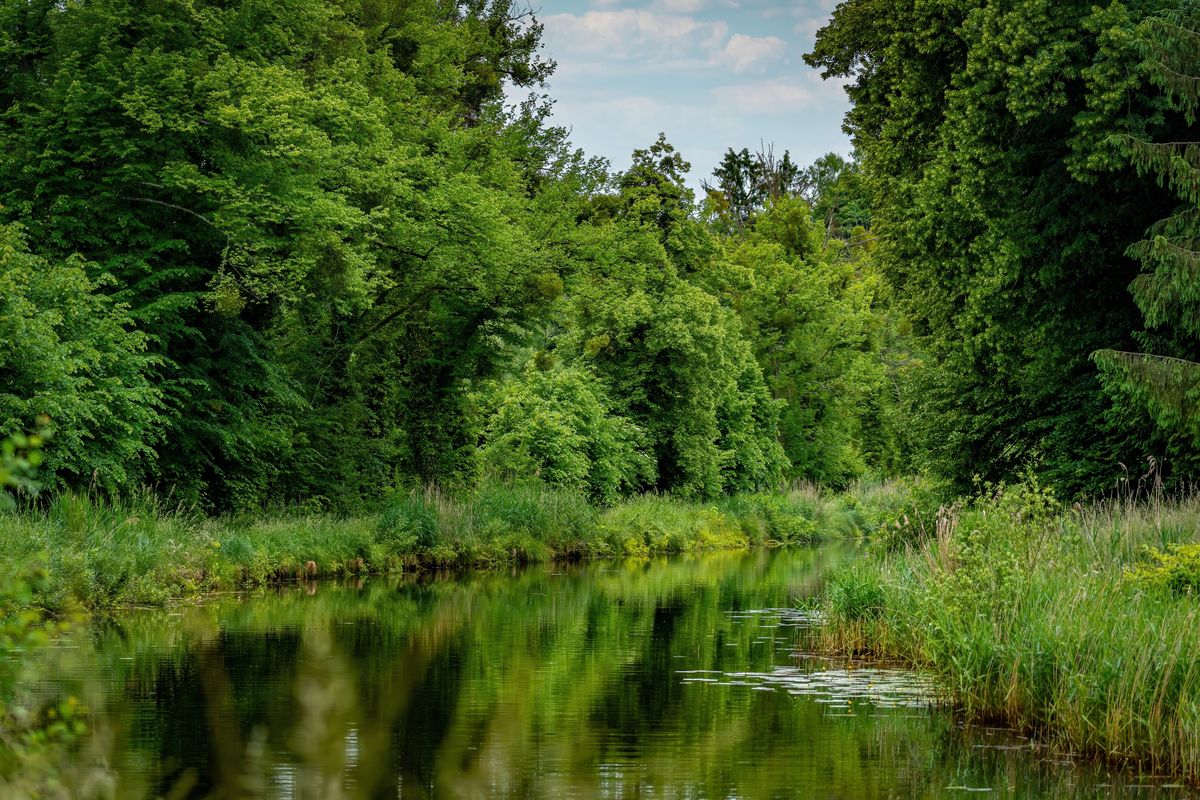
Inside the park, the river runs through a surprisingly deep and forested valley. The shale bluffs rise on both sides, old-growth remnants of beech-maple forest cling to the slopes, and the canopy is dense enough that sections of the river feel isolated despite being minutes from interstate highways. The valley was carved during the last ice age, and the geological history is visible in the exposed shale ledges and sandstone outcrops that line the banks.
The river itself is a large, shale-bottom waterway that varies from shallow riffles to deep pools, with an average width of fifty to seventy feet through the park. The bottom is predominantly flat shale and gravel, wadeable in many sections during normal flows, but the shale can be slippery. A wading staff and felt-soled or studded boots are not optional.
Water Conditions
The Cuyahoga fishes best at 250 to 350 cfs as measured at the USGS gauge at Independence, Ohio. Above 350 cfs, the water begins to carry too much sediment for effective fly fishing. Below 200 cfs in summer, the river gets warm and the fish become lethargic.
The critical issue is runoff. The Cuyahoga drains an urban and suburban watershed with substantial impervious surface, parking lots, rooftops, highways. Rain events push the river up fast and dirty. After a significant rain, the river takes a week or more to clear, much longer than a freestone stream in a forested watershed. This extended clearing time is the single biggest challenge for planning a fishing trip to the Cuyahoga. You cannot show up after a Thursday rainstorm and expect fishable water on Saturday. You need to watch the gauge, wait for the water to drop and clear, and then move.
Between May and October, the National Park Service posts daily bacteria advisories for the Cuyahoga due to combined sewer overflows from upstream communities. These advisories are based on E. coli testing at multiple sites through the park. Check the NPS website before wading, on high-bacteria days, minimizing water contact is the smart move. This is one of the lingering consequences of the urban watershed. The river has come a long way from 1969, but the infrastructure upgrades are still catching up.
Access Points
The National Park Service maintains seven access points along the Cuyahoga River through the park, from Northampton Point at the southern end (river mile 36.7) to Lock 39 Trailhead at the northern end (river mile 13.2). The Towpath Trail connects all of these, so you can park at one access point and walk the trail to reach water that gets less pressure.
Key access points for anglers:
- Station Road Bridge Trailhead, one of the most popular spots, with good parking and direct trail access to a productive stretch of river. The covered bridge here is a park landmark.
- Red Lock Trailhead, access to a quieter stretch south of the Brecksville area.
- Brecksville (Route 82 Dam), the dam is a key feature for steelhead. Fish stage below the dam during the runs, and this is one of the most well-known steelhead fishing spots on the entire Cuyahoga system.
- Boston Store Trailhead, central park access near the village of Peninsula, with Towpath Trail connections in both directions.
- Lock 29 Trailhead (Peninsula), the heart of the park, adjacent to the village. Good access to wadeable water.

The Steelhead, Lake Erie Chrome in Suburban Creeks
The steelhead story at Cuyahoga Valley is the same Great Lakes steelhead story that plays out across the southern Lake Erie tributaries from Indiana Dunes east through Ohio, Pennsylvania, and New York, what anglers call Steelhead Alley. The Ohio Division of Wildlife raises roughly 450,000 Little Manistee strain smolts annually at the Castalia hatchery and distributes them across six Lake Erie tributaries. Some of those fish, along with strays from other stocked tributaries, enter the Cuyahoga River system on their spawning runs.
The Cuyahoga itself is not one of the six primary stocked tributaries, the Chagrin, Rocky, Grand, Vermilion, and Conneaut are the headline rivers of Steelhead Alley. But the Cuyahoga receives a natural run of fish that stray from other tributaries, and when conditions are right, the run can be substantial. These are legitimate steelhead, chrome-bright fish averaging 23 to 28 inches that have spent two to four years feeding in Lake Erie before returning to tributaries to spawn.
The Tributaries
The steelhead fishing inside the national park is concentrated not in the main stem Cuyahoga but in the tributaries, the smaller creeks that flow into the Cuyahoga from both sides of the valley. These are intimate waters, many of them barely ten to fifteen feet wide, shaded by hemlock and beech, running over gravel and shale. When steelhead push up the Cuyahoga and turn into these tributaries, the experience is similar to what you find on the small creeks at Indiana Dunes, big fish in tiny water, a genuinely surreal scale mismatch.
Brandywine Creek is the most well-known tributary in the park. It enters the Cuyahoga from the east side near the village of Sagamore Hills and is famous for Brandywine Falls, a sixty-five-foot waterfall that is one of the park's most visited attractions. Below the falls, Brandywine Creek flows through a forested gorge before reaching the Cuyahoga. The creek receives steelhead during the fall and winter runs, and the fish hold in the pools and deeper runs of the lower reaches.

Tinkers Creek is the largest tributary of the Cuyahoga River, draining 95 square miles of suburban and rural land in Summit and Cuyahoga counties. Tinkers Creek enters the Cuyahoga near the northern end of the park and receives steelhead that push upstream from the lower Cuyahoga. The creek is larger than Brandywine, wide enough in places for a full backcast, and holds steelhead through the winter months in its deeper pools.
Furnace Run is a smaller tributary entering the Cuyahoga from the west side, with access through Furnace Run Metro Park managed by Summit Metro Parks. The creek is small, wading is the only option, and the fishing is tight-quarters work, but it receives steelhead during high-water events when fish push into the smallest available tributaries to find spawning gravel.
Other tributaries worth exploring include Yellow Creek, Chippewa Creek, and Mud Brook, all of which flow into the Cuyahoga through the park and receive at least some steelhead movement during the runs.
The Steelhead Season
The timing follows the standard Lake Erie tributary pattern:
Fall Run (October-December): Steelhead begin entering the Cuyahoga and its tributaries following the first significant fall rains that raise water levels and drop temperatures below 55 degrees. The fall run builds through November, which is typically the peak month. Fall-run steelhead are the strongest fish of the year, fresh from the lake, chrome-bright, and aggressive. They have not been in the river long enough to get stale.
Winter Fishing (January-February): Fish that entered in the fall hold through the winter in the deeper pools, feeding opportunistically. Winter fishing is slower and requires finding these holding lies, but the fish are there. Cold weather keeps the pressure low, you will often have the water to yourself.
Spring Run (March-April): The second peak. Steelhead that overwintered in the river begin spawning, and fresh fish continue entering from the lake. March is often the best month of the entire season, the fish are actively moving, the water is typically at good levels from snowmelt, and the spawning activity concentrates fish in predictable locations on gravel beds. By late April, most steelhead have dropped back to Lake Erie.
Steelhead Flies and Techniques
This is indicator nymphing water. Not spey fishing. Not swinging. The tributaries are too small for spey rods, and the main-stem Cuyahoga, while larger, is best fished with nymph rigs in the steelhead lies. A 9- to 10-foot, 7-weight rod, a strike indicator, split shot, and a two-fly nymph rig is the standard setup across all of Steelhead Alley.
The fly selection is Great Lakes steelhead standard, the same patterns that work on every Lake Erie tributary from the Indiana Dunes creeks to the Pennsylvania tributaries:
Egg patterns are the number-one producer. Period. Steelhead in Lake Erie tributaries feed heavily on the eggs of other spawning steelhead and salmon, and egg patterns outfish everything else by a wide margin. Carry:
- Glo Bugs (#8-12, chartreuse, Oregon cheese, pink, cerise), the classic Great Lakes egg fly
- Sucker Spawn (#10-14, cream, white, pale pink, chartreuse), a cluster egg pattern that imitates a clump of eggs drifting downstream. Fish this as your lead fly.
- Nuclear Eggs / Blood Dots (#10-12, hot pink with red dot, chartreuse with orange dot), bright attractor egg patterns for stained water
Stonefly nymphs are the second-most-important category. Black stoneflies are a significant food source in Ohio tributaries, and steelhead eat stonefly nymphs readily:
- Black Stonefly Nymph (#8-12), a critical pattern that many visiting anglers overlook. Carry plenty.
- Prince Nymph (#10-14), works as a stonefly/attractor
- Copper John (#12-16), sinks fast, catches fish in the deeper pools
General nymphs fill out the subsurface box:
- Hare's Ear Nymph (#10-14), the universal nymph, effective in every tributary
- Pheasant Tail Nymph (#12-16), a mayfly imitation that steelhead eat between egg-feeding sessions
- Zebra Midge (#16-20), surprisingly effective as a dropper behind an egg pattern, especially in winter when the fish are lethargic
- San Juan Worm (#8-12, red, wine, pink), always carry worms for Great Lakes steelhead. They work.
Streamers and egg-sucking leeches for aggressive fish:
- Woolly Bugger (#6-10, black, olive), tie them with a fluorescent egg head (hot pink or chartreuse) for the egg-sucking leech effect. Strip them through the deeper pools or dead-drift them under an indicator.
- Muddler Minnow (#6-8), a sculpin imitation that works in the deeper runs
- Small Clouser Minnows (#6-8, white/chartreuse), bounced along the bottom for steelhead holding in deeper water
The technique is straightforward: set your indicator at 1.5 to 2 times the water depth, add enough split shot to get the flies to the bottom, and dead-drift the rig through the lies. The key is a drag-free drift, Great Lakes steelhead are indicator-nymphing fish, not swing fish. The standard two-fly rig is an egg pattern as the lead fly with a nymph dropper eighteen to twenty-four inches below. When the indicator goes down, set hard. Steelhead takes on nymph rigs are often subtle, a slight pause or twitch of the indicator, not a violent plunge.

Smallmouth Bass, The Summer Fishery
While steelhead own the cold months, smallmouth bass are the Cuyahoga's warm-weather story. The main stem of the river through the park holds a healthy population of smallmouth that are active from May through October, and they are genuine fly rod fish.
The smallmouth in the Cuyahoga are not trophy-class, most fish run ten to fourteen inches, with occasional sixteen-inch fish in the deeper pools. But they are scrappy, they eat aggressively, and they are present in enough numbers that a good summer evening can produce a dozen fish or more. The Cuyahoga's smallmouth are a direct result of the water quality improvements since the Clean Water Act, these are pollution-sensitive fish that could not have survived in the river a generation ago.
Smallmouth Flies
- Clouser Minnow (#4-8, chartreuse/white, olive/white, brown/orange), the universal smallmouth fly. Cast it to shale ledges, undercut banks, and the heads of pools, and strip it back with short, erratic strips.
- Crayfish patterns (#4-8, olive, brown, rust), crayfish are the primary forage for Cuyahoga smallmouth. Patterns with rubber legs and dumbell eyes that ride hook-point-up are essential.
- Small poppers (#6-10), surface fishing for smallmouth on summer evenings is the most fun you can have on the Cuyahoga. Cast a foam or cork popper tight to the shale banks, give it a pop-and-pause retrieve, and wait for the explosion.
- Chubby Chernobyl (#8-12), a big foam attractor that doubles as a strike indicator when you fish a nymph dropper underneath. Great for covering water on summer evenings.
- Woolly Bugger (#6-10, olive, black, brown), stripped through the deeper runs
- Stimulator (#10-14, orange or yellow), a stonefly dry fly that works during summer stonefly activity and doubles as a general attractor pattern on the riffles
- Elk Hair Caddis (#12-16), when caddis are hatching in the evening, smallmouth will eat dry flies off the surface
Gear: A 9-foot, 6-weight rod handles everything the Cuyahoga smallmouth fishery requires. Floating line, a 7.5-foot leader tapered to 2X or 3X, and a box of Clousers, crayfish, and poppers. This is not complicated fishing.
The best smallmouth water in the park is the stretch from the Station Road Bridge area south to the Boston Store area, riffles, runs, and pools with enough shale structure to hold fish. Wade the riffles, cast to the banks, and work downstream. Early morning and the last two hours of daylight are prime.
Carp on the Fly, The Overlooked Fishery
Here is the fishing that most articles about the Cuyahoga will not mention, and it might be the best fly fishing the river offers: the Cuyahoga holds excellent carp.
Common carp in the Cuyahoga run ten to twenty pounds, with fish over twenty-five pounds entirely possible. They are present throughout the river, particularly in the slower pools, the soft-bottomed backwaters, and the long flats where the current slows and silt accumulates. On warm days from May through September, carp move into shallow water to feed, tailing on the flats, rooting along the edges, cruising the slow pools with their backs occasionally breaking the surface.
Sight-fishing to carp on the fly is one of the most technical and rewarding disciplines in freshwater fly fishing. The fish are wary. They spook easily. They reject flies that do not look and behave like real food. And when they eat, the fight, on a fish that averages fifteen pounds and can exceed twenty-five, is the most powerful thing you will hook in any Ohio river.
Carp Flies
The carp fly box is small and specific:
- San Juan Worm (#8-12, red, rust, brown), the most reliable carp pattern. Cast it ahead of a cruising or tailing fish and let it sink to the bottom. When the fish reaches the fly, give it a tiny twitch.
- Backstabber (#6-8, rust, olive, tan), a purpose-built carp fly with rubber legs, a soft body, and a hook that rides point-up to avoid snagging the bottom. This is the fly if you are serious about carp.
- Small rubber-legged nymphs (#8-12), Hare's Ear variants tied with rubber legs, soft hackle, and muted colors (olive, brown, tan) that imitate the invertebrates carp are rooting for on the bottom.
- Woolly Bugger (#8-10, olive, brown), dead-drifted or crawled along the bottom near feeding carp. Not as precise as a San Juan Worm or Backstabber, but effective when the fish are actively feeding and less selective.
Carp Technique
Gear: A 9-foot, 7-weight or 8-weight rod. You need the backbone to fight a fifteen-pound fish in current and the power to punch casts into wind. Floating line, a 9-foot leader tapered to 1X or 2X. Fluorocarbon tippet helps with the spooky fish.
The approach is the same as bonefishing: wade slowly, scan the water for feeding fish (tailing, mudding, or cruising), get into position without spooking them, and place the fly ahead of the fish's path. The cast needs to land softly, a splashy delivery will send every carp in the pool to the next county. Let the fly sink, wait for the fish to reach it, and watch for the eat. Sometimes the carp tips down on the fly and you see the tail come up. Sometimes you see the line tighten. Strip-set when it happens. Do not trout-set, you will pull the fly out of the fish's mouth every time.
The Cuyahoga's carp fishery is completely unpressured. Almost nobody fly fishes for carp here. The fish are used to being ignored, which paradoxically makes them both more approachable (they are not flee-on-sight spooked like heavily fished carp) and more challenging (they have not been conditioned to eat flies, so your presentation needs to be convincing).
Panfish and Other Species
The Cuyahoga and its associated ponds and lakes hold a variety of panfish that provide light-tackle fly fishing for anglers who want easier targets or are introducing someone to fly fishing:
- Bluegill, present in the park's ponds (Kendall Lake, Horseshoe Pond, Indigo Lake) and in the slower backwaters of the river. Small foam poppers (#10-12) and Woolly Buggers (#10-12) are all you need.
- Rock bass, common in the main stem of the Cuyahoga, especially in the riffles and around shale structure. They eat Hare's Ear Nymphs, small Clousers, and just about anything else you throw at them. Not large fish, but reliable and fun on a 4-weight.
- Crappie, found in the park's lakes and ponds, especially Kendall Lake and Brushwood Lake. Small streamers and Woolly Buggers worked slowly around submerged structure.
- Channel catfish, present in the deeper pools of the main river. The same bottom-bouncing techniques described in the Theodore Roosevelt guide apply here: heavy Woolly Buggers and San Juan Worms dead-drifted on the bottom.
- Largemouth bass, in the ponds and slower backwater sections. Poppers, Woolly Buggers, and small Clouser Minnows fished around structure.
Kendall Lake and Horseshoe Pond both have accessible paved paths and fishing docks, making them excellent options for anglers with mobility limitations or families with young children.
The Towpath Trail, Your Fishing Access Highway
The Ohio and Erie Canal Towpath Trail is the single most useful feature of Cuyahoga Valley National Park for anglers. The trail follows the route of the historic Ohio and Erie Canal, completed in 1832, connecting Cleveland on Lake Erie to Portsmouth on the Ohio River, for twenty miles through the park. The canal itself is long gone, filled in or drained, but the towpath where mules once hauled canal boats is now a crushed-limestone multi-use trail that runs alongside the Cuyahoga River for nearly the entire length of the park.
What this means for fishing is simple: you have twenty miles of level, easy walking access to the river. You can park at any trailhead, walk the Towpath in either direction, and reach water that gets almost no fishing pressure because most anglers park at the obvious access points and fish within a few hundred yards. Walk a mile down the Towpath from any trailhead, and you will likely have the river to yourself.
The trail also connects to the village of Peninsula, a former canal town that is now the park's social center, with restaurants, shops, and the Cuyahoga Valley Scenic Railroad depot. You can fish a morning session, walk the Towpath into Peninsula for lunch, and fish your way back in the afternoon.

The Seasonal Calendar
October-November (Fall Steelhead Run): The first steelhead enter the Cuyahoga and its tributaries after fall rains drop water temperatures and raise flows. November is typically the peak month. Fall-run fish are chrome-bright and aggressive. Egg patterns and stonefly nymphs under an indicator are the standard approach. The fall foliage in the valley is spectacular, the beech, maple, and oak canopy turns gold and orange, and the fishing coincides with peak fall color.
December-February (Winter Steelhead): Fish that entered in the fall hold in the deeper pools through winter. The fishing slows but does not stop. Winter steelhead eat smaller flies, Zebra Midges, small egg patterns, Pheasant Tails, and require patience. The reward is solitude. Very few anglers fish the Cuyahoga tributaries in January. Dress for cold, northeast Ohio winters are serious, with wind chill off the lake routinely dropping below zero.
March-April (Spring Steelhead Run): The second and often best peak of the steelhead season. Fresh fish continue entering from Lake Erie, and overwintered fish begin spawning on gravel beds. March is frequently the highest-catch month of the entire season. The fish concentrate on spawning gravel in the tributaries, making them predictable and accessible. Sucker spawn and egg patterns remain the top producers. By late April, most steelhead have dropped back to the lake.
May-June (Transition): The steelhead are gone, and the warmwater fishery comes online. Smallmouth bass become active as water temperatures climb through the fifties and sixties. Carp begin moving into shallow water on warm days. The park is green and lush, the Towpath Trail is busy with hikers and cyclists, and the fishing transitions entirely to warmwater species. Clouser Minnows, crayfish patterns, and poppers replace the egg flies and nymph rigs.
July-September (Summer Warmwater): The best smallmouth and carp fishing of the year. Smallmouth are active in the riffles and runs, eating crayfish, baitfish, and surface insects. Carp are on the flats and in the shallow pools. Evening fishing is the best, the heat of the day pushes fish into deeper holding lies, but the last two hours of light bring them back to the shallows. Poppers on the surface for smallmouth, sight-fished worm and crayfish patterns for carp. Elk Hair Caddis and Griffith's Gnats during evening hatches. Watch the bacteria advisories and the water levels, summer thunderstorms can blow out the river for a week.
Regulations and Licenses
Ohio state fishing regulations apply inside the park. You need a valid Ohio fishing license, available online from the Ohio Department of Natural Resources or at retailers throughout the state. Anyone 16 or older must have a license. The license must be on your person while fishing.
Park-specific rules:
- Live bait is discouraged and specific bait types are prohibited (dead minnows, preserved fish eggs, amphibians)
- No chumming or use of attractants
- Fishing is prohibited from motor road bridges, public boat docks, and within 200 feet of swimming areas
- Between March 15 and May 31, bass cannot be taken from Kendall Lake
- Catch-and-release is encouraged throughout the park to maintain fish populations
Check the NPS website for current bacteria advisories before wading, especially May through October.
The Comeback, Why This River Matters
The Cuyahoga River fire of 1969 was a national embarrassment. Time magazine described the river as a waterway that "oozes rather than flows." But the shame generated action. Cleveland mayor Carl Stokes, the first Black mayor of a major American city, used the fire to push for federal water quality legislation. The image of a burning river gave the environmental movement a symbol that was impossible to argue with. You could debate the science of air pollution or the economics of endangered species protection, but you could not defend a river that was on fire.
The Clean Water Act of 1972 gave the EPA authority to regulate pollutant discharges into American waterways. The Cuyahoga became a test case. Industries that had dumped waste into the river for a century were required to treat their discharges. The city of Cleveland and surrounding communities invested billions in sewer infrastructure. The results were not immediate, the river did not recover overnight. But year by year, decade by decade, the water got cleaner and the fish came back.
The 1968 Ohio EPA survey found fish at one of twenty-three sampling sites. By the 1990s, surveys were finding forty species. By the 2010s, the count exceeded fifty-six species, including pollution-sensitive species that serve as biological indicators of water quality. In 2019, on the fiftieth anniversary of the fire, the Ohio EPA declared the Cuyahoga had achieved its best biological health scores in the history of monitoring. Lake sturgeon, a species that had been absent from the river for more than a century, were reintroduced in 2024.
Every steelhead that runs up the Cuyahoga from Lake Erie is swimming through a river that was functionally dead within living memory. Every smallmouth bass holding in the riffles is proof that the Clean Water Act worked. Every carp tailing on the flats is feeding in water that once had no dissolved oxygen. The fishing at Cuyahoga Valley National Park is not just fishing, it is evidence.
This story has parallels at New River Gorge, where coal-country rivers recovered to hold excellent smallmouth fisheries, and at Mammoth Cave, where the Green River's smallmouth population rebounded after water quality improvements. But the Cuyahoga is the most dramatic example in the national park system, from literally on fire to holding steelhead in fifty years.
Getting There and Getting Around
Cuyahoga Valley National Park is between Akron and Cleveland, accessible from Interstate 77, Interstate 80 (the Ohio Turnpike), and State Route 8. The park has no entrance fee.
Peninsula is the central hub, a small village on the Cuyahoga River with restaurants (Fisher's Cafe and Pub, Trail Mix, Winking Lizard), shops, and the Cuyahoga Valley Scenic Railroad depot. The railroad runs heritage excursions through the park and offers a bike-aboard option that lets you ride the train to a trailhead and bike or walk back on the Towpath.
Lodging: The Stanford Hostel inside the park offers basic bunkroom accommodations. The Inn at Brandywine Falls, a bed-and-breakfast adjacent to Brandywine Falls, is the scenic option. Hotels in Brecksville, Peninsula, and the Akron and Cleveland suburbs are plentiful.
Nearest fly shops: The Cuyahoga Valley is not overserved by fly shops, but local outfitters in the area cater to the steelhead and warmwater crowd. The Chagrin River and Rocky River steelhead communities to the east and west, respectively, support additional shops that carry Great Lakes steelhead gear.
Local knowledge is worth a lot on the Cuyahoga, the steelhead runs are highly dependent on water conditions, and knowing which tributaries are fishing and which pools are holding fish can save you days of unproductive water. Watch the USGS gauge at Independence and the daily bacteria advisories, and be ready to move to a different stretch when the water you planned on comes up dirty.
The Cuyahoga Valley is also an easy day trip or weekend addition to fishing the better-known Steelhead Alley rivers, the Chagrin, Rocky, and Grand are all within an hour's drive. If you are coming to northeast Ohio for steelhead, spending a day on the Cuyahoga's tributaries inside the national park adds a dimension that the other rivers cannot match: the context. You are catching steelhead in a river that was dead within your lifetime. That is not a fish story. That is a conservation story, and the fish are the proof.
For other Great Lakes steelhead fishing, the Indiana Dunes guide covers the Indiana tributaries with the same indicator-nymphing approach, and the Pere Marquette guide covers Michigan's premier steelhead river. For warmwater national park fishing with a similar comeback narrative, see Shenandoah for Blue Ridge brook trout recovery and New River Gorge for Appalachian smallmouth. And if you are looking for more national park fishing that mixes unlikely settings with legitimate fish, Congaree offers floodplain warmwater in South Carolina, Isle Royale has Lake Superior brook trout in genuine wilderness, Voyageurs delivers pike and bass in the Boundary Waters country, and Acadia pairs brook trout ponds with the Maine coast.