Fish
Fish Fire
Fire Hike
Hike Bird
Bird

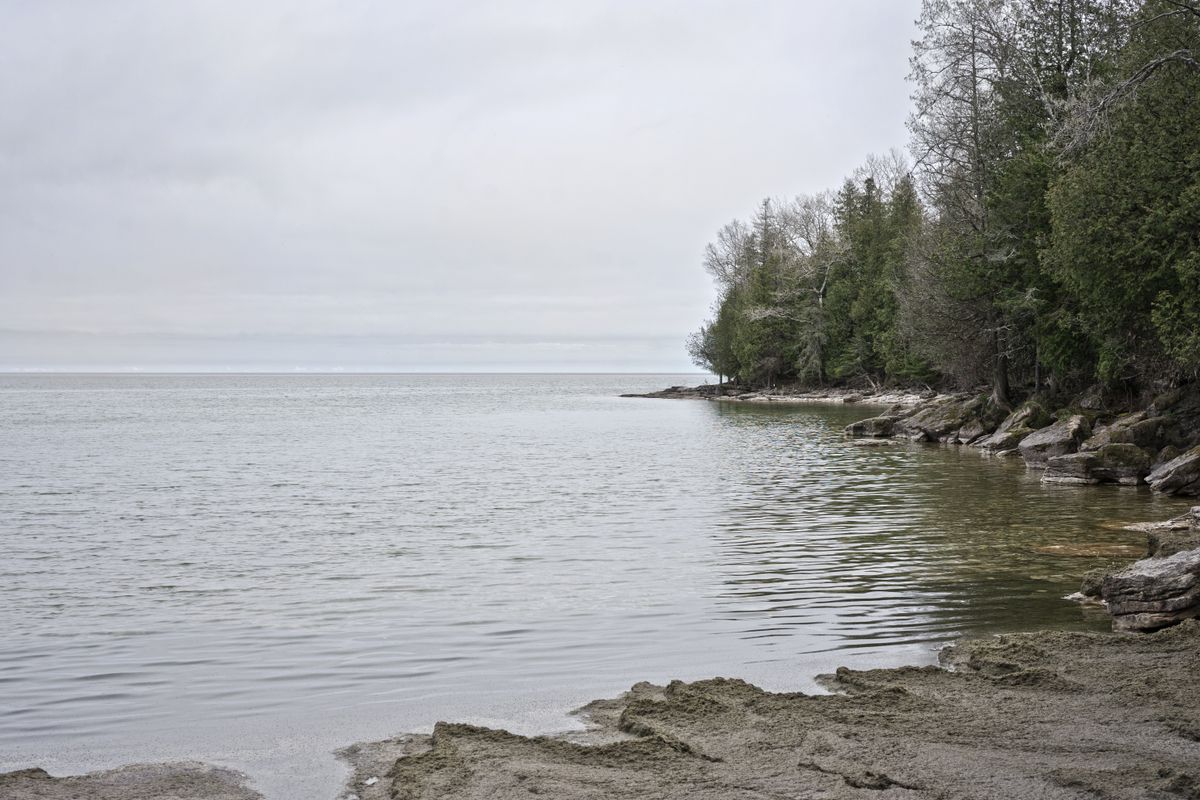

Indiana Dunes National Park is not the place anyone pictures when they hear the word steelhead. The park is 15,000 acres of sand dunes, oak savanna, bog, and beach along the southern shore of Lake Michigan, wedged between steel mills and commuter rail stations in the industrial crescent of northwest Indiana. The nearest major city is Chicago, 60 miles west on I-90. The nearest fishing town is Michigan City, a harbor community of 30,000 people at the eastern end of the park where Trail Creek dumps into Lake Michigan through a concrete channel flanked by a public pier and a strip of bait shops.
None of that sounds like steelhead country. And that's exactly what makes this fishery worth your attention.

The tributaries that flow through Indiana Dunes and the surrounding Porter and LaPorte County landscape into Lake Michigan hold legitimate steelhead runs, Skamania summer-run fish and Michigan-strain winter-run fish that the Indiana Department of Natural Resources has been stocking since the early 1970s. These are real steelhead. Not holdover stockers sitting in a tailwater. Chrome-sided, Lake Michigan fish that average 8 to 12 pounds, fight like freight trains in creeks you can throw a rock across, and have produced an Indiana state record of 26.62 pounds from Trail Creek. The same species, the same genetics, the same fight as the steelhead that draw thousands of anglers to Michigan's Pere Marquette River, just in a setting that looks more like a suburb than a wilderness.
Indiana's Dunes is one of the few places in North America where you can catch steelhead in all 12 months of the year. That's not a typo. Skamania steelhead, a summer-run strain originally developed from Washington's Washougal River stock, start pushing into Indiana's tributaries by mid-June. They overlap with the fall chinook and coho salmon runs in September and October. Michigan-strain winter steelhead follow from November through March. By the time the last winter fish drop back to the lake in April, the early Skamania are already staging again. There is no off-season.
The Tributaries, Small Water, Big Fish
The fishing at Indiana Dunes isn't on Lake Michigan itself. It's in the network of small tributaries, creeks, ditches, and channelized rivers, that flow through the park and the surrounding communities into the lake. These streams receive stocked steelhead and salmon from the Indiana DNR, and when the fish run, they stack into water that would feel undersized for a 14-inch brown trout. An 8-pound steelhead in a creek 20 feet wide and 2 feet deep is a genuinely surreal experience the first time you see it.
Trail Creek, The Main Event
Trail Creek is the primary steelhead tributary in the Indiana Dunes region and one of the best steelhead streams in the entire Great Lakes system for its size. The creek is roughly 25 miles long, meandering north through LaPorte County farmland and the outskirts of Michigan City before entering Lake Michigan at the Michigan City harbor. The creek produced Indiana's state-record steelhead, 26.62 pounds, caught by Evan Nicholson in 1999, and continues to deliver fish in the 8 to 15-pound range with regularity.
Trail Creek is micro-steelheading at its most concentrated. Average depth is about two feet. The current is slow by steelhead-stream standards, more like a Midwest warm-water creek than a Pacific Northwest freestone river. The bottom is a mix of gravel, sand, and clay that stains the water tea-colored after rain, with visibility dropping to three or four feet. The banks are lined with a mix of forest, backyards, city parks, and the occasional parking lot. You will catch steelhead within sight of a fire station. You will fight fish under highway bridges. This is not wilderness fishing, and it makes no apology for that fact.
Access points are numerous and well-established: Hansen Park, Winding Creek Cove, Fire Station #2, Robert Peo Public Access, Karwick Nature Park, the U.S. 35 bridge, Trail Creek Forks, Johnson Road, and Creek Ridge Park all provide public water. There is private land along Trail Creek, and it is illegal in Indiana to wade through posted property, check signage and respect boundaries.
The best fishing on Trail Creek happens 2 to 3 days after a good rain. The fish push upstream on rising water, the clay-stained flow provides cover, and the steelhead settle into the deeper holes and behind any structure that breaks the current. Weekends during the peak Skamania run (late July through September) are crowded, serious anglers fish weekdays.
Salt Creek, The Sleeper
Salt Creek is a tributary of the Little Calumet River that runs through Porter County, including portions now within Indiana Dunes National Park boundaries. The Indiana DNR stocks Salt Creek with steelhead, chinook salmon, and coho salmon, creating runs that mirror Trail Creek on a slightly smaller scale.
The Salt Creek Public Fishing Area, 75 acres of public access, provides the primary entry point. The creek also courses through Imagination Glen Park and Havel Hollow, where both the fishing and the scenery are worth the trip. The Chustak Public Fishing Area adds another 76 acres of access to Salt Creek downstream.
Salt Creek doesn't get the pressure that Trail Creek does. The fish are the same, Skamania steelhead pushing upstream from Lake Michigan on seasonal runs, but the crowds are smaller and the water feels more intimate. If Trail Creek is the headliner, Salt Creek is the opening act that sometimes steals the show.
The Little Calumet River and Burns Ditch
The East Branch of the Little Calumet River is another DNR-stocked steelhead tributary, flowing through the heart of the national park's eastern section. Burns Ditch (Burns Waterway) is the man-made channel that connects the Little Calumet system to Lake Michigan at Portage, and it serves as the highway that steelhead and salmon use to access the Little Calumet drainage.
The Portage Lakefront and Riverwalk, a national park facility with a fishing pier, breakwater, pavilion, and restrooms, provides 24-hour access for anglers at the Burns Ditch outlet. This is where the Lake Michigan fishery and the tributary fishery overlap: you can fish the breakwater for lake-run fish staging at the mouth, then walk upstream to intercept steelhead pushing into the Little Calumet system.
The Heron Rookery section of the park provides access to the Little Calumet River in a more natural setting, forested bottomland where Great Blue Herons nest in the canopy and steelhead hold in the pools below. It's the most scenic fishing the park offers, and the least crowded.
Kintzele Ditch and Dunes Creek
These smaller tributaries within and near the park hold warmwater species, largemouth bass, bluegill, channel catfish, rather than steelhead. They're fishable and fun on a light rod with Woolly Buggers and poppers, but they're not why you're here. The steelhead game is Trail Creek, Salt Creek, and the Little Calumet system.
Great Lakes Steelhead on the Fly, This Is Not West Coast Fishing
If you've fly fished for steelhead on the West Coast, swinging intruders on a spey rod through big water on the Olympic Peninsula or the North Cascades, forget everything you know. Great Lakes steelhead fishing is a fundamentally different discipline. The rivers are smaller. The flows are slower. The fish hold in different water. And the techniques that catch them bear almost no resemblance to the classic swing-and-step approach of Pacific Northwest steelheading.
Great Lakes steelhead are nymph-fished. Period. The vast majority of fly-caught Great Lakes steelhead, including virtually every fish taken from Indiana's tributaries, are caught on indicator rigs drifted through holding water. You're not swinging flies across broad tailouts hoping for a grab. You're reading a two-foot-deep pool behind a fallen tree, setting a yarn indicator or Thingamabobber at the right depth, adding enough split shot to tick the bottom, and dead-drifting an egg pattern or nymph through the strike zone at the speed of the current.
The setup is straightforward: a 9 to 10-foot rod in 7 or 8-weight, a floating line, a long leader (9 to 12 feet), an indicator, split shot, and a two-fly rig. The classic Great Lakes rig runs an egg pattern as the point fly with a beadhead nymph dropped 18 to 24 inches off the bend. Some anglers reverse it, nymph on point, egg on the dropper, to make color changes easier. Either way, the presentation is a drag-free dead drift through water where you believe fish are holding.
The key skill isn't casting, you're rarely throwing more than 30 feet, and roll casts handle most situations on these small tributaries. The key skill is reading water and managing drift. Great Lakes steelhead in small tributaries hold in soft water: the insides of bends, behind boulders and logs, in the deepest slots of otherwise shallow runs, in the tail-outs of pools where the current slows before the next riffle. They're resting on their upstream migration, and they settle into the gentlest current they can find. Your drift has to put the fly in front of them at their depth, at the speed of the natural current, without drag. Mending is everything.
The Fly Box, What Actually Catches Great Lakes Steelhead
The fly selection for Indiana Dunes steelhead is distinctly Great Lakes. These are not the patterns you'd fish on a Pacific Northwest river. West Coast spey flies, Hoh Bo Speys, intruders, big articulated streamers meant to be swung on tips, are designed for a different game in different water. Here, the flies are small, the colors are specific, and the egg-pattern game is an art form unto itself.
Egg Patterns, The Foundation
Egg patterns are the single most productive category for Great Lakes steelhead, and the variety is staggering. Unlike Western steelhead fishing where egg patterns are an afterthought, Great Lakes steelheaders have turned egg imitation into a science:
Glo Bugs in every color imaginable, chartreuse, Oregon cheese (a pale peachy-orange that is the single most productive egg color in the Great Lakes), peach, pink, white, flame, and combinations. Sizes #8-12. The Glo Bug is the granddaddy of Great Lakes egg patterns and still produces as well as anything.
Nuke Eggs, a foam-bodied egg pattern with a translucent veil that gives it a realistic, just-expelled look. Orange with a white veil is the standard, but carry them in chartreuse and peach too. Sizes #8-10. The Nuke Egg has become the default point fly on indicator rigs across the Great Lakes.
Sucker Spawn, THE signature Great Lakes pattern. Sucker spawn imitate the clumpy, multi-egg masses that suckers deposit in tributaries during spring. They're tied with angora yarn or McFly Foam in loose, shaggy clumps that look nothing like a single trout egg and everything like what steelhead actually see drifting through the current. Pink, white, cream, and chartreuse are the standard colors. Size #10-12. If you fish one fly pattern for Great Lakes steelhead, fish a sucker spawn.
Blood Dot Eggs, a two-tone egg pattern with a contrasting dot of color in the center, imitating a fertilized egg. Light orange body with a fluorescent orange dot is Jeff Blood's original recipe. Sizes #10-12.
Estaz Eggs, tied with Estaz or Crystal Chenille for a sparkly, translucent look. Pink, peach, Oregon cheese. The flash catches attention in stained water.
Crystal Meth, yes, that's really what it's called. A Crystal Flash egg pattern that sparkles like nothing else in the fly box. It's a Great Lakes original and it catches fish that have refused everything else. Chartreuse and pink are the go-to colors.
Nymphs, The Second Fly
The nymph on a Great Lakes steelhead rig is typically the dropper, the second fly below the egg pattern, running 18 to 24 inches deeper. Standard trout nymphs work, but the best producers are tied heavier and in darker colors than what you'd fish for resident trout:
Pheasant Tail Nymphs (#12-16), the universal nymph. Works everywhere, including Great Lakes tributaries. A beadhead version in #14 is the default dropper fly.
Hare's Ear Nymphs (#10-14), buggy, impressionistic, effective. The gold-bead version in #12 is a Great Lakes staple.
Prince Nymphs (#10-14), the white biots and peacock herl body give this pattern visibility in stained water that subtler nymphs lack.
Copper Johns (#12-16), heavy, flashy, and they sink fast. Perfect for getting into the strike zone quickly in deeper pools.
Black Stonefly Nymphs (#8-12), Great Lakes tributaries have legitimate stonefly populations, and the big black stones are a primary food source for steelhead holding in riffled water. Rubber-leg versions and the Black Wiggle Stone (articulated) are particularly effective.
Hex Nymphs (#6-10), Hexagenia limbata, the giant burrowing mayfly, is one of the Great Lakes' signature insects. The nymphs are huge, size 6 is not oversized, and steelhead eat them readily. These aren't available in every tying guide, but they belong in your box.
Spring Wigglers (#10-14), a regional Great Lakes pattern imitating the larval stage of the Hexagenia mayfly. Tied on light wire hooks with soft, wiggly materials. When the big Hex hatch comes off in summer, steelhead that are still in the system will eat a Stimulator (#8-10) dead-drifted through the riffles, the closest thing to a classic dry-fly steelhead experience this fishery offers.
Zebra Midges (#16-20), don't overlook them. When steelhead get finicky in low, clear winter water, a tiny midge dropper behind an egg pattern can be the difference between a skunk and a fish.
San Juan Worms (#10-14) in red and pink, steelhead eat worms. It's not glamorous, but it works, especially after rain when real worms wash into the creeks.
Streamers, When Conditions Allow
Streamer fishing is the minority approach on Indiana's small tributaries, but it has its moments. When water is up and stained after heavy rain, a streamer stripped through the deeper pools can trigger reaction strikes from aggressive fish:
Woolly Buggers (#4-8) in black, olive, and the egg-sucking leech variation (black body with a fluorescent egg head) are the go-to streamers. The Egg-Sucking Leech can be dead-drifted under an indicator or stripped, it's the most versatile streamer pattern in the Great Lakes steelhead arsenal.
Clouser Minnows (#2-6) in chartreuse-and-white or all-white, imitate the emerald shiners and other baitfish that steelhead fed on in Lake Michigan. Effective stripped through deeper runs, especially for fresh fish that haven't been in the tributary long.
Muddler Minnows (#4-8), a sculpin imitation that works swung through current or dead-drifted along the bottom. The deer-hair head gives it a unique action.
The Seasonal Calendar, When to Fish What
Summer: Skamania Season (June through September)
The Skamania steelhead run is what makes Indiana's tributaries unique. These are summer-run fish, a strain that enters freshwater in warm weather when most people associate steelhead with rain, cold, and misery. The first Skamania show up in Indiana's tributaries by mid-June, with numbers building through July and peaking in late July through September.
Skamania steelhead are hot fish. Fresh from Lake Michigan, chrome-bright, and entering streams where the water temperature can hit 70°F, they fight with an intensity that winter steelhead can't match. They jump. They run. They shake their heads with a violence that pops 3X tippet like thread. An 8-pound Skamania in Trail Creek during August is one of the most exciting fish-on-a-fly-rod experiences available anywhere in the Midwest.
Fish egg patterns in bright colors during summer, chartreuse, pink, and Oregon cheese are the top producers. Skamania are often described as "quick hitters", they grab the fly and spit it fast, so stay alert on the indicator. The water is warm enough for wet wading on summer days, which means you can fish in shorts and wading boots, catch steelhead, and be at a Lake Michigan beach by afternoon. Try doing that on any other steelhead river in America.
Fall: Salmon and Steelhead Overlap (September through November)
The fall run stacks species on top of each other. Chinook (king) salmon enter the tributaries in September, followed by coho (silver) salmon through October. Skamania steelhead are still in the system, and Michigan-strain winter steelhead begin arriving by November. On a good October day at Trail Creek, you could encounter all four species in the same pool.
Chinook salmon average 15 to 25 pounds and will occasionally grab an egg pattern or Clouser Minnow stripped through their holding lies, though they're targeted more by conventional anglers than fly fishers. Coho are more fly-friendly, 6 to 12 pounds of aggressive fish that will chase streamers and eat egg patterns with enthusiasm.
During fall, egg patterns in natural colors (peach, Oregon cheese, pale pink) become more productive as actual salmon eggs fill the tributaries. The steelhead shift to feeding mode, gorging on the real eggs drifting downstream from spawning salmon. A Glo Bug in Oregon cheese drifted behind a pod of spawning chinook is as close to a guaranteed steelhead as fly fishing gets.
Winter: Michigan-Strain Steelhead (November through March)
The winter run is the traditional Great Lakes steelhead season, and it's when the most dedicated anglers show up. Michigan-strain steelhead are cold-water fish, they enter the tributaries as water temperatures drop into the 40s and continue running through water that's barely above freezing. Ice forms on your guides. Your fingers stop working by the third drift. And when the indicator dips and you set the hook into a 10-pound chrome steelhead in January, every frozen moment is worth it.
Winter steelhead fishing on Indiana's tributaries requires patience, cold tolerance, and attention to water conditions. The fish run on rising water after rain or snowmelt, and they hold in the deepest, slowest pools they can find. Fish slowly. Set your indicator deep. Use smaller, more natural egg colors, peach, light orange, white. Add a Zebra Midge or small Pheasant Tail as a dropper. The winter fish are less aggressive than Skamania, they want the fly right on their nose, drifting naturally, at exactly the right speed.
Winter is also when the crowds disappear. If you're willing to fish in 25°F weather with ice in the guides, you'll have Trail Creek largely to yourself. That solitude, combined with the quality of the fish, is why the winter-run loyalists keep coming back.
Spring: The Transition (March through May)
Spring steelhead fishing bridges the gap between winter and summer runs. The last Michigan-strain fish are moving through, spawning in the gravelly sections of the tributaries, and the early Skamania are staging in the lake. Water levels fluctuate with snowmelt and spring rain, creating windows of excellent fishing between periods of blown-out, unfishable conditions.
Spring is prime time for sucker spawn patterns. Real suckers spawn in the tributaries in April and May, depositing clumpy egg masses that steelhead eat aggressively. A pink or white sucker spawn drifted through a run in April is absolutely deadly.
This is also when small-stream nymphing is at its best. The tributaries are running higher than normal, pushing fish into defined holding lies, and the hatches of black stoneflies, caddis, and midges give nymph patterns legitimacy beyond just "dropper behind an egg." A black stonefly nymph in #10 fished tight to the bottom through a fast run can produce when egg patterns go quiet. When steelhead are keyed on emerging caddis, an Elk Hair Caddis (#14-16) skated across the surface can draw explosive strikes from aggressive spring fish, one of the rare dry-fly opportunities in Great Lakes steelheading. Midge clusters are another spring constant; a Griffith's Gnat (#18-20) trailing behind a Stimulator (#10-12) as a stonefly-and-midge dry-dropper rig is an unconventional approach that works when the water drops and clears.
Gear for Indiana Dunes Steelhead
Rod: 9 to 10-foot, 7-weight is the sweet spot. It handles the indicator-and-shot rigs, has enough backbone to fight 10-pound fish in tight quarters, and isn't overkill for the small water you're fishing. Some anglers prefer an 8-weight for more lifting power when fish get into logjams, which happens often on Trail Creek. If you own a 6-weight and only a 6-weight, you can make it work for summer Skamania, just expect long fights and lost fish.
Reel: A sealed-drag reel with a smooth disc drag and at least 100 yards of backing. Great Lakes steelhead run. In small creeks, they don't have far to go, but a hot Skamania in August will strip 50 yards of line before you register what's happening.
Line: Weight-forward floating. You don't need sink tips for indicator nymphing on 2-foot-deep creeks. The split shot handles depth.
Leader and Tippet: 9-foot tapered leader to 2X or 3X. Fluorocarbon tippet is essential, the water clarity on non-rain days is good enough for steelhead to see mono. Run 2X to the indicator, then step down to 3X for the tippet section. Go to 4X only in very low, very clear winter conditions, and prepare to lose fish in the structure.
Indicator: Thingamabobber, yarn indicator, or New Zealand-style wool indicator. Set the depth so your point fly is ticking the bottom, you want occasional snags. If you're not losing flies, you're fishing too high.
Split Shot: Carry a range of sizes. Removable shot in BB to #4 sizes lets you adjust weight as you move between pools of different depths and speeds.
Wading: Chest waders and studded boots for fall, winter, and spring. The clay-and-sand bottom is slippery, and the water is cold enough to matter from October through May. Wet-wade with wading boots in summer, the Skamania run coincides with 80°F air temperatures.
Net: Carry a rubber-mesh net with a hoop big enough for a 28-inch fish. These steelhead are too big and too valuable (as repeat spawners) to beach or tail by hand.
Regulations
All anglers need an Indiana fishing license plus a trout and salmon stamp to fish for steelhead and salmon in Indiana's Lake Michigan tributaries. Non-resident annual licenses are $60; the trout/salmon stamp is $11 additional. One-day licenses ($15 non-resident) include the stamp.
The daily bag limit for trout and salmon combined is 5 fish with a 14-inch minimum size. All trout and salmon taken from Lake Michigan tributaries must be hooked in the mouth, foul-hooked fish must be released. Within national park boundaries, fishing is hook-and-line only, closely attended. No chumming, no using fish eggs or roe as bait, no digging for bait. Effectively, the NPS regulations make the park sections fly-and-lure-only water.
Check the Indiana DNR website for current season dates and any emergency closures before each trip. Regulations can change during the season based on run strength and water conditions.
Michigan City, The Base Camp
Michigan City is the logical base for fishing Indiana Dunes steelhead. The town sits at the mouth of Trail Creek, putting you within walking distance of the most productive steelhead water in the region. It's also the eastern anchor of the national park, with the park's beaches, dunes, and trails accessible in minutes.
The town has the infrastructure that anglers need, tackle shops that stock steelhead-specific gear and can report current creek conditions, restaurants, motels, and the kind of working-harbor character that fishing towns develop over decades. The Michigan City pier and lighthouse are iconic Lake Michigan landmarks, and watching the sun set over the lake after a day of steelhead fishing is one of the quiet pleasures of the trip.
For a broader exploration, the national park stretches 15 miles along the lakeshore to the west. The Indiana Dunes Visitor Center in Porter is worth a stop for maps and trail information. The dunes themselves, some rising 200 feet above the lake, are the park's signature feature and worth hiking even if you're here primarily for the fishing.
The South Shore Line commuter rail connects Michigan City to downtown Chicago in about 90 minutes, which means this steelhead fishery is accessible to anyone with a train ticket and a rod tube. An hour and a half from the Loop to chrome-bright steelhead in a creek behind a fire station. No other national park steelhead fishery in America can make that claim.
The Honest Assessment
Indiana Dunes is not Yellowstone. It's not Glacier. The tributaries are small, frequently muddy, and run through landscapes that include strip malls and highway overpasses. You will see steel mills on the horizon. You will hear freight trains while fighting fish. The aesthetic is industrial Midwest, not mountain West.
But the fish don't care about aesthetics. An 8-pound Skamania steelhead in Trail Creek fights exactly as hard as an 8-pound steelhead in any river in Michigan or Oregon. The chrome is just as bright. The jumps are just as violent. The take, that sudden dip of the indicator that sends electricity through your hands, feels exactly the same whether you're standing in a mountain canyon or a city park.
Indiana Dunes offers something that almost no other national park fishery can match: accessibility. You don't need a bush plane. You don't need a drift boat. You don't need a week off work. You can take the train from Chicago on a Saturday morning, fish Trail Creek all day, and be back in the city for dinner. You can fish 12 months a year, in every season, for fish that legitimately qualify as one of the greatest freshwater gamefish in North America.
The Pere Marquette is a better river. Nobody disputes that. The steelhead fishing at Voyageurs is set against a more dramatic landscape. The trout fishing at New River Gorge is more conventionally scenic. But none of those fisheries let you catch steelhead on a fly rod in July, in shorts, an hour from a major American city, in a national park you can reach by commuter rail.
That's the Indiana Dunes proposition. It's not pretty. It's not remote. It's not exclusive. But it is real, and the steelhead are chrome, and the sucker spawn is pink, and the indicator just went down.