 Fish
Fish Fire
Fire Hike
Hike Bird
Bird

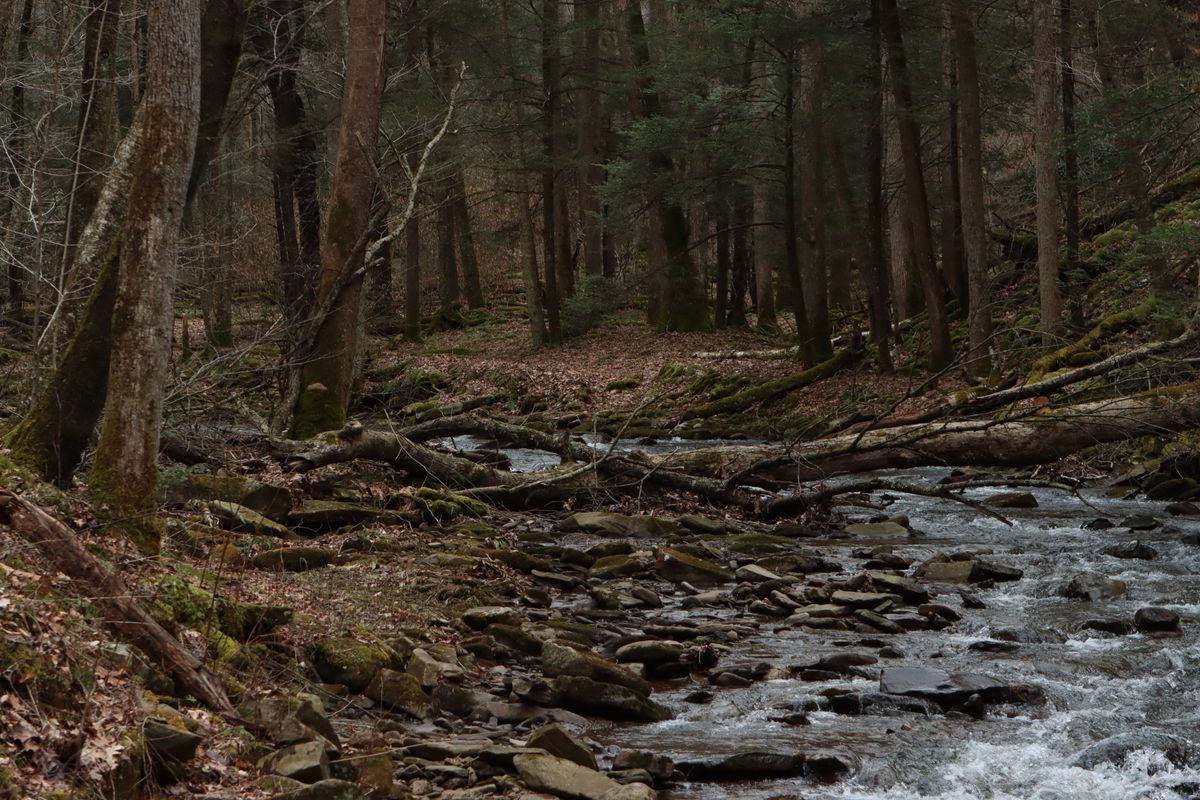

Forget everything you know about national park fly fishing. Forget the delicate dry-fly presentations, the 5X tippet, the reverent hush on the riverbank. New River Gorge doesn't do reverence. This is a place where you tie on a foam popper the size of your thumb, launch it against a boulder in the middle of a Class III rapid, and watch a two-pound smallmouth bass blow up on it like a depth charge. Then you do it again. And again. For miles and miles of river, through one of the deepest gorges east of the Mississippi, under one of the longest steel arch bridges in the world, past ghost towns where coal barons once shipped four million tons of black rock a year, on a river so old that geologists argue about whether it predates the Appalachian Mountains themselves.
New River Gorge became America's 63rd national park on December 27, 2020, the newest in the system. West Virginia had never had a national park before, and the designation changed the old New River Gorge National River (established 1978) into something bigger. But the fishing didn't change. The smallmouth bass don't care about the sign at the visitor center. They've been here, eating crawdads and hellgrammites in these rock gardens, long before the coal companies came, long before the railroad punched through the gorge, and long before anyone thought to call this place a park.
If you've been reading this series and expecting another trout guide, this is your plot twist. New River Gorge is a warmwater fishery. The star is the smallmouth bass, Micropterus dolomieu, and it might be the most fun fish you've ever caught on a fly rod.
The River Nobody Named Right
The New River is not new. It is, by most geological estimates, one of the oldest rivers in North America, possibly one of the five oldest in the world. The name is a historical accident, likely given by early Virginia surveyors who stumbled onto it and assumed they'd found something undiscovered. In reality, the New River may have been flowing before the Appalachian Mountains existed in their current form. As the mountains rose, the river cut through them, carving the gorge deeper and deeper over hundreds of millions of years.
The result is dramatic. The gorge drops over 1,000 feet from rim to river through 53 miles of park boundary, from just downstream of Hinton to Hawks Nest State Park near Ansted. The walls are layered sandstone and shale, covered in hardwood forest, oak, hickory, tulip poplar, rhododendron, and the river itself is big water. Not Western-big like the Missouri or the Yellowstone, but Appalachian-big: wide, rocky, broken by rapids and shoals, with deep green pools behind every boulder field.
And here's the other thing that messes with people: the New River flows north. Most East Coast rivers run east or southeast to the Atlantic. The New starts in the mountains of North Carolina, flows north through Virginia, and enters West Virginia heading generally northward until it meets the Gauley River at Gauley Bridge to form the Kanawha. That northward flow is part of what makes geologists think it's so old, it predates the current drainage patterns of the Appalachians.
The Fish, Smallmouth Bass and Friends
Smallmouth Bass
This is the fish. The reason you're here. Smallmouth bass in the New River average 12 to 16 inches, with 18-inch fish common enough to keep things interesting and genuine 20-inch trophies taken every season. A guide on the river described landing one "just a hair under 20 inches" on a cicada pattern during a summer float, and that's not an outlier story.
Smallmouth are everything trout aren't. They're aggressive. They hit hard. They fight dirty, head-shaking, jumping, diving for rocks. They'll eat a topwater fly in the middle of the day, in bright sun, in water so clear you can see them tracking it from ten feet away. They're not selective the way a Brown Drake sipping brown trout on a spring creek is selective. They either want it or they don't, and most of the time, they want it.
The New River's smallmouth population is healthy and self-sustaining. The river isn't stocked with bass, these are wild fish, reproducing naturally in the same gravel beds and boulder gardens they've used for generations. A catch-and-release zone protects black bass from the I-64 bridge at Sandstone 12 miles downstream to Grandview Sandbar, and that regulation has helped maintain quality fishing throughout the gorge.
The Supporting Cast
Smallmouth get the headlines, but the New River holds a deep roster. Rock bass are everywhere, smaller, scrappier, and willing to eat anything. They're fun on a 3-weight and they'll keep your rod bent between smallmouth encounters. Channel catfish and flathead catfish inhabit the deeper pools, and while they're not traditional fly-rod targets, a weighted Woolly Bugger drifted along the bottom will find them. Walleye move through in spring and fall, especially in the deeper sections upstream near Hinton. Muskellunge, the apex predator of the river, lurk in the deepest pools and eddies, with strict regulations (one per day, protected slot limits, seasonal restrictions) keeping the population stable. And if you want to get weird, there are carp tailing on the sandy flats in the slower sections, legitimate sight-fishing targets for anglers who want to test their saltwater skills in freshwater.
Trout in the Tributaries
The New River itself is too warm for trout, but its tributaries are a different story. The West Virginia Division of Natural Resources stocks Meadow Creek, Glade Creek, Dunloup Creek, and Mill Creek with rainbow, brown, brook, and golden trout each spring. These small mountain streams inside the park boundary offer Shenandoah-style fishing, tight canopy, short casts, small dry flies, as a contrast to the main river's bass action. If you want a trout fix during your gorge trip, Glade Creek at Babcock State Park is the local favorite.
The Fly Box, What Eats What
Smallmouth bass are not trout. You don't need seventeen different mayfly patterns in three stages of emergence. You need flies that look like the things smallmouth eat: crawdads, hellgrammites, baitfish, and bugs that fall in the water. Here's what works.
Topwater, The Most Fun You'll Have
This is why people fly fish for smallmouth. The topwater bite on the New River is violent and addictive.
Poppers are the classic. A size 4-6 foam or cork-bodied popper with rubber legs, chartreuse, yellow, black, or white, cast tight to a boulder or undercut bank and given a sharp strip. The pop and gurgle brings them running. The take is an explosion. Sneaky Pete-style sliders work when fish want something subtler, the tapered nose pushes water without the loud pop, and sometimes that's what triggers a commit. If you've tied Miyawaki Beach Poppers for saltwater, the same design principles apply here, just scale down to size 4-6.
Deer hair bugs, bass bugs, Dahlberg Divers, mouse patterns, push water and create commotion. The Dahlberg Diver is especially good because it pops on the strip and then dives on the pause, covering two feeding zones with one fly.
Chubby Chernobyls and big Stimulators work as attractor dries when the topwater bite is on but poppers feel too aggressive. Dead-drift them through the tailouts of pools and along foam lines.
The topwater window on the New River is wider than you'd expect. Early morning is prime, but unlike many bass rivers, the surface bite often dies mid-morning and then comes back in the heat of the afternoon, especially during cicada season (late May through June), when bass are keyed in on the big bugs crashing into the water from overhanging trees.
Subsurface, The Workhorses
Clouser Minnow, This is the fly. Bob Clouser designed it on the Susquehanna River specifically for smallmouth bass, and it remains the single most effective smallmouth pattern ever tied. Chartreuse and white is the standard, but don't sleep on rust/orange (crawdad imitation), olive/white (sculpin), or all-black (hellgrammite/leech). Sizes 2-6 with lead or tungsten eyes. If you could only bring one fly to the New River, this is it.
Crawdad patterns, Smallmouth eat crawdads the way trout eat mayflies: constantly. Whitlock's Near Nuff Crayfish, Clouser Crayfish, and various articulated craw patterns in brown/orange or olive/tan, sizes 2-6. Fish them on the bottom with short strips and long pauses. When a smallmouth eats a crawdad pattern, it often feels like a snag, then the snag starts moving.
Hellgrammite imitations, Hellgrammites (dobsonfly larvae) are the other major protein source in the New River. Big, ugly nymphs in black or dark brown, sizes 2-6, fished on the bottom in the rocky runs. Woolly Buggers in black serve double duty as hellgrammite and leech imitations. The real insects can be 3-4 inches long, so don't be afraid to go big.
Muddler Minnow, Sculpin imitation that works swung through current or stripped along boulder-studded banks. The spun deer-hair head gives it a unique action that smallmouth love.
Woolly Bugger, Olive, black, or brown in sizes 4-8. The universal subsurface fly. Effective stripped, dead-drifted, or swung. If the Clouser is the #1 smallmouth fly, the Bugger is a close #2.
Lefty's Deceiver, For those deeper pools where you need a baitfish profile. White or chartreuse/white, sizes 2-4, stripped with erratic pauses.
Nymphs, Yes, Really
When smallmouth aren't eating streamers or topwater, they'll pick nymphs off the bottom just like trout. Pheasant Tail Nymphs, Hare's Ear Nymphs, Prince Nymphs, and Copper Johns in sizes 8-12 all produce when drifted through the riffles and runs. A San Juan Worm in red or pink is deadly after rain when the water is stained. And a big stonefly nymph (size 6-8) is a year-round producer, since the New River has excellent stonefly populations.
Gear for the Gorge
Rods
A 6-weight, 9-foot rod is the all-around choice for the New River. It handles poppers and Clousers, fights 18-inch smallmouth without overpowering them, and can punch into the wind that funnels through the gorge. Some guides prefer a 7- or 8-weight for throwing bigger streamers and fighting fish out of heavy current, but a 6 does everything. Bring a 3- or 4-weight if you plan to fish the trout tributaries, you'll want the lighter rod for the small-stream work with Elk Hair Caddis, Parachute Adams, and Griffith's Gnats on Glade or Meadow Creek.
Lines and Leaders
Floating line covers 80% of the fishing. Add a sink-tip line (or a sinking leader) for getting Clousers and crayfish patterns down in the deeper pools during summer, when bass hold in 6-10 feet of water to escape the heat. A 7.5-foot leader tapered to 10-12 pound fluorocarbon tippet is standard, you're not fooling PhD brown trout here. Smallmouth don't care about tippet diameter. They care about presentation angle, fly speed, and whether the thing looks alive.
Other Essentials
Wading boots with felt or rubber soles (the river rocks are slippery sandstone). A wading staff if you're going to wade, the current is deceptively strong in places. Polarized sunglasses are not optional; sight-fishing to smallmouth holding behind boulders is half the game. And sunscreen, the gorge faces south in many sections and reflects light off the water.
Fishing the Gorge, Section by Section
The 53 miles of New River within the park boundary fish very differently depending on where you are. The character changes as the gorge deepens and the gradient increases downstream.
The Upper Gorge: Hinton to Grandview Sandbar
This is the mellower section, wider river, gentler gradient, more agricultural land on the benches above the gorge. The fishing is good but not as concentrated as the lower gorge. Sandstone Falls, near the upstream park boundary, is a dramatic 1,500-foot-wide waterfall (the largest on the New River) that creates excellent habitat above and below. The catch-and-release zone from the I-64 bridge downstream to Grandview Sandbar protects 12 miles of quality smallmouth water.
Access: Tug Creek Beach, Brooks Falls, Hellems Beach, Sandstone Falls (via River Road from Hinton), Meadow Creek, McCreery, Grandview Sandbar.
Float: Hinton to Brooks Falls is about 7 miles of mellow Class I-II water, good for less experienced oarsmen and a solid half-day fish.
The Middle Gorge: Grandview to Thurmond
The gorge starts to deepen here. The rapids pick up (Class II-III), the access gets harder, and the fishing gets better. This section has excellent boulder gardens and deep pools between the shoals, prime smallmouth habitat. The Grandview overlook, 1,400 feet above the river, gives you a sense of the scale before you drop in.
Access: Glade Creek (off Hwy 41 near Prince), Mill Creek.
Float: Glade Creek to McCreery is about 8 miles with diverse habitat, eddies, rocky cover, long glides. Manageable rapids for an intermediate rower.
The Thurmond Ghost Town: Thurmond is one of the most interesting landmarks on the river. In 1910, this was a booming coal town shipping four million tons annually, more freight revenue than Cincinnati and Richmond combined. Fifteen trains a day rolled through. The Chesapeake & Ohio Railway made it one of the richest per-capita towns in West Virginia. Today, Thurmond has five permanent residents. The old depot, the bank building, the hotel foundations, they're all still there on the riverbank, slowly being reclaimed by the forest. You can pull your raft up on the gravel bar, walk through the ghost town, and then get back in and catch smallmouth in the pool below the railroad bridge. There is no better fishing-adjacent history lesson in the national park system.
The Lower Gorge: Thurmond to Fayette Station
This is the money section, and the most challenging. The gorge reaches its maximum depth here, the rapids jump to Class III-IV (and Class V in high water at spots like Upper and Lower Keeney), and the smallmouth fishing is outstanding. The river narrows, concentrating fish in the pools between rapids. The boulders are enormous, creating complex current seams and eddies that hold big fish.
Access: Dunglen, Stone Cliff (near Thurmond), Cunard, Fayette Station.
Float: Cunard to Fayette Station is the signature whitewater section, Class IV-V rapids that require professional guide services. Do not attempt this section without an outfitter unless you are an expert whitewater boater. But the fishing between the rapids is exceptional. Several outfitters, some operating since the 1970s, run multiday float-fishing trips that combine world-class whitewater with world-class bass fishing, including riverside camp meals and overnight stays on gravel bars deep in the gorge.
The Bridge: The Fayette Station section ends beneath the New River Gorge Bridge, an 876-foot-high, 3,030-foot-long steel arch that was the world's longest single-span arch bridge for 26 years after its 1977 completion. Looking up at it from river level, with a smallmouth on your line and rapids behind you, is one of those moments that doesn't need embellishment. Every October, Bridge Day brings hundreds of BASE jumpers leaping from the span. The rest of the year, it's just you, the bridge, and the fish.
When to Go
The New River is fishable year-round, but the seasons feel very different from a trout river's calendar.
April through May: Spring is transitional. Water temperatures climb through the 50s and 60s, and smallmouth move from their deep winter holes to shallower spawning areas. Pre-spawn fish are aggressive feeders, Clouser Minnows and crawdad patterns fished slow and deep produce the biggest fish of the year. The tributaries get their spring trout stocking. Dogwoods and redbuds bloom on the gorge walls. Water levels tend to be higher from spring rain, which is great for rafting but can make fishing tougher, wait for flows to drop below 8,000 CFS for the best wading and sight-fishing.
June through August: Prime time. Water temperatures in the 70s and low 80s put smallmouth in peak feeding mode. The topwater bite is on, poppers, deer hair bugs, Chubby Chernobyls. Cicada season (late May into June) triggers some of the most explosive surface feeding of the year. Early morning and late afternoon are best for topwater, but the curious thing about New River smallmouth is that the surface bite often dies mid-morning and then comes back around midday as water temps climb. Subsurface, Clousers and crayfish patterns with sink-tip lines reach fish holding in the deeper pools during the hottest part of summer. Evenings are long and warm, you can fish until 9 PM.
September through October: Fall is the sleeper season. Water temperatures drop back into the 60s, smallmouth feed aggressively to fatten up for winter, and the gorge turns colors, the hardwood canopy goes gold, orange, and red against the sandstone walls. October fishing under the bridge during Bridge Day weekend (third Saturday in October) is a surreal experience, parachutists floating down from 876 feet while you strip a Bugger through the pool below. The Gauley River, which joins the New at Gauley Bridge, runs its famous fall release season (Gauley Season) from mid-September through mid-October, six weekends of controlled dam releases that create world-class whitewater and, in the eddies between the chaos, excellent fishing.
November through March: The cold months. Smallmouth slow down but don't stop feeding. Big fish move to the deepest pools and can be caught on slowly fished Clousers and jig-style flies. This is trophy season, the biggest smallmouth of the year come from winter fishing, though the bites-per-hour rate drops dramatically. Walleye fishing improves in winter. The gorge is quiet, and the leafless trees reveal the full depth of the canyon walls.
Fayetteville, Base Camp for the Gorge
Fayetteville is to the New River Gorge what West Yellowstone is to Yellowstone National Park: the gateway town where everything starts. It's a small Appalachian town (population around 3,000) perched on the rim of the gorge, about a mile north of the Canyon Rim Visitor Center on Route 19.
The town has that particular energy of places built around outdoor adventure. The main street has outfitters, gear shops, restaurants, and breweries catering to rafters, climbers, mountain bikers, and anglers. Local outfitters run customized guided fishing trips on the New, Gauley, Elk, and Greenbrier Rivers. Several adventure resorts offer guided float-fishing trips alongside their whitewater rafting operations, a combination that's unique to this part of the country.
The food scene punches above its weight for a town this size, the kind of place where you can get a solid burger and a local craft beer after a day on the river without driving an hour. And because Fayetteville is a rafting town first, the atmosphere is young, casual, and fun. Nobody's wearing tweed or discussing the merits of Czech nymphing technique. They're sunburned, river-tired, and talking about the smallmouth that hit a popper in the shadow of the bridge.
The Gauley River Connection
You can't talk about New River Gorge fishing without mentioning the Gauley River, which joins the New at Gauley Bridge, just downstream of the park boundary. The Gauley is famous worldwide as a whitewater river, Gauley Season (the fall dam releases from Summersville Dam) draws paddlers from around the globe for Class V rapids like Pillow Rock and Lost Paddle.
But the Gauley also fishes. Smallmouth bass, walleye, muskellunge, and trout all inhabit the Gauley and its tributaries. The Cranberry River, Cherry River, and Williams River, all Gauley tributaries, are legitimate trout streams with native brook trout populations. The Gauley River National Recreation Area, managed by the same NPS staff as New River Gorge, adds another layer of fishing opportunity to any gorge trip.
If you're planning a week in the area, split your time: fish the New River for smallmouth, hit Glade Creek or Meadow Creek for trout, and add a day on the Gauley or one of its tributaries. The variety is remarkable for one geographic area.
Why the Gorge Is Different
Every other national park fly-fishing guide in this series is about trout. Yellowstone has its cutthroats. Glacier has its bull trout. Rocky Mountain has its greenback cutthroats. Grand Teton has the Snake River fine-spotted cutthroat. Shenandoah, the closest Appalachian comparison, has native brook trout in mountain streams. The Smokies have brookies too. Even the Everglades guide covers a different kind of reverence, sight-fishing to tarpon and snook in mangrove estuaries.
New River Gorge is none of that. It's loud. The fish hit hard. The water is big and pushy. You're floating through rapids to get to the next pool. The history is industrial, not pastoral, coal mines, not cattle ranches. The gorge is wild not because nobody ever came here, but because the people who came here (the miners, the railroaders, the timber cutters) left, and the forest grew back over their towns.
And the fishing is accessible in a way that most national park fishing isn't. You don't need a backcountry permit or a float plane or a 12-mile hike. You can drive to Fayetteville, book a guided float trip, and be catching smallmouth on poppers by 10 AM. The fish are cooperative. The guides are good. The scenery is outrageous. And at the end of the day, you're sitting on a brewery patio in Fayetteville eating a burger, not huddled in a tent at 10,000 feet eating freeze-dried pasta.
That's the New River Gorge sell: this is the national park fishery for people who want to have fun. Pure, uncomplicated, aggressive, topwater-smashing fun, in a gorge that took a river 300 million years to carve.
Go fish it.