Fish
Fish Fire
Fire Hike
Hike Bird
Bird

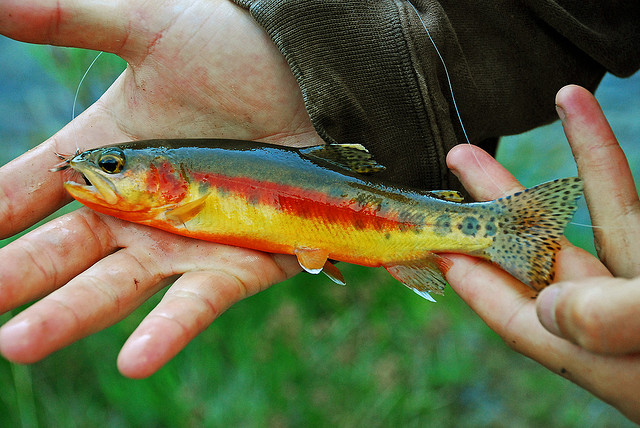

The golden trout is, by wide agreement, the most beautiful trout in North America, and one of the most rewarding to catch. Painted in brilliant gold and orange with a crimson stripe down its side, dark parr marks along its flanks, and a boldly spotted tail, it looks almost too vivid to be real. It's the state freshwater fish of California, native to a tiny corner of the high Sierra Nevada, the icy headwaters of the Kern River, and since transplanted into pristine alpine lakes and streams across the high country of the West, from the Sierra to Wyoming's Wind River Range. To catch one, you don't just go fishing; you go on an adventure, hiking or packing miles into the thin-aired high country where these jewels live. The reward is a fish of impossible color caught in some of the most spectacular scenery on the continent.
Golden trout fishing is as much about the journey as the catch. These fish live in remote, high-elevation water, often above 10,000 feet, that you reach on foot, on horseback, or not at all. But once you're there, the fishing itself is often wonderfully simple: golden trout in unpressured alpine water are frequently eager, willing biters that will readily take a small fly or lure. This guide covers where golden trout live, how to catch them, and how to plan the high-country trip that gets you to them.
Understanding the Golden Trout
The golden trout is a close relative of the rainbow trout, and it retains a jewel-like beauty found in no other North American trout: a golden-yellow body, a bright red-orange stripe along the lateral line and belly, roughly ten dark oval parr marks along the sides (which most trout lose as adults but goldens keep), white-tipped fins, and a spotted dorsal fin and tail. In their tiny native range in the high Sierra's Kern River basin, Golden Trout Creek and the South Fork Kern, they're small stream fish, often just 6 to 10 inches. But planted into rich alpine lakes, they grow much larger: fish of 1 to 3 pounds are attainable in good lakes, and the world record, from Wyoming's Wind River Range, weighed an astonishing 11 pounds.
What defines the golden trout is where it lives: the cold, clear, high-elevation lakes and streams of the alpine zone. These are pristine, often above-treeline waters, snowmelt-fed, gin-clear, and stunningly beautiful. Golden trout thrive in this harsh, cold, short-season environment, feeding on the limited insect life (mayflies, midges, caddis, and terrestrials that blow onto the water) and, in lakes, on tiny crustaceans. Their alpine home is remote and lightly fished, which is why the fish are often so willing, and why getting to them is the real challenge.
Golden Trout Lakes: A Backcountry Fishing GuideThe Adventure: Getting to Golden Trout
There's no way around it, catching a golden trout usually means earning it with a hike. Golden trout live in high-country lakes and streams reached by backpacking, day-hiking from a trailhead, or a horse-packing trip, often over many miles and thousands of feet of elevation gain. This is a fishery for people who love the mountains as much as the fish. Plan your trip like the backcountry adventure it is: research which high lakes and creeks hold goldens (state fish-planting records and maps are gold here), be ready for altitude, weather, and self-sufficiency, and treat the fishing as the cherry on top of a mountain journey. Many of the most legendary golden trout waters sit deep in wilderness areas in the Sierra, the Wind Rivers, and other Western ranges. Pack thoughtfully: a lightweight rod, a small fly or lure selection, layers for cold nights and sudden storms, sun protection for the intense high-altitude light, and plenty of water and food for the effort. Give yourself time to acclimate to the altitude, and don't try to rush a big-mileage trip in a single push, the high country rewards those who move at its pace. For many anglers, a multi-day backpacking or horse-packing trip to a chain of golden trout lakes becomes a highlight of the whole fishing year, as much about the wild places and the company as the fish themselves.
Catching Golden Trout in Their Native RangeSmall Dry Flies: The Classic Method
Golden trout are a fly angler's dream, and the classic way to catch them is on small dry flies. In their clear alpine water, goldens look up for food, mayflies, midges, caddis, ants, beetles, and other terrestrials, and a well-presented dry fly (think Adams, Elk Hair Caddis, Griffith's Gnat, small attractors, and ant/hopper patterns) will often be eagerly eaten. Because these fish are usually unpressured, they can be surprisingly willing, rising confidently to a fly drifted over them. In clear, shallow lakes and creeks, though, they can also be spooky, so a stealthy approach and a delicate presentation with light tippet pay off. Watching a golden trout tip up and sip your dry fly in a crystalline alpine pool is one of fly fishing's purest joys.
Dry-Fly Fishing for Golden TroutTenkara and Light Fly Tackle
The golden trout's small size and small alpine waters make it a perfect match for tenkara, the simple, elegant Japanese fixed-line fly method that's ideal for high-country streams and has become hugely popular for backcountry trout. A tenkara rod is light, packable, and deadly effective for dapping and drifting flies through the pockets, runs, and lake edges where goldens hold, with none of the weight and bulk of a reel and fly line. Whether you fish tenkara or a light conventional fly outfit (a 2- to 4-weight is perfect), the emphasis is on light, packable, delicate gear suited to small fish in small, clear water. It's minimalist fishing that fits a backpacking trip perfectly.
Tenkara Fly Fishing for Golden TroutSmall Spinners and Lures
You don't have to fly fish. Small spinners and spoons are excellent for golden trout, especially in lakes and larger streams, and they're a great choice for anglers who prefer spinning gear or want to cover water. Tiny inline spinners (like a small Panther Martin, Mepps, or Rooster Tail) and small casting spoons (a little Kastmaster) cast well on ultralight gear, get down to cruising fish, and trigger strikes from goldens keyed on small aquatic life. Retrieve them steadily or with a little twitch through the likely water. A compact spinning kit, an ultralight rod and a few small spinners and spoons, is light to pack and highly effective in the high country.
Fishing High-Country Lakes for Golden TroutFishing the Alpine Lakes
Many of the biggest golden trout live in high alpine lakes, and fishing them is its own game. Goldens in lakes often cruise the shallows and shorelines, especially the inlet and outlet areas, drop-offs, and along weed edges and rocky points, hunting insects and crustaceans. Watch for cruising or rising fish and cast to intercept them, a fly or small spinner placed ahead of a moving fish is deadly. Early morning and evening are prime, as is any hatch or spell of terrestrials blowing onto the water. Because alpine lakes are clear and calm, a stealthy approach and a long, light leader help enormously. The combination of a big, brightly colored golden trout and a breathtaking alpine lake basin is about as good as trout fishing gets.
Backpacking and Fishing an Alpine Golden Trout LakeTackle for Golden Trout
Keep it light and packable, you're carrying it up a mountain:
- Fly: A 2- to 4-weight rod (or a tenkara rod) with a floating line, light tippet (4X–6X), and a small box of dry flies (Adams, Elk Hair Caddis, Griffith's Gnat, ants, small hoppers) plus a few small nymphs.
- Spinning: A packable ultralight rod, a small reel with 2- to 6-pound line, and a handful of tiny inline spinners and small spoons.
- The essentials: Polarized sunglasses to spot cruising fish, a small net, and everything sized down for small fish in clear water.
Because you're backpacking, favor gear that's light, compact, and durable, a broken-down travel rod or a tenkara rod is ideal.
Reading High-Country Streams
In the small streams where native golden trout live, reading the water is a rewarding skill, and much like fishing any mountain trout stream. Golden trout hold where a small stream offers food and cover: in the deeper pools and pockets, behind rocks and current breaks, at the heads and tails of pools where current funnels insects, and under any overhanging bank or willow that provides shade and safety. Fish upstream where you can, since these fish face into the current and are less likely to see you coming from behind, and drift your fly naturally through the holding water. In tiny high-country creeks, a careful approach matters enormously, a heavy footfall or a shadow across a small clear pool can send every fish darting for cover. Take it slow, fish each likely spot, and enjoy the intimacy of picking apart a jewel-box mountain stream.
The Fight and the Table
For their size, golden trout are spirited fighters, using the cold, oxygenated alpine water to put a satisfying bend in a light rod, a big lake golden in particular can pull surprisingly hard. But the real reward isn't the fight or a meal; it's the fish itself and where you caught it. Most anglers treat golden trout, especially the fragile native-range fish, as a catch-and-release treasure to be admired, quickly photographed over the water, and released. In some well-stocked alpine lakes where regulations allow, keeping a few for a shore lunch is a classic backcountry experience, and few meals beat a fresh alpine trout cooked at 11,000 feet. But given their beauty, their fragile high-elevation populations, and the effort it took to reach them, the ethic among most golden trout anglers leans strongly toward release. Always check the regulations for the specific water you're fishing, and let the majority of these living jewels swim on.
Timing: The Short Alpine Season
The golden trout season is dictated by the mountains. High-elevation lakes and streams are locked in snow and ice for much of the year, so the fishable window is short, generally midsummer through early fall, roughly July into September, once the snow has melted enough to reach the water and the ice is off the lakes. Early in the season, high passes and trails may still be snowbound; late in the season, storms and cold return quickly at elevation. Within that window, the fishing can be excellent, with long days and eager fish. Always check current conditions, snowpack, and access before a high-country trip, and be prepared for fast-changing mountain weather any time of year.
Conservation: Protecting a Fragile Jewel
Native golden trout face real threats, chiefly hybridization with introduced rainbow trout and competition from non-native fish, along with the pressures of a warming climate on their cold, high-elevation habitat. In their tiny native Kern River range, extensive conservation efforts work to protect genetically pure populations. As an angler, handle these fish with great care, they're small and delicate, keep them wet, minimize handling, use barbless hooks, and release them quickly and gently (many anglers treat goldens, especially natives, as a catch-and-release treasure). Never move fish between waters, pack out everything, and tread lightly in the fragile alpine environment. Protecting the high country protects the golden trout.
Common Golden Trout Mistakes
- Underestimating the trip. Golden trout country is remote and high. Prepare for the hike, the altitude, and the weather, the fishing is the easy part.
- Heavy tackle. These are small fish in clear water. Go light and delicate; heavy gear and thick tippet spook them.
- Sloppy approach. Clear, calm alpine water shows your every move. Approach quietly, keep a low profile, and don't line the fish.
- Going too early or too late. The alpine season is short. Time your trip for the snow-free, ice-off window and check conditions first.
- Rough handling. Goldens are delicate jewels. Keep them wet, handle minimally, and release them with care.
Put It All Together
Catching a golden trout comes down to earning it: plan and make the hike into the high alpine lakes and streams where these fish live, bring light, packable fly or spinning tackle, and present a small dry fly, a delicate nymph, or a tiny spinner to the eager, gorgeous fish that cruise this pristine water. Time your trip for the short summer-into-fall window, approach the clear water with stealth, and handle every jewel-like fish with care. Do that, and you'll not only catch the most beautiful trout in America, you'll do it in some of the most beautiful country on earth.
The golden trout is a high-country cousin of more familiar trout. The rainbow trout is its close relative and the backbone of trout fishing across the West, and the native cutthroat trout shares much of the same wild mountain water. Add a golden trout to your list, and you've caught one of angling's true crown jewels.
Ready for the adventure of a lifetime? Do your homework before you go: use state fish-planting records to pin down which high-country lakes and creeks hold goldens, map out the trail miles and elevation gain, and check current snowpack, access, and weather so you arrive inside the short ice-off window. Put in the planning and the miles, and you'll earn your mountain jewel, the most beautiful trout in America, caught in some of the wildest country on earth.