Fish
Fish Fire
Fire Hike
Hike Bird
Bird

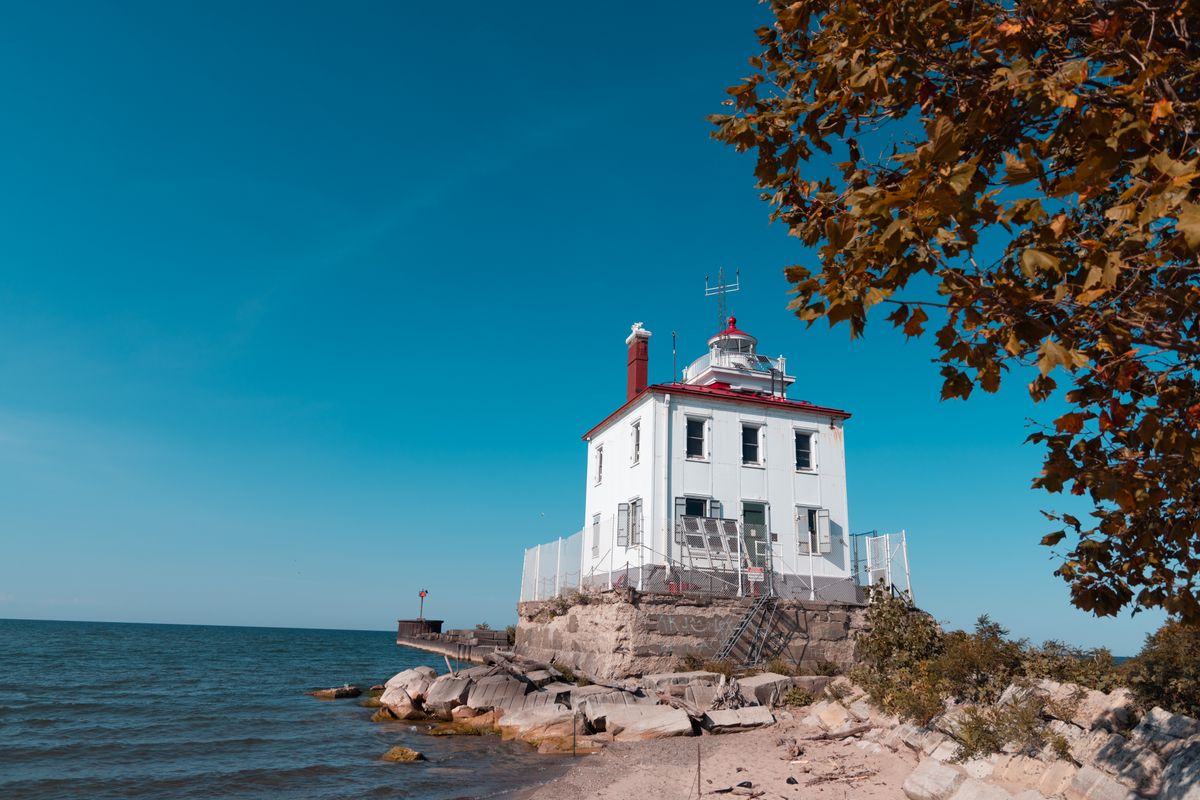

Lake Erie is the shallowest and warmest of the Great Lakes, and that warmth makes it the most productive. The western basin, the stretch from Toledo to the Bass Islands, averages just 24 feet deep and supports one of the largest walleye populations in the world. Port Clinton, sitting on the southern shore where the Portage River enters the lake, calls itself the Walleye Capital of the World, and the claim holds up: Ohio's walleye harvest routinely exceeds two million fish per year, and the 2026 outlook projects another strong season backed by excellent year-classes.
But Lake Erie isn't only walleye. The fall yellow perch fishery draws just as many boats, jumbo perch in the 10- to 14-inch range, filling coolers by the hundred. Steelhead trout run the Lake Erie tributaries from October through April, creating a world-class river fishery that locals call Steelhead Alley. Smallmouth bass cruise the rocky reefs and island shorelines from May through October. And if you don't have a boat, the piers and breakwalls that line the Ohio shore produce walleye, perch, white bass, and channel catfish within casting distance of your car.
This guide is organized by season, because Lake Erie's fishery changes completely from one quarter to the next. What works in April is useless in August, and the species you target in October are different from the ones you chase in January.
Where to Fish: The Western Basin Reef Complex and Islands
Most of Lake Erie's walleye and perch reputation is built on one place: the western basin reef complex, a 70-square-mile tangle of hard Niagara limestone reefs that rise abruptly off the bottom between the Catawba and Marblehead peninsulas and the Bass Islands. Ruggles Reef and Niagara Reef are the two biggest, and in spring they hold spawning and post-spawn walleye you can reach with a jig, this is the water people mean when they search "western basin walleye fishing." From Ruggles Reef east to Vermilion, and all around the Bass Islands and Kelleys Island, is the most consistent walleye ground on the lake.
The islands are the hub. Put-in-Bay, on South Bass Island, is the launch point for most western-basin charters and the easiest way for a first-timer to get on fish without owning a boat, see our Put-in-Bay fishing guide and the local guide directory. Kelleys Island, Marblehead, and the Catawba peninsula each put you within a short run of the reefs.
For yellow perch, the nearshore water is what matters: Vermilion, Huron, Fairport, Ashtabula, and Conneaut all stack jumbo perch in fall, fished with a crappie-rig spreader and emerald shiners over 25 to 40 feet. For the species deep-dives, read how to catch walleye and how to catch yellow perch. Shore anglers aren't shut out either, the public piers and breakwalls at Port Clinton, Huron, and Cleveland's East 55th Street give real walleye and perch access, and Pennsylvania anglers can work the Erie, PA shoreline to the east.
Spring (April through June): The Walleye Spawn and Jig Bite
Spring is when Lake Erie earns its reputation. Walleye spawn on the rocky reefs of the western basin in late March and April, and the post-spawn fish linger near the reefs through May and into early June, feeding aggressively before dispersing across the lake for summer. This is the jig bite, the most accessible and beginner-friendly walleye fishing Lake Erie offers.
Where
The walleye reefs are concentrated around the Bass Islands and Kelleys Island in the western basin. The key structure names: Niagara Reef (southwest of South Bass Island), Gull Island Shoal, Toussaint Reef, Cone Reef, and the areas around the Marblehead Peninsula. Most charter boats and private boats launch from Port Clinton, Catawba Island, Marblehead, or Huron.
The Jig Bite
Jigging for walleye is simple in concept: anchor or drift over a reef in 18 to 30 feet of water, drop a jig to the bottom, and work it with short hops and pauses. The walleye picks up the jig on the fall, the bite feels like a subtle tick or a heaviness on the line, not a hard strike. Set the hook with a firm sweep, not a violent snap.
Jigs: A 3/4-ounce or 1-ounce Bait Rigs Oddball jig or a Northland Fire-Ball jig in chartreuse, orange, or white is the standard. In heavy current or wind, go to 1 ounce to stay vertical. Tip the jig with a live emerald shiner (hooked through the lips) or a 3-inch Berkley Gulp Alive Minnow in smelt or chartreuse color.
Hair jigs and blade baits are the alternative when live bait isn't available or the fish want a different presentation. A white or chartreuse bucktail jig bounced aggressively off the bottom, or a 1/2-ounce Silver Buddy blade bait ripped and dropped vertically, triggers reaction strikes from lethargic post-spawn walleye.
Gear: A 6-foot-6 medium-light spinning rod with a fast tip paired with a 2500-size spinning reel (Shimano Stradic or Pflueger President) loaded with 10-pound Power Pro braided line and a 3-foot leader of 8-pound Seaguar fluorocarbon. Braid is essential for jigging, it transmits the subtle walleye bite directly to your hand. Monofilament stretches too much to feel the tick.
Jigging and Casting for Spring Lake Erie Walleye Tips and Tricks for Jigging Lake Erie Walleye with Hair Jigs and Blade BaitsSummer (July through September): Trolling the Open Lake
By midsummer, walleye have left the western basin reefs and scattered across the central and eastern basins in 40 to 80 feet of water, following schools of emerald shiners and gizzard shad. Jigging becomes impractical over open water, this is when trolling takes over. Summer trolling is the dominant Lake Erie technique, and most charter operations run trolling trips from July through September.
Trolling Crankbaits
The standard Lake Erie trolling spread deploys 6 to 10 rods behind the boat, each running a crankbait at a different depth and distance. The boat moves at 1.5 to 2.5 mph while the baits dive and wobble behind it. When a walleye hits, the rod bends, the drag sings, and you reel it in. Trolling is the easiest way for a complete beginner to catch walleye, the boat and the lures do most of the work.
Lures: Bandit crankbaits in size 300 are the Lake Erie standard, colors like Ol' Blue Shiner, Purple Ice, Coconut Candy, and Chartreuse Clown. Reef Runner 800 series and Smithwick Perfect 10 Rogue jerkbaits are the other staples. Match the color to water clarity: natural patterns (blue chrome, perch) in clear water, bright patterns (chartreuse, orange) in stained water.
Getting depth: The lures don't dive deep enough on their own to reach walleye in 50 to 70 feet. Lake Erie trollers use diving devices to push baits down: Dipsy Divers (adjustable diving planes), Jet Divers, snap weights, and lead-core line. A Luhr-Jensen Dipsy Diver on a 4- to 6-foot leader to the crankbait is the most common setup. Set the Dipsy on different ring settings to stagger depths and directions across the spread.
Worm harnesses: An alternative to crankbaits, especially when fish want a slower presentation. A spinner harness (Colorado or willow blade in hammered gold or chartreuse, trailing two hooks threaded with a nightcrawler) trolled behind a bottom bouncer at 0.8 to 1.5 mph is deadly on days when crankbaits produce short strikes. Erie Dearie and Northland Tackle make popular ready-made harnesses.
Gear for trolling: Trolling rods are 7- to 8-foot medium-action rods designed to handle the constant load of a diving device. Daiwa Line Counter reels (Daiwa Sealine SG-3B) or Okuma Convector series are the standard, the line counter tells you exactly how much line is out, which is critical for repeating a productive depth. Spool with 20-pound monofilament (Berkley Big Game) or 30-pound braided line with a mono leader.
How to Troll for Walleye on Lake Erie Trolling Bandits and Perfect 10s for Hog Walleye on Lake ErieFall (August through November): Jumbo Perch and the Autumn Walleye Push
Fall on Lake Erie means two things: jumbo yellow perch and aggressive walleye moving back toward the western basin. The perch bite starts in August and peaks in September through October. The fall walleye push, fish migrating west toward their spawning reefs, produces some of the best trolling and jigging of the year from October through November.
Yellow Perch
Yellow perch is Lake Erie's working-class fish. They're not as glamorous as walleye, but they're arguably better eating, sweet, flaky, white fillets that rival any fish in fresh water. And they cooperate. A school of Lake Erie perch on a good day means filling a bucket in two hours.
Where: Perch school over mud and sand bottoms in 25 to 45 feet of water. The western basin around the Bass Islands, the reefs off Vermilion and Lorain, and the waters between Kelleys Island and Huron are traditional perch grounds. Finding the school is everything, once you're on them, the fishing is fast. Use your electronics to mark fish, or watch for clusters of anchored boats (the perch fleet is hard to miss).
The spreader rig: The Lake Erie perch rig is a wire spreader with two or three dropper hooks and a 1- to 2-ounce sinker on the bottom. Pre-tied spreader rigs are sold at every bait shop on the lake. Bait each hook with a live emerald shiner (hooked through the lips) or a piece of shiner. Drop the rig to the bottom, then reel up one or two cranks so the sinker is just off bottom. Jig it gently, a slow lift-and-drop every few seconds.
Bait: Live emerald shiners are the first choice. Tackle shops along the lakeshore, Erie Outfitters in Sheffield Lake, Angler's Supplies in Port Clinton, Lakefront Bait in Huron, stock them daily in season. When live shiners aren't available, frozen or salted shiners work. Gulp Alive minnows in emerald shiner color are the backup artificial.
Gear: A medium-light spinning rod (6 to 7 feet) with a 2500-size reel and 8-pound monofilament handles perch perfectly. Light tackle makes the fight more fun, a 12-inch perch on an ultra-light rod is a legitimate tussle.
Limits: The daily bag for yellow perch varies by zone and year, check the current Ohio DNR regulations at wildohio.gov. Western basin limits have historically been 30 per day but may be reduced. The minimum size is typically 8 to 9 inches depending on the zone.
Fall Walleye
From mid-October through November, walleye push back toward the western basin in advance of the winter spawn. This is some of the best shore fishing of the year, walleye move close enough to the breakwalls and piers to be caught from shore after dark. It's also excellent for jigging on the reefs, which repopulate with fish that were scattered across the lake all summer.
Walleye Fishing Lake Erie, Trolling Jigs and CrankbaitsWinter and Early Spring (November through April): Steelhead Alley
When the lake turns cold and most anglers hang up their rods, the tributaries come alive with steelhead. Lake Erie's steelhead fishery, known as Steelhead Alley, runs from central Ohio east into Pennsylvania and New York. Steelhead (lake-run rainbow trout) are stocked annually into the tributaries, grow to 4 to 10 pounds in the lake's open water, and return to the rivers to spawn from late October through April. The peak run is December and again from mid-March through April.
The Rivers
Ohio's primary steelhead rivers, from west to east: Vermilion River, Rocky River (in the Cleveland Metroparks, the most accessible urban steelhead river in the Midwest), Chagrin River, Grand River, Conneaut Creek, and Ashtabula River. Each has public access through Metroparks, state parks, or municipal land. The Rocky River is the easiest for beginners, the Cleveland Metroparks maintain trails, parking, and access points along the entire lower river.
Techniques
Float fishing (centerpin or spinning): The most popular technique. A long rod (10 to 13 feet), a centerpin reel or large spinning reel, a small float (Raven or Drennan), split shot, and a size 8 to 12 hook baited with spawn sacs (salmon or steelhead eggs tied in mesh), waxworms, or single egg beads. Set the float depth so the bait drifts 6 to 18 inches off the bottom. The float glides downstream, tracking every seam and run, and when a steelhead eats, the float dips or hesitates. Set the hook.
Nymphing (fly rod): A 10-foot 7-weight fly rod, floating line, long leader with split shot, and egg patterns (Glo Bugs in Oregon cheese, chartreuse, or cerise), pheasant tail nymphs, or stonefly patterns. Indicator nymphing, a yarn or foam indicator suspends the fly at the right depth while you mend line to maintain a drag-free drift. Steelhead Alley is one of the best places in the country to learn indicator nymphing.
Gear: For spinning, an 8- to 10-foot medium-light steelhead rod with a 3000-size spinning reel spooled with 8-pound monofilament (Maxima Ultragreen is the tributary standard). For fly fishing, a 10-foot 7-weight rod (Redington Chromer or Echo Shadow II) with a large arbor reel and floating line. Carry 6X and 5X fluorocarbon tippet.
Conditions
Steelhead run when the rivers rise. Rain brings fresh fish in from the lake. The ideal flow for most Lake Erie tributaries is 200 to 250 cfs with 18 to 24 inches of visibility, you can barely see your boots in knee-deep water. Monitor flows at waterdata.usgs.gov for real-time gauges. Bright sun and low, clear water make steelhead lock-jawed; overcast skies and slightly stained water are perfect.
Shore and Pier Fishing: No Boat Required
Lake Erie's Ohio shoreline is lined with piers, breakwalls, and public access points that produce real fish, not just panfish, but walleye, steelhead, perch, and smallmouth bass.
Huron Pier: One of the best fishing piers on the Great Lakes. The Nickel Plate Beach pier extends into the lake and gives access to the Huron River mouth. Walleye stack up here in fall and spring, especially after dark. A Husky Jerk or ThunderStick jerkbait twitched in the current at the river mouth catches walleye from shore. White bass, channel catfish, and sheepshead round out the catch.
Catawba Island State Park: Direct lake access from the pier and shoreline. Walleye, perch, white bass, and steelhead depending on the season. Fall night fishing is particularly productive, cast Rapala X-Rap or Husky Jerk jerkbaits along the breakwall after dark.
Edgewater Park (Cleveland): A pier in one of Cleveland's best parks. Perch, white bass, smallmouth bass, and steelhead from the pier and adjacent breakwall. The Rocky River is a short drive west for steelhead.
Lorain Pier: Long breakwall with deep water access. Walleye, perch, and steelhead. The Black River mouth nearby adds variety.
E. 55th Street (Cleveland): A concrete breakwall popular with shore anglers. Perch, smallmouth, and white bass in summer and fall. Night walleye in spring and fall.
Gear for piers: A 7-foot medium-power spinning rod with a 3000-size reel and 10-pound braid works for most pier species. Bring a variety of jerkbaits (Rapala Husky Jerk in Helsinki shad or clown), casting spoons (Kastmaster 1/2-ounce in silver), and a perch spreader rig for bottom fishing with shiners. A long-handled landing net is essential, most piers sit 4 to 8 feet above the water and you can't hand-land fish.
Filling the Box with Lake Erie Walleyes, Precision TrollingCharter Fishing: The Easiest Way In
If you're visiting Lake Erie for the first time, a charter is the fastest way to catch fish. The charter fleet is massive, Port Clinton alone has dozens of boats, and the captains know exactly where the fish are on any given day.
Walleye charters: Half-day jig trips (4 hours): $500 to $600 for the boat, up to 6 anglers. Full-day trolling trips (8 to 10 hours): $750 to $1,000. Walk-on head boats (large party boats, 15+ anglers): $80 to $125 per person including bait. Head boats are the budget option and great for beginners, no experience needed, the crew helps with everything.
Perch charters: $110 to $125 per person on most head boats. Half-day private charters: $500 to $600. Perch trips are shorter (4 to 6 hours) because limits fill fast on a good day.
Departure ports: Port Clinton and Catawba Island are the western basin hubs (walleye and perch). Huron and Vermilion serve the central basin. Cleveland and Ashtabula serve the eastern basin and steelhead rivers.
Fishing License and Regulations
Ohio requires a fishing license for anyone 16 or older. Residents pay $25 annually. Non-residents pay $76.96 annually, or $52 for a 3-day license, or $27.04 for a single day. The 3-day license is the best value for a weekend visit. No separate Lake Erie or Great Lakes stamp is required, the standard Ohio license covers everything. Buy online at wildohio.gov, through the HuntFish OH app, or at any Walmart, Bass Pro, or bait shop.
Key Lake Erie regulations (2026): Walleye: 6 per day, 15-inch minimum. Smallmouth bass: 5 per day, 14-inch minimum (catch-and-release only during May spawn). Steelhead: 2 per day, 12-inch minimum. Yellow perch: varies by zone (check wildohio.gov for current limits). White bass: 30 per day, no minimum size.
Jigging for Walleye in Open Water