 Fish
Fish Fire
Fire Hike
Hike Bird
Bird


Theodore Roosevelt came to the North Dakota badlands in September 1883 to hunt bison. He was twenty-four years old, a New York assemblyman with a thin frame, thick glasses, and a Harvard accent that did not play well west of the Mississippi. He arrived in the small railroad town of Medora on the Northern Pacific line, hired a guide, spent two weeks chasing the last buffalo on the northern plains, and fell in love with the place so completely that he invested fourteen thousand dollars in the Maltese Cross Ranch before he left. He could not have known, standing on the bluffs above the Little Missouri River and watching the badlands turn orange in the sunset, that this broken landscape would turn him into the most important conservation president in American history.
Five months later, on Valentine's Day 1884, Roosevelt's mother and his young wife Alice died in the same house within hours of each other. He drew a large X in his diary and wrote beneath it: "The light has gone out of my life." He returned to the badlands that summer as a man looking for a place where the pain could not find him. He established a second ranch, the Elkhorn, thirty-five miles north of Medora, and threw himself into the physical labor of the cattle frontier. He rode a hundred miles in a day. He tracked horse thieves down the Little Missouri in a makeshift boat. He wrote books by lamplight in a cabin on the river. He later said, "I never would have been President if it had not been for my experiences in North Dakota."
The park that bears his name was established in 1947 and covers 70,446 acres in three units, the South Unit near Medora, the North Unit sixty-eight miles north near Watford City, and the Elkhorn Ranch Unit between them. The Little Missouri River flows through all three. The badlands are stunning. The bison are magnificent. The wild horses in the South Unit are a living link to the frontier era.
And the fishing is honestly marginal.
That sentence is important, and it would be dishonest to bury it. Theodore Roosevelt National Park is not a fishing destination in any conventional sense. The Little Missouri River is a silty, warm, prairie river that runs muddy for much of the year and supports a fish community dominated by rough fish, chubs, minnows, carpsuckers, and the occasional fingerling pike. The three sport fish species present are channel catfish, goldeye, and sauger. There are no trout. There are no smallmouth bass worth targeting. The water is too warm, too silty, and too variable for a cold-water fishery.
But there is a fly rod story here, and it is a better one than you might expect. It involves goldeye, dry flies, and the fact that almost nobody knows about it.

The Little Missouri River, A Working Prairie River
The Little Missouri is not the Yellowstone. It is not the Madison. It is not trying to be. This is a prairie river that begins in northeastern Wyoming, flows north through the badlands of western North Dakota, and eventually joins the Missouri River at Lake Sakakawea. It runs for roughly 560 miles, through terrain that is alternately dramatic and monotonous, carved badlands canyons giving way to open grassland, then back to badlands, then grassland again.
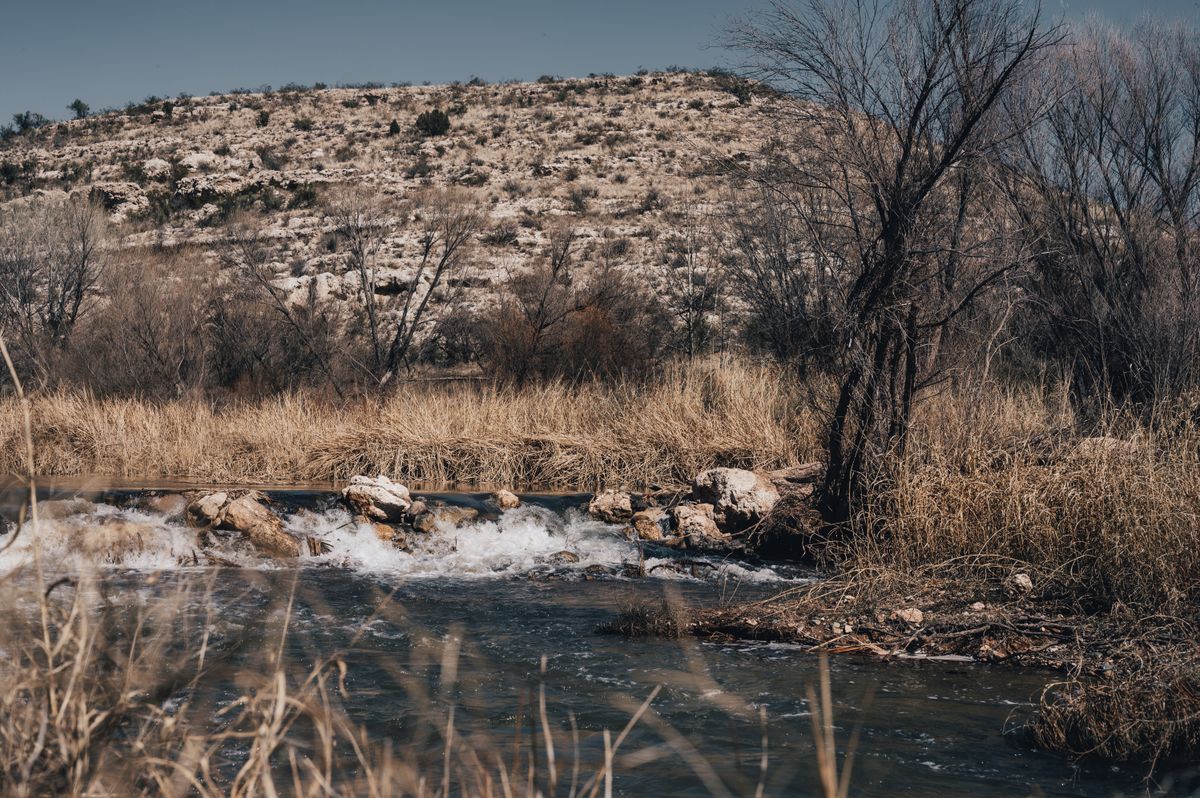
Inside the park, the river twists through the valley floor in long, sweeping meanders, leaving oval cottonwood bottoms on alternating sides. Theodore Roosevelt described it as a stream that "twists down through the valley in long sweeps, leaving oval wooded bottoms first one side and then on the other." The description is still accurate. The river has not changed much since 1883, except that the bison no longer drink from it in herds of thousands.

The water itself is the challenge for any angler. The Little Missouri drains badlands clay, soft, easily eroded sedimentary rock that dissolves into the river with every rainstorm. The river runs muddy after any precipitation and stays silty for days. Even in low-water periods, the clarity rarely exceeds a foot or two. This is not sight-fishing water. You will not spot fish holding in feeding lanes. You will not watch a trout rise to your fly from ten feet away. The Little Missouri is water you fish by feel, by structure, and by understanding where the fish hold in relation to the current and the bottom.
The river ranges from "a muddy trickle to a raging flood to a frozen highway" depending on the season, according to the National Park Service. Spring runoff can make it unfishable for weeks. Summer thunderstorms can blow it out in hours. Winter freezes it solid. The fishable windows are narrower than you would expect for a river that runs through a national park.
When It Fishes
The best conditions on the Little Missouri come during late summer and early fall, August through October, when the river drops to its lowest and clearest levels. After the spring runoff has passed and between the summer thunderstorms, the river can drop to a wadeable trickle in places, and the water clarity improves to the point where subsurface flies are visible to the fish. This is the window. Late September and October, when the cottonwoods turn gold against the grey badlands clay and the tourist traffic drops to almost nothing, is the finest time to fish the Little Missouri through the park.
The Fish, What You Are Actually Catching
The National Park Service lists three legal sport fish species in the park:
Channel Catfish
Channel catfish are the primary target for anyone fishing the Little Missouri with any seriousness. They are present throughout the river, they grow to respectable size (fish over five pounds are not uncommon), and they feed actively enough to be caught on fly tackle.
Catfish on a fly rod is a niche pursuit, but it is a legitimate one, and the technique is straightforward: get your fly to the bottom and keep it there. Heavy Woolly Buggers (#4-6, black or brown) dead-drifted along the bottom through the deeper pools and runs are the standard approach. San Juan Worms (#6-10, red or pink) fished on a heavy nymph rig work because catfish are scent-and-feel feeders, they locate food with their barbels, and a worm pattern drifting along the bottom triggers the same response as a live nightcrawler. Clouser Minnows (#2-6, chartreuse/white or brown/orange) bounced along the bottom through the deeper holes imitate the minnows and chubs that catfish eat.
The key is weight. You need to get your fly down in current that is often carrying enough silt to reduce visibility to inches. Heavy dumbbell eyes on the Clouser, tungsten beads on the Woolly Bugger, split shot on the San Juan Worm rig. Strip-set hard when you feel the take, catfish do not rise to sip flies off the surface.
Rod: A 7-weight or 8-weight gives you the backbone to cast heavy, weighted flies and fight a five-pound catfish in current. This is not delicate work. Bring the rod you would take bass fishing.
Goldeye, The Hidden Gem
Here is the story that makes Theodore Roosevelt National Park worth mentioning in a fly-fishing context: goldeye are excellent dry-fly fish, and almost nobody talks about them.
Goldeye (Hiodon alosoides) are a native North American species found in the Missouri and Red River systems. They are flat-sided, silvery, with a distinctive large golden eye that gives them their name. They are sometimes called skipjack or shiner. Most anglers encounter goldeye as bait, cut goldeye is a standard catfish bait across the Northern Great Plains.
But goldeye feed on insects. They eat mayflies, caddisflies, midges, and terrestrials off the surface with a rise form that looks remarkably like a trout's. They are surface feeders in a river system where almost nothing else eats off the top. On warm summer evenings when caddis and mayflies come off the Little Missouri, goldeye will rise steadily in the slower pools and backwater eddies, and they will eat a dry fly presented in the drift.

A #16 or #18 Elk Hair Caddis is the starting point. Goldeye are not as selective as spring creek trout, they do not refuse a fly because the hackle is one shade too dark. But they are selective enough that a reasonable match to the hatch matters. Parachute Adams (#16-18) covers the general mayfly spectrum. Griffith's Gnat (#18-20) works during midge activity. Small foam beetles and ants (#16-18) are effective when terrestrials are on the water.
The goldeye typically average eight to twelve inches, with larger fish pushing fourteen inches. They fight well for their size, quick, darting runs with frequent jumps. The experience of casting dry flies to rising fish in a badlands river, with buttes and bison and cottonwoods as the backdrop, is genuinely unique. You will not find this combination anywhere else in the national park system.
The critical detail: Goldeye feed best in the slower water, backwater pools, inside bends, the calm eddies behind cottonwood snags. They are not holding in the main current like trout in a riffle. Find the quiet water where insects collect on the surface, and that is where the goldeye will be rising.
Sauger
Sauger are the third legal sport fish in the park, a smaller relative of the walleye. They are present but uncommon, and targeting them specifically with a fly rod in the silty Little Missouri is a low-percentage proposition. A Clouser Minnow or Woolly Bugger bounced along the bottom through the deeper runs might pick one up incidentally while fishing for catfish. Sauger are primarily a bait-and-lure species here, and the fly rod is not the most effective tool.
The Fly Box, Warmwater Prairie River
This is not a trout fly box. Do not bring your Pheasant Tail Nymphs expecting to fish a hatch chart. The Little Missouri demands a different approach.
For channel catfish (bottom):
- Woolly Bugger (#4-6, black, brown, olive), heavy, tungsten-bead or lead-wrapped, dead-drifted on the bottom
- San Juan Worm (#6-10, red, pink, wine), the universal catfish pattern, fished slow on the bottom
- Clouser Minnow (#2-6, chartreuse/white, brown/orange), bounced through deeper holes to imitate baitfish
- Muddler Minnow (#4-6), weighted, stripped slow along the bottom in deeper pools
- Lefty's Deceiver (#2-4, white/chartreuse), a larger streamer for bigger catfish in the deepest holes
For goldeye (surface and subsurface):
- Elk Hair Caddis (#16-18), the primary dry fly during caddis activity
- Parachute Adams (#16-18), general mayfly match
- Griffith's Gnat (#18-20), for midge clusters
- Chubby Chernobyl (#12-14), a visible attractor pattern in broken water
- Small foam terrestrials, beetles, ants, hoppers (#14-18)
- Hare's Ear Nymph (#14-16), subsurface, for goldeye feeding below the surface
- Prince Nymph (#14-16), an attractor nymph that goldeye eat readily
- Copper John (#16-18), a quick-sinking nymph for goldeye holding in deeper pools
- Pheasant Tail Nymph (#16-18), during mayfly emergence
- Small Woolly Bugger (#10-12, olive or black), stripped slowly through pools for larger goldeye
For stock dam panfish (if you explore outside the park):
- Small foam poppers (#10-12), bass and bluegill in ranch stock dams
- Foam spiders and rubber-leg patterns (#10-14)
- Woolly Bugger (#10-12), a universal stock dam pattern
The Two Park Units, Where to Fish
South Unit (Medora)
The South Unit is the more accessible and more visited section of the park. The entrance is in Medora, right off Interstate 94. The 36-mile Scenic Loop Drive winds through the badlands with multiple pulloffs and trailheads. The Little Missouri River runs through the valley floor, accessible from several points along the loop drive and from the Cottonwood Campground.
Cottonwood Campground is the best base for fishing the South Unit. The campground sits in a cottonwood grove along the river, and you can walk from your campsite to fishable water in minutes. The river here has a mix of deeper pools and shallow riffles, the pools hold catfish, and the slower water on the inside of the bends is where goldeye feed in the evenings.
The Ekblom Trail and the Paddock Creek Trail provide access to more remote stretches of the river. The further you walk from the road, the less likely you are to encounter other people (not that you encounter many anyway, most visitors here are driving the loop, not wading a river).
North Unit (Watford City)
The North Unit is sixty-eight miles north of Medora, accessed from Highway 85 near Watford City. It receives a fraction of the South Unit's visitors and feels genuinely remote. The Little Missouri flows through a deeper, more dramatic canyon here, the river has cut further into the badlands clay, and the bluffs rise higher on both sides.
The fishing in the North Unit is similar to the South Unit, the same species, the same silty water, the same techniques. The advantage is solitude. On a weekday in September, you can fish the North Unit river and not see another person all day. The River Bend Overlook offers a dramatic view of the Little Missouri's meanders, and trails descend to the river from several points along the scenic drive.
Elkhorn Ranch Unit
The Elkhorn Ranch Unit, the site of Roosevelt's second ranch, is between the South and North Units and requires a drive on unpaved roads. The Little Missouri flows through it, and the fishing is technically available, but the site is preserved primarily for its historical significance. The foundation stones of Roosevelt's cabin and the water well are the draw here, not the fishing. Visit the Elkhorn for the history, not the catfish.
The Landscape, Why You Are Really Here

The fishing at Theodore Roosevelt National Park is a reason to bring a rod. The landscape is the reason to come.
The badlands formed over millions of years as the Little Missouri and its tributaries eroded through soft sedimentary layers, clay, sandstone, siltstone, and lignite coal deposited during the late Cretaceous and Paleocene eras, between sixty and seventy million years ago. The result is a landscape of sharp buttes, deep coulees, flat-topped mesas, and hoodoo formations painted in bands of grey, cream, rust, and red. The coal seams that run through the formations sometimes catch fire from lightning strikes and burn underground for decades, baking the surrounding clay into a hard, red material called scoria or clinker that caps many of the buttes. This is the color, that distinctive rust-red, that identifies badlands formations across western North Dakota.
The Painted Canyon Overlook, seven miles east of Medora off I-94, is the first thing most visitors see, and it is one of the most dramatic viewpoints in the national park system. The canyon drops away from the overlook in layers of color, grey clay at the bottom, bands of brown and tan sandstone, red scoria caps, green juniper clinging to the slopes, stretching to the horizon in every direction. Roosevelt saw this same view in 1883, before there was a road or a railing or a visitor center. He called it "a perfect freedom."
Bison
The South Unit maintains a herd of roughly three hundred American bison. They are descendants of reintroduced stock, the original herds were slaughtered to near-extinction by the 1880s, and it was partly witnessing this destruction during his ranching years that pushed Roosevelt toward conservation. The bison roam freely through the park, crossing the road, grazing on the river flats, and occasionally bedding down in the cottonwood groves where you intended to fish.
If you are fishing the river and a bison herd approaches, give them a very wide berth. Bison are unpredictable, fast (they can run 35 mph), and territorial. They are not cattle. Do not attempt to fish through a bison herd. Move away, wait them out, and fish somewhere else.
Wild Horses
The South Unit also maintains a herd of feral horses, between fifty and ninety animals, managed to prevent overgrazing. These are not mustangs in the romantic sense. They are descendants of horses that escaped or were released from local ranches over the past century. But they are beautiful, they are wild, and seeing them graze on the badlands ridges in the early morning light, with the Little Missouri winding through the valley below, is one of the signature experiences of the park.
Prairie Dogs
Black-tailed prairie dog towns dot the grasslands of both units. The prairie dog towns are the most reliable wildlife-viewing spots in the park, the animals are active, visible, and entertaining. They are also ecologically critical. Prairie dogs are a keystone species: their burrows provide shelter for burrowing owls, black-footed ferrets (reintroduced to the park), and rattlesnakes. Their grazing creates short-grass habitat that attracts pronghorn and bison. The prairie dog town near the South Unit entrance is the most accessible.
The Conservation Story, Why It Matters
Theodore Roosevelt spent four years in the badlands, from 1883 to 1887. He came as a grieving young man with a political career he thought was over. He left as something different, harder, more confident, and carrying a conviction about the American landscape that would shape the next century of conservation policy.
Roosevelt watched the bison disappear. When he arrived in 1883, the northern herd was already in its death spiral, professional hide hunters had reduced millions of animals to scattered hundreds. By 1886, Roosevelt could not find a bison to hunt on his own ranch land. He watched the elk retreat to the mountains. He watched the beaver trappers clean out the creeks. He watched the cattle barons overgraze the prairie until the brutal winter of 1886-87 killed sixty percent of the herds on the northern plains, including most of his own stock.
These losses, the bison, the open range, the wild character of the land, planted the seed that grew into Roosevelt's conservation legacy. In 1887, back in New York, he co-founded the Boone and Crockett Club, one of the first wildlife conservation organizations in the country. As president from 1901 to 1909, he established five national parks, eighteen national monuments, fifty-one bird reserves, four game preserves, and 150 national forests, protecting roughly 230 million acres of public land, an area larger than the states of California and Texas combined.
He did this because he watched what happened when the land had no protection. He learned that lesson on the Little Missouri River, in the badlands, surrounded by the vanishing bison and the eroding buttes. The park named after him is not just a memorial, it is the classroom where America's conservation ethic was born.
The Seasonal Calendar

April-May: Spring runoff. The Little Missouri swells with snowmelt and runs high and muddy. The river is essentially unfishable for fly tackle. The badlands are greening up, wildflowers appear on the prairie, and the bison calves are born. Come for the landscape, not the fishing.
June-July: The river drops but remains warm and often silty. Summer thunderstorms can blow it out with no warning. Catfish are active in the deeper pools. Goldeye begin feeding on surface insects, caddis and mayfly hatches occur on warm evenings, especially in the slower backwater pools. The heat can be intense, triple digits are not unusual in July. Fish early morning and late evening. Mosquitoes are brutal near the river.
August-September: The best fishing window. Water levels are at their lowest and clarity is at its best (which is still not great by Western standards). Catfish concentrate in the remaining deep pools. Goldeye surface feeding peaks during the warm evenings. Terrestrial insects, grasshoppers, beetles, ants, are abundant and falling into the river. A Chubby Chernobyl or Elk Hair Caddis drifted through the evening light in a quiet pool is the best dry-fly opportunity in the park. The September cottonwood color against the grey badlands is the finest scenery of the year.
October: The shoulder season. Water temperatures drop and fish activity slows. The cottonwoods are gold, the crowds are gone, and the badlands light in October is extraordinary, low-angle sun painting the buttes in warm tones that photographers chase. Fishing is possible but slow.
November-March: The river freezes. The park is open year-round, but winter in the North Dakota badlands is serious, temperatures drop to negative forty, the wind is relentless, and the snow drifts across the roads. The badlands in winter have a stark, severe beauty that is worth seeing, but the fishing is done until spring.
Regulations and Licenses
North Dakota state fishing laws apply inside the park. You need a valid North Dakota fishing license, available online through the North Dakota Game and Fish Department. Non-resident licenses are available as one-day, ten-day, or annual options.
The three legal sport fish species in the park are channel catfish, goldeye, and sauger. Standard North Dakota bag limits and size regulations apply, check the current North Dakota Fishing Guide for specific limits, as they can change annually.
There are no special park-specific fishing regulations beyond the state requirements. No fishing permit, no rod fee, no restricted areas. Just a state license and the river.
The Gateway, Medora
Medora is the gateway town to the South Unit, a small town of roughly a hundred year-round residents that swells in summer with tourists visiting the park and attending the Medora Musical, an outdoor variety show that has been running since 1965. The town was founded in 1883 by the Marquis de Mores, a French aristocrat who built a meatpacking plant and a mansion (the Chateau de Mores, now a state historic site) with the plan of shipping dressed beef east on the Northern Pacific Railroad. The plan failed, the Marquis left, and Medora settled into the quiet role of a ranching town that happens to sit at the entrance to a national park.
The Maltese Cross Cabin, Roosevelt's original ranch cabin, has been relocated to the South Unit Visitor Center and is open for tours. It is the only surviving building from either of Roosevelt's two ranches. Standing inside the cabin, looking at the desk where Roosevelt wrote by lamplight, is the closest you can get to understanding the man's experience in the badlands.
Conditions change week to week on the Little Missouri, a pool that held fish last week can be blown out or silted in after a single thunderstorm, so it pays to scout the river and check current flows before committing to a stretch. Knowing which pools are holding fish can save you a day of blind casting in silty water.
Lodging: The Rough Riders Hotel in downtown Medora is the classic option, a restored frontier hotel with a dining room and saloon. The Badlands Motel and the Amerihost Inn are the no-frills alternatives. The Cottonwood Campground inside the park is the best option if you want to fish morning and evening, you are on the river.
Food: The Rough Riders Hotel dining room serves steaks and bison burgers. Theodore's is the casual option. Medora is not a food destination, it is a town of a hundred people in the western North Dakota badlands. Bring groceries if you are camping.
The Honest Assessment
Theodore Roosevelt National Park is not Yellowstone, which is two hundred miles west and offers world-class trout fishing in dozens of rivers and streams. It is not Glacier, where you can catch cutthroat trout in turquoise mountain lakes. It is not Grand Teton, where the Snake River delivers genuine trout fishing with mountain scenery. It is not the Madison River or the Bighorn or any of the famous Montana fisheries that are within a day's drive.
The fishing at Theodore Roosevelt National Park is marginal. The Little Missouri is silty, warm, and unpredictable. The fish community is dominated by rough fish. The three sport species, catfish, goldeye, sauger, are not what most fly anglers travel to catch. The NPS itself describes the catch quality as "unpredictable." This is not false modesty. It is an accurate description.
But.
The goldeye rising to a #16 Elk Hair Caddis in a cottonwood-shaded pool, with painted buttes rising above the river and a bison herd grazing on the far bank, that is something you cannot get anywhere else. A five-pound channel catfish on a Woolly Bugger dead-drifted through a prairie river pool, with wild horses on the ridge above you, that is a story worth telling.
And the history. Standing at the Elkhorn Ranch site, where the foundation stones of Roosevelt's cabin are still visible in the grass, looking at the same bend in the Little Missouri that he looked at every morning for four years while he processed grief and became a conservationist, that is worth the drive across North Dakota. That is worth bringing a rod, even if the fishing is marginal. Theodore Roosevelt would approve of the honest reporting. He was not a man who exaggerated, and he would want you to know that the badlands are beautiful, the bison are magnificent, and the fishing is present but not the point.
The badlands are the point. The conservation story is the point. The goldeye on dry flies is a bonus. And North Dakota, which has no other entry in the national park fly-fishing guides, deserves a place on the map, not because the fishing is great, but because the landscape is, and because the man who saved more American wilderness than any other president learned to love this country on the banks of this silty, unpredictable, magnificent little river.
This is also a park that pairs well with other warmwater national park fishing in the region: Voyageurs in northern Minnesota for pike and bass, New River Gorge for smallmouth, Congaree for floodplain species, Mammoth Cave for Green River smallmouth. And for the comparison that emphasizes the point, Big Bend on the Rio Grande is another remote national park where the landscape dwarfs the fishing but the rod gives you a reason to be on the water. Canyonlands in Utah is the desert warmwater equivalent.