Fish
Fish Fire
Fire Hike
Hike Bird
Bird

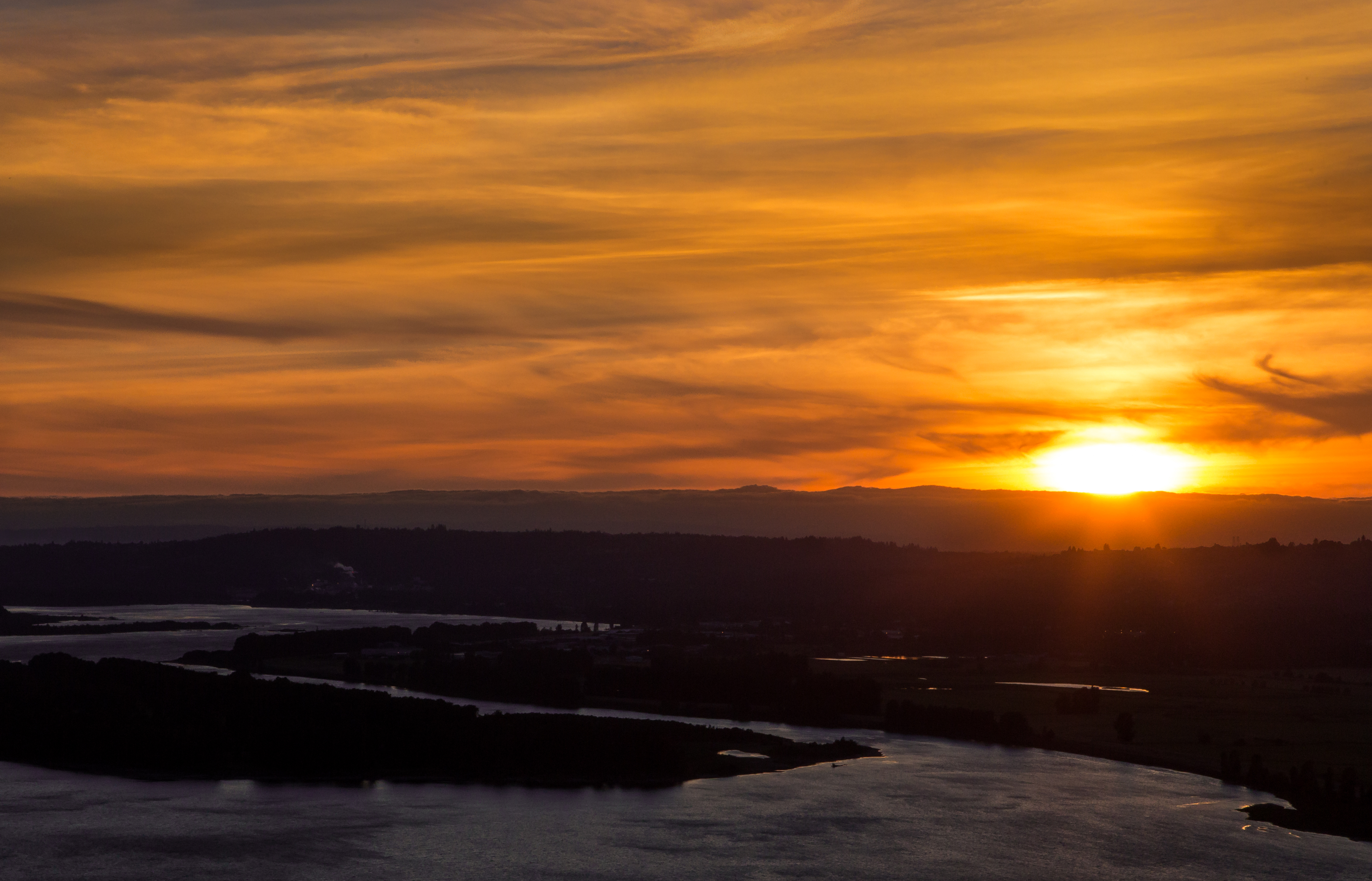
The Columbia River is the great river of the Pacific Northwest, more than 1,200 miles from the Canadian Rockies to the Pacific, forming most of the Oregon-Washington border and draining an area the size of France. It has been dammed into a staircase of long reservoirs, but it still carries millions of salmon and steelhead to the sea and back, hides some of the largest freshwater fish on the continent, and grows walleye and smallmouth bass that rival anywhere in the country. For an angler it is one of the most productive and varied freshwater fisheries in North America, and this guide takes the whole-river view, from the surf-pounded mouth at Astoria to the sagebrush country upriver, of what swims here and how to catch it.
Salmon and Steelhead: The Heart of the Columbia
The Columbia is, above all, a salmon river. It runs three separate races of Chinook (king) salmon plus coho, sockeye, and hard-charging summer steelhead, and knowing the runs is the key to timing a trip.
Spring Chinook (March through May) are the most prized, bright, fat, and the best eating of all, they draw a devoted following to the lower river and the tributary mouths. Summer Chinook and sockeye push through in June and July. Fall Chinook (August through October) are the biggest run of all, and they power the river's most famous fishery. Coho follow in the fall, and summer steelhead, sea-run rainbow trout, show from June onward and give the river a long, exciting swing-and-drift season.
The classic techniques change with the water: anglers troll cut-plug herring and spinners in the tidal lower river, back-troll or anchor and fish plugs and bait in the current, hover-fish eggs, and bobber-fish for steelhead and springers around tributary mouths. For the species deep-dives, see our guides to Chinook salmon, coho salmon, sockeye salmon, and steelhead.
Rigging for Columbia River SalmonBuoy 10: The Fall Salmon Spectacle
If the Columbia has one signature event, it's Buoy 10, the fishery named for the channel marker near the river's mouth at Astoria. Every August and early September, hundreds of thousands of fall Chinook and coho stack up in the estuary as they wait to run upriver, and a huge fleet of boats trolls herring and spinners through the tide lines to intercept them. It's crowded, it's electric, and it's some of the most productive salmon fishing on the West Coast. From there the fall run pushes upriver past Longview, into the Gorge below Bonneville Dam, and all the way to the Hanford Reach, so you can chase the same fish for weeks as they move up the system.
White Sturgeon: The River's Living Dinosaurs
Beneath the salmon swims something far older. The Columbia holds enormous white sturgeon, armored, prehistoric fish that can top nine or ten feet and live for decades. They gather below the dams and in the deep holes of the estuary and the Bonneville pool, where anglers anchor and fish stout rods with bait on the bottom and hang on when one of these giants comes tight. Most sturgeon fishing today is catch-and-release, retention is tightly limited or closed across much of the river to protect the population, and the biggest "oversize" fish must always be released, but the chance to fight a fish bigger than you are, on a river you can drive to, is one of angling's great experiences. Check the current rules for the exact area, because sturgeon seasons and retention change constantly.
Walleye and Smallmouth Bass: World-Class and Underrated
Here's the Columbia's best-kept secret: it may be the finest walleye river on Earth. The mid-river pools, especially the John Day and Umatilla reservoirs, grow giant walleye, and the river has produced fish pushing the world record. Anglers troll bottom-walkers and crankbaits along the channel edges and flats, or vertical-jig the deeper structure, for walleye that run huge and fat on a river full of forage. The same pools are stuffed with smallmouth bass, the rocky shorelines, riprap, and drop-offs hold them in outrageous numbers, and a summer day of nonstop smallmouth on the Columbia is one of the easiest, most fun trips a beginner can take.
Walleye Fishing TechniquesShad: The Springtime Millions
For sheer, nonstop action, nothing beats the American shad run. Every May and June, millions, yes, millions, of shad pour up the Columbia and stack below Bonneville Dam, and light-tackle anglers catch them one after another on tiny shad darts and flies fished in the current. Shad fight well above their weight, the numbers are almost comical, and it's about the most beginner- and kid-friendly fishing the river offers. Bring a light spinning rod, a handful of darts, and be ready to lose count.
Fishing From the Bank
You don't need a boat to fish the Columbia, the river has a long tradition of bank fishing, and some of it is excellent. The waters just below the dams, where fish ladders funnel salmon, steelhead, and shad into reach, are the classic bank fisheries: anglers line the shore below Bonneville for spring Chinook, summer steelhead, and the shad millions. At the mouth, the beaches and long jetties at the river's edge give shore anglers a shot at fall salmon and even sturgeon. Up the river, rocky banks and riprap along the pools produce smallmouth bass and walleye for the wading and shore-bound angler, and the many tributary mouths, where cooler, cleaner water draws staging fish, are prime shore spots when the runs are in. Bank fishing is the cheapest, most accessible way onto the Columbia, and generations of Northwest anglers learned the river with their feet on the gravel.
The River in Sections
The Columbia fishes very differently from the mouth to the interior:
- The estuary and Buoy 10 (Astoria): tidal, big, and salmon-crazy in late summer; also home to the biggest sturgeon.
- The lower river and the Gorge (Longview to Bonneville): salmon and steelhead highways, sturgeon below Bonneville Dam, and excellent bass.
- The mid-Columbia pools (The Dalles, John Day, Umatilla): trophy walleye and smallmouth country, plus sturgeon and upriver salmon.
- The Hanford Reach: the last major free-flowing stretch of the river, home to wild "upriver bright" fall Chinook, big smallmouth, and sturgeon, a wilder, more natural piece of the Columbia.
The Great Tributaries
Much of the Columbia's fishing actually happens where its tributaries meet the main stem, because staging salmon and steelhead pile up at the cooler, cleaner river mouths before running up to spawn. The Willamette through Portland is a spring Chinook powerhouse; the Cowlitz and Lewis rivers on the Washington side are hatchery salmon and steelhead factories; the Deschutes, John Day, and Klickitat pour out of the dry interior with wild summer steelhead and trout; and the mighty Snake River, the Columbia's largest tributary, adds its own salmon, steelhead, and sturgeon. If the main stem is blown out by wind or the run is between pushes, a tributary mouth is often the smart move, and each of these rivers is a destination fishery in its own right. Think of the Columbia not as a single river but as the trunk of a vast tree, with world-class fishing on nearly every limb, and you'll start to appreciate just how much water there is to explore.
Understanding the Dams and Pools
The single thing to understand about the modern Columbia is that it's a chain of long reservoirs, called pools, behind a series of dams: Bonneville, The Dalles, John Day, McNary, and more heading upstream. Each dam has fish ladders that concentrate migrating salmon, steelhead, and shad, which is why the water just below a dam is often the hottest fishing on the river. Each pool fishes a little differently and carries its own regulations and, sometimes, its own seasons, so "the Columbia" is really a dozen distinct fisheries strung together. Figure out which pool holds the fish you want in the season you're fishing, and the river becomes far less intimidating.
Reading the River and the Wind
The Columbia is enormous, and learning to read it pays off. In the tidal lower river below Bonneville, the fishing swings with the tide just like the ocean, moving water positions salmon in the estuary, and many anglers time their Buoy 10 trips to the tide changes. Up in the pools, current is still king: fish stack on the down-current side of points, ledges, wing dams, and channel edges, and the water directly below each dam concentrates everything. Learn to find the seams where fast water meets slow, the drop-offs into the old river channel, and the rocky structure, and you've found the fish. And then there's the wind. The Columbia River Gorge is one of the windiest places in the country, it's a world capital of windsurfing for a reason, and a calm morning can become a whitecapped, dangerous afternoon in a hurry. Watch the forecast, fish the mornings, and never let the big water lull you; the Columbia demands respect.
Hatchery, Wild, and the Salmon Story
Fish the Columbia and you're fishing one of the great, hard-won conservation stories in the country. The dams that created the pools also blocked and altered the salmon runs, and today the river's salmon and steelhead are a carefully managed mix of wild fish protected under the Endangered Species Act and hatchery fish raised to support fishing. For anglers, the most important practical rule is the adipose fin: on most Columbia salmon and steelhead fisheries you may keep only hatchery fish, identified by a clipped (missing) adipose fin, and you must release wild fish with the fin intact. Learn to spot the difference at a glance, handle wild fish gently in the water, and follow the barbless-hook and selective-fishery rules that apply in many reaches. Every angler who releases a wild fish carefully is part of keeping this fishery alive.
When to Go
- Spring (March–May): Prized spring Chinook in the lower river and tributary mouths; the shad run building.
- May–June: The shad millions below Bonneville, plus fast walleye fishing in the pools.
- Summer (June–August): Summer steelhead and sockeye run; trophy walleye and smallmouth are in full swing; sturgeon fishing peaks.
- Fall (August–October): Buoy 10 and the fall Chinook and coho run, the river's biggest show, moving upriver for weeks.
- Winter: Steelhead in the tributaries and holdover sturgeon for the hardy.
Licenses and Regulations
The Columbia is a shared border river, and both Oregon and Washington manage it. Under long-standing concurrent-waters rules, a valid Oregon or Washington license generally lets you fish the shared main stem from a boat in many reaches, but this is not universal, and bank anglers must be licensed in the state they're standing in, so always confirm for your exact spot. You'll also need a Columbia River Basin endorsement and a salmon/steelhead catch record card for those fisheries. Most important of all: the Columbia's salmon, steelhead, and sturgeon seasons are extremely dynamic and change in-season by area, so checking the current ODFW and WDFW regulations and emergency updates before every trip isn't optional here, it's essential.
A Beginner's First Trip
You have two easy on-ramps. In late May or June, grab a light rod and a pack of shad darts and join the crowd below Bonneville for hours of nonstop shad, cheap, simple, and a guaranteed bent rod. Or in summer, chase smallmouth bass along the rocky banks of the mid-river pools, where numbers are high and the fishing is forgiving. When you're ready for the main event, book a guide for a fall Buoy 10 salmon trip or a mid-river walleye day; the guide supplies the boat, the gear, and the local knowledge of a river far too big to learn quickly on your own.
Guides and Gear
A guide is the fastest way into water this vast and this regulated. For gear, a medium-heavy salmon rod with a line-counter reel handles trolling herring and spinners at Buoy 10; a stout Lamiglas sturgeon rod and heavy leader gets you into the dinosaurs; a 7-foot medium spinning or casting rod with bottom-walkers and crankbaits covers walleye; and a light rod with shad darts or a jig-and-grub loads up on shad and smallmouth. Downriggers and diver setups help you reach salmon depth in the big water. Whatever you chase, respect the river, the Columbia is enormous, current-driven, and famous for a fierce afternoon wind through the Gorge that can turn it dangerous in a hurry.
The Columbia River rewards anglers who match the run, the pool, and the season. Time it to a spring Chinook, a June shad blitz, a summer walleye troll, or the great fall salmon push at Buoy 10, check the ever-changing Oregon and Washington rules, and fish one of the greatest rivers on the continent. Few places offer this much variety in one watershed, salmon, sturgeon, steelhead, walleye, bass, and shad, and few reward a curious, prepared angler more richly.