Fish
Fish Fire
Fire Hike
Hike Bird
Bird

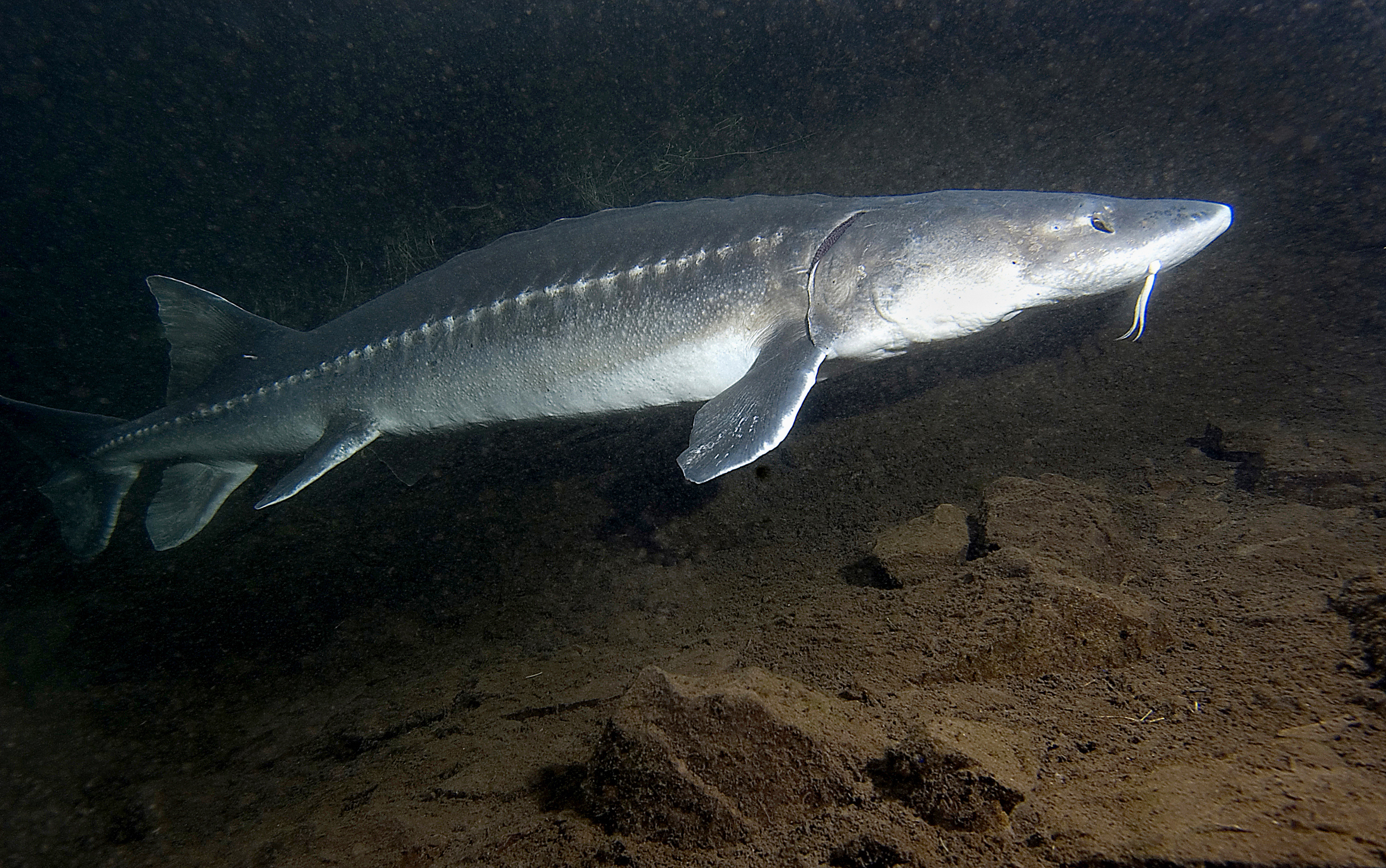

The white sturgeon is a living dinosaur, a prehistoric giant that has swum North America's rivers essentially unchanged for tens of millions of years, and the largest freshwater fish on the continent. In the mighty rivers of the West, white sturgeon grow past ten feet long and hundreds of pounds, with the true giants of the Columbia, Snake, and Fraser exceeding a thousand pounds. Hooking one is like hooking a submarine: they run, they thrash, and the biggest ones leap their whole armored bodies clear of the water. Because they're so ancient, slow-growing, and vulnerable, the largest sturgeon are strictly catch-and-release, which makes every giant landed a shared, respectful thrill rather than a harvest. This guide covers what these leviathans are, where they live, and every core technique, with step-by-step instruction, to catch and safely release one.
Ready to battle a river monster? Because these fish grow so large and must be handled so carefully, many anglers book a trip with an experienced sturgeon guide for their first outing, genuinely the best and safest way to learn the ropes and land one without hurting the fish. For more big-river bottom fishing, see our guide on how to catch blue catfish.
The Living Dinosaur
The white sturgeon (Acipenser transmontanus) looks like the ancient fish it is: a long, torpedo-shaped body armored with rows of bony plates called scutes (not scales), a shovel-like snout with four sensory barbels, a toothless, protrusible vacuum of a mouth on the underside, and a shark-like tail with a longer upper lobe. Sturgeon are among the oldest fish lineages on earth, and individual white sturgeon are remarkably long-lived, big fish can be many decades to over a century old.
They also grow to almost unbelievable size. While anglers catch plenty of "keeper" and sub-legal fish of a few feet, white sturgeon are the giants of freshwater: mature fish commonly reach 6 to 8 feet, and the largest exceed 10 feet and 1,000 pounds. Native to the large rivers and estuaries of the Pacific coast, the Columbia, Snake, Fraser, Sacramento-San Joaquin, and others, white sturgeon are the ultimate freshwater trophy, and the fish of a lifetime for anglers who chase them.
How Sturgeon Feed
Understanding how sturgeon feed is the key to catching them: they're scent-driven bottom feeders. A sturgeon cruises the river bottom using its four barbels and an acute sense of smell (and even electroreception) to detect food, then extends its tube-like mouth to vacuum up whatever it finds. They're opportunistic, eating everything from salmon and lamprey eggs, dead and dying baitfish (smelt, eulachon, shad, anchovies), shrimp, crayfish, clams and mussels, to the carcasses of spawned-out salmon.
Two practical lessons follow. First, scent and fresh bait are everything, like catfish, sturgeon home in on a strong scent trail, so fresh, oily, smelly baits fished on the bottom are the ticket. Second, they hold in specific bottom locations, deep holes, current seams, and the deep water below rapids and dams, where current concentrates food. Put a fresh, scented bait on the bottom in a hole where sturgeon travel and feed, and you're in business.
Where Sturgeon Live
White sturgeon relate to deep water, current, and food in big rivers and estuaries:
- Deep holes, the deepest slots and holes in a river, classic sturgeon resting and feeding areas.
- Current seams and the deep water below rapids, falls, and dams, where flow concentrates food.
- Channel edges and drop-offs adjacent to deep water.
- Tidal reaches and estuaries (the lower Columbia, San Francisco Bay-Delta), where sturgeon follow the tides and feed on shrimp and baitfish.
- Below salmon spawning areas, where sturgeon gorge on drifting eggs and carcasses in season.
Local knowledge of the deep holes and the seasonal movements is invaluable, which is a big reason sturgeon guides are so popular.
Bait for Sturgeon
Fresh, scent-rich bait is the heart of sturgeon fishing, and the best choice varies by river and season:
- Fresh salmon or steelhead roe (eggs), a top sturgeon bait, especially during and after salmon runs.
- Smelt, eulachon, and other oily baitfish, a mainstay, whole or cut.
- Ghost shrimp, sand shrimp, and grass shrimp, deadly, especially in tidal waters.
- Lamprey (whole or pieces), a premier big-sturgeon bait where available.
- Shad, anchovies, squid, and nightcrawlers, all take sturgeon.
The theme is fresh and smelly, matched to the local forage. Ask what's producing on your water, and keep your bait fresh.
The Techniques That Catch White Sturgeon
Sturgeon fishing centers on a heavy bottom rig fished in the right spot. Here are the core methods, how to fish each, and when to use it.
The Bottom Rig, the sturgeon setup
Sturgeon are caught on a heavy sliding-sinker bottom rig that pins fresh bait to the river bed and lets a fish take it.
How to fish it: Build a sliding-sinker rig: a heavy sinker (4 to 16 ounces, matched to the current) on a slider or dropper above a bead and a barrel swivel, then a stout leader (60 to 130 lb) to a strong circle or siwash hook (5/0 to 9/0) sized to your bait. Bait it generously with fresh, scented bait, cast or lower it into a deep hole or seam, and hold bottom in the current. Fish a rod in a sturdy holder (or hold it) and watch the tip closely, the take can be a series of taps or a slow load. This heavy bottom rig is the foundation of all sturgeon fishing.
The Best Sturgeon RigBait Selection, match the water
Because sturgeon feed by scent, choosing and presenting the right fresh bait is often the difference-maker, and it changes with the river and the season.
How to fish it: Pick your bait to match the local forage and time of year, roe during salmon runs, smelt and eulachon as a year-round staple, shrimp in tidal water, lamprey for big fish, and keep it fresh and scent-rich. Wrap or tie soft baits so they stay on the hook in current (bait thread or a bait-wrapping technique helps), and leave plenty of scent-leaking surface exposed. Refresh your bait regularly so the scent trail stays strong. Dialing in the productive bait for your water and season is a core sturgeon skill.
Recommended Bait for White SturgeonAnchoring and Positioning, over the fish
Because sturgeon hold in specific deep holes and seams, positioning your baits over the fish is essential.
How to fish it: Anchor (or hold position on a trolling motor) so your baits sit in or on the up-current edge of a deep hole, seam, or channel where sturgeon travel and feed, letting the scent trail wash down to cruising fish. In tidal water, position for the stage of tide that concentrates fish and bait. Use your electronics and knowledge of the river's deep structure to set up on productive water, and be patient, sturgeon often move through in waves, so time on a good spot pays off. Getting the boat and baits in the right place is more than half the game.
How to Catch River Sturgeon (Tips and Release)Detecting the Bite and Fighting a Giant
A sturgeon bite can be subtle, and the fight that follows is anything but, landing a big sturgeon is a battle you must be ready for.
How to fish it: Watch for the classic sturgeon "pump", a series of taps or a rhythmic nodding of the rod tip as the fish mouths the bait, then, with a circle hook, reel down and let the fish load the rod (or set firmly with a J-hook) to hook it in the mouth. Once hooked, hold on: big sturgeon make powerful runs, dogged dives, and spectacular leaps. Keep steady pressure, let the fish run against a smooth drag, and be prepared to follow a big one with the boat. Use a stout rod and heavy line, take your time, and never try to muscle a giant. The fight can last a long while, that's part of the thrill.
How to Fish Sturgeon: In-Depth TutorialGetting Started, putting it together
For newcomers, sturgeon fishing can look intimidating, but it comes together around a simple formula: the right heavy gear, fresh bait, a good deep-water spot, and patience.
How to fish it: Start on a river with a healthy sturgeon population (the Columbia and its tributaries are famous), get set up with proper heavy tackle and fresh local bait, anchor over a known deep hole, and soak your bait on the bottom while watching for the pump of a bite. Learn the local regulations cold (see below), because sturgeon rules are strict and specific. A day with a sturgeon guide short-cuts the whole learning curve, the gear, the spots, the bait, and the safe handling of enormous fish. Then it's you, a bent rod, and a living dinosaur on the other end.
Sturgeon Fishing the Columbia RiverWhen to Go
Sturgeon can be caught year-round, but the best fishing often tracks the food. Periods when baitfish and salmon are running and spawning, bringing smelt, eulachon, and drifting salmon eggs and carcasses into the river, trigger strong sturgeon feeding, so late winter through spring (smelt/eulachon) and the salmon runs of summer and fall are prime on many rivers. In tidal waters, sturgeon fishing keys on the tides and the seasonal movements of shrimp and baitfish. Warmer water generally means more active feeding. Check your specific river's seasons, both the biology and the regulations, which often set specific open periods, and time your trip to a feeding window.
An Ancient Survivor
Part of what makes sturgeon fishing so special is the sense that you're connecting with deep time. Sturgeon belong to one of the oldest surviving lineages of bony fishes on earth, their basic form little changed since the age of the dinosaurs, the fish you're fighting is a nearly living fossil, built on a blueprint tens of millions of years old. Those bony scutes, the shark-like tail, the sensory barbels, and the vacuum mouth are ancient adaptations that have carried the species through mass extinctions and ice ages.
That endurance makes their modern vulnerability all the more poignant. Because white sturgeon grow so slowly and take 15 to 25 years to even reach spawning age, and because they were historically overharvested and their rivers dammed, populations that vanish are almost impossible to replace on a human timescale. A hundred-year-old giant hooked today began its life before your grandparents were born. Anglers who chase sturgeon tend to become their fiercest advocates, precisely because holding one of these living dinosaurs boat-side, and watching it kick back into the depths, is a humbling reminder of how ancient, and how fragile, these great fish are. Fish for them with that reverence, and the experience becomes about far more than the catch.
Gear for White Sturgeon
Sturgeon gear is the heaviest freshwater tackle there is, because you may hook a fish bigger than you are:
- Rod and reel: A 7- to 8-foot heavy or extra-heavy sturgeon rod with a strong conventional or baitcasting reel and a smooth, powerful drag.
- Line: Heavy 60- to 100-lb braided line with a stout leader (60–130 lb).
- Terminal tackle: Heavy sliding sinkers (4–16 oz), strong circle or siwash hooks (5/0–9/0), heavy swivels, beads, and bait thread.
- Handling gear (critical): Since big sturgeon must stay in the water, you'll need the know-how (and often a guide's setup) to safely control and release large fish boat-side, not a net or a lift for the giants.
Conservation: These Giants Must Be Respected
This is essential: white sturgeon are ancient, slow-growing, and vulnerable, and their fisheries are strictly regulated to protect them. Most fisheries are managed with tight slot limits (only a narrow size range may ever be kept, if any), and the large fish, the old, precious breeders, are mandatory catch-and-release. Oversized sturgeon usually may not be removed from the water at all, so you unhook and photograph them boat-side. Some populations (like the landlocked Kootenai River white sturgeon) are endangered and fully protected.
Handle every sturgeon with the utmost care: keep large fish in the water, support them horizontally, never lift a big one by the gills or tail or hang it vertically, minimize the fight and handling time, use barbless hooks where required, and revive the fish fully before release. Learn and rigorously follow every regulation on your water, sturgeon rules on legal size, retention, seasons, and handling are among the strictest in fishing, and for good reason. Treat these living dinosaurs as the irreplaceable treasures they are.
Meeting a Living Dinosaur
For sturgeon more than almost any fish, going with an experienced hand pays off. A seasoned guide or a well-equipped friend brings the heavy boat and gear, the fresh bait, the knowledge of the deep holes, and, crucially, the practice needed to handle and release enormous fish safely and legally, the surest and most responsible way to catch your first white sturgeon. However you get out there, it always comes back to the same formula: heavy tackle, fresh scent-rich bait anchored in a deep hole, and the patience to wait out the slow pump of a bite. Do that on good water, follow every regulation to the letter, and sooner or later a bent rod will connect you to a living dinosaur that has ruled these rivers since before the modern world began.